Thanksgiving food can be as polarizing as it is unifying. The topic of sides alone! Do we really need to arm wrestle over stuffing vs. dressing and which one should be in or alongside the bird? (Because, you know, we will.) Do marshmallows belong on sweet potatoes? Are you hell-bent on homemade cranberry sauce, or is the siren song of that alluring, silky, gelatinous “fwomp!” of a thing that comes out of the can your jam? Is green bean casserole a gift of the gods or a sin against vegetables that gets your gloves off?
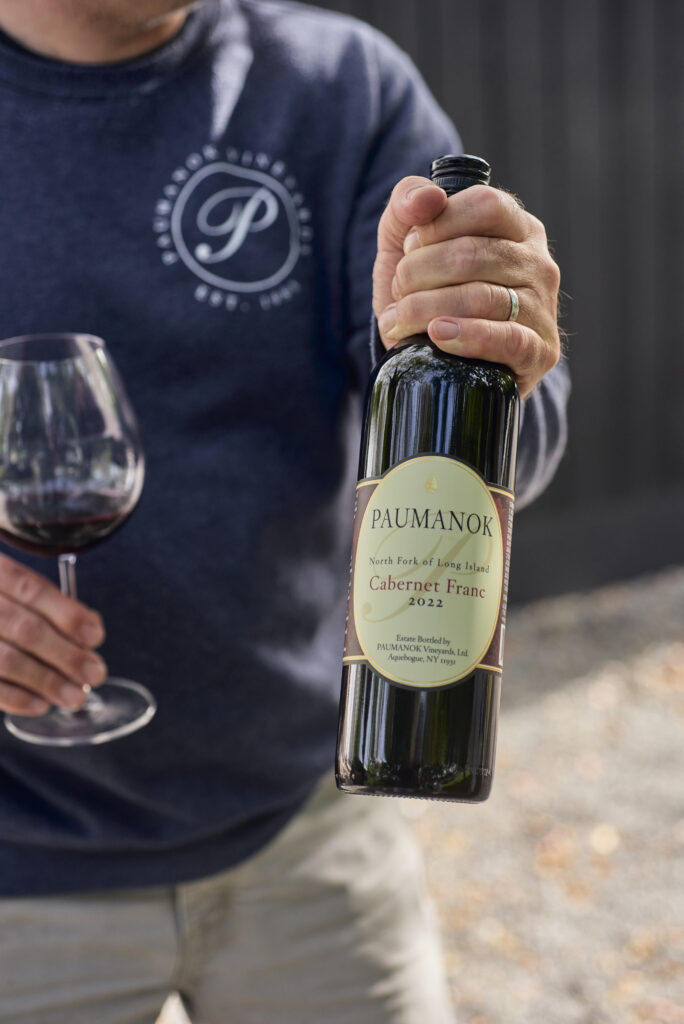
Duke it out over the dishes all you like — there’s one thing you can place on your table that we guarantee you’ll never, ever have to argue about: Long Island cabernet franc, which goes with everything. Period.
“Many of them I find to be fresh-fruit forward, with blackberry and plum. Sometimes there’s a little bit of soy and umami,” says Amy Racine, partner and beverage director for JF Restaurants, of which North Fork Table & Inn is part.
And it’s precisely that combo — juicy, lit-up, impossible-not-to-love fruit and freshness with some sneaky layers of savoriness — that makes the grape such a winner for Thanksgiving, when flavors run the gamut.
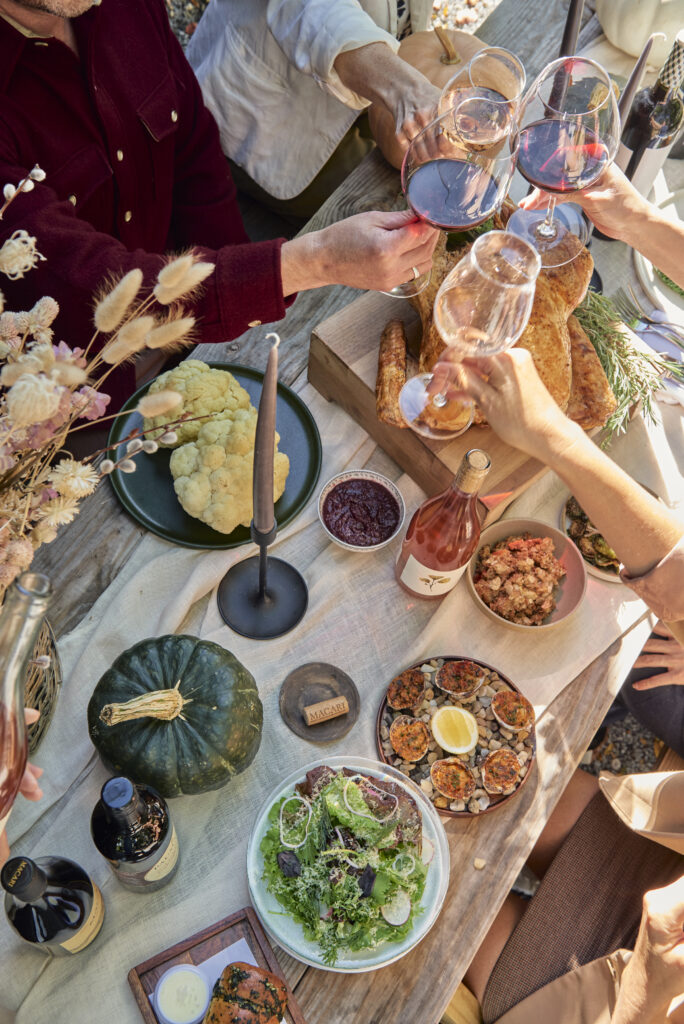
By nature, cabernet franc also just hits the spot. The perfect natural kiss of tannin. Not too summery light and not too winter heavy. If Goldilocks were of drinking age and found a bottle at the three bears’ house, it certainly would have been among her “juuuuust right!” judgement calls.
“They’re medium-bodied and bright and can go with fish that’s coming from the water just outside. Or it can go with our burger night,” says Racine. “Or it can take you all the way through a meal.”
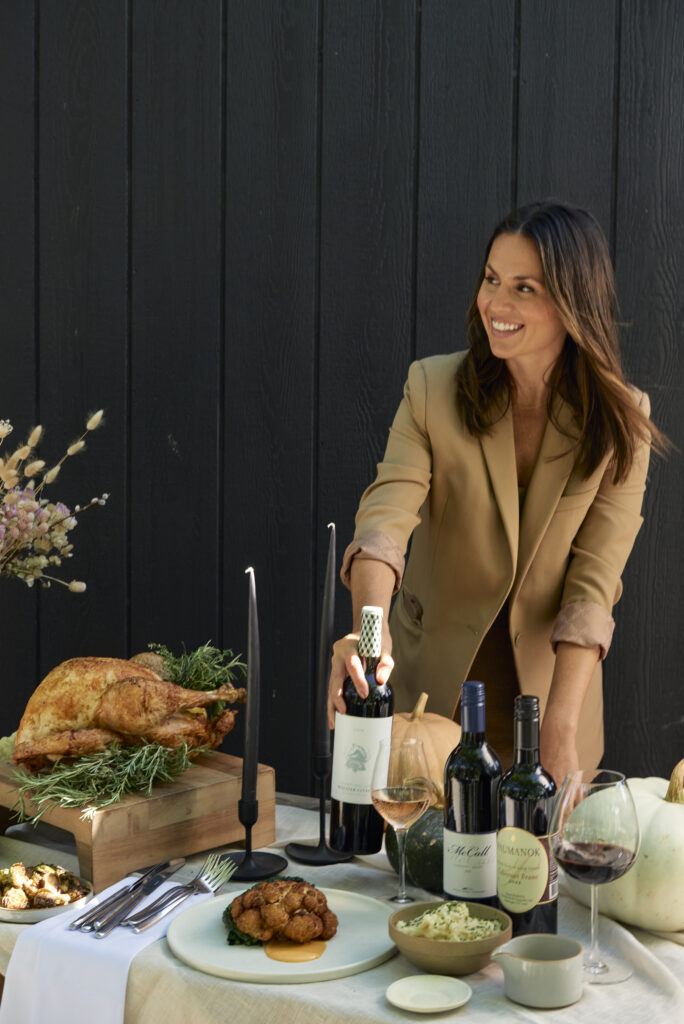
And for Thanksgiving, that’s exactly what you want. Or as we would like to join in and call it from now on: Francsgiving.
Franc-ly Food-Friendly
Luckily for you this holiday, there’s an embarrassment of juicy riches and myriad styles, from sparkling to rosé to righteous red (or a mix of ‘em all), right here for you to pick from for your holiday spread.
At Vintage Mattituck, fine-wine buyer Nate Mendelson is having a lot of fun curating a Francsgiving six-pack for the holiday, offering a half-dozen North Fork cabernet franc wines that are not only darned delicious but demonstrate the variety of styles and price points available right in our own backyard.


“Cab franc has all these peppery notes and this crunchy, herbaceous character, but it still finishes off with this red currant, blackberry and raspberry to it — the flavors shine! So we’re trying to put together a collection of wines that really speak to the North Fork,” says Mendelson, a diploma candidate with the Wine & Spirits Education Trust. “From Corey Creek and their white cabernet franc to Macari’s “Lifeforce” which ages in concrete casks, to John Leo, who does two separate cab francs of his own — one co-fermented with malbec and then one aged in French oak. They’re so good!”
Which is probably why, at this point in time, it’s the most widely planted red grape in the entire state of New York and, as of a year ago, the star of the newly launched statewide effort “Cab Franc Forward.” This collective includes eight core producers from eastern Long Island, all the way to the Finger Lakes and in between, who’ve come together to create different events and activations to show wine lovers just how irresistible and versatile the cab franc from within our Empire State borders is — while bringing other local producers into the fold, too.
Cab Franc Forward is the brainchild of Gabriella Macari of Macari Vineyards and Max Rohn of Wölffer Estate Vineyard, both of whose wineries make sundry excellent versions. “I think for me, the short goal is to get the wine in people’s glass, right?” laughs Macari. “Once it’s in front of you, there’s really nothing we need to say and that’s the beauty. You know, if the wines were bad, we’d have to do a lot more talking and convincing!”
And while merlot, once the darling red of Long Island, can really only thrive on the East End, cabernet franc seems to settle in just fine east to west, north to south in the state.
“It’s just at home in New York, and the way it grows. It’s cold hardy and disease resistant and you don’t have to wrestle with it as much as other grapes to get it to where you want it,” says Rohn. “It’s wonderful on the fresher side, like in the Finger Lakes further north, where it’s typically lighter, fresher. And with Long Island being further south, [the wines become] bigger, richer. It just does well at all these levels.”
A Grape Gets Its Groove
While cabernet franc wasn’t one of the first vines to go in the ground on Long Island, it’s certainly been around for a good bit.
“We had the first merlot east of the Rockies but we never planted cabernet franc. However, around 1980 we leased a vineyard on the North Road that was owned by investors, planted by Dave Mudd,” says Louisa Hargrave, the matriarch of Long Island wine. “There was an acre there and it was very good quality.”
So good that they planted some of their own around 1984. The year after, Bridgehampton Winery, which folded in 1996, planted cabernet franc, too — the first to do so in the Hamptons.
According to renowned vineyard manager Sam McCullough, who’s been with Lenz Winery since 1989, there were other scattered plantings but most were bound for blending.
“Lenz had a very small planting from the outset — less than half an acre — but it was never made into a varietal wine. Pindar also has a sizeable planting, although really just a few acres in Peconic. Gristina put in cab franc pretty early, around the mid to late ‘80s,” McCullough recalls, listing other wineries that followed suit: Macari, Pellegrini before it was Pellegrini, Roanoke (“The first one to make a big deal and promote it — it was [owner Richie Pisacano’s] dad’s pet project sometime in the mid to late ‘90s.”) And on and on.
In the ‘90s, winemaker Bruce Schneider stirred up a bit of well-deserved cultlike devotion with his single-variety cabernet francs (some made by Kip Bedell) from his eponymous label, Schneider Vineyards, which drew attention and praise from Wine Spectator on more than one occasion.
But it wasn’t until the last couple of decades that vintners here started to grow and make cab franc in earnest. Armed with experience and improved knowledge about how to best grow and care for it, winemakers began to pull it from behind the blending scenes and into the forefront.
And with very good reason. The red grape, which originally hails from France, where it holds a vital position in the winemaking traditions of both Bordeaux and the Loire Valley, doesn’t need the same kind of European comparative coaxing that other grape varieties seem to. There’s no déjà vu vetting required. It simply is what it is — and it is, indeed, very good.
“It’s not a super tannic wine. It’s not going to put you to sleep. It has some electricity to it. Those bright berry-plum flavors are great with, say, a heritage turkey on Long Island that has a little bit of game to it or more dark meat,” says Racine. “And this is when all the root vegetables come out! You have all the carrots, Brussels sprouts, all of that on the table. And cranberry sauce. From a crowd-pleasing point of view, I’ve never poured the cabernet franc for anybody and they’ve been like, ‘I don’t like this.’ It’s not a polarizing grape. You can pour it for a dinner table at Thanksgiving and everybody will be happy.”