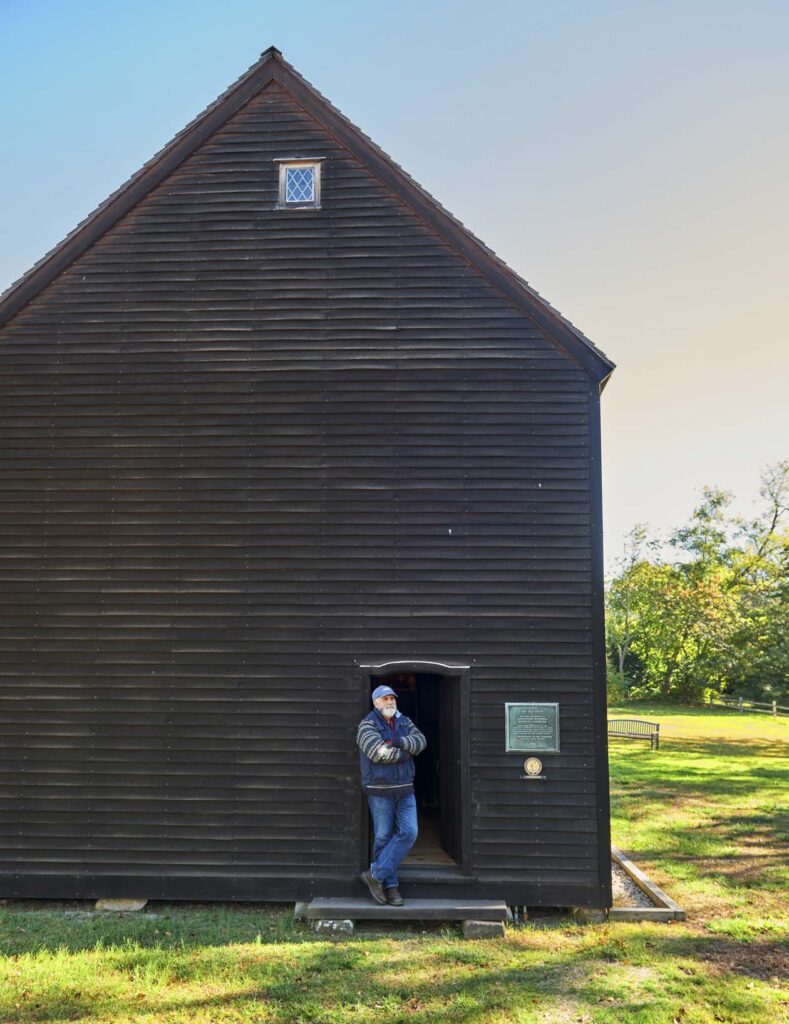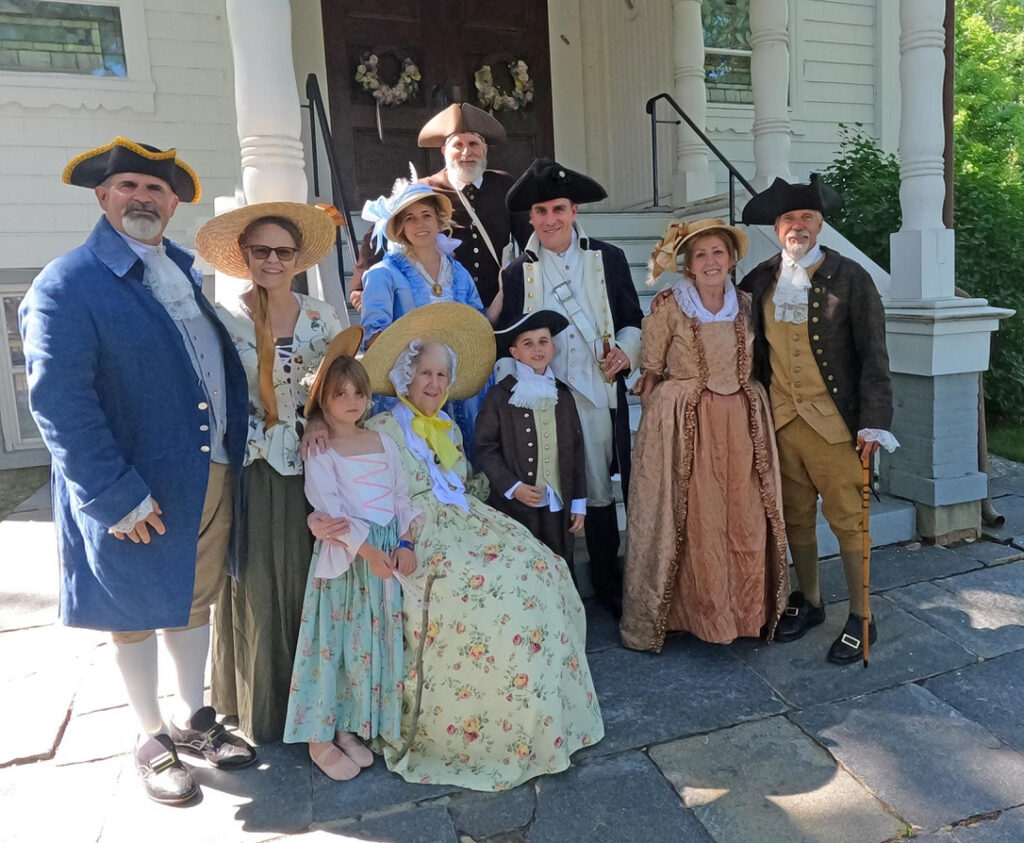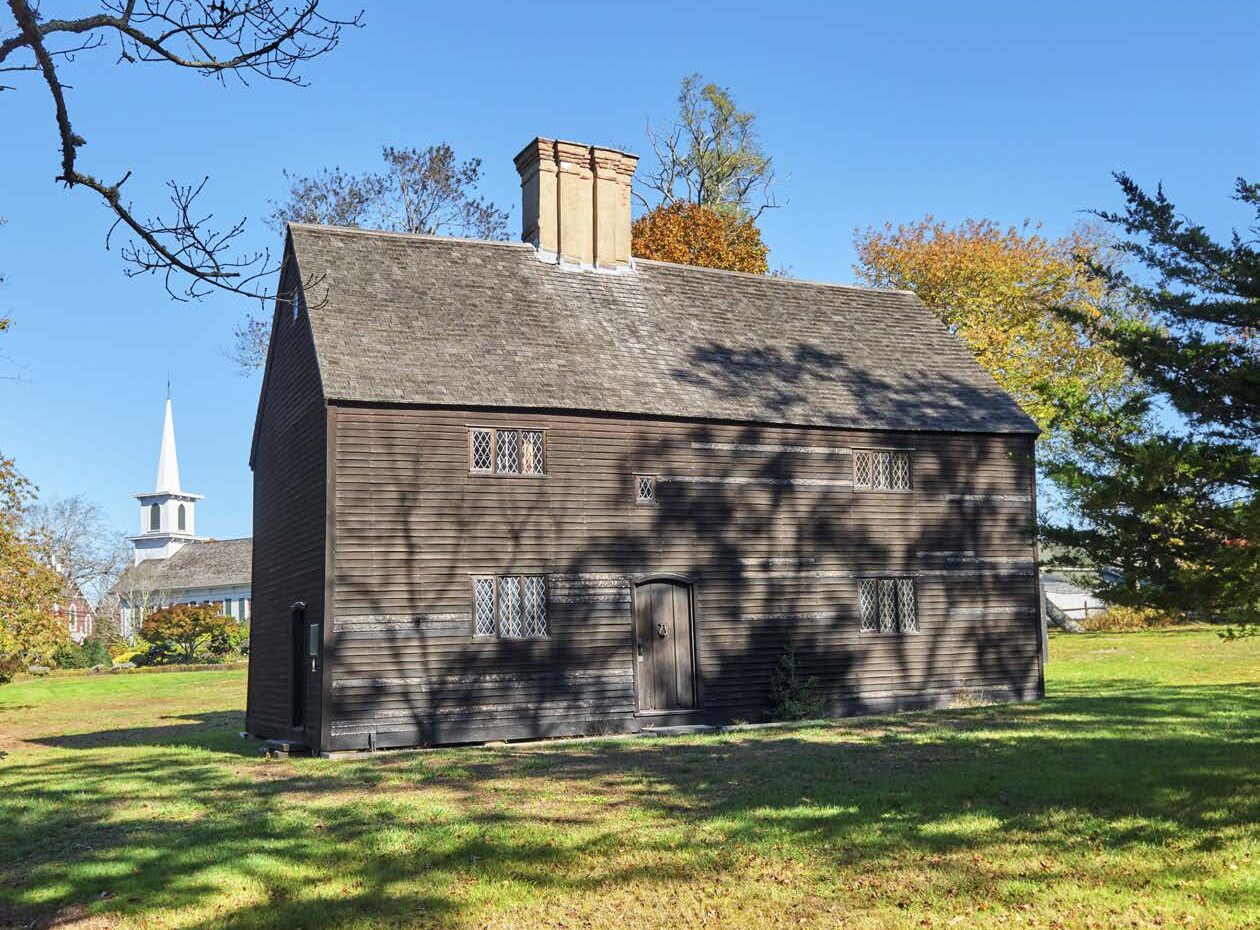
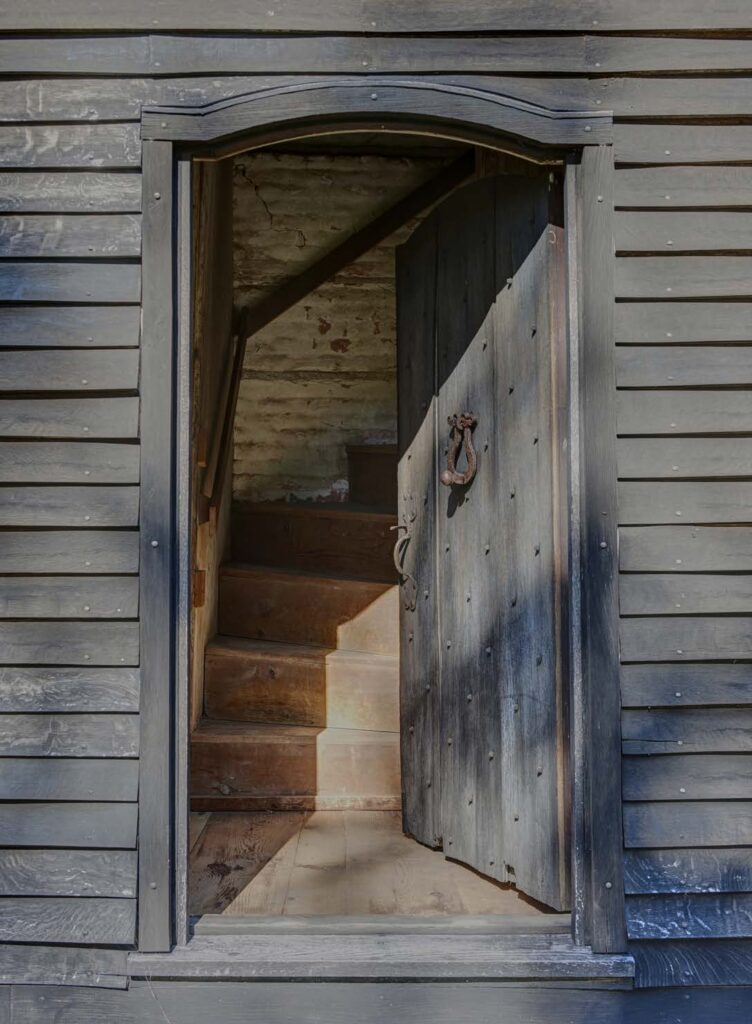
Built centuries ago, the imposing, nearly noir-hued “Old House” on the village green in Cutchogue still hides myriad secrets.
In the current age of shiplap, wraparound decks, chef’s kitchens and spa bathrooms, many might not give much thought to what it was like to live in a Colonial-era house hundreds of years ago. But the Old House happens to be an exceptional historical property worth thinking about, with several rare architectural features that survive today. The Cutchogue-New Suffolk Historical Council & Museums, which owns and maintains the structure, describes it as one of the finest examples of English domestic origin in the nation.
Besides giving us an idea of how people lived back in the day, history also reminds us of what our ancestors believed and fought for. The Old House has stories to tell about ritual magick to protect against witches, a Loyalist to the Crown losing it all during the Revolution and the lives of the enslaved people forced to dwell and work there.
COMPETING ORIGIN STORIES
The origin of the Old House is not without controversy. Legend has it the structure was built further east in Southold or Hashamomuck and moved to its present location.
“That’s part of the old origin story that we now treat as local lore,” says Mark MacNish, executive director of the Historical Council. “There is an indication that when the lane was sold to Joseph Wickham in the late 17th century, the house was already there.”
While some historical documentation can be found in Southold Town’s archives from the 1600s, no actual proof the house was sold or moved exists, according to Southold Town historian Amy Folk.
“It is said that the account book of a Southold carpenter, Joshua Horton, has an entry that Horton moved a building from the Southold area to Cutchogue,” Folk says. “Since the account book that this was noted in disappeared in the 1940s, the information cannot be verified. Without that single entry in the account book, the legend that the Old House was moved must remain just that — a legend.”
Competing camps also have different ideas about exactly when the house was built; the 1649 date is based on personal histories of some of the founding families of the town. The Historical Council ultimately decided to use 1698 as the house’s official origin date but notes both stories on its website.
One account, passed from one person to another for over 80 years, goes that the house was built in Southold by prosperous shipping merchant John Budd and given to Budd’s daughter Anna and her husband, Benjamin Horton, as a wedding gift. According to the Historical Council, it was disassembled and moved to what is currently known as the Village Green in Cutchogue, which was then a swathe of wilderness, and reconstructed.
The second story uses science as its historical compass. Dendrochronology — scientific dating by analyzing tree rings in wood — was used to test Old House timbers in 2008 and determined that the felling dates of the trees used in its construction were 1698 and 1699. In 2018, the testing was repeated with the same results. Archeological digs were also done around the house, and anything found in those excavations points to the late 17th century and not a moment before.
A search for primary documents found a 1699 deed of sale from Benjamin Horton’s brother John to Joseph Wickham, noting the boundary of the land without mentioning a house. Folk notes that “it is well documented that by the American Revolution the Old House and the land it stood on belonged to the Wickham family,” passing from Benjamin Horton to his brother Joseph Horton and then to Joseph Wickham.
Whatever story you prefer, there’s one thing about the house MacNish says is certain: “When originally built,” he says, “it was considered a home suitable for a wealthy gentleman.”
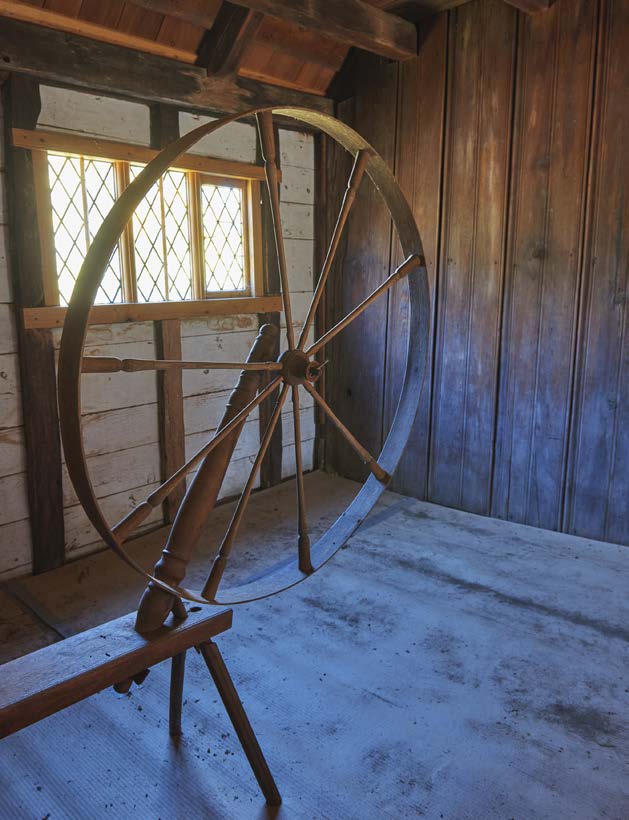
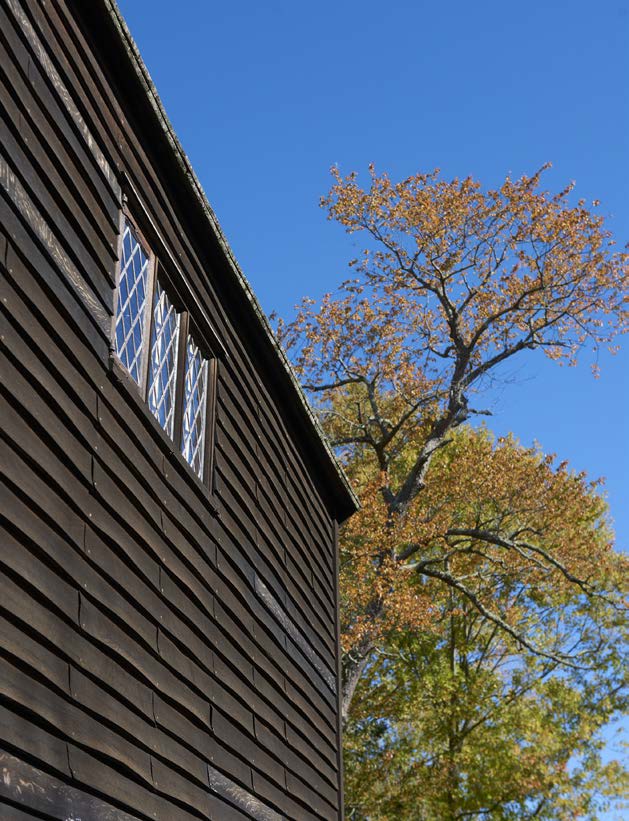
The search for the Old House’s origins has been a rabbit hole of research for local historians, going as far as finding felling dates for the trees used to build it. (Photo credit: Doug Young)
EXCEPTIONAL FEATURES
“The house is a rare example of a European late-medieval architectural style that is extremely unusual to be found in the U.S.,” says MacNish. It was designated a National Historic Landmark in November 1961, its description noting that “construction details, in particular the casement window frames, reflect the work of a master builder.”
“The lack of windows is because of the rarity of glass in the U.S. at the time and the difficulty in producing large pieces, hence the small diamond-leaded frames,” MacNish notes. In 1940, an original window was found when a lean-to was removed from the north side of the house; its current casement windows are reproductions.
Other distinctive features are the pilastered brick chimney (a rare find on this continent); a colossal 9-foot long, 3-foot deep and 5-foot-high fireplace with an oven that projects outside the north wall of the house; the “summer-beam” (an enormous horizontal timber common in 17th- and 18-century architecture and used as a load-bearing beam) that spans the parlor, and the chimney girts that stretch across each fireplace and serve as the home’s main structural supports. A 17th century root cellar is also located next to the house.
In 2018, June Metzner, who was part of the original Old House Society that formed after a restoration of it was completed in 1940, inspired the members of the Historical Council to restore and restage the interior in a more authentic manner suitable to the likely 1698 lifestyle of Joseph Wickham, a wealthy tanner.
Robert F. Trent, an authority on early American and Colonial furniture and decorative arts, oversaw the restaging, with many reproductions handcrafted by Peter Follansbee, a nationally renowned woodworker who used pre-Colonial techniques and materials. The bed textiles were handwoven by Rabbit Goody, an expert on historical textiles who also employed pre-Colonial methods.
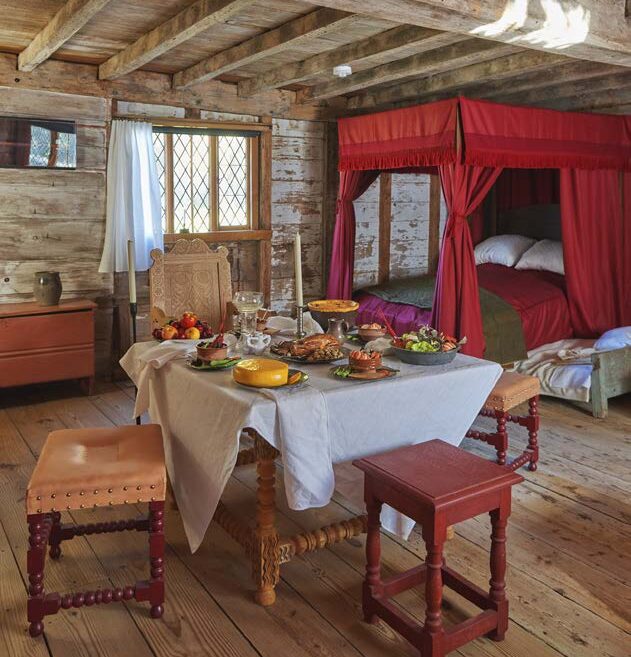
Interior of the Old House. (Photo credit: Doug Young)
MAGICK AND WITCHCRAFT
Ritual magick and folk traditions were practiced in Southold during the Colonial era, according to Folk (the addition of the letter “k” in “magick” differentiates the folk version from ordinary stage magic).
“The early citizens of Southold, for the most part, were not city people. They came from the English countryside, mostly from East Anglia… [and] very much believed in the forces of evil and in witches,” she says.
In 1658, Elizabeth “Goody” Garlick of East Hampton was accused of witchcraft and went on trial in Connecticut, 30 years before the infamous Salem Witch Trials. It’s no wonder then, that several apotropaic items have been found in the Old House, like talismans meant to repel witches or the Devil.
In the kitchen, one can view deliberate teardrop-shaped burn marks on the fireplace lintel meant to prevent witches from entering through it. Prominently nailed to the wall is an iron horseshoe, a common device to protect against evil forces. “Iron is supposed to be anathema to witches,” says MacNish.
Common items found behind the walls or under floorboards in 17th century houses in America include shoes or even cats (a mummified cat was found behind a parlor wall during the late 1970s renovation of the Terry-Mulford House in Orient). The secreted items were meant to ward off evil spirits and bring good luck.
During the 1940 renovation of the Old House, three small dolls made of twigs and handwoven linen, known as poppets, were found under the kitchen. Their significance wasn’t immediately realized upon discovery and they were initially thought to be toys owned by occupants of the house and made available to visiting children. But these dolls were not for child’s play.
The familiar concept of the “voodoo doll” — a small effigy or doll meant to represent a specific person and then pierced by sharp pins or bound in the hope it will cause harm to the real-life person — has ancient origins in many cultures and is mentioned in accounts of the Salem Witch Trials. It seems the Cutchogue poppets were used as protection rather than to cause harm and were meant to repel any witches lurking about.
“When they realized what they actually were, they sent them to a conservator at great expense, and now they’re preserved in a passive humidifier,” says MacNish.
The poppets, which anyone who takes a tour of the Old House can view, are rarely found in America and, as MacNish notes, are historically significant and of great interest to scholars.
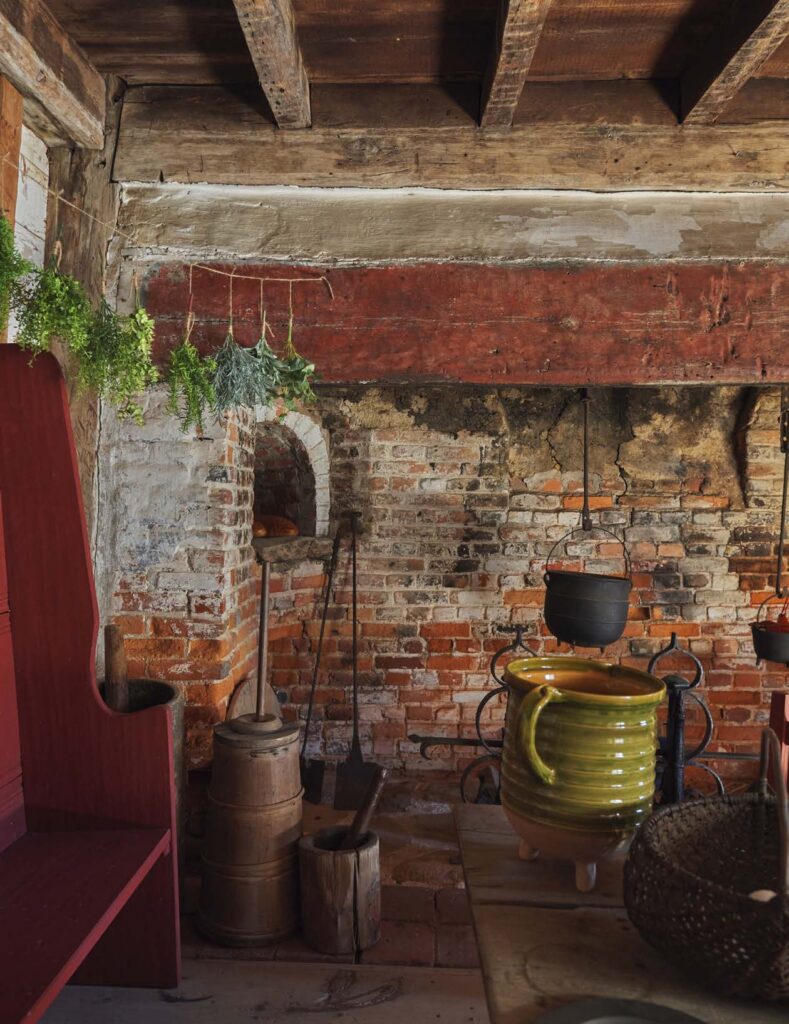
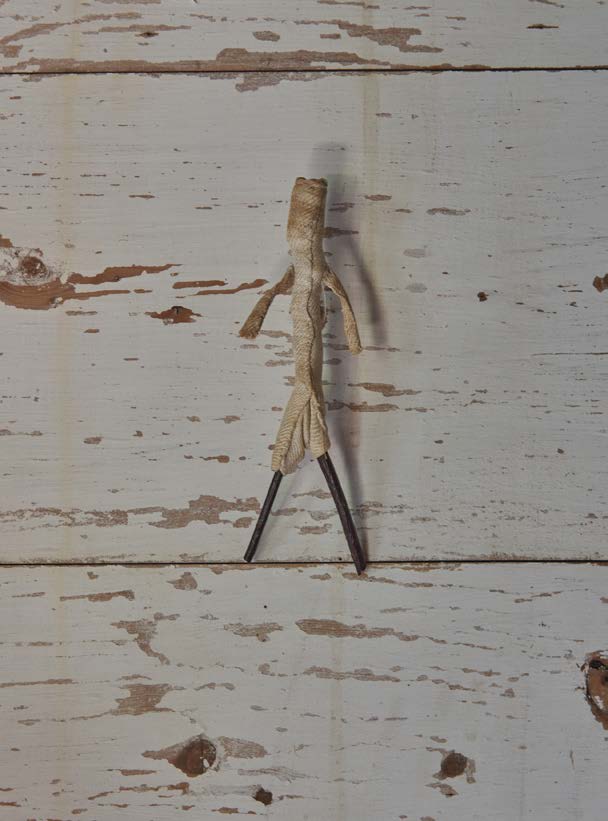
Left, the massive fireplace in the Old House’s kitchen, with bread oven to the left; right, one of the rare poppets found underneath the floorboards during a 1940 renovation. (Photo credit: Doug Young)
RAIDS, REAL ESTATE AND RIGHTING WRONGS
In 1749, at age 22, Parker Wickham of Cutchogue, great-grandson of one of the original Puritan settlers in Southold, inherited his father’s large estate — 590 acres in Cutchogue (including the Old House), 900 acres in Riverhead and the 435-acre Robins Island. Over the years he served in many official capacities, including as justice for the County of Suffolk, and was elected nine times as Southold Town supervisor.
During the Revolution, Wickham remained loyal to the Crown, like most Eastern Long Islanders, and refused to support the campaign for independence. In December 1777, a Patriot group from Connecticut kidnapped Wickham, spirited him across the Sound and held him captive.
When he returned to Long Island in 1779 as a parolee, Wickham was named as one of three English sympathizers in Suffolk County. His property was seized and he was banished from the state under threat of death. Claiming to be innocent of the charges, he died in Connecticut in 1785.
To help pay the newly formed country’s war debts, all of Wickham’s properties were auctioned and The Old House was bought by Wickham’s political opponent, Jared Landon, who moved in with his family and his enslaved servants.
In recent years the North Fork Project, spearheaded by journalist Steve Wick and three local historians — Folk, Sandi Brewster-Walker, and Richard Wines — has unearthed many stories of marginalized peoples in local history, most of them untold before now.
Recently, MacNish launched a permanent exhibition on the Village Green about an enslaved woman named Keturah who, along with her mother, Zipporah, was “inherited” by Landon from his father around 1782.
Landon freed the two in his will, with only Keturah manumitted after Landon passed away in 1816 — although not much changed in her daily life despite the supposed emancipation. The mother and daughter lived with and worked for Landon’s family and descendants in Southold until their own deaths. Keturah cared for the family’s children and grandchildren and was paid a salary from the time she was freed. She died in 1867 and is buried in the Cutchogue Old Burial Ground, MacNish notes, where her tombstone is inscribed “Aunt Tura.”
Today, the Old House is the cornerstone of the Historical Council’s complex of buildings on the Village Green and remains a North Fork icon, thanks to the Budd, Horton, Wickham, Landon and Case families and all who have recognized its importance over the years. It is “a beautiful survivor of our Colonial heritage in Southold Town,” says Folk, “and a valuable part of our history.”
The Old House (27320 Main Road, Cutchogue, 631-379-7494, cutchoguenewsuffolkhistory.org) is open for tours from June to early October, Friday-Sunday from 1 to 4 p.m., or by appointment.