Mile after mile, the signs dot the landscape as ubiquitously as those for strawberries in June or corn in August, but for a homegrown product of a different sort: “Live music today!” Only these signs defy seasonal sequestering — and, more often than not, are found at the entryways to the North Fork’s sipping and supping spots. Unlike the equally pervasive “No Limos” or “No Buses” notices posted like arms-crossed bouncers at myriad wineries, these signs are open-armed invitations to come in, grab a seat and a menu, and take a listen.
There is an entire flourishing live music eco-system on the North Fork that feeds multitudes of performers, venues and the community alike, with creative, social and financial implications that come along for the ride right next to the speakers and mixing boards. While live music venues and festivals have long been part of our regional, tuneful flavor, over the years local wine and beer producers, as well as restaurants, have been fermenting a whole new music scene among the vines and taps. The hottest stage in town? It often comes with a side of locally made albariño, craft ale and ahi tuna tacos.
Tasting Bar Star
There’s more than meets the eye — or ear — to this industry than you might imagine while you’re sipping on your chardonnay at Main & Mill, vibing to a live version of “Hopelessly Devoted to You” with an indie-vibe twist.
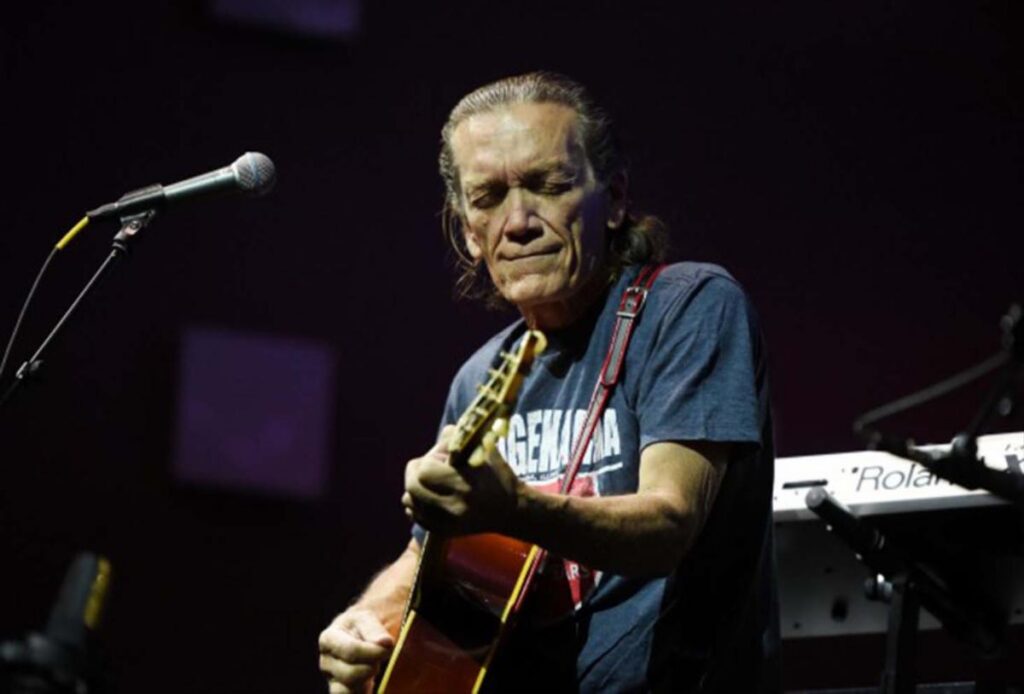
One of the stalwart performers on the scene is Southold-based troubadour Gene Casey. With his cowboy hat and “rhythm and twang” repertoire, Casey has been performing on the North Fork for over 20 years, both with his venerable band the Lone Sharks and as a solo act. He’s more than pleased that the remainder of his 2026 calendar is booked.
“I really couldn’t have done this 10 or 15 years ago…” says Casey, speaking on the almost expected nature of live music at eating and drinking establishments these days while setting up one recent Friday at Corey Creek Tap Room. “You know, there’s a lot more venues now.”
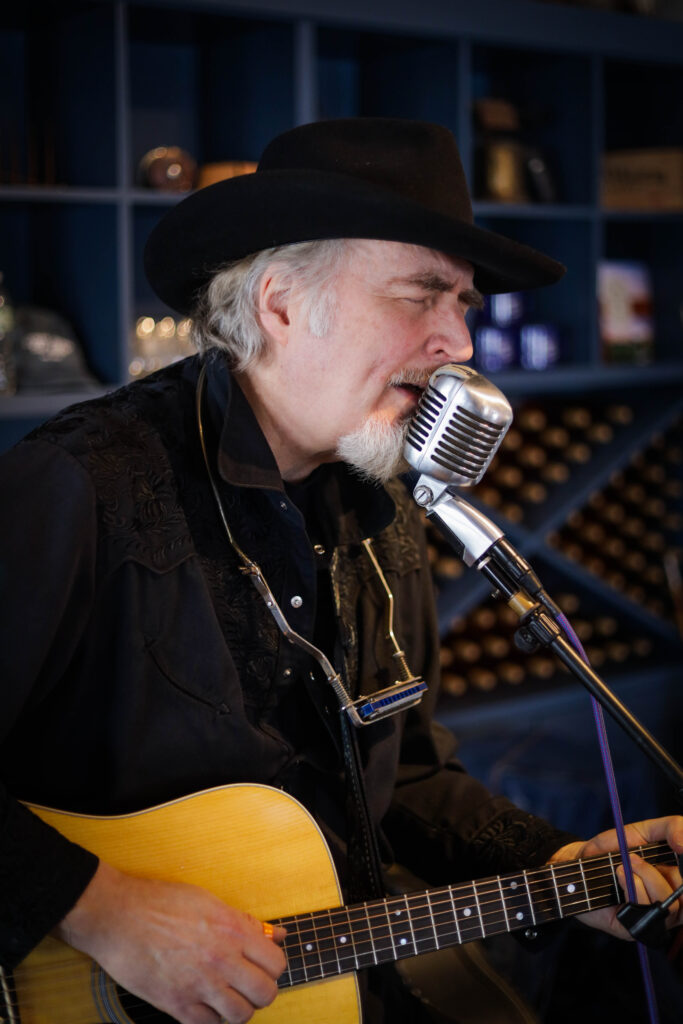
There are. And many are different from the bars and clubs a lot of Long Island performers came up in. Casey’s Lone Sharks were a staple at South Fork bars dating back to the late 1980s. As demographics shifted, many of the establishments where the band appeared were priced out of the area, as were the patrons. Casey moved to the North Fork in 2002, when the vineyard scene was flourishing. As tasting rooms became destinations, the number of outlets for live-performing musicians grew.
But it’s far less of a “bar band” scene as many of the wineries and restaurants call for solo gigs.
“The good news is that there’s a lot of artists and performers who are working,” says Casey.
A Full Dance Card
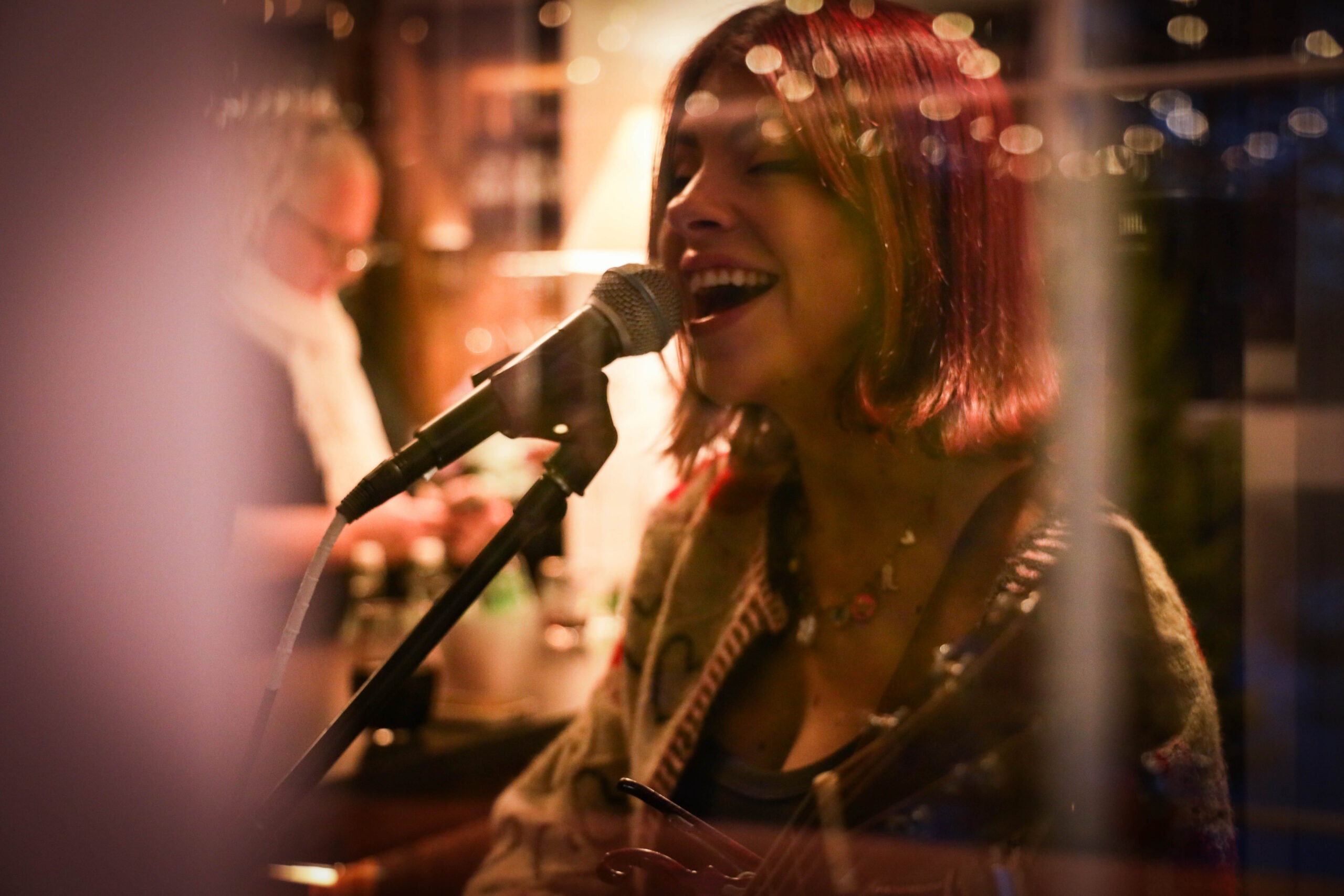
One recent afternoon, singer/songwriter Paris Ray packed up her Jeep in Bay Shore to head to Rose Hill Vineyards on Oregon Road in Mattituck for a 4-6 p.m. show. Her commute was a testament to the authenticity of her infectious original song “Something’s Gotta Give!,” in which the opening lyrics set the scene: “I spend more time in my car than I do in my bed…”
Such is the life of a performing musician, particularly on sprawling Long Island. However, that afternoon a call came that the booking was canceled due to weather. At one time in her career, that might have brought much greater disappointment, not to mention financial concern. But Paris had another gig the next day and is also already booked for most of the year. She has a band, too, called The Crush, but like Casey, most of her bookings are for solo gigs.
To be sure, there are still numerous places that can accommodate, and indeed are cultivating, more of a band business. For Rich Vandenburgh, co-owner of Greenport Harbor Brewery with locations in Greenport and Peconic, it was a friend and member of the local band Route 48, who upon seeing the flagship Peconic location encouraged him to consider hosting live music. From there it was on-the-job-training for the former attorney.


Deadwood and Friends and Tasty Wave on the stage at Greenport Harbor Brewing Co.; Rich Vandenburgh, owner of Greenport Harbor Brewing Co., believes investing in music is a good move for his brewery and his customers. (Photo credit: Glen Hoffman)
“At first we thought it would be, like, special events with bands, but then one person told another person, ‘Hey, I’d love to play there’ and by default I became the guy who was booking all the bands,” Vandenburgh says.
Indeed, Greenport Harbor has grown into one of the most robust live music venues on the North Fork, especially with the advent of a new live-music stage built into the back of the Peconic locale’s brewery, which showcases bands every weekend. “It’s been fantastic because you meet such wonderful people; artistic people. I’m a big believer in paying for craft,” says Vandenburgh. “Not that I’m any kind of expert, but you hear a band. They’re good. I’d love to have you back. And I’m happy to pay you more because I always believe in paying for that artistic craft.”
Vandenburgh might have paid to the tune of approximately $75,000 on live music last year, but outside of an occasional ticketed event, customers aren’t. And the economics of maintaining a live music program for a winery, brewery, or restaurant are a complicated balancing act.
This Little Ditty Went to Market
Arden Gardell, owner of Little Fish Restaurant near Kenneys Beach in Southold, considers having live music a bit of a luxury. “As much as I love it, I don’t think economically it makes so much sense,” he says. “It is purely a passion project.”
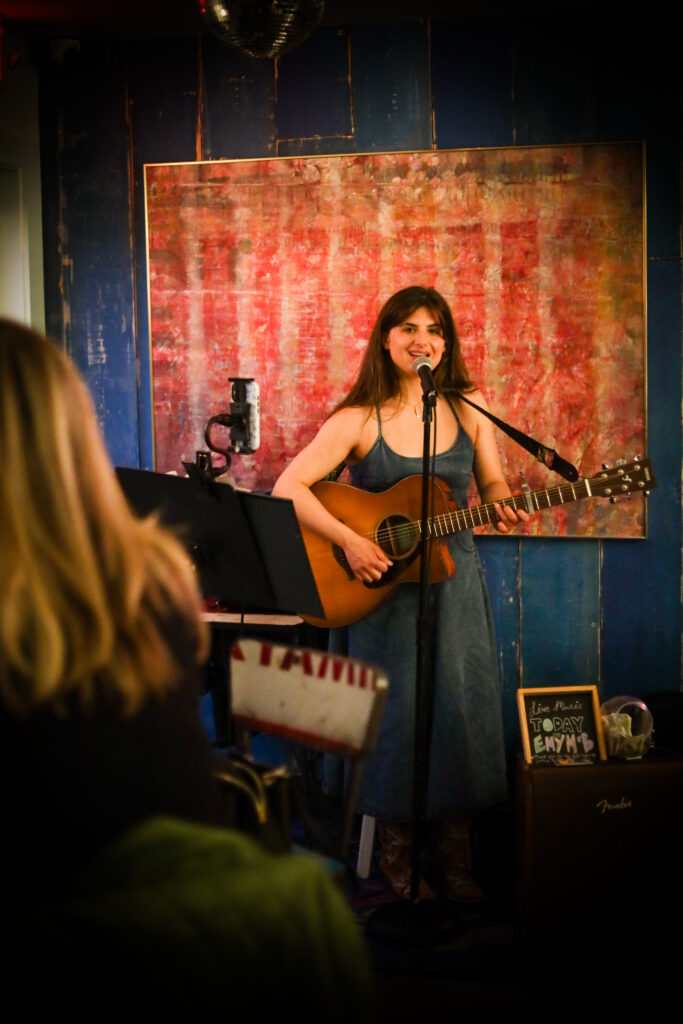
For a small restaurant like Gardell’s, supporting live music can be tough. Most customers don’t realize an establishment has to pay fees in the thousands of dollars to performing rights organizations that collect royalties for the writers and publishers of the songs that are performed, in addition to the cost of hiring musicians.
“The reality is that most small restaurants can’t economically justify live music,” says Gardell. “You know, by the time you’ve done the math, how much additional revenue has this brought in?”
There is also the opportunity cost of the space taken by the player(s), which could potentially be filled with patrons. “We do it because we love it. And because we like the culture,” Gardell continues. “We want these musicians to have a place to practice their craft and we enjoy it and we have fun. There’s not a damn thing an accountant would say good about it.”
The average rate of pay for performers ranges between $100 to $150 per hour, per person. So a soloist for a three-hour shift might earn $300, while a trio would warrant $900 or more. That’s a lot more beer to pour to cover the cost.
But according to Paul Mahos, another Long Island musician who has played with his band at Greenport Harbor, Claudio’s in Greenport, and as a soloist at The Watershed Kitchen and Bar in South Jamesport, the pay is more geared toward everything it takes to put a set together than the actual performance. “You’re paid for the setup and the breakdown and practicing the songs and learning material and traveling,” he says. “You know, there’s a of a lot of things to factor in.”
There’s a mutual investment in the relationship between venue and performer, too. Operators appreciate when performers have a following that will show up and fill seats. Performers like to know venues will have patrons to catch the show.
Julie Vergari of Raphael Winery in Peconic sees having live music as kind of a community service as well, particularly with their “Cabin Fever” series started over a decade ago. She books acts every weekend from February to May for the winery’s cavernous indoor space, leaving the warmer weather for outside conversation (and not disturbing the neighbors with amplified sound). “It gets the locals out because I try to do some local artists,” she says, “and they have really good followings and everybody’s happy.”
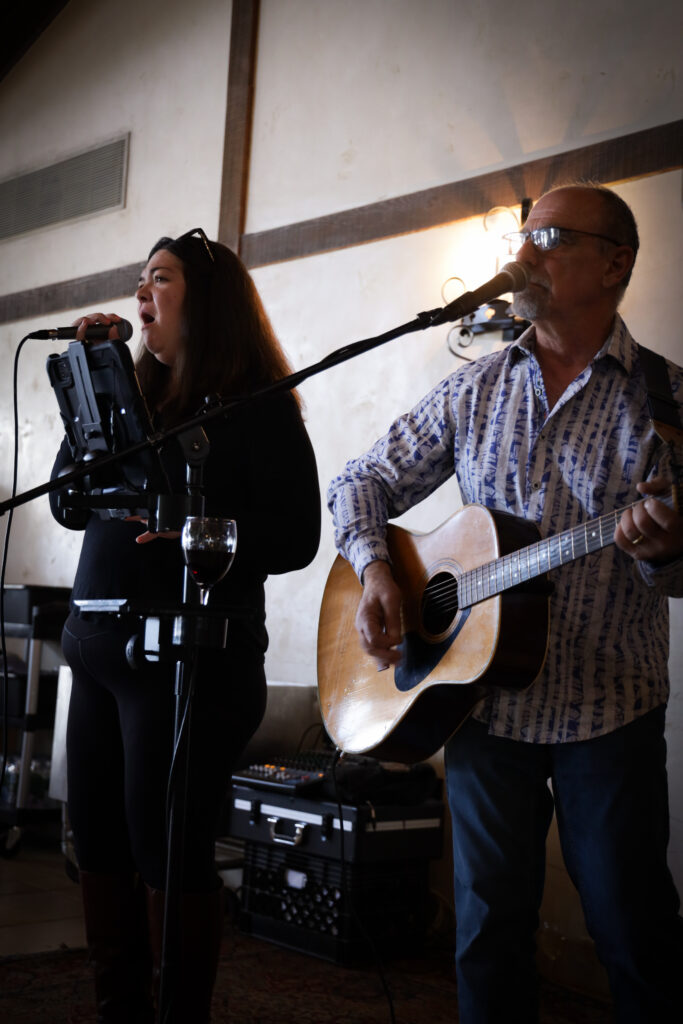
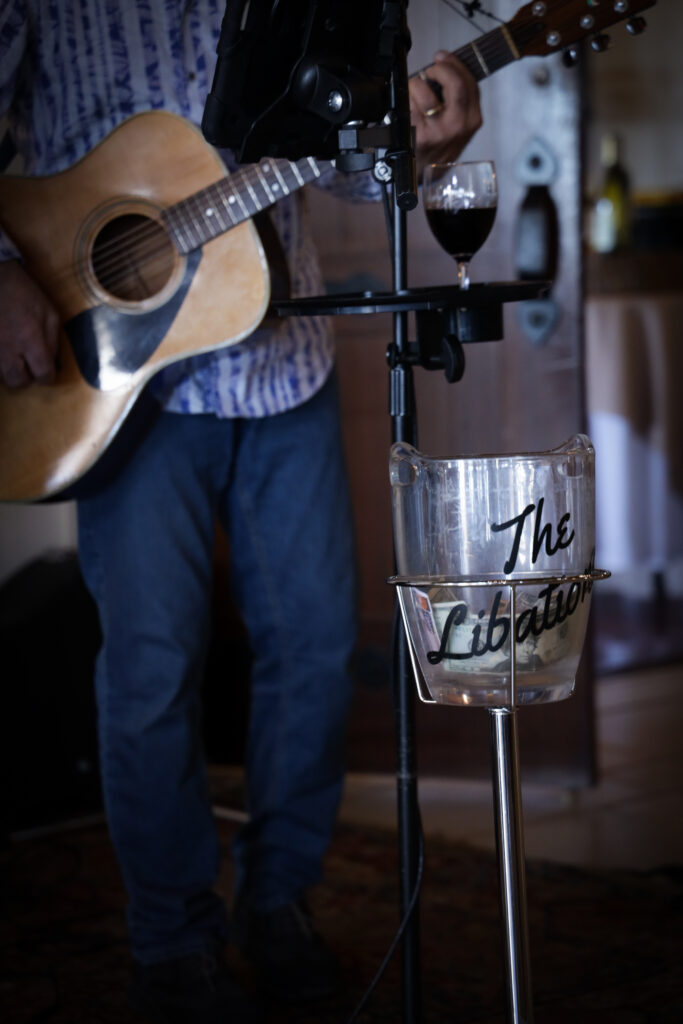
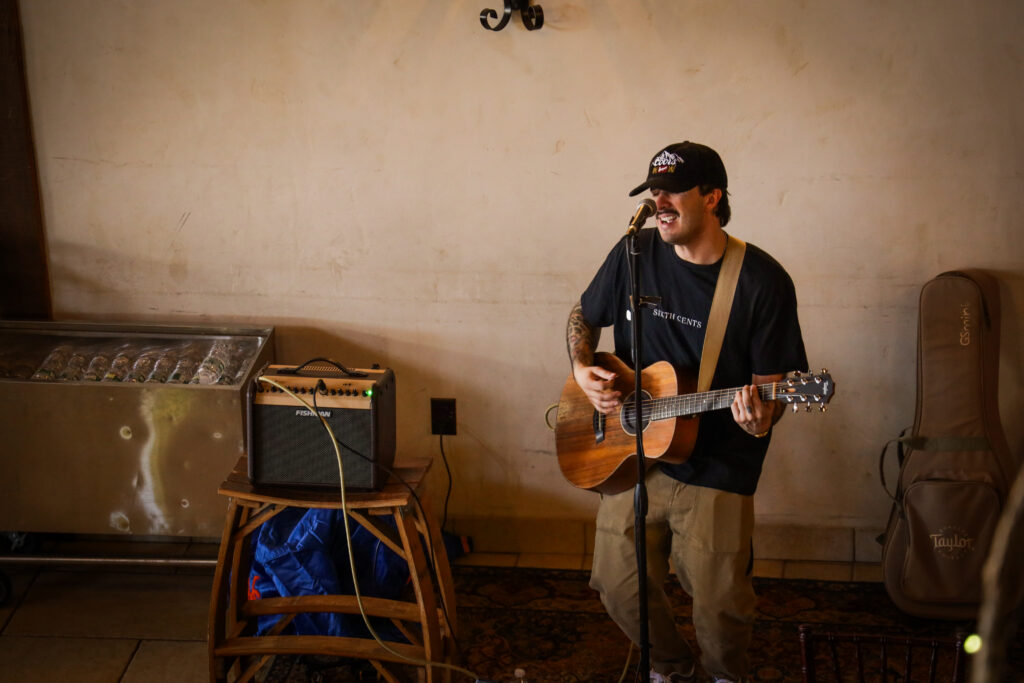
Libations performs a weekend show and Danny Casey goes acoustic at Raphael in Peconic. (Photo credit: Glen Hoffman)
Like other venues where the primary function is food or drink, Vandenburgh is always trying to evolve the model at his brewery spaces. Free music is an expected attraction, and he plans to continue hosting it in what he refers to as the “garage space,” or the main bar area of the Peconic locale. But he and his team recently developed the “Brew House” room, the site of the new stage. In there, he is exploring ticketed events at the right price point and time slots. It’s a work in progress.
Gianna Volpe, the host of WLIW-FM’s The Heart of the East End and one of the area’s greatest treasures in terms of giving exposure to local artists, is a fan and thinks it’s great for business. “It’s a proven example of how supporting local musicians has built a loyal and vibrant scene,” she says of Greenport Harbor. “The whole team at the brewery have been pretty consistent these past years, often, if not always, featuring live music and local musicians.”
A Different Tune
For many performers, including Casey, Ray, and Mahos, one of the interesting dichotomies is that the audience at these kinds of gigs has no awareness that the artist is often engaged in writing and recording their own music. Few have any idea when they request Paul Mahos to play “Sweet Caroline” that one of his own songs, “Daylight in Your Eyes,” became a top 5 hit in Germany. But when it fits, performers will sneak in an original now and then and take the opportunity to grow the audience for their own music while delivering on the experience expected at your average winery booking.
Still, the opportunity to perform, be it originals or covers, and make a living isn’t lost on any of these troubadours. For Ray, the opportunities on the North Fork and the rest of the island have been endlessly abundant. According to the well-traveled Long Island native, “There’s nowhere else I could have this life for sure. I am so beyond blessed.”
To bring joy through their music and create connection with the audience is as meaningful as a paycheck. “I get, like, so blown away and so emotional that I get to do this for a living,” Ray says. “And I really do have the most beautiful life, and I’m so grateful.”
As for the constant ping-pong of different venues — and risk of getting stuck in trade parade or tourist traffic? Well, that’s just part of the life of a have-guitar, will-travel musician.
“All in all, it’s a good thing [on] the North Fork we have musically, I’d say. I can’t complain about traffic congestion when they’re coming to see me or my brothers and sisters,” says Casey. “Hopefully there can be some kind of balance, you know? But I don’t know, this might be the craziest summer yet.”
Glen Hoffman is a writer, producer, director and songwriter. He is a founding member of The Hunkerdowns, who create East End holiday music, as well as founder and creative director of local merchandise brand NOFOk’n Way.