There’s no better place to learn about the issues that Long Island’s seafood industry is facing than at the New York Seafood Summit.
Now celebrating its 10th year, the summit has become a must-attend gathering for everyone with a stake in New York’s waters — from fishermen and oyster growers to chefs, scientists and policymakers. Organized by New York Sea Grant with assistance from Cornell Cooperative Extension’s Marine Program, the event is held at various locations around the state.
This year’s series kicked off on March 27 at the Riverhead Free Library, drawing a crowd of Long Island professionals from the culinary, fisheries and aquaculture worlds. Two additional sessions will be held at the Culinary Institute of America in Hyde Park on April 8 and at the Oswego Public Library in Oswego on April 9.
The summit serves as a place to connect. As Michael Ciaramella, Seafood Safety and Technology Specialist at New York Sea Grant explains, the event was launched in 2016 to bring together different sectors of New York’s seafood economy: “academics, decision-makers, and others with a vested interest in fisheries, aquaculture, and seafood.”
Ciaramella says that the summit’s purpose is “to foster cross‑sector communication and learning, identify challenges and opportunities, and encourage collaboration to support and strengthen fisheries, aquaculture, and seafood activities across New York State.”
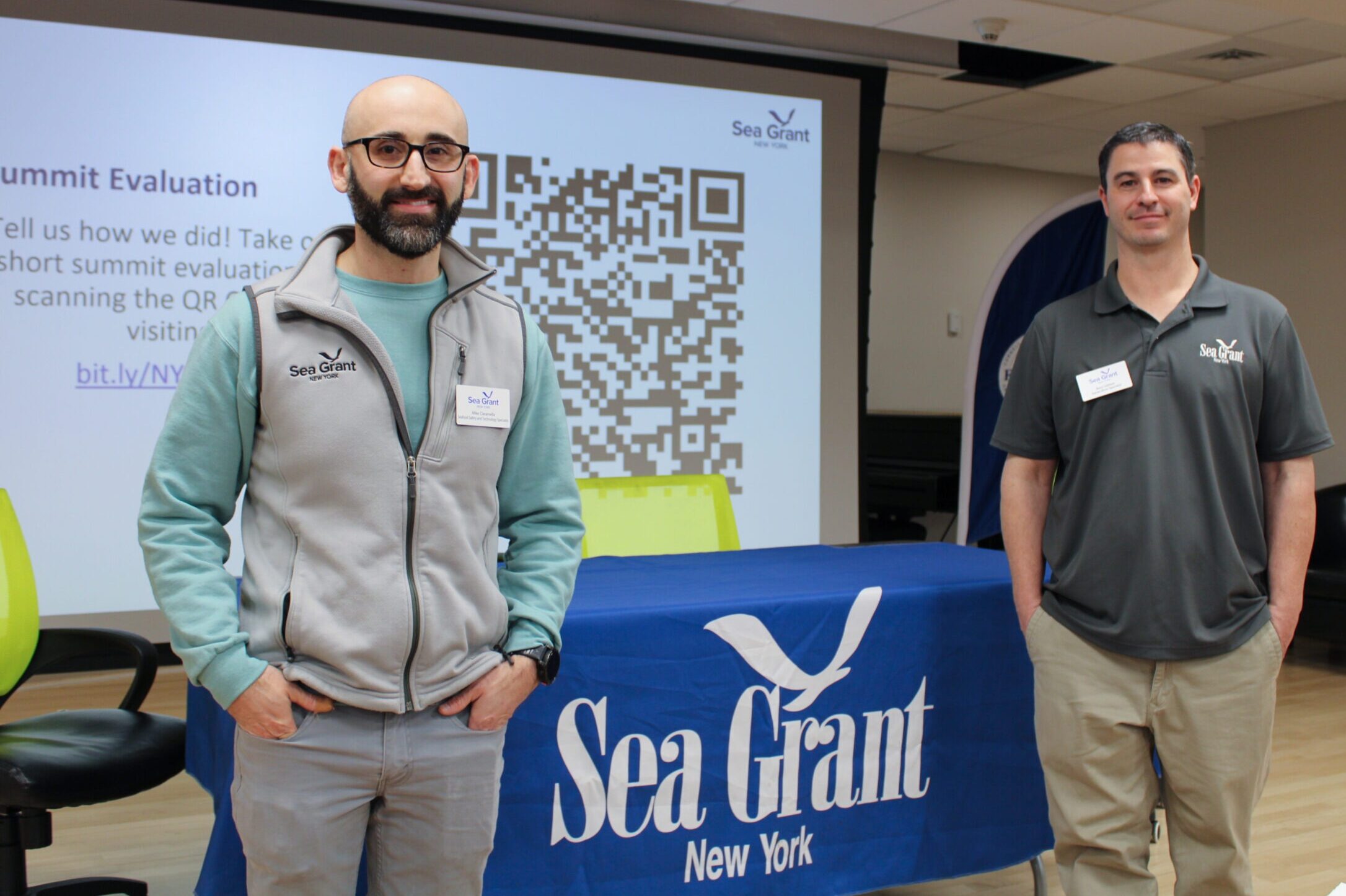
Seafood Summit coordinators. Left to right: Michael Ciaramella, Seafood Safety and Technology Specialist, New York Sea Grant and Barry Udelson, Aquaculture Specialist, New York Sea Grant. (Photo Credit: Sumayyah Uddin for New York Sea Grant)
At the Riverhead session, industry voices like Bonnie Brady of the Long Island Commercial Fishing Association and Eric Koepele of the Long Island Oyster Growers Association (LIOGA), gave updates on their respective organizations and on issues they are facing, including the damaging effects of a cold, icy winter on oyster gear and high fuel costs.
Joshua Perry, seafood coordinator of the New York State Department of Agriculture and Markets, spoke on funding opportunities for seafood businesses, while Marty Gary, Director of the New York State Department of Environmental Conservation (who is charged with licensing and regulating fishermen and seafood-related businesses) also lent his support in his remarks.
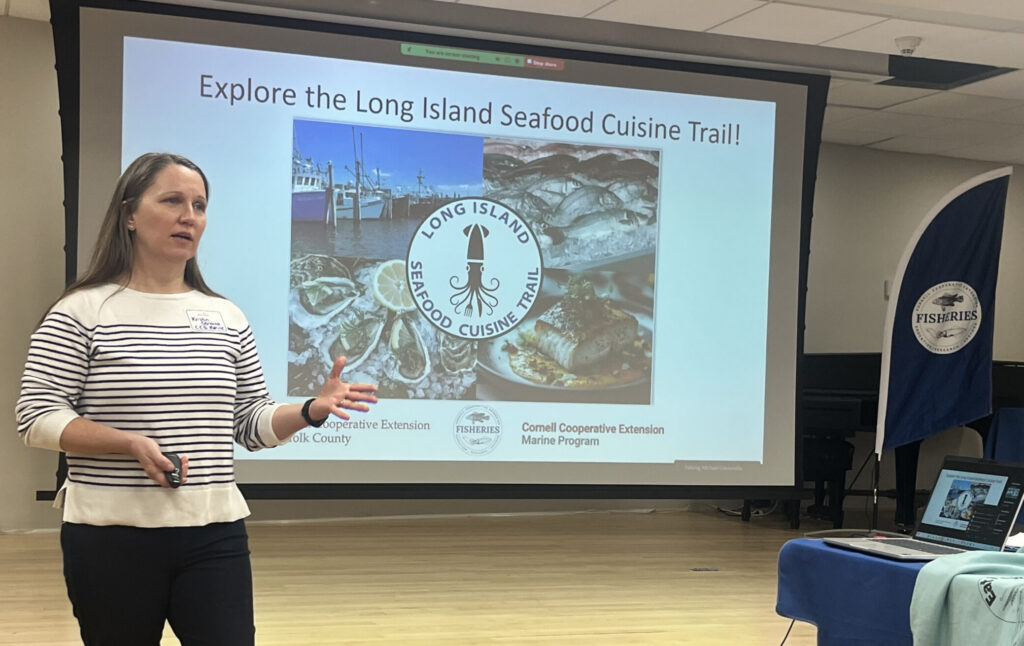
Kristen Gerbino of CCE’s Marine Program discusses the Long Island Cuisine Seafood Trail. (Photo Credit: Stephanie Villani)
Scott Curatolo-Wagermann and Kristin Gerbino of Cornell Cooperative Extension’s Marine Program spoke on ongoing fishery research projects and the Long Island Seafood Cuisine Trail. The Seafood Cuisine Trail — a chain of restaurants and fish markets featuring local seafood from Bay Shore to Montauk on the South Fork — will launch a north shore version from Northport to Greenport this spring.
A cadre of elected officials also attended the summit. Suffolk County Executive Ed Romaine reiterated his support of the preservation of working waterfronts and spoke about his interest in reducing fuel taxes for fishing vessels. The audience applauded New York State Assemblyman Tommy John Schiavoni and Riverhead Town Supervisor Jerry Halpin’s support of the industry as well.
Protecting working waterfronts was a core theme of the afternoon. Sarah Lansdale of Suffolk County’s Department of Economic Development and Planning detailed a landmark preservation program passed by the Suffolk County Legislature last September. The initiative allows property owners to sell future development rights to the County through a conservation easement. Based on similar legislation passed in Maine and with a nod to Suffolk County’s successful Farmland Preservation program, working waterfront properties will remain privately owned but cannot be developed, ensuring access to the water for commercial fishing and aquaculture businesses now and in the future.
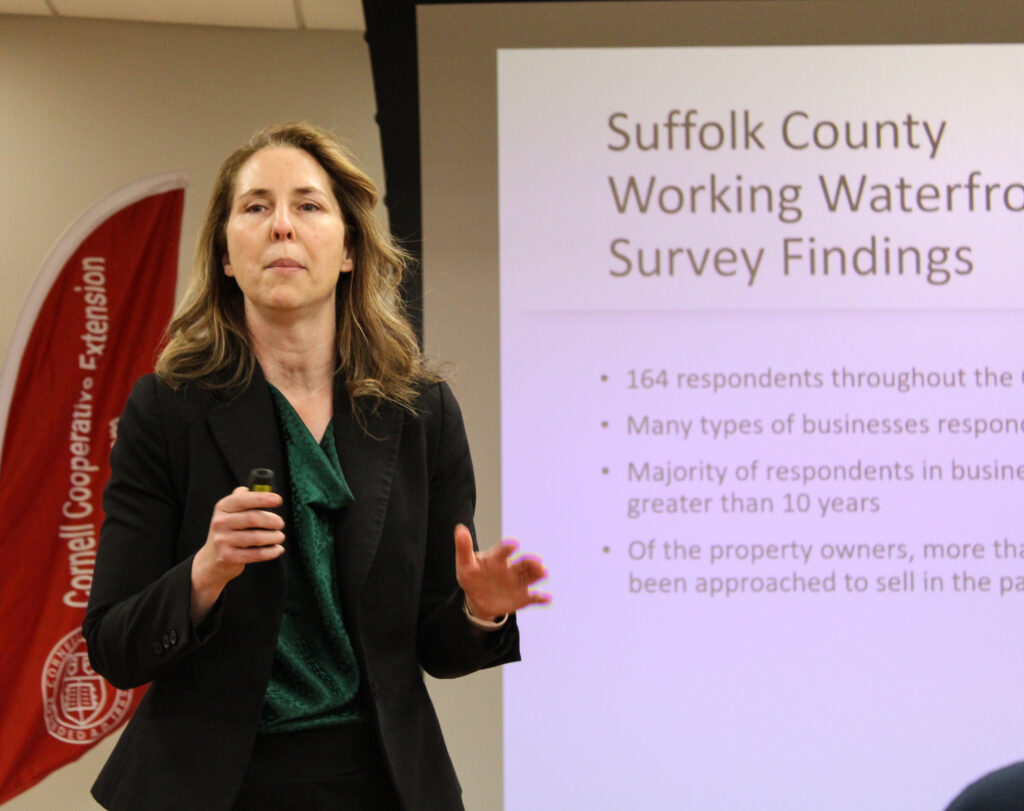
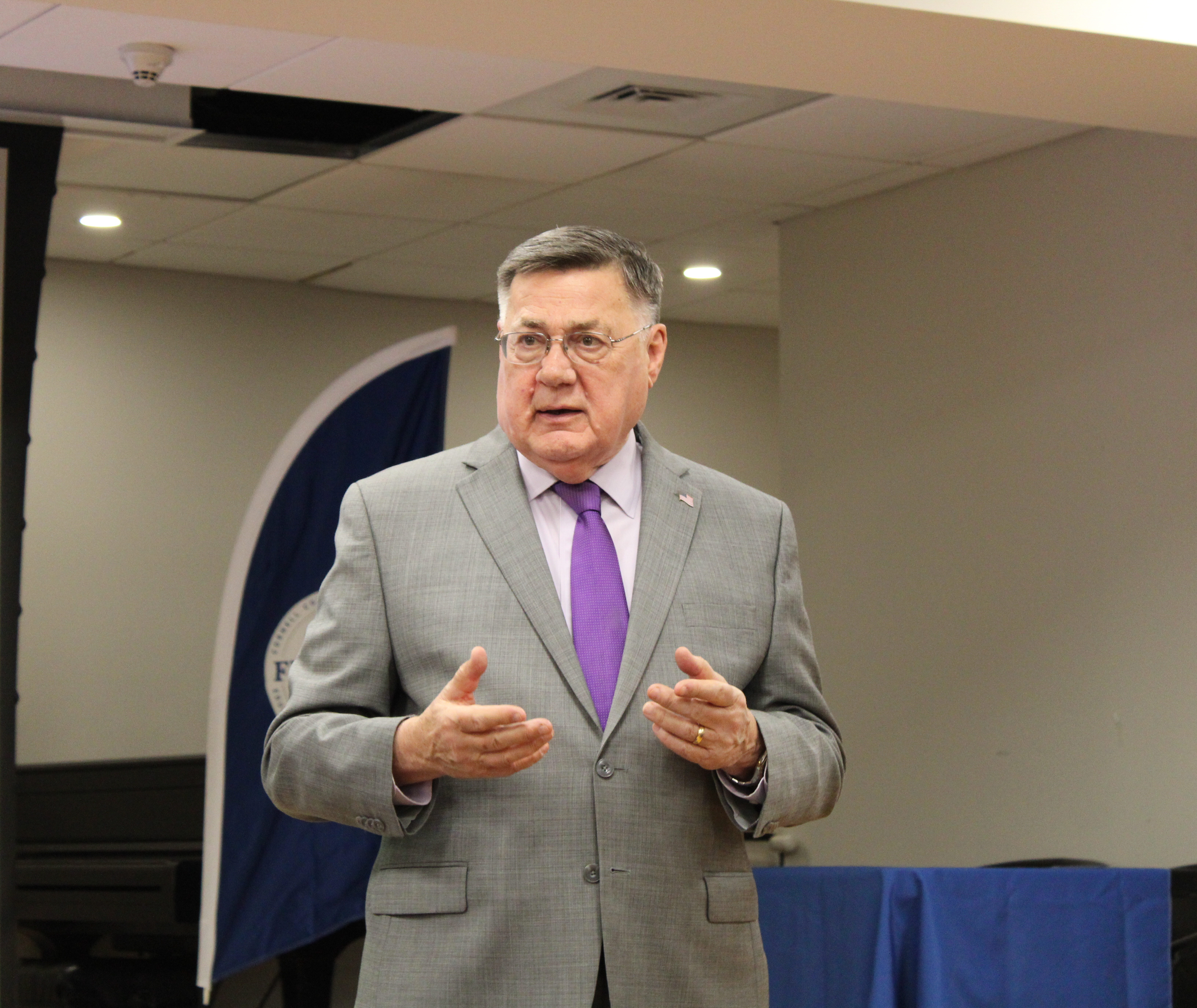
Sarah Lansdale, Commissioner, Suffolk County Department of Economic Development and Planning, and Ed Romaine, Suffolk County Executive, both spoke at the summit. (Photo credit: Sumayyah Uddin for New York Sea Grant)
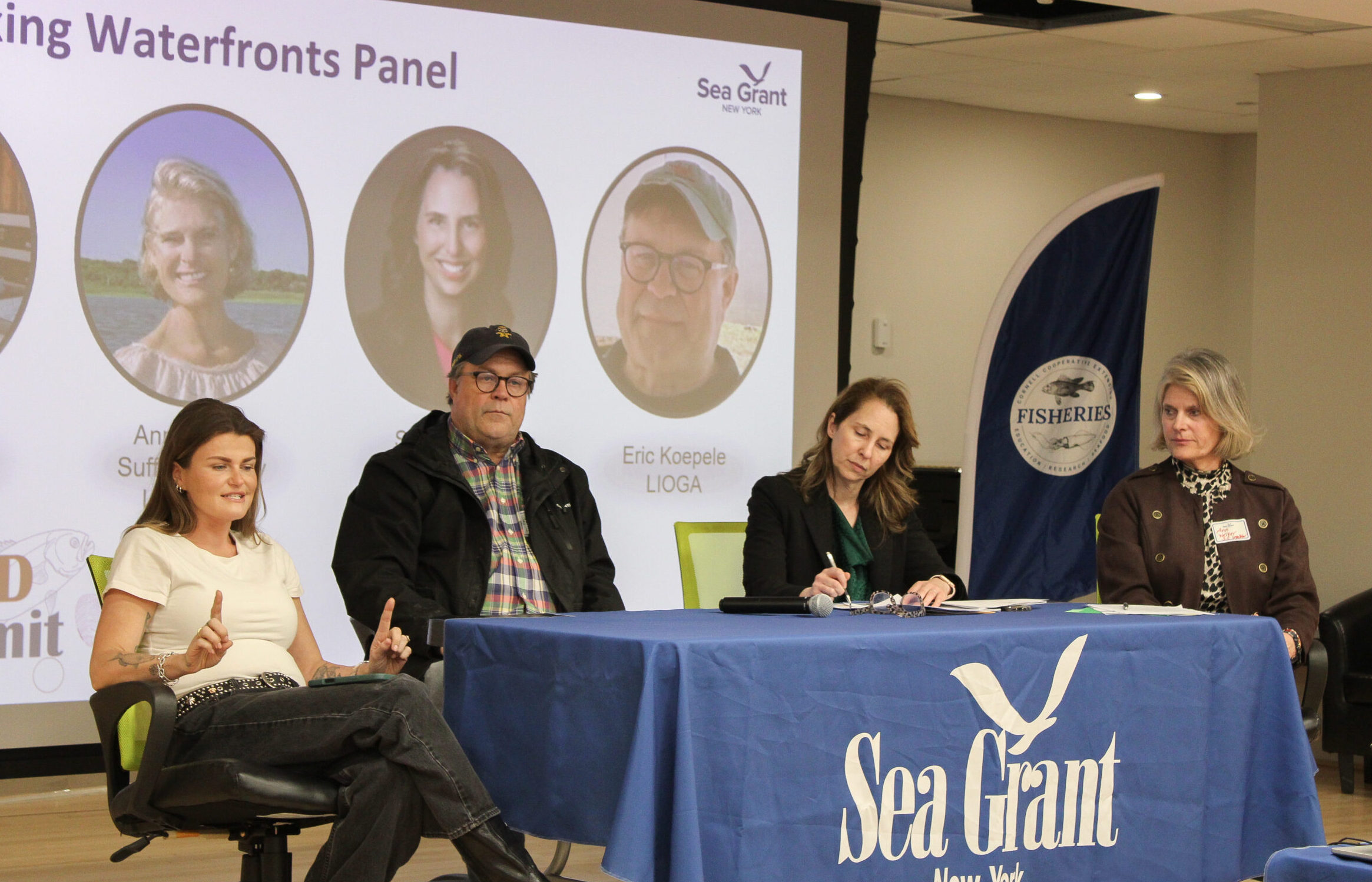
A panel discussion featured Lansdale, Amanda Jones of Inlet Seafood in Montauk, Ann Welker of the Suffolk County Legislature, and Koepele of LIOGA; topics discussed were commercial fishing quotas, fishing license transfers and high fuel costs, among others.
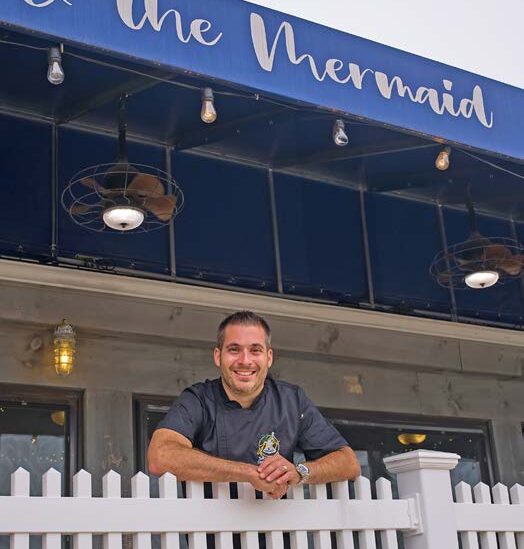
After the discussions wrapped up, attendees enjoyed local seafood tastings, including a tilefish chowder and fluke ceviche, with fish courtesy of Gosman’s and served up by chef Jerry Dicecco Jr. of Jerry and the Mermaid. Seaweed-based products like pickles and salsa added an unexpected flavor, and Jacob Feibusch of Davy Jones Shellfish Company shucked oysters for the group.


At the end of the afternoon, a line of fishermen formed to speak one-on-one with regulators, and many attendees downloaded the Seafood Cuisine Trail app with the intent of planning trips for fresh local seafood.
For those interested in diving deeper, the New York Seafood Summit is free and open to the public. More information can be found through New York Sea Grant and Cornell Cooperative Extension’s Marine Program.