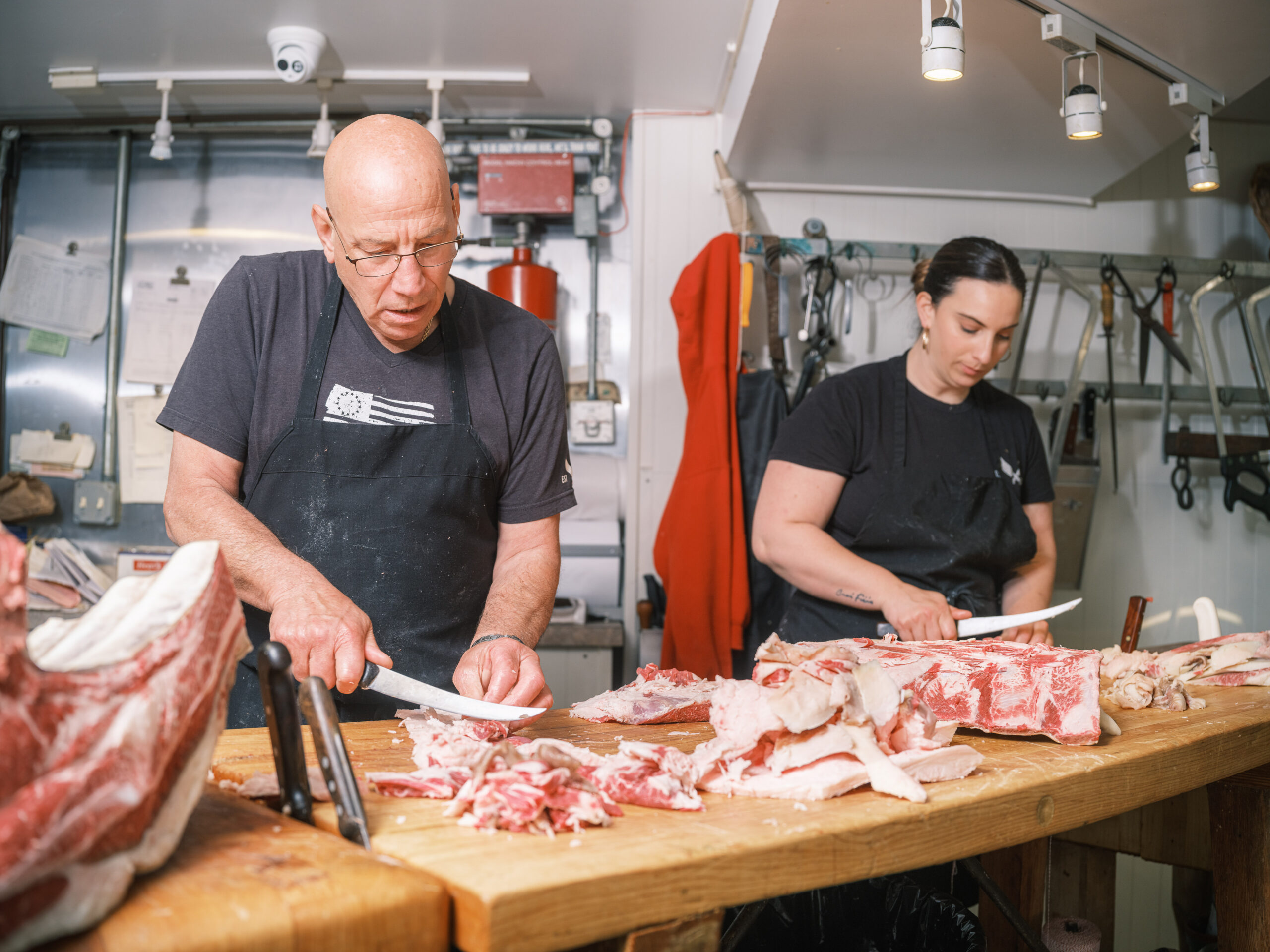
On the big butcher block behind the deli case at Wayside Market (55575 Main Road, Southold, 631-765-3575), Pasquale “P.T.” Rutigliano cuts up a steer, quarter by quarter. Hacksaws, a long rack of knives and a huge pair of steel shears hang on the wall behind him as he puts his weight into the effort, neatly trimming the fat as he goes.
“I don’t like a sloppy butcher,” he deadpans.
This particular animal, a red angus steer from a small grower in Connecticut, is being broken down to order for a customer who purchased half of it on the recommendation of Isabella Rutigliano, P.T.’s daughter and head butcher at the shop since 2024. The only female prime butcher on eastern Long Island, Isabella is following in the footsteps of her father and grandfather, the latter of whom owned a butcher shop in Center Moriches before he and P.T. pivoted to become a wholesale meat supply and delivery service for a multitude of once-thriving butcher shops from Brooklyn to Shelter Island.
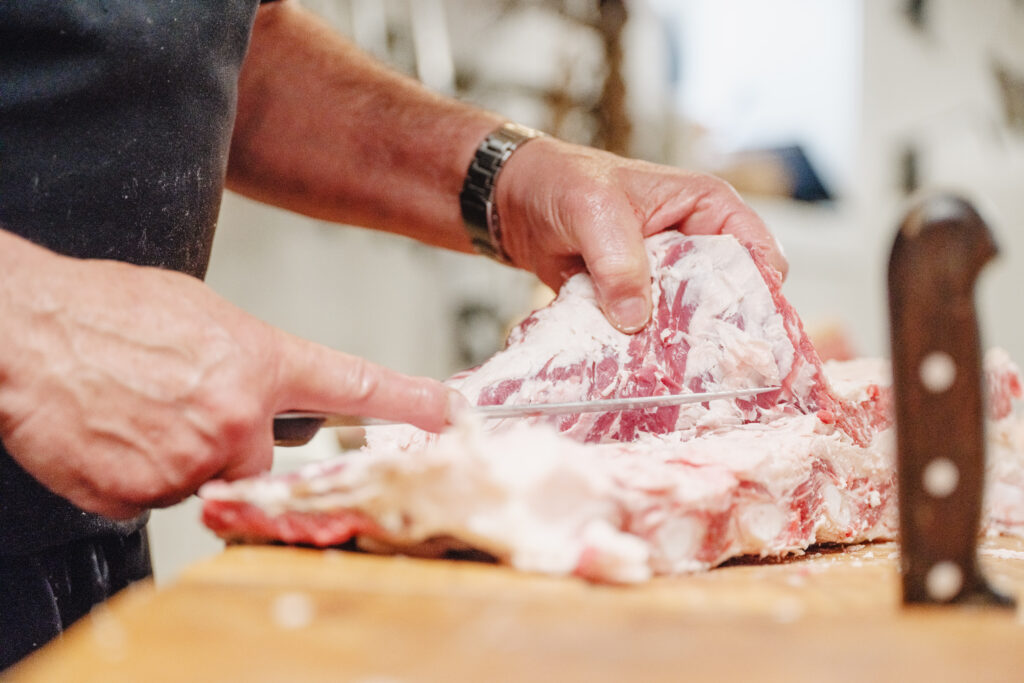
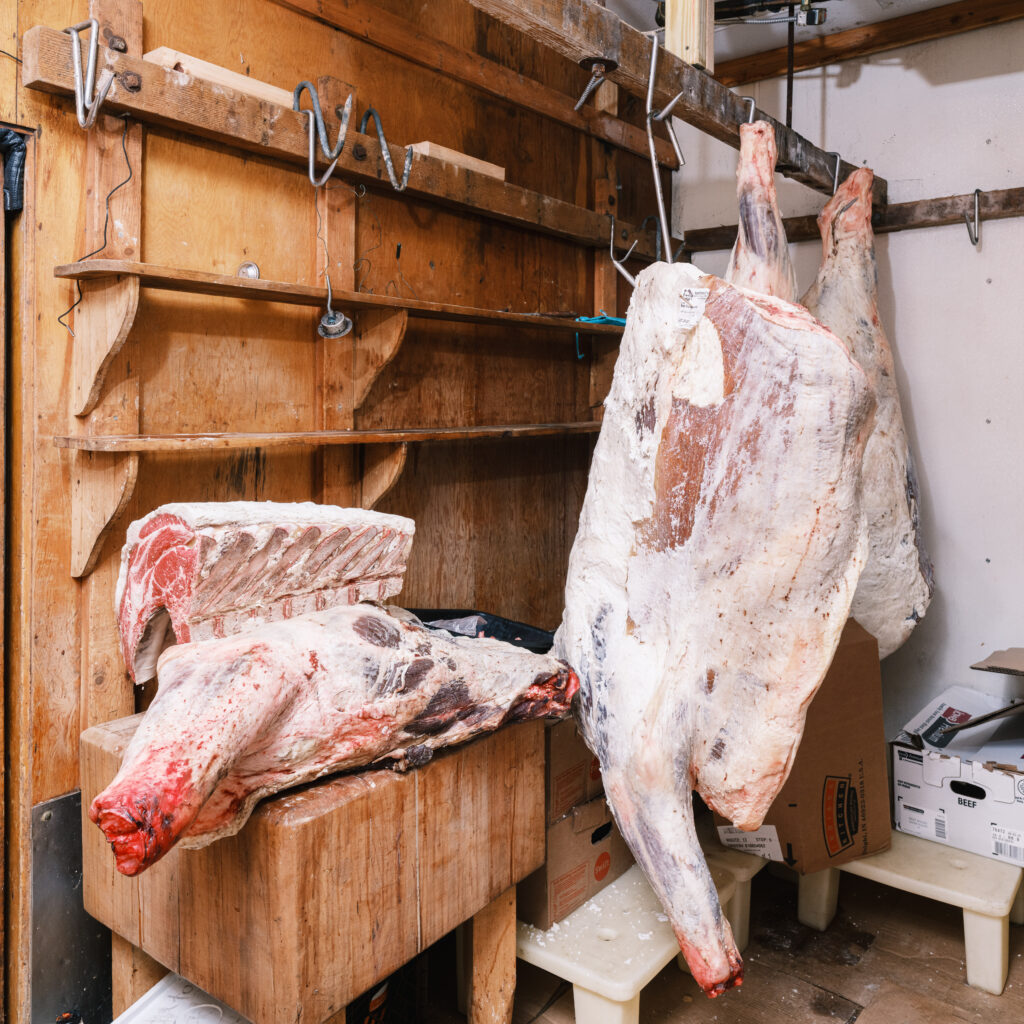
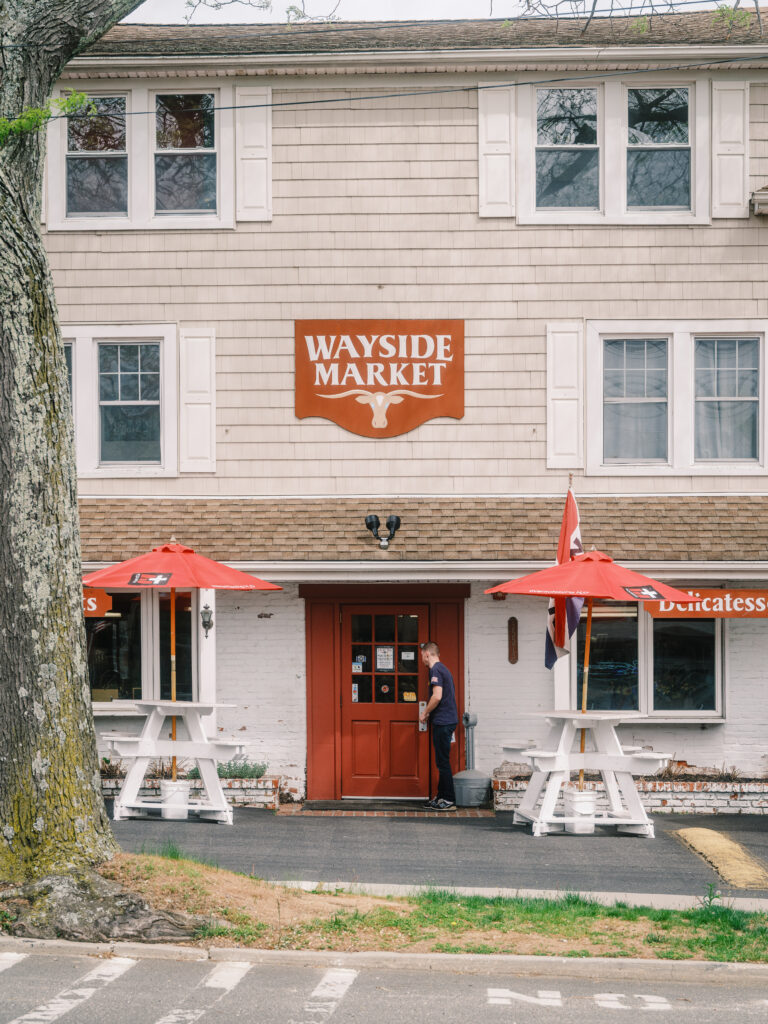
Wayside will butcher an animal to the farmers’ specifications, much as they have been doing since the 1960s. (Photo credit: Jeremy Garretson)
Once again, what’s old is new. Not only is Wayside Market bucking the big-box trend and keeping the art of proper meat cutting on the block, they’re also bringing back the once-prevalent purchasing habit of consumers investing in a whole, half or even quarter of an animal, proving that provenance matters — both in what’s bought and from whom you buy it.
Close to the Source
Buying in bulk from smaller farms, where more humane methods of meat production result in higher-quality protein and environmentally friendly practices, is attracting an increasing number of carnivore customers.
Isabella remarks that a recent buyer of a half-steer, Dr. Shah Ahmed, probably won’t have to buy meat for another two years. Ahmed, an anesthesiologist who lives in Riverhead with his wife and two young children, will receive about 300 pounds of meat — along with organ meat like kidneys and liver and about five gallons of beef tallow — when all is said and done. The other half of the steer will be processed and sold at Wayside Market in the form of aged steaks, roasts and chopped meat.
“There’s a human connection here,” Ahmed says. “I want to support local agriculture and regenerative practices. I trust Isabella to source me a [steer] personally… where I have a better quality of food at a good price and I can support a local farmer.”
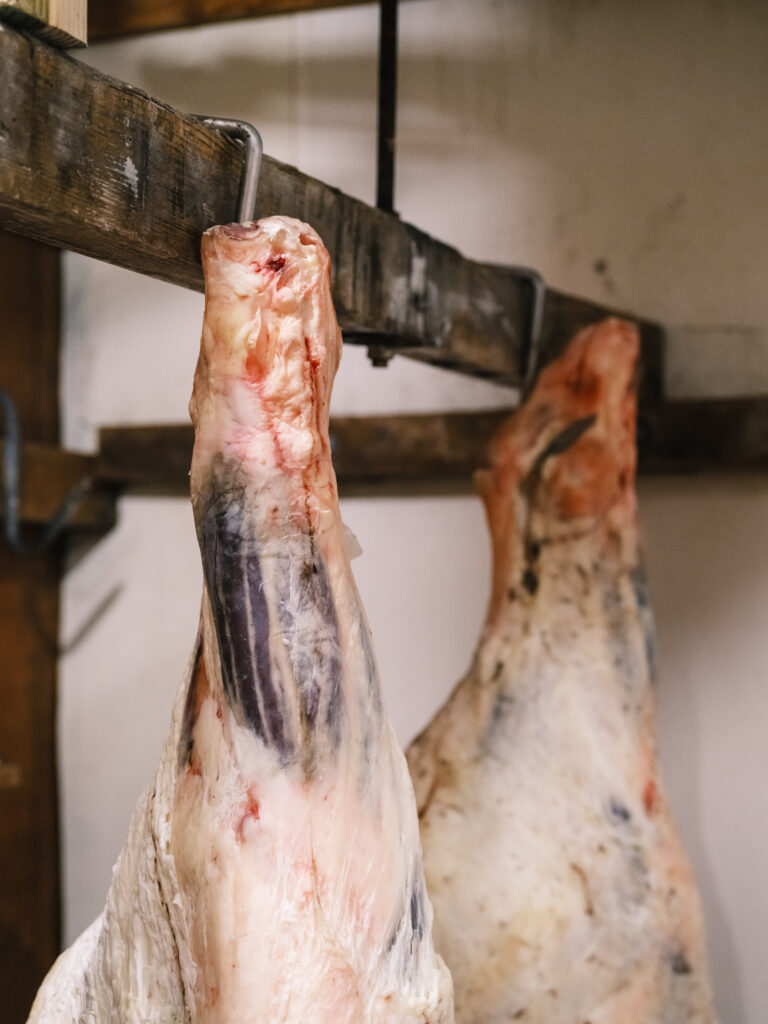
Isabella sourced the meat for Ahmed from a farm in Connecticut that she knows well. Not only do the animals eat a proprietary blend of feed grown right on that farmer’s 80-acre property, it also happens to be located right down the road from a meat processing facility. As the slaughter and processing of animals for food must be done in a USDA-approved-and-inspected facility, most farmers who raise livestock have to transport them far afield. The nearness of the processing plant to the Connecticut farm source means less stress to the animal and, according to Isabella, better-quality meat.
“My dad and I wanted to find a high-quality rancher — we didn’t want the lean meat; we wanted the prime meat that is more marbled. We want to keep the integrity of the product that we have in-house,” she explains. “It’s the feed that makes them more flavorful, and how they’re raised and treated. We know the conditions they are raised in, we know they are pastured and have minimal vaccinations.”
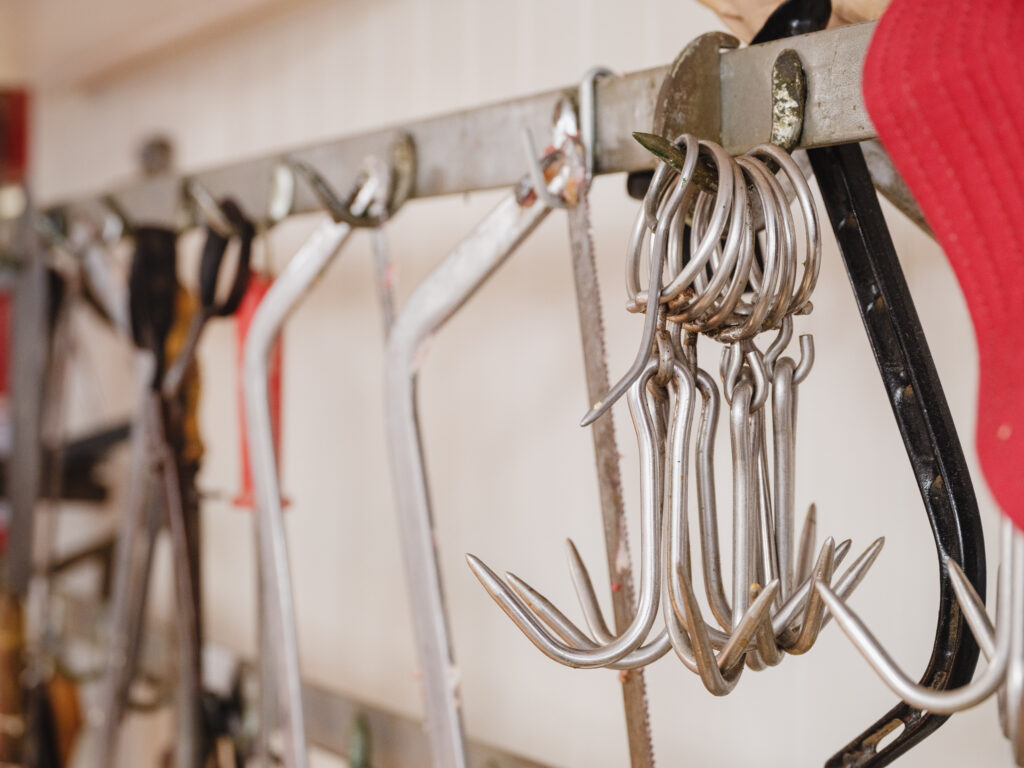
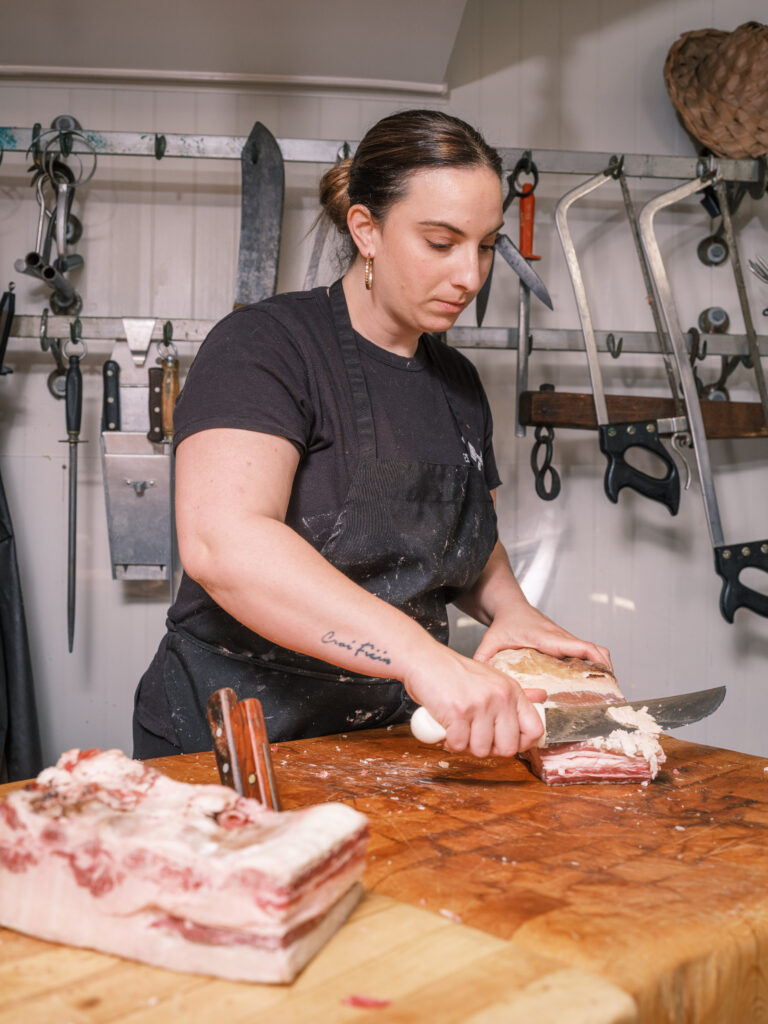
“We still use brown paper, we grind meat fresh. I’m a real butcher, meaning I learned from my father. I’ve slaughtered cattle, pigs, goats, chickens, rabbits — I’ve done all that” (Photo credit: Jeremy Garretson)
The Rutiglianos note that there are still some old-school farmers on the North Fork who raise their own animals. As long as those animals are slaughtered at an approved facility (for farmers here, that means the Berkshires or upstate New York), Wayside will butcher them to the farmers’ specifications, much as they have been doing since the business opened in the 1960s.
“It’s hard work — my grandfather literally broke down animals and whole forequarters all day long like a machine, and well into his late 70s,” Isabella says. “People don’t realize, but it’s tough work.”
How long does it take to break down a steer? After one is delivered from a USDA-approved processor in four quarters, it takes around five hours of physical labor to cut it up. Additional time is then spent rendering the fat into shortening or beef tallow and packaging the tallow and organ meat, tail and tongue.
Ahmed pays about $10.99 per pound for the meat — about a $4,500 outlay. He notes that he’s able to save quite a bit on the price of prime meat by buying in bulk. (Prime meat often goes for $30 per pound and up.)
“The average family can’t afford it,” he says. “But if four families split a steer and freeze the meat, that works. There’s no plastic… there’s less cost and waste involved and the quality is way better.”
Even when she’s not butchering on-site, Isabella’s mind seems to be turning to her chosen calling. As a side favor, she’s been known to help a few hunters, too, butchering deer for them in the winter the same way her grandfather did.
Chip Off the Old Butcher Block
Wayside’s four walls have seen many a business in their day. The building itself dates back to 1815 and, according to P.T., has operated under a multitude of purposes. It was a Methodist church, a gas station and an ice cream and candy store at different points in its history. But it’s been Wayside Market since the 1960s, when its first owner, Walter Adamson, opened its Main Road doors as a grocery and butcher shop.
Eventually, butcher Kenneth Ramsauer, who Adamson knew from his Bohack days — the supermarket chain once dotted Long Island — became a partner. He brought in another Bohack alumnus, John Oliver. Eventually, Oliver’s son, Scott, came into the business, too. P.T. became a partner in 1999 and bought the business outright in 2001.
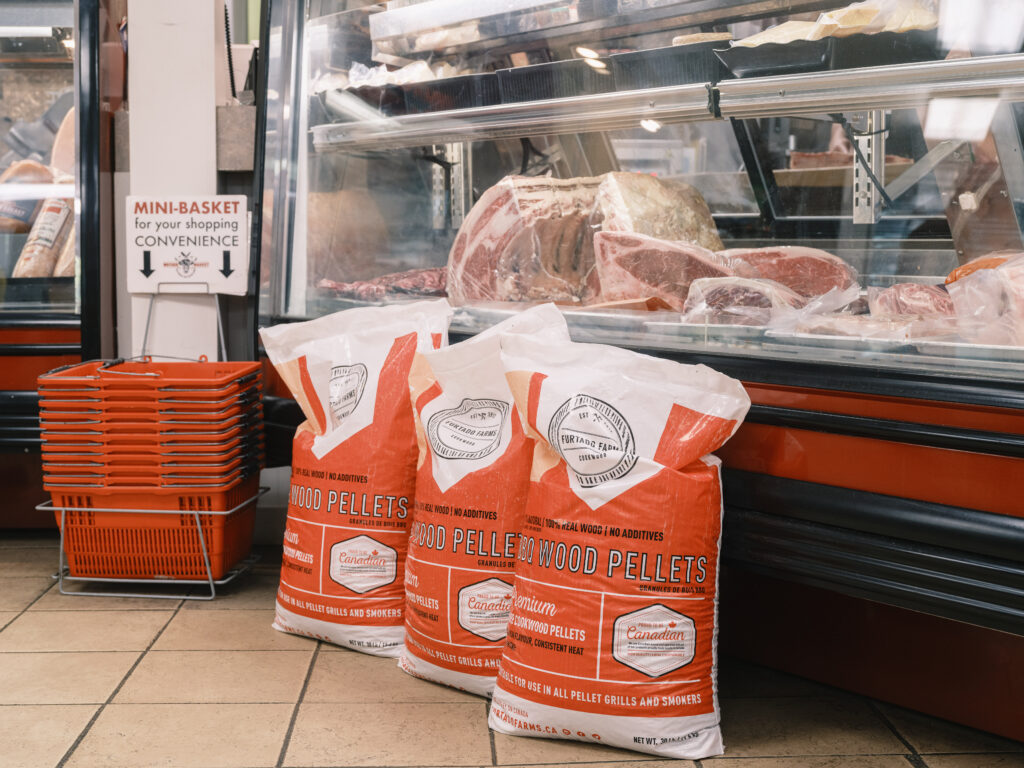
With close to 60 years serving the Southold community, it’s not unusual to see loyal fourth- and even fifth-generation customers coming in for everything from a little weeknight ground chuck for meatloaf or making requests for a grand Porterhouse or rack of lamb for special occasions and holidays. Sometimes, they just come in for cooking advice.
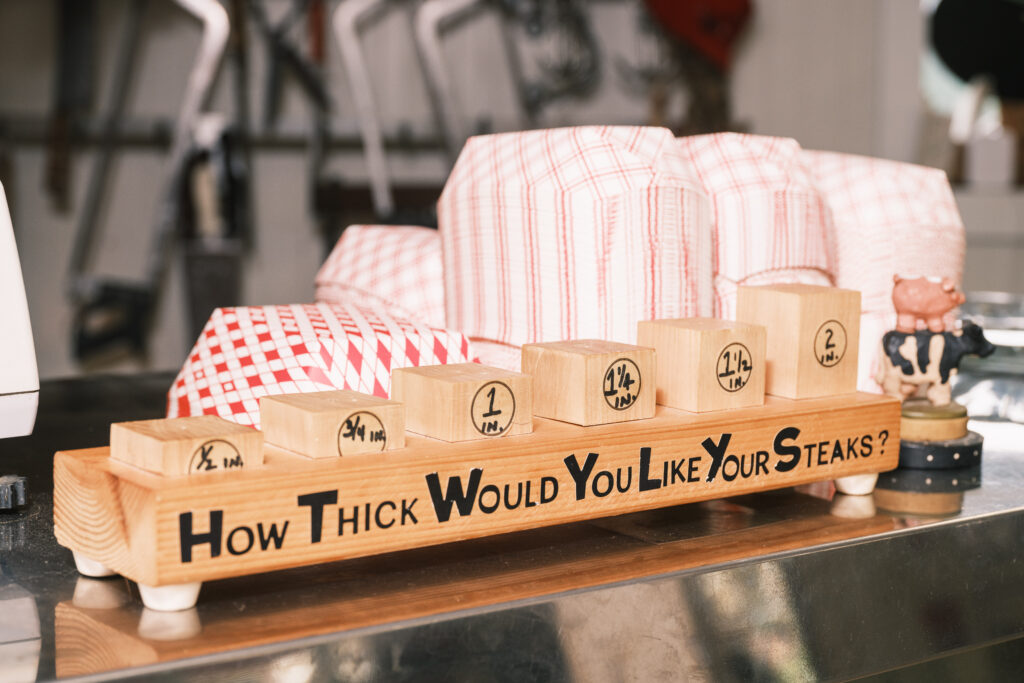
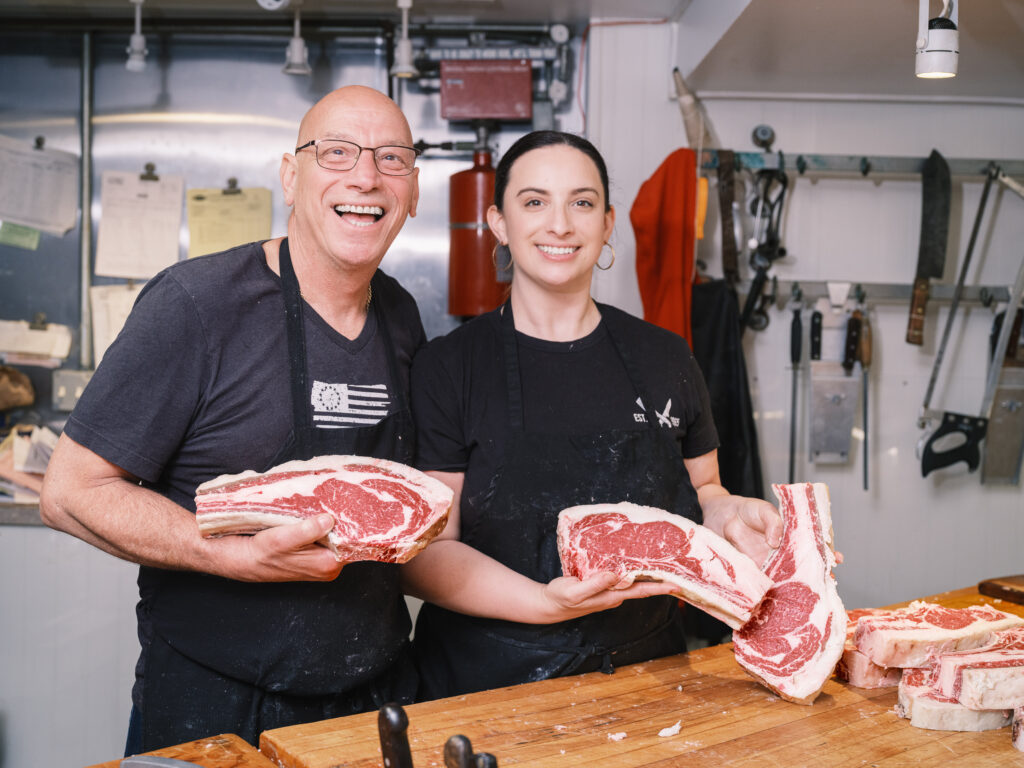
It’s not unusual to see loyal fourth- and even fifth-generation customers coming in for everything from a little weeknight ground chuck for meatloaf or making requests for a grand Porterhouse or rack of lamb for special occasions and holidays. (Photo credit: Jeremy Garretson)
“We still use brown paper, we grind meat fresh. I’m a real butcher, meaning I learned from my father. I’ve slaughtered cattle, pigs, goats, chickens, rabbits — I’ve done all that,” says P.T. “That makes me very unique, because I’ve done everything from soup to nuts. You can’t find anyone today who can say that.”
Anyone except, perhaps, his chip-off-the-old-butcher-block daughter.
“As a young woman, my dad didn’t really push me to go into the business. He wanted it to be an organic choice and he just did his best to keep objective,” Isabella says. “But I always loved it.”
After college, Isabella entered the corporate world but found it less than satisfying. When the COVID-19 pandemic hit and her father needed help, she felt something shifting inside her. “Timing is everything. I was bored behind a computer and behind a desk. I’ve always been a listen-to-my-gut person,” she says.
Instead of analyzing numbers, Isabella’s days are now filled with learning the particulars of meat buying and purchasing, including trips to wholesale meat markets with her dad. “It’s super exciting. It’s like full-blown Rocky, fast-paced and super early in the morning. It’s the floor of Wall Street for meat!” she laughs.
Isabella’s a parent herself now, and the notion that her son might one day want to be a fourth-generation butcher is something she could have only dreamed about a few years ago.
“Legacy is everything to us and it’s an honor I get to raise my son in a business and in such a loving and precious community that’s family-oriented,” she says. “It makes me emotional, really, because this is [my dad’s] life’s creation — this store is an extension of our family and our family’s legacy. Most don’t know that he’s a pilot; he loves planes. So I use an analogy with him all of the time: You took the plane off of the ground; I’ll take it to the next altitude.”