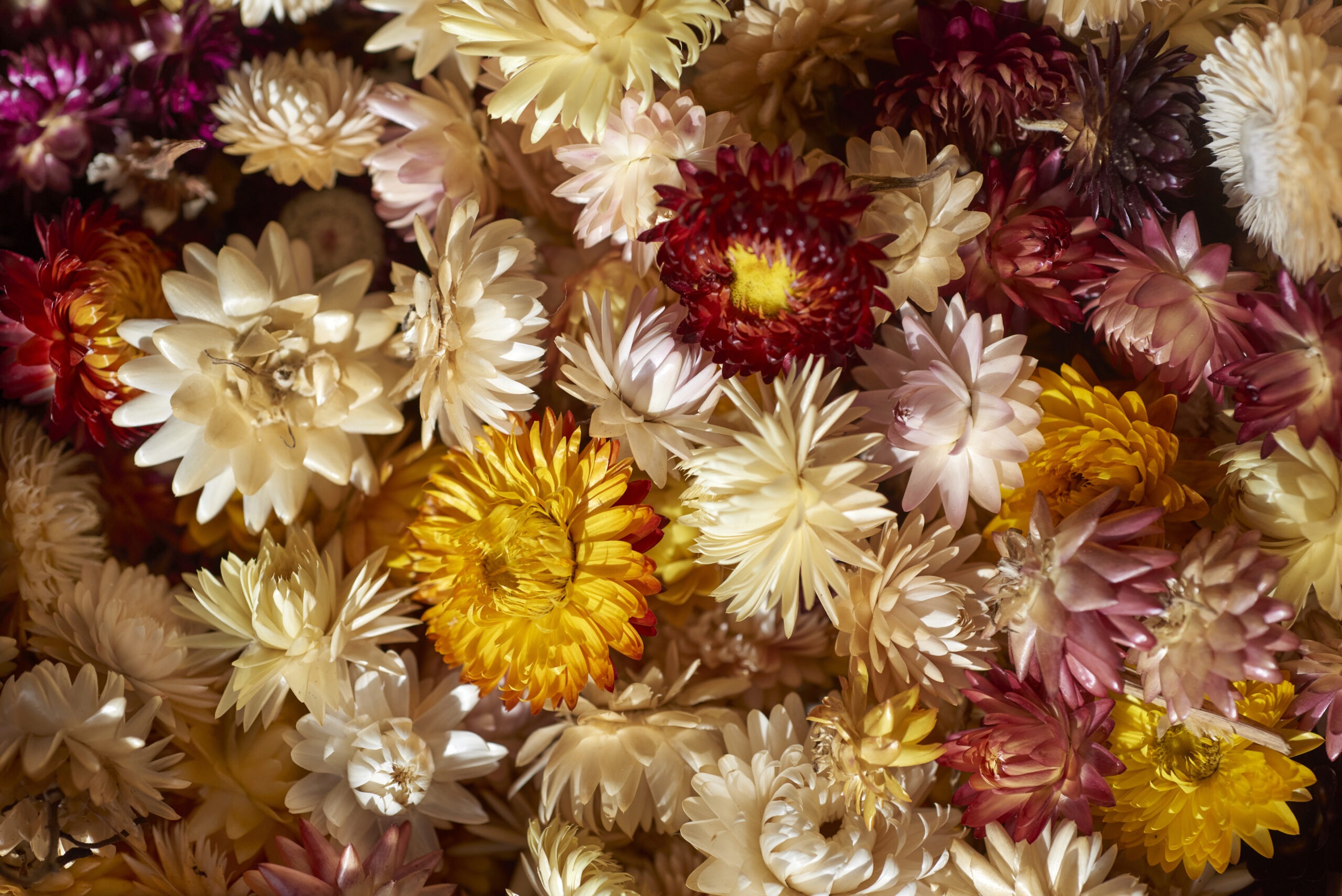
While petal perusing is certainly a warm-weather pleasure, one farm is thinking further along in the season to keep nature’s colorful glow on tables and doors in the gray months ahead: At North Fork Flower Farm in Southold, flowers and their cheery natural beauty are always in season.
Petal Power
After a busy spring and summer of providing fresh flowers for bouquet subscriptions, custom arrangements, flower pressing and arranging workshops, weddings and events, the team at NFFF begins drying flowers for use in the fall and winter.
Once referred to as “bouquets of winter,” dried flowers seem to be having a moment. They’re en vogue again for their traditional, eco-friendly vibe — something to which NFFF is well attuned.
According to a recent article in Florists’ Review magazine, “Dried flowers have experienced a resurgence in popularity in recent years, and it is not expected to slow anytime soon.” They’re low-maintenance and long-lasting and “are often chosen for their sustainable and ecofriendly qualities.”
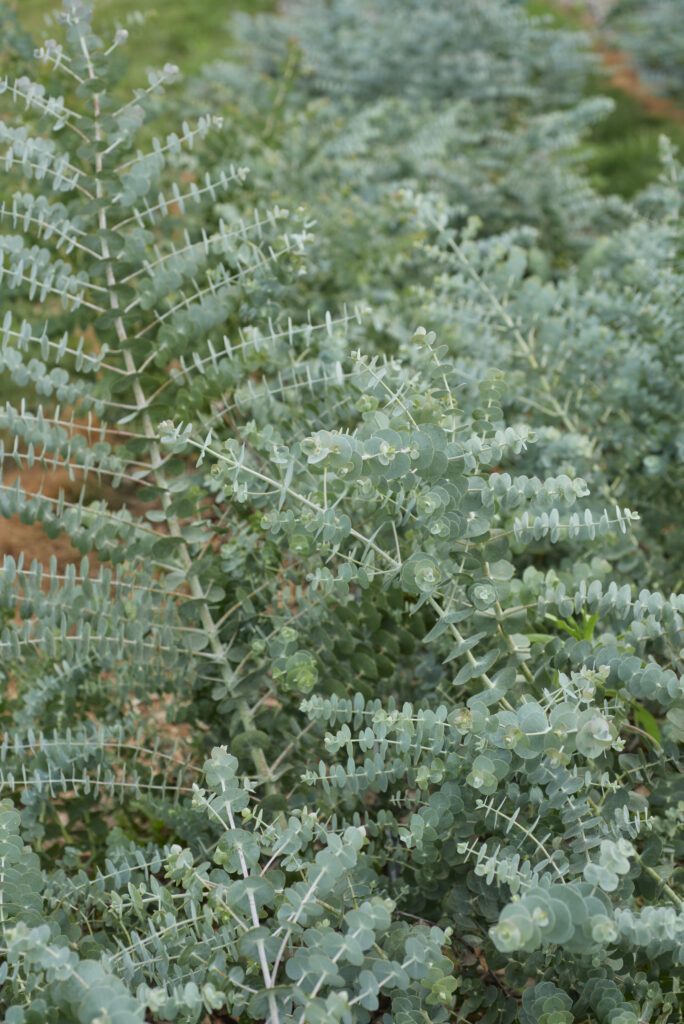
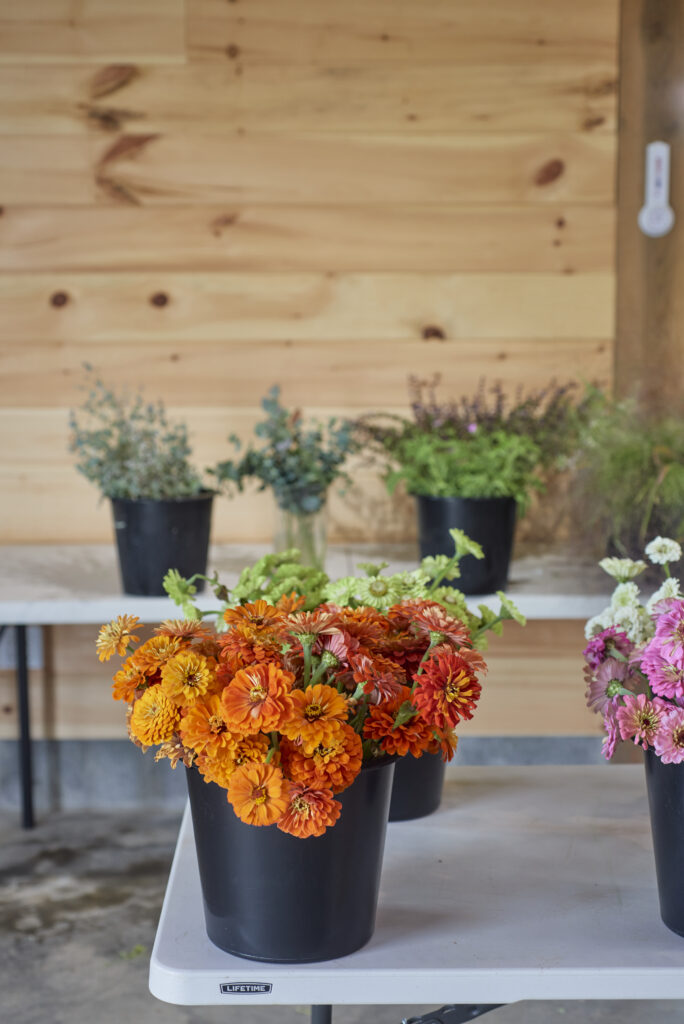
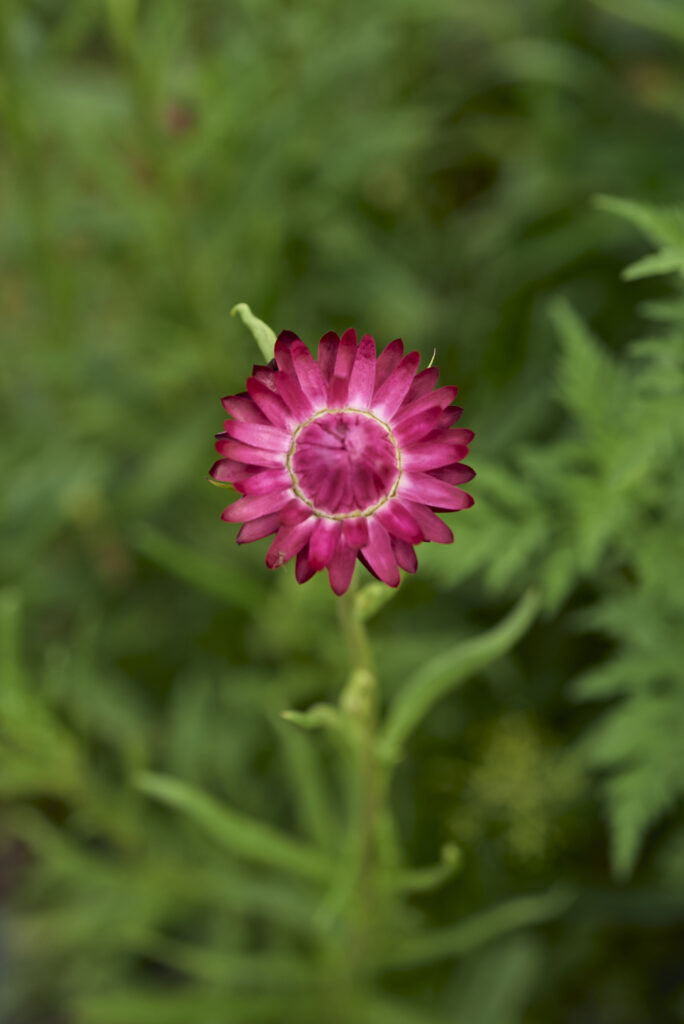
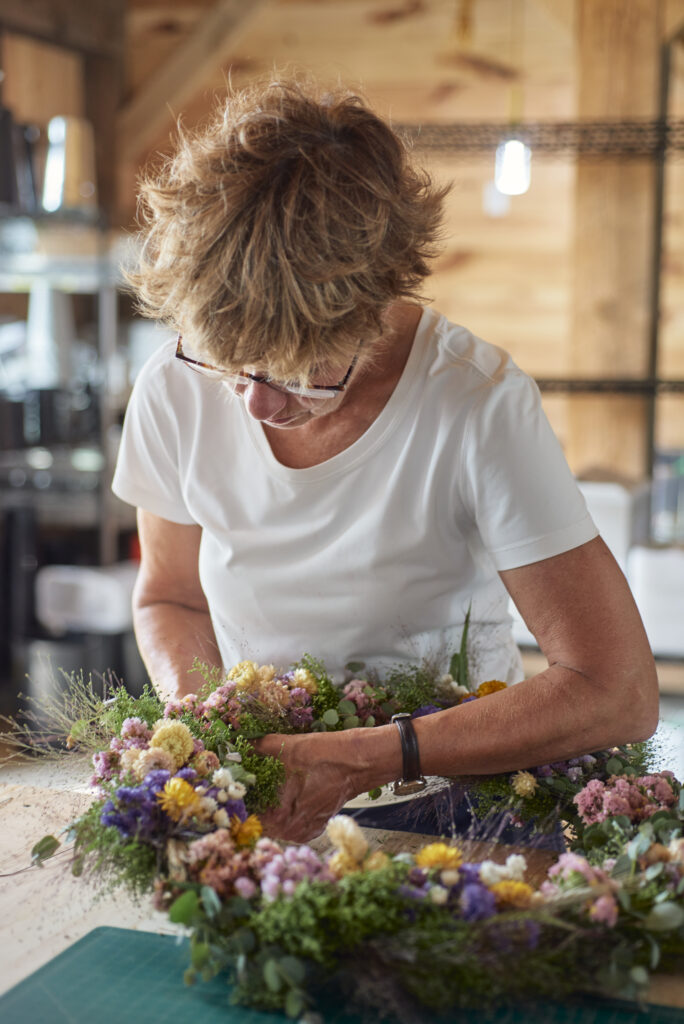
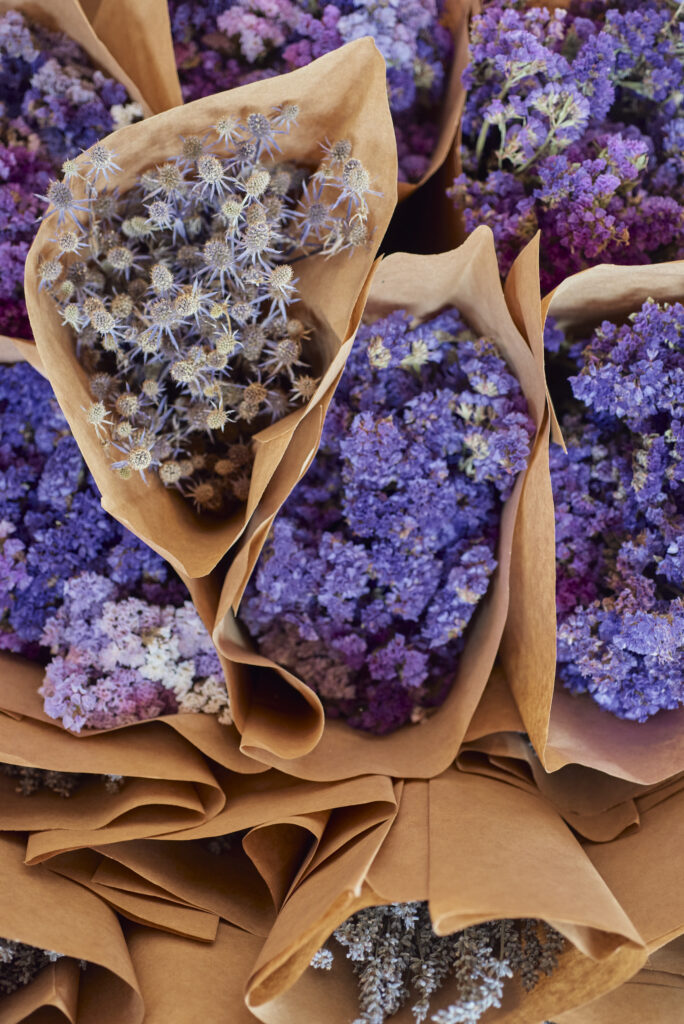
In autumn, the team at NFFF starts drying flowers for use in wreaths, seasonal decorations and bouquets that will last months, with a nod to folks who are looking to decorate their homes or tables with natural arrangements. They begin with summer flowers like zinnias, cosmos, foxglove, hydrangeas and sunflowers, giving way to fall favorites like dahlias, mums, asters, celosia, strawflowers, statice and marigolds. From all these beauties, NFFF makes dried flower wreaths, ornaments, flower crowns and bouquets.
“While the flowers are still more pliable, we hang them up as a small arrangement and people start buying them in September,” says Drianne Benner, one of NFFF’s owner-partners. “A dried flower arrangement is a nice gift and it lasts much longer.”
Founding a Flower Farm
Started in Orient in 2016, North Fork Flower Farm is run by three couples: Benner and her husband, Kevin Perry; Karen Braziller and Charles Sherman; and Al and Raquel Martinez-Fonts, all Orient and Cutchogue residents.
The idea for the farm blossomed when Braziller and Sherman met Perry and Benner at an Orient Association meeting they were hosting in their home. “Charles was with Karen, who was our neighbor, and he described himself as interested in finding a flower farm,” says Perry. “And I said, ‘Speak to my wife — she’s always wanted to have a farm.’ And two weeks later we were digging in the dirt.”
The farm quickly outgrew its rented space. In 2022, NFFF moved to its current location on 24 acres in Southold on what used to be the former Moffat Farm, known for growing Christmas trees — still evident in an advertisement on the side of an old barn on the property and the enormous, decades-old Christmas trees you pass as you enter.
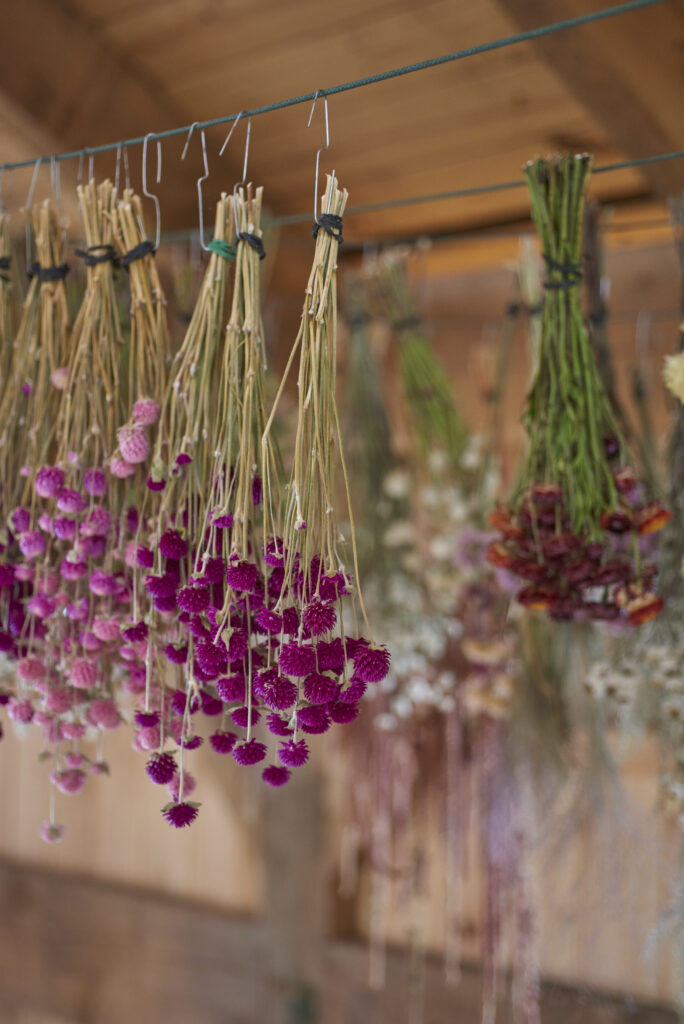
Six acres of the farm are now dedicated to growing over 300 varieties of flowers, herbs and grasses. But this isn’t willy-nilly flower plucking: a section of the flower beds are laid out with varieties intended specifically for drying, like strawflower, statice, gomphrena, lavender, craspedia, grasses, ammobium, hydrangea, and celosia in a wide spectrum of colors.
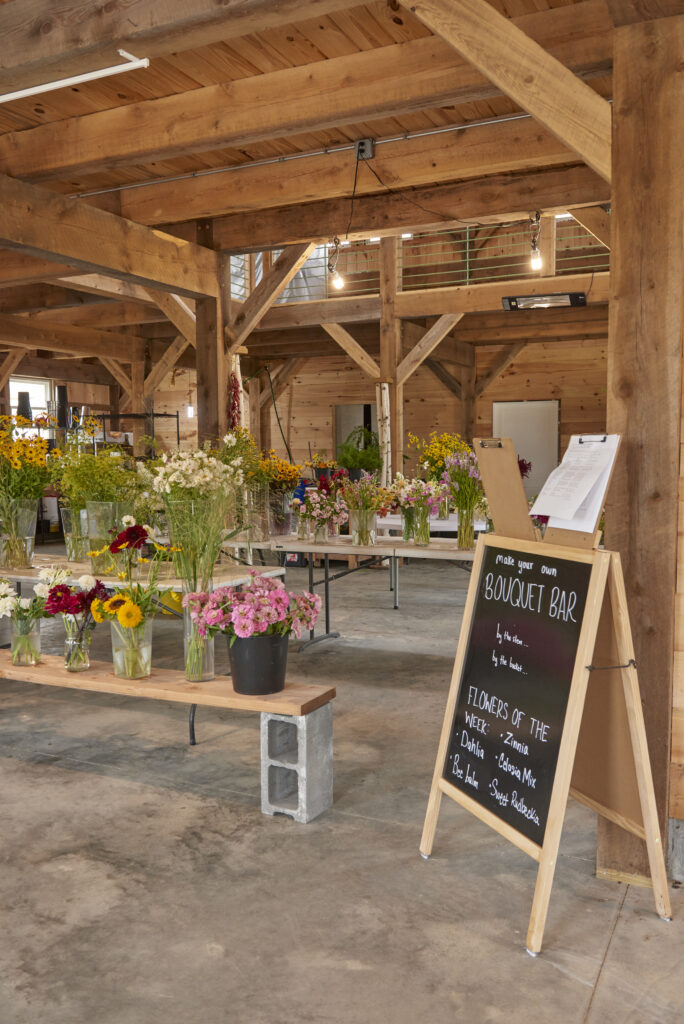
With the farm’s brand-new barn — designed by Perry, an architect by trade, that NFFF broke ground on in July 2024 — the power of NFFF’s flowers is here to stay, with the needs of both fresh florals and dried flower processing in mind. For the latter, the business employs a classic air-drying method, tying the stems together and hanging the bouquets upside down in a dark, dry place. It takes about three weeks or more before the flowers can be used in a wreath or arrangement. “It depends on the flower,” says Benner. “Some flowers dry faster than others, but again, we’re trying to speed up the process by keeping the humidity and light out… the colors stay more saturated in the dark.”
Airflow is important when drying flowers, which takes place on the barn’s second story. “We struggled with that in the past,” says Perry. “They need a dry environment with low light. We have slots running around the length of the building, so the air comes up and goes into that assembly up there and vents out.” Perry designed the building specifically with air movement in mind. “We have four ventilators [on the roof] which we control by rope,” he says. “It’s got a cap, so the rain doesn’t come in.”
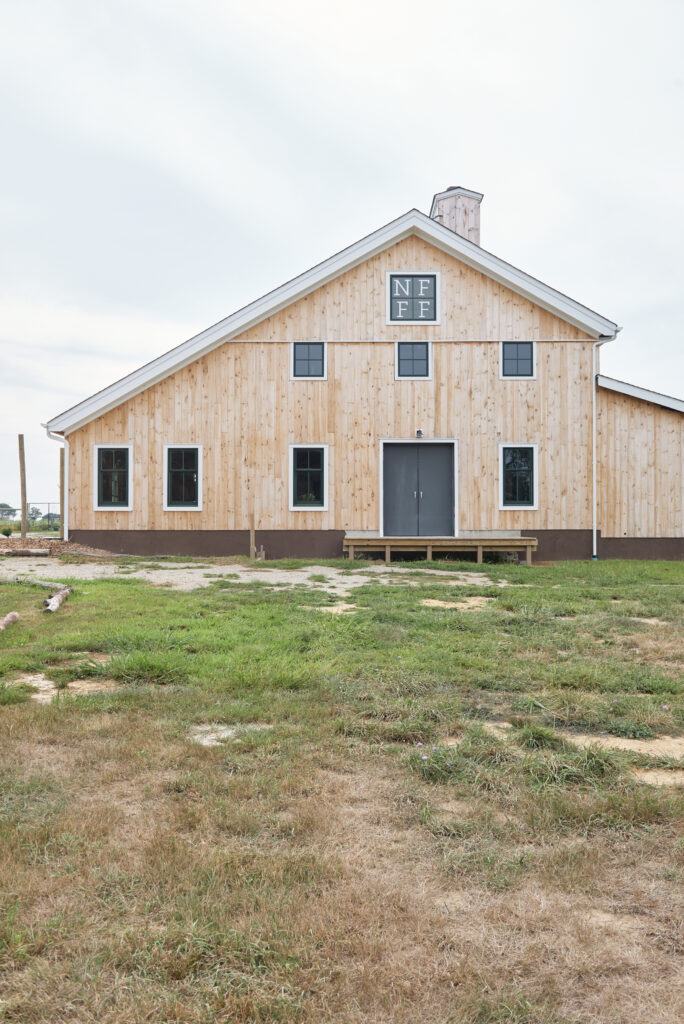
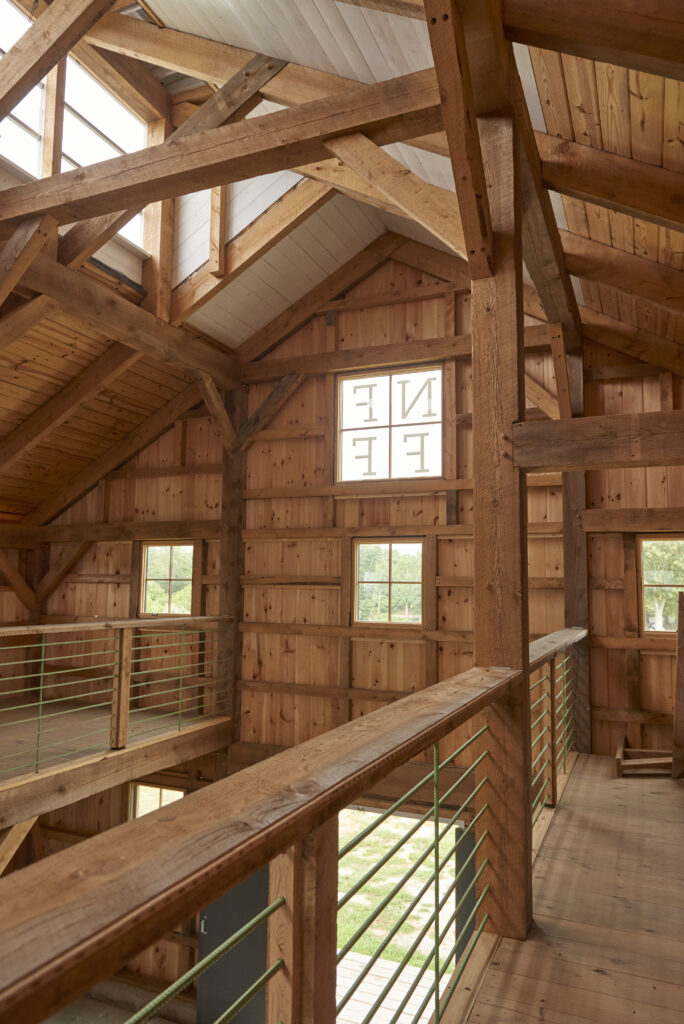
Natural light was another important factor Perry considered in the design. When drying flowers, colors can sometimes fade or even darken. White flowers can appear yellowish or brownish when the petals oxidize. Sunlight, or even indoor light, can fade hues, while humidity can encourage mold.
Natural light is not only an energy saver, it’s better for preserving the color in myriad blossoms. “When you work under LED lights, the color is a little skewed,” Perry explains. “Our designers are very picky about color and we are as well. Having a north light worked; it lit our space. You can work in here with the lights off on cloudy days and you’re not picking up a lot of heat.”
In addition to creating the ultimate environment for processing its dried flower inventory, NFFF’s new barn is used for workshops and classes. This month and in December, instruction on flower pressing will be offered, as well as wreathmaking and dried flower arranging workshops. NFFF is also thinking of adding classes about floral scents, natural dyes and hammering, which entails infusing a flower into a piece of fabric. “You take a fresh flower, cover it with cotton or linen and you pound it, and you get the impression of the flower and the color onto the fabric,” says Benner. NFFF also intends to offer a selection of framed pressed flowers for sale in the barn’s shop. And don’t forget: flowers — both fresh and in the form of dried arrangements — are an essential part of any holiday table and make great gifts for gatherings. “We do as much as we can with flowers,” says Benner, “and it’s a lot more than you would think.”
North Fork Flower Farm is located at 48455 Middle Road, Southold, 631-769-9678; northforkflowerfarm.com.