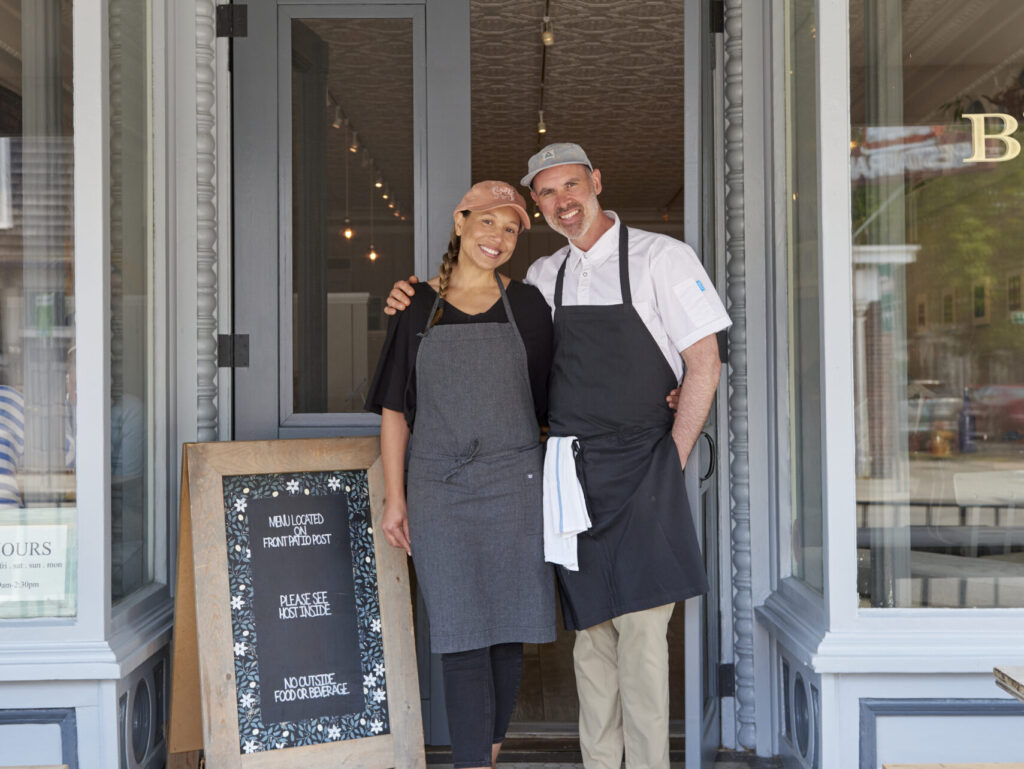
Wherever you go, there you are. For Scott Bollman — chef, fisherman, sometime salt harvester and all-around vegetable whisperer — that lens, born of a life lived on the East End, has deeply informed his path to the kitchen and what he presents through it. His Greenport restaurant, Bruce & Son, is known as a stylish, popular daytime dining spot, celebrated for its farm-to-table philosophy and downright revelatory dishes.
For this North Fork chef, making time to march to the beat of his own drum is vital. In his restaurant and in his life, it’s about honoring the place that formed him and appreciating where he and his wife live and work.
Becoming ‘Wine Country’
Bollman grew up in Southold with the kind of idyllic childhood parents dream of giving their kids. “In the early ‘80s, Greenport became the place where I spent most of my time—biking around town, diving off the docks, and getting into a bit of mischief along the way,” he says.
Longtime residents like Bollman will tell you that Greenport was very different then from what it is today.
“Greenport was rough around the edges … It was a hardworking, blue-collar town. Everybody knew everybody,” he says. “It was its own little world.”
Bollman’s dad, Bruce, had been a summer resident of the area for 28 years before moving here permanently. While still living in the city, he’d managed the famous Sardi’s restaurant in Manhattan, but on the weekends he noticed a flow of city people, like him, heading east in the summer, as well as the influx of grape vines overtaking potato and other crops.
“The reason why my father opened up [his shop] was because of the wineries, which were a big draw. It was starting to happen—it was becoming wine country,” Bollman continues. And, his dad reasoned, if people wanted to hang out and drink wine, they would need specialty items to go with it.
Bruce opened his market, Bruce’s Cheese Emporium, 51 years ago—the first of its kind in working-class Greenport. Situated just off Main Street, the tiny shop had a cheese case and a counter and eventually added a small café, which offered freshly ground coffee. Scott’s mom, Maryann, researched cheeses and baked cheesecakes and other desserts for local restaurants out of the café.
“On Sundays after church there would be families; the old-timers bellied up to the bar reading their papers. It was a magic time,” says Bollman. “Being in a place for so long, you see the growth of a town. Back in those days there were so many characters.”
Bollman worked with his father in the family business on and off throughout the years. “It wasn’t always easy, but it’s what sparked my interest in food,” he says, “and for that I’m forever grateful.” Bruce’s Cheese Emporium moved to the storefront that is now Land Shark and eventually to the space next door, where it is today.
“There wasn’t anything Bruce Bollman couldn’t conjure up that wasn’t fabulous,” says Lori Luscher, a frequent customer and former East Marion resident. “Muffins, cheeses, coffee, and let’s not forget those warm breads.”
Those flavors and aromas began to work their way into the younger Bollman’s plans. He graduated from Southold High School and moved to New York City, where he landed a job in a restaurant kitchen and enrolled in the New York Restaurant School.
“I found that putting your head down, working hard and becoming a sponge for knowledge was worth more than any piece of paper. Networking through this community in the early days was adrenaline-filled. I was all in,” he recalls.
In restaurant kitchens, Bollman noticed there was often a disconnect with food and where it came from. Since he had worked on farms as a kid (Krupski’s, to name one), he was much more familiar with fresh produce than most kitchen staff. Eventually, his path took him back east, where he rejoined the family business, partnering with his father in 2012 and bridging the gap between chef and farmer/fisherman.
On The Fly
On the East End, Bollman found a richness to life that continued to influence his work in the kitchen and experiences far beyond it. He’d always fished as a kid, borrowing his grandfather’s bamboo pole to fish from the Bay Avenue bridge in East Marion. His interest in fly fishing took root on a local beach when he ran into a man who recognized him from the restaurant. That conversation, with fly fishing captain Bruno Carullo of NOFO Outfitters, led to his introduction to the sport. Along with Captain Vinny Catalano of Long Island Fly Fishing, the fishermen became fast friends.
“Scott fishes for all the right reasons,” says Catalano. “For him, it’s not always about catching the fish, but immersing himself in being out on the water and being part of what’s really happening out there. That’s also what makes him a great fisherman and friend.”
A day out fishing enables one to connect to nature in a visceral way.
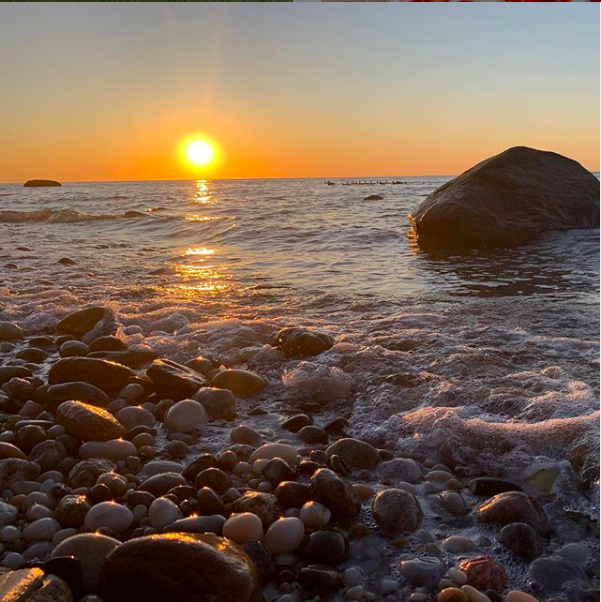
“It’s a beautiful thing,” says Bollman. “You find yourself in some little cove in an undeveloped area off Shelter Island or Sag Harbor and it’s so quiet your ears are ringing; all you hear is nature.”
All that time spent on the shore spawned a new connection between the North Fork’s natural resources and his chosen career. Around 2011, Bollman started a venture to harvest sea salt. “I thought it was such a special thing,” he remarks. “This is something that I can do in my profession that puts me on the water.” Through much trial and error, North Fork Sea Salt was born.
Just as terroir describes the specific environmental conditions that give grapes a certain flavor, “merroir” refers to how a particular marine environment influences the taste of seafood. Indeed, multiple variables affect salt’s quality: humidity, weather, salinity, location and the tides—and the long, slow cooking process sometimes takes up to 24 hours to produce the perfect pyramidal crystals Bollman was after.
“I kind of fell in love with it and created a great product, which took off unexpectedly,” he says. “I tried to keep up with it, and then my father offered to sell us the business.
Restaurant Restart
Bollman partnered with his father in 2012 and the duo changed the name of the business to Bruce & Son. Bollman turned North Fork Sea Salt over to his partner Dennis Borowsky, a fellow fisherman and salt maker he met on the beach; today, Borowsky is an important part of the Bruce & Son staff, where he’s worked as a server for several years.
Bollman married his wife, Kassata, in 2013 and she became a partner in the business. A trip they took to Australia inspired a flood of creative ideas for Bruce & Son.
“We spent a month traveling through Australia, New Zealand and Indonesia. That trip really inspired me,” Bollman recalls. While in Australia, the couple took note of the daytime café culture that had started there in the early 1990s—relaxed, healthy and hip, with many Australians preferring to eat brunch or lunch in place of dinner, and often al fresco (it’s even rumored that the avocado toast trend got its start here). Many of these restaurants had no liquor license, instead flaunting a high-end, creative coffee program.
“One thing we noticed about Australia was that their dining scene was really big during the day. That really drew us in; we ate a lot of food, and we loved what they were doing. When we came back, we thought we would turn this place into a ‘daytime restaurant,’” says Bollman.
In 2017, Bruce & Son was completely renovated, with the couple doing away with the retail portion of the business and implementing a rustic, minimalistic aesthetic—and a menu that served just morning and midday meals.
On The Menu
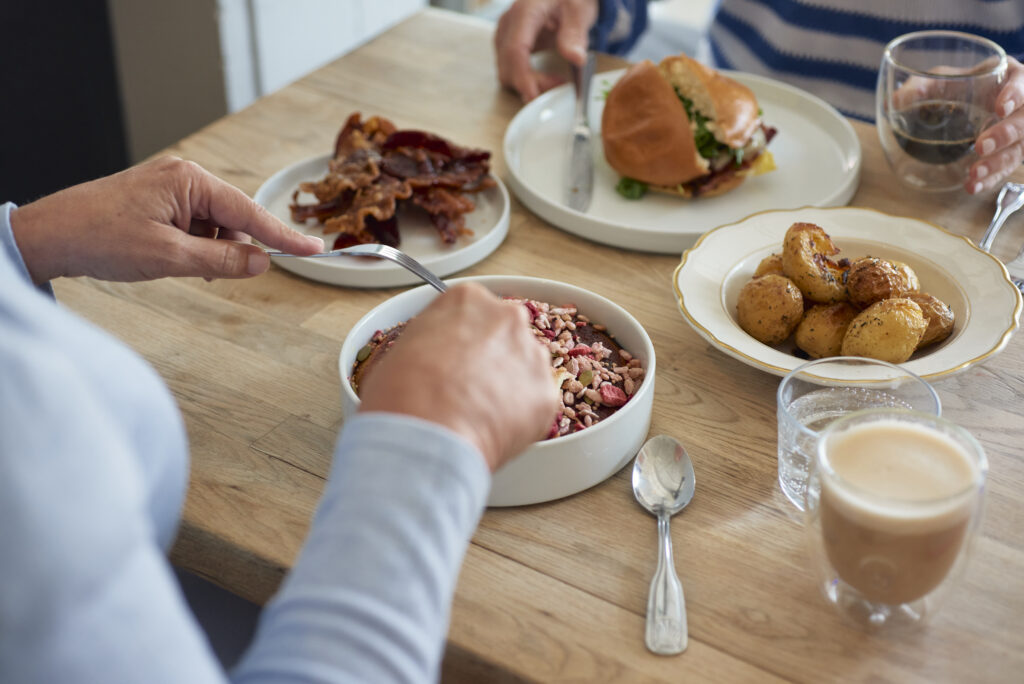
Bruce & Son is lauded for its brunch, stacking up many awards over the years. Despite Bollman’s penchant for fishing, fish is rarely on the menu, save for an occasional dish like the open-faced pickled bluefish tartine sandwich, served with horseradish cream, shaved fennel and fresh herbs. One fantastically creative veggie-centric dish served at the restaurant is the carrot “lox” tartine, which looks like typical smoked salmon but is actually a thinly sliced smoked carrot served on toasted sourdough with labneh, shaved onion, caper, dill, and lemon—an offering so deceiving the servers make a point of reminding those who order it that it is not actually fish.
“We’re veggie-forward,” Bollman says. “A main reason is because it is daytime, it is light and it is healthy… it’s great to work with vegetables and play around to create something different. For us to serve a maitake mushroom French dip that you wouldn’t even know isn’t beef is kind of a cool concept.”
When I dine out and have food like that, I smile—that’s clever, that’s interesting, that’s fun, and it’s a reason why I would go back to a place for a certain dish. We tend to keep people on their toes.”
One standout dish that customers are obsessed with is the egg sandwich, made with sugared bacon and a folded omelet topped with pickled onion and Gruyère. The innovative beverage program, run by Kassata, features a range of hot and cold brewed coffees and teas, along with mushroom or turmeric lattes and Vietnamese egg coffee. The cocktails, too, are deliciously thoughtful, like the Bourbon Latte, served hot or iced and made with espresso, honey, oat milk and bourbon, and the jewel-like Negroni, made with tea-infused gin and orange marmalade.
Finding Balance
The restaurant business can be tough, with stressful working conditions and a high failure rate, and the added blow of the Covid pandemic in 2020 hit the industry hard. The Bollmans took the slowdown as an opportunity to focus on their respective interests, with Kassata tapping into her background in broadcasting to start a podcast called “Have You Eaten Yet?” featuring chefs, artists and restaurateurs from all over the world.
“It was created out of a need to connect with other restaurateurs to see how they were navigating the unknown at that time,” Kassata notes. The latest episode (her 59th) is with Charmaine Mchugo, co-owner of the Michelin Green-Starred restaurant Chapters in Wales. Past guests include sommelier Charles Carron Brown, of London; Jim Sullivan, a food and lifestyle photographer from Southern California, and chef Simeon Hall Jr. from the Bahamas.
After the pandemic, the couple scaled down the restaurant’s hours, going from a seven-days-a-week schedule to a more manageable five. “We’re able to travel and take care of our staff,” says Scott. “Everybody has a clear head when they come in on Thursday.”
The restructuring of their work-life balance has put the Bollmans in a good place, where they can remain focused on what they do and stay inspired by the world outside their door.
“Change isn’t easy,” says Scott. “We [acknowledge] impermanence and are grateful for every day and every person who has supported us.” Indeed, the latest iteration of Bruce & Son is focused on a more balanced, community-based lifestyle, just as Bruce Bollman lived all those years ago.