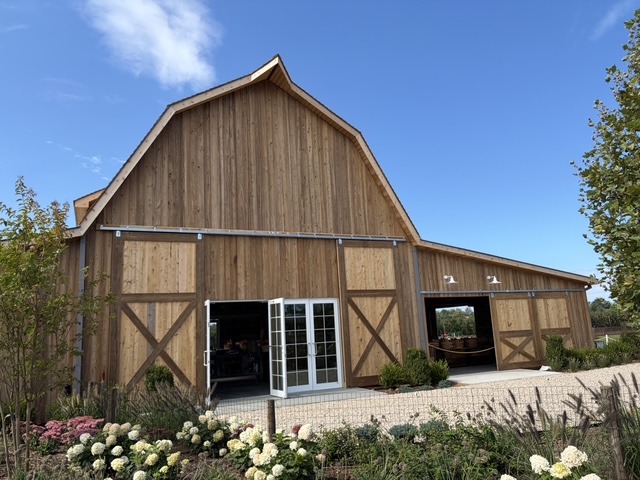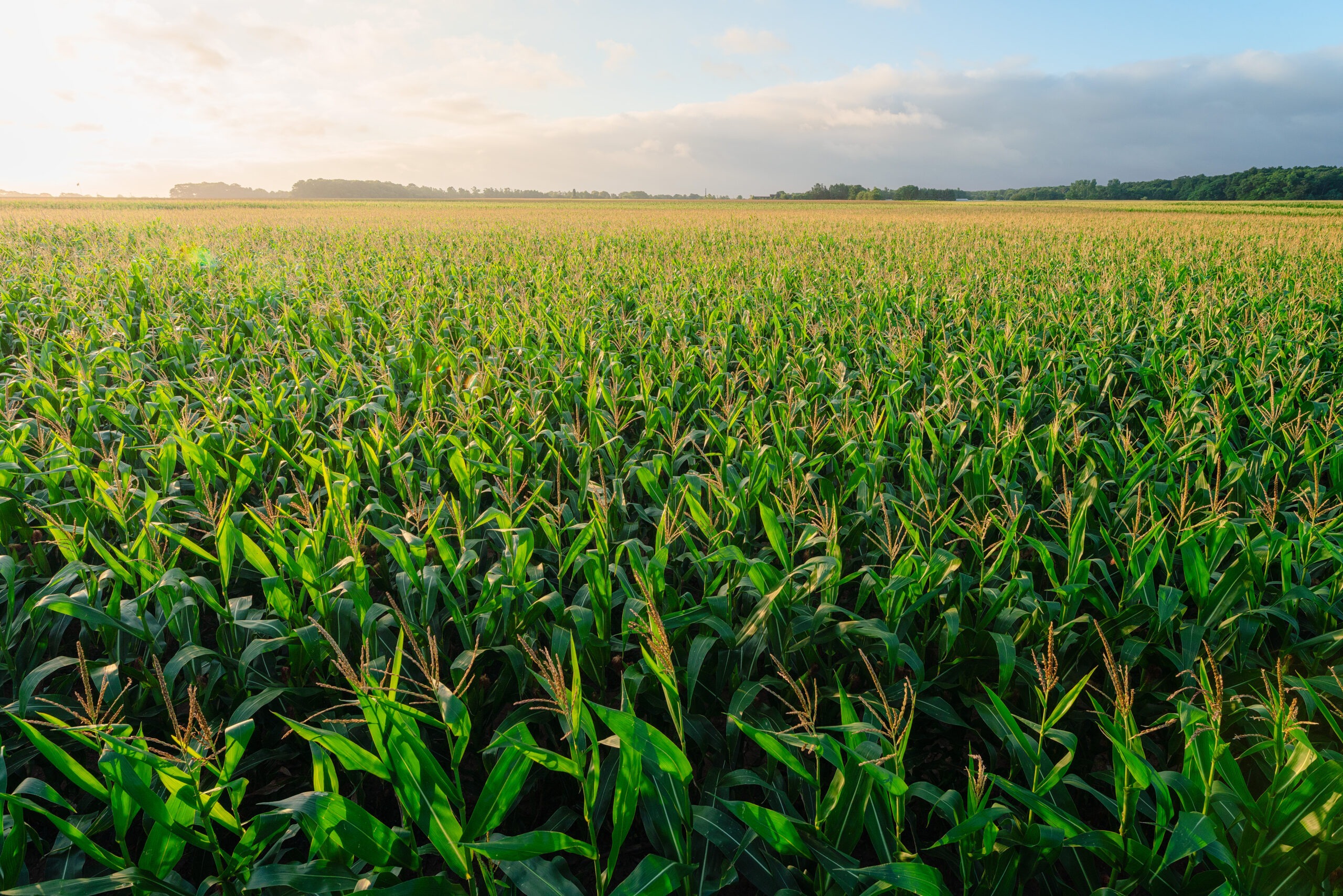
Erin Stanton, owner of Orient’s Latham Farms, still lives in the house that her father, Daniel Latham, a legacy North Fork farmer, grew up in. “We put our first planting of corn in very early this year,” she says. “You kind of have to wait for the weather to present the perfect conditions, where the fields have dried out a little bit.”
Latham’s plants corn earlier than some of the surrounding farms, covering their first two plantings with plastic to create what Stanton describes as a “mini greenhouse effect,” which promotes growth in the chilly first days of spring. “You can always expect corn on our farm stand for July Fourth weekend,” she adds.
Like many of the other farms that grow corn on this part of Long Island, Latham Farms grows different varieties with varying gestation times. Short-day corn, Stanton says, matures in about 68 days and is planted first. The farm doesn’t plant any genetically modified corn.
At Sang Lee Farms in Peconic, corn is also not genetically modified, says Lucy Senesac, the farm’s co-owner. “We have two varieties that have different maturity dates,” she notes, adding that they mature about a week apart so that the corn isn’t all ready at the same time. “Corn is ready when it’s ready,” she says; it has to be harvested — and enjoyed — when it’s at its prime.
Picking Prime Ears
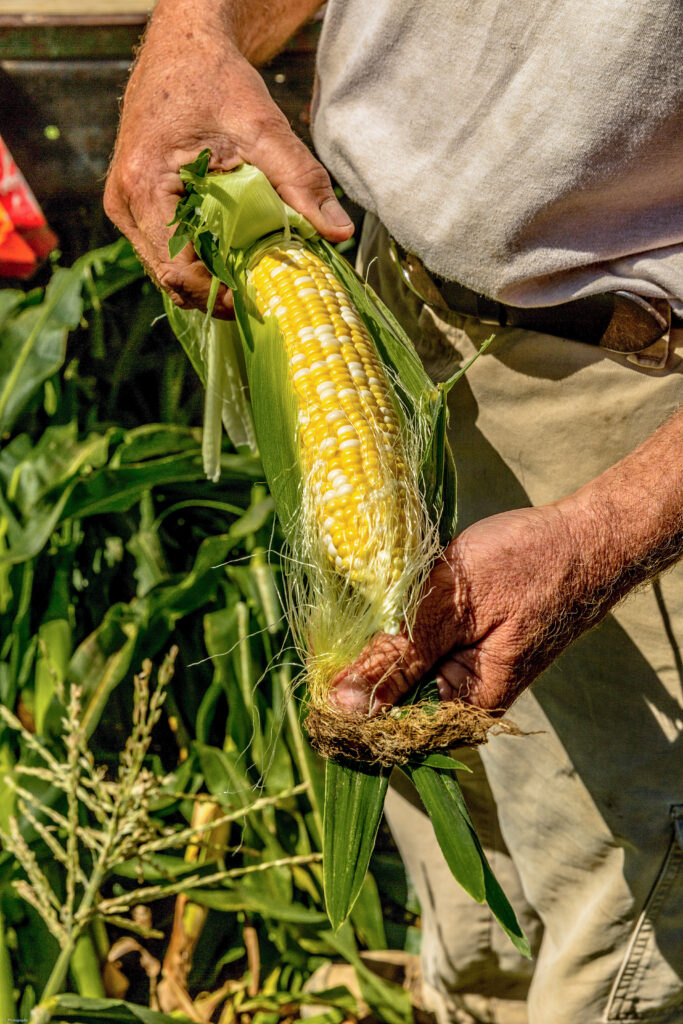
How does a farmer—or, more importantly, a consumer—know when corn is at its prime? There remains much debate about selecting farm stand corn. Pull the husks back? Squeeze the ears? Farmers naturally have their own feelings about how to choose the best of the bunch.
When it comes to selecting corn, one distraction is the corn earworm, which emerges in late summer and burrows into the tops of cobs. This pest feeds on the silk, and you can find savvy huskers searching for traces of the worm as they peel back the husk when selecting their ears.
But, Stanton warns, you actually shouldn’t do this. Removing the husk from your corn can prematurely dry it out, compromising quality. “Keep it in the husk,” she advises. “You can plastic-bag it and put it in the refrigerator.” If you’re worried about worms, some places have factored this into the equation.
“We actually cut the tips off before we sell it,” Senesac says. “The earworms, they pretty much live in the top quarter.” The drawback, she notes, is that corn that has been trimmed must be eaten the same day it’s purchased or it can turn starchy.
If you’re shopping for corn and want to know how to look for worms without pulling back the husk, just squeeze the top of the ear, says Ed Harbes, general manager of Harbes Family Farm in Mattituck. “It should feel kind of firm and consistent with the middle,” he says. “If the top feels kind of mushy, then oftentimes that’s a worm.” Although Harbes doesn’t trim their corn, they do have their own method of quality control, self-selecting the best ears from the fields each day and serving them directly to customers rather than placing them in bins for people to sift through.
“We take out a lot of that confusion and basically package our corn in half-dozen and dozen bags,” Harbes says. “We train our farm team to go through that process: to select the best corn and grade out anything that doesn’t meet our standards.” When guests arrive at the farm, they simply ask for a bag of six or 12, are handed one, and are set to go.
Fresh Is Best
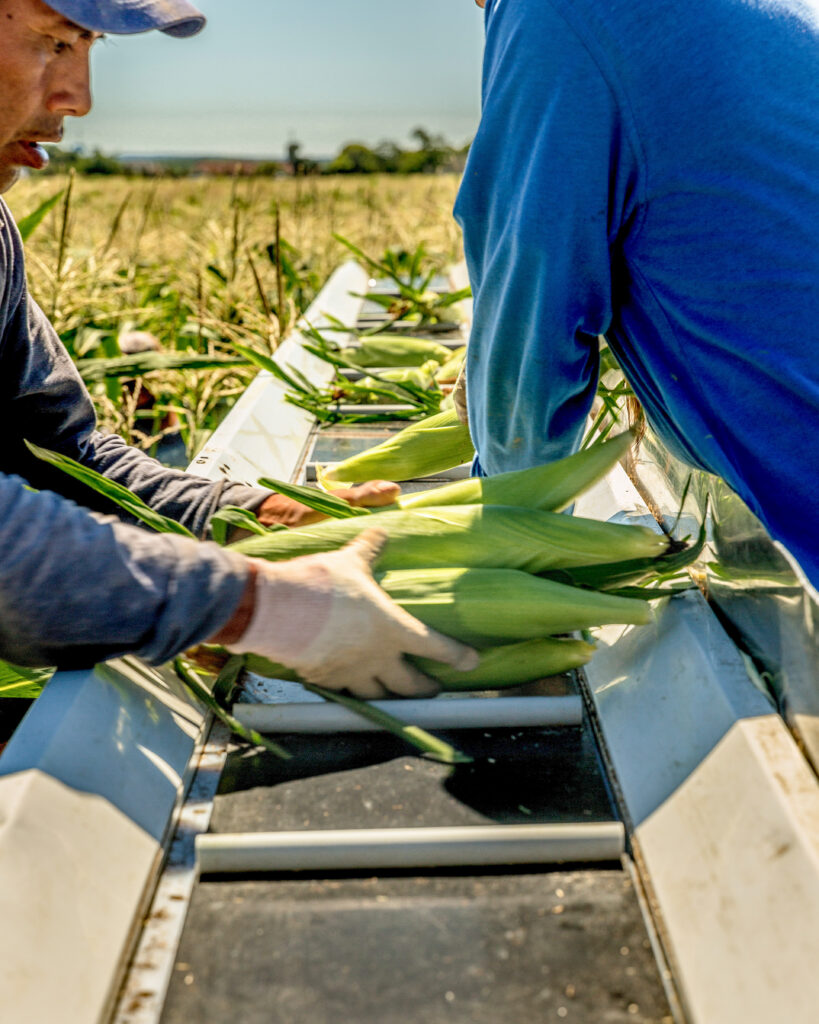
Once you’ve selected your corn, the next step is deciding what to do with it. The farmers interviewed here agree that the best corn is the freshest corn; they replace theirs daily and schedule pickers to keep up with demand so that the stands are stocked with fresh produce without too much excess. “The sugars turn to starch, so it starts to have a weird texture to it,” Senesac says of older corn. “And that happens even if you wait too long to harvest it in the field.”
Senesac cooks her peak-season corn together with other vegetables, like tomatoes, ong choy and zucchini, for a play on succotash. “It’s a nice little summer medley of vegetables,” she says. To extend the season, she cuts the kernels off the cob and places them in freezer-safe bags (they can hold for up to nine months). When the colder months arrive, Senesac notes, they make a great addition to soups and stews.
Stanton does double duty when it comes to cooking and storing her summer corn. In summer, she makes sure to boil or grill a few extra ears at every meal. She then takes the extra cooked corn and places them directly into freezer bags. “I don’t even cut them off the cob,” she says. In the winter months, she warms the frozen cobs in a grill pan and serves them as if it were a warm summer day.
As for Ed Harbes, he suggests replicating Harbes Family Farms’ famous roasted corn recipe at your own house, when the picking is good. Although the farm uses specific machines—he likens them to rotisserie ovens—to roast ears over an open flame, Harbes has advice for anyone looking to get that smoky experience in their backyard. Remove the excess leaves from the husk, which can ignite easily. Pull back the husks and remove the silk. Replace the remaining husks and lay the ears directly on the grates of a very hot grill.
“Just throw the corn right on the open barbecue, with the open flame, for about 20 minutes until it’s a nice, dark brown with a hint of green,” he says. “People have all different ways that they like to do it, but I’ve been pretty happy with that.”