Breathe
For the LIOGA, oysters are no shell game
by Amanda Olsen
Photography by Jeremy Garretson
Oysters on Long Island were once ubiquitous; you couldn’t dig into the shore without turning over slabs of rough white shells. The Lenape people regularly ate shellfish, to the point they left behind middens of shells some four feet deep, and early colonists also subsisted on the bivalves. Queen Victoria demanded her table only be served Long Island oysters, then called Blue Point oysters because they came from the Great South Bay.
But wild oysters, despite their abundance, were soon in a precarious place. Waste from agriculture and increasing human settlement, coupled with ever-increasing demand, led to smaller and smaller harvests. Die-offs from disease were the final blow for the wild harvest.
But all is not lost for Long Island oysters.
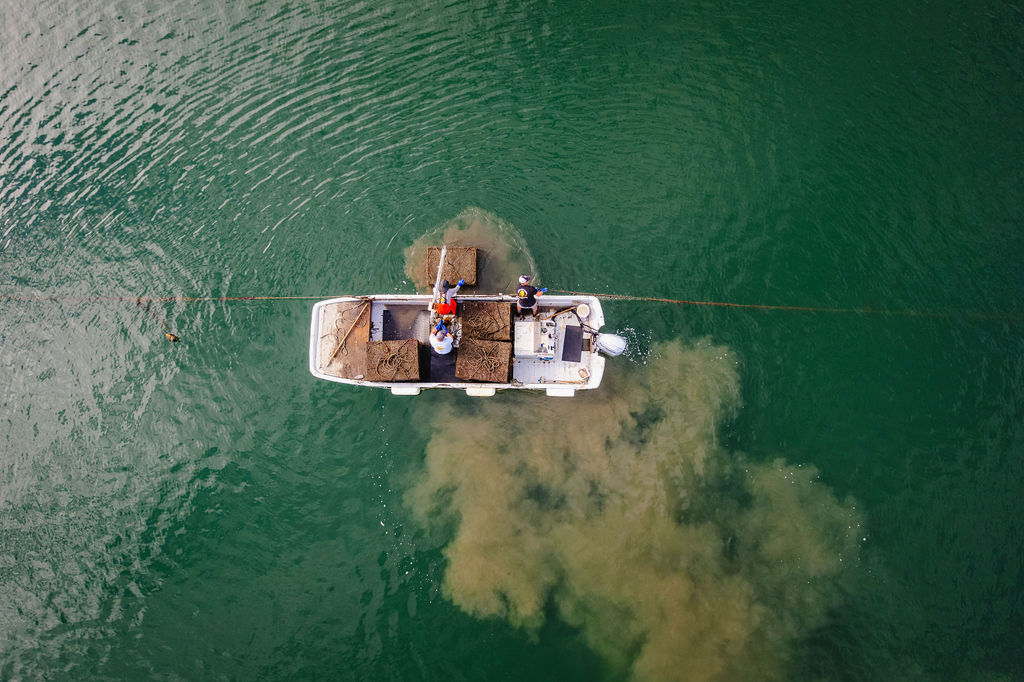
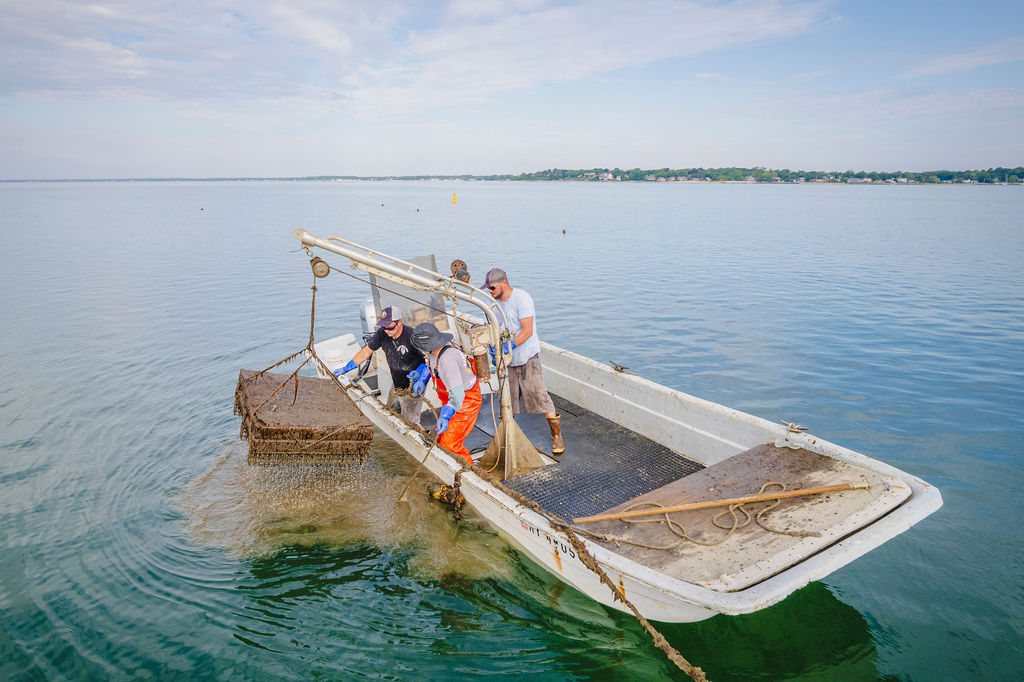
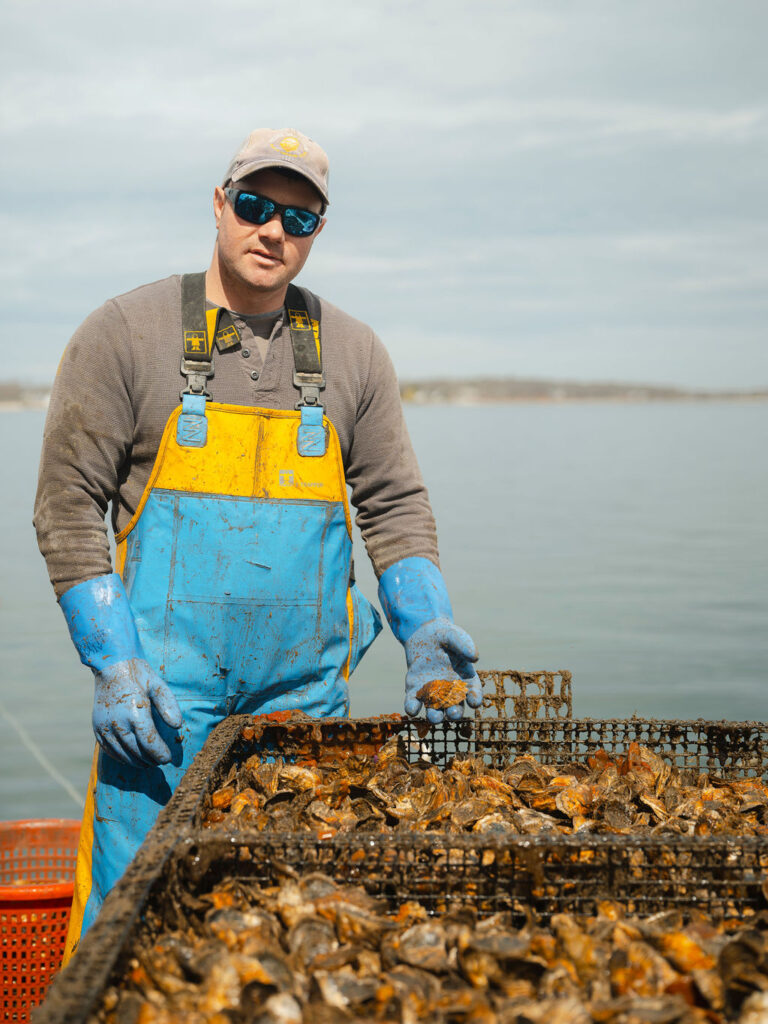
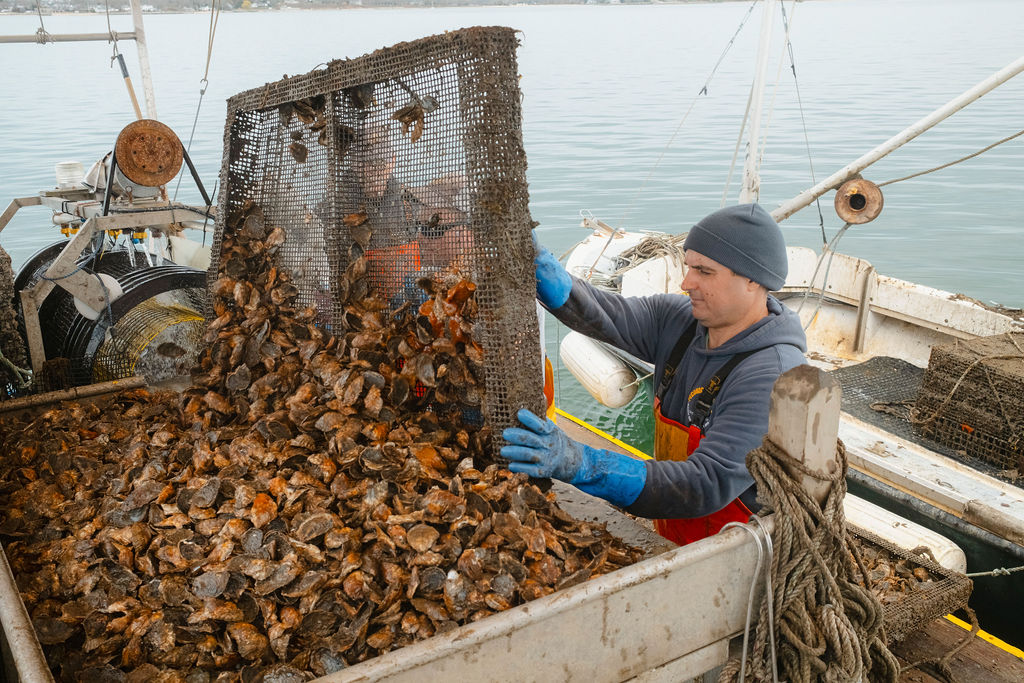
Aquaculture has boomed in recent years. By taking advantage of Suffolk County’s bottom leases, where portions of the seabed are leased to growers, oyster farms have sprung up all along the shore, with a large number concentrated on the East End. This explosion is due in no small part to the efforts of the Long Island Oyster Growers Association.
Bivalve Bonding
Founded in 2001 as the East End Marine Farmers Association, the organization aims to support aquaculture farms all over the island. One facet of this support is serving as a point of contact between the growers and regulatory bodies like the Department of Environmental Conservation, Suffolk County and New York State.
“In the past year, we’ve taken a much more proactive stance with all of those government entities and have engaged the DEC to the point that we have meetings once a quarter to work together on resolving issues that are onerous to the growers,” says current president Eric Koepele, who is both an advocate for farmers and an industry insider as the owner of North Fork Big Oyster on Hog Neck Bay.
In 2024, Long Island and Fishers Island farms harvested 9.4 million oysters, a record for cultivated oysters coming out of New York waters. According to Koepele, most of those oysters go to restaurants in Manhattan, the outer boroughs and Long Island. A smaller stream of them go to Westchester and Connecticut. A very small fraction of them go farther afield, like the West Coast.
“It represents something like our eighth or 10th year in a row of double-digit year-over-year growth and oyster production from the farms. So we’ve grown pretty rapidly from a small base,” Koepele says. “And all of the farms that are responsible for that growth are self-funded, bootstrap family operations.”
“I’ve completed the circle of my life on the water, and my farming has actually given back to the bay more than I ever took. And that’s my biggest prize.”
Joe Finora, Hampton Oyster Company
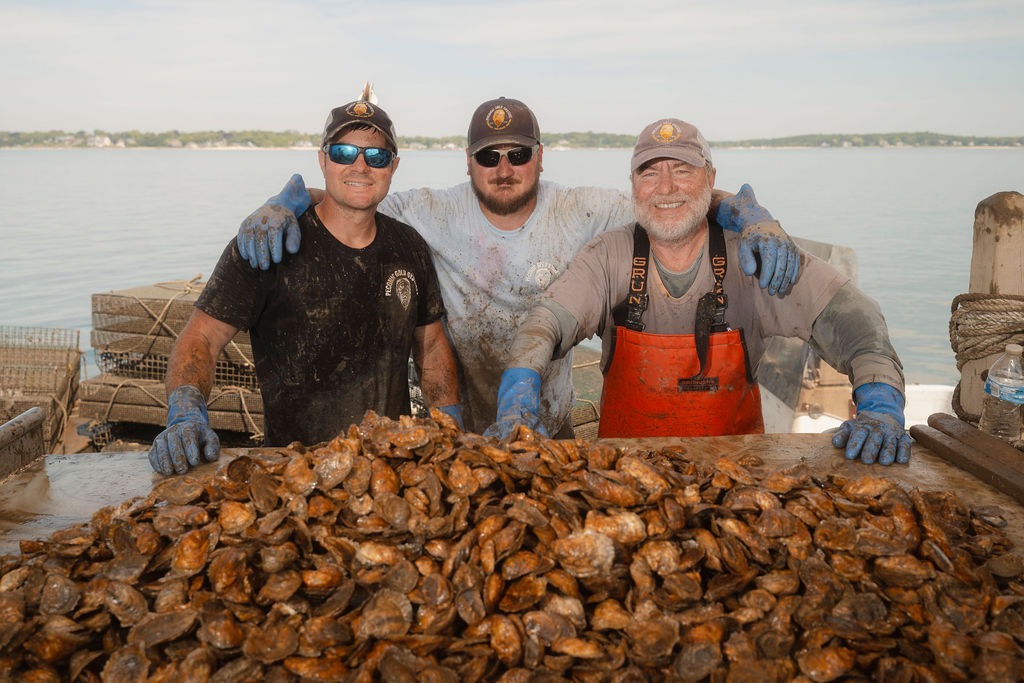
One such farm is Peconic Gold Oysters Inc. Owner Matt Ketcham got into oyster farming after starting his career as a commercial fisherman. He equates the state of the local oyster industry to where the wine industry was in its infancy, with an eye toward expansive growth.
“I like to think that the oyster industry on the North Fork now is a lot like the wine industry was, you know, decades ago, where nobody really knew about the wine industry out here. They didn’t know that we had good wine,” says Ketcham. “And now it’s a huge thing. So just by being consistent and through some marketing efforts, we’re really helping ourselves.”
The Taste of Place
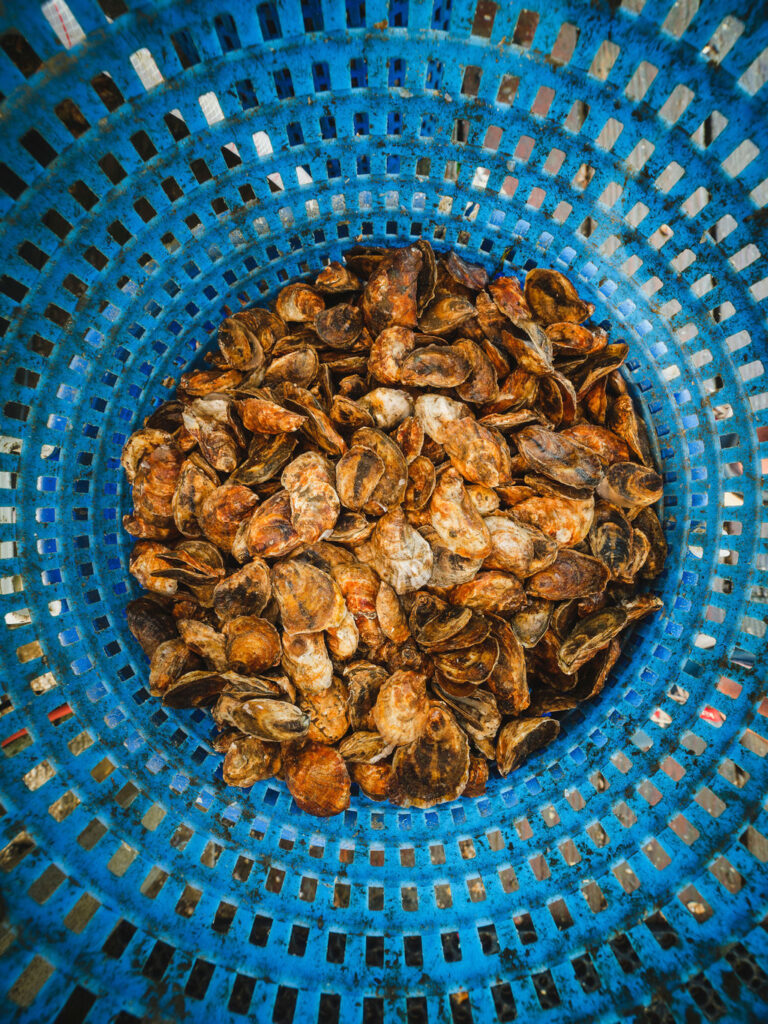
In the same way that wines depend on different varieties grown under unique conditions to produce their signature flavors, oysters take on different “notes” depending on where and how they are grown, even though they are the same species.
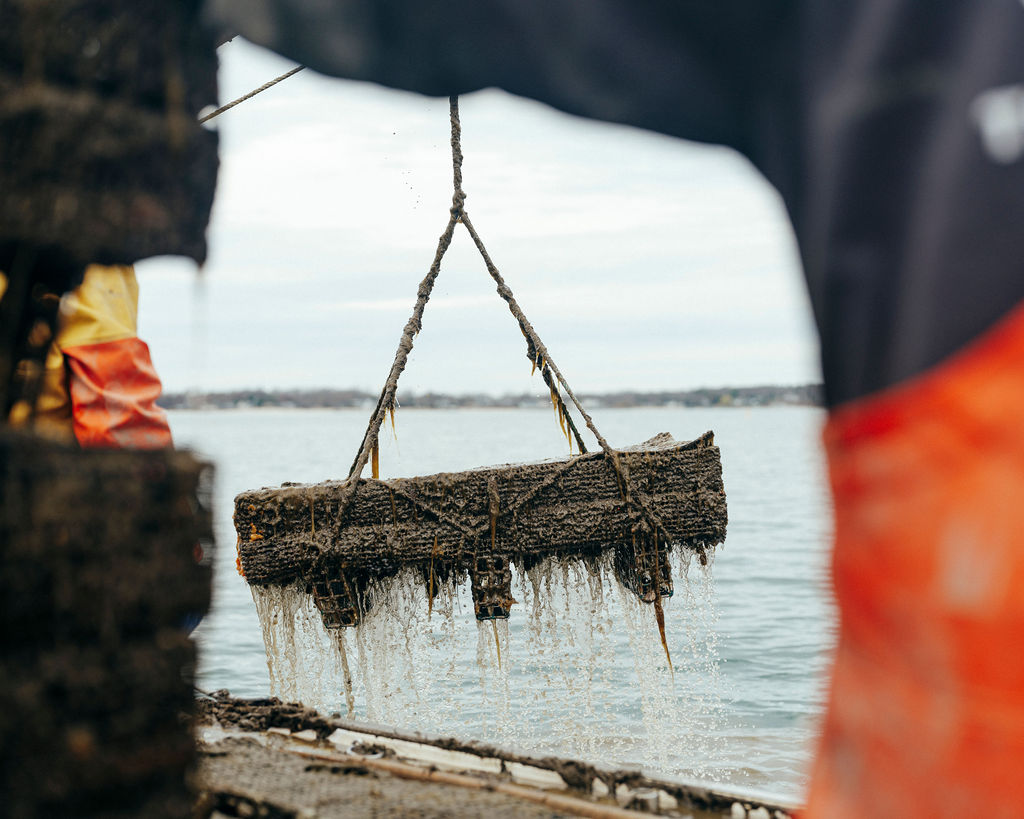
Ketcham puts it this way: “They’re taking on the flavor of where they’re grown, and also how they’re grown and how they’re handled, and the kind of cages that they’re in.”
LIOGA has a goal of increasing yields to reach 100 million oysters harvested in 2035, with a projected value of $177 million added to the local economy.
“If we can get the state behind us and some other government entities behind us,” Ketcham continues, “we can get ourselves up to a 100 million oyster-year harvest, and let it put us in the same league as other important regions on the East Coast, like the Chesapeake, which harvest 100 million farmed oysters every year.”
Canada, too, does a similar number—and it exports most of those down here into the U.S., Koepele notes. “It’s important to make the distinction that we’re not looking for subsidies to maintain an as-is scenario. We all want to make this industry a meaningful force for Long Island and hopefully for the state overall.”
Grady Koepele, manager at North Fork Big Oyster and Eric’s son, echoes this growth mindset.
“I see a lot more oysters coming out of the water in New York. Myself and many of the other farmers are at a stage now where it’s really just starting to scale as the capacities come online,” says Grady.
Growing oysters — and a network
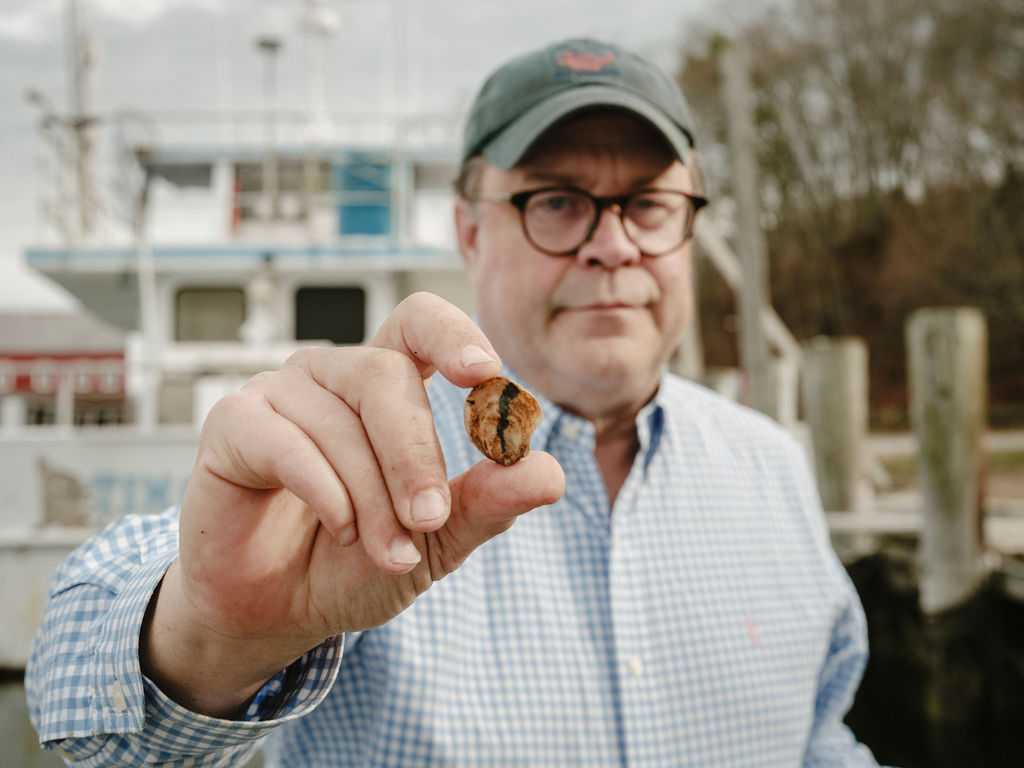
Another benefit of the association is the wealth of knowledge. Just about anything a newbie could want to know has probably already been discussed. And if there are still questions, all they have to do is ask.
A valuable perk of the organization is having a sounding board of peers to work out issues with the farms.
“Everything from shellfish husbandry to what we do about kelp and how do you grow it to what’s the best gear type for the type of water I’m in,” says Koepele. “Sort of the nuts and bolts of how to grow the best oysters the fastest, with some advice sprinkled in about best practices when it comes to regulatory agencies and issues like sales and transport and all that.”
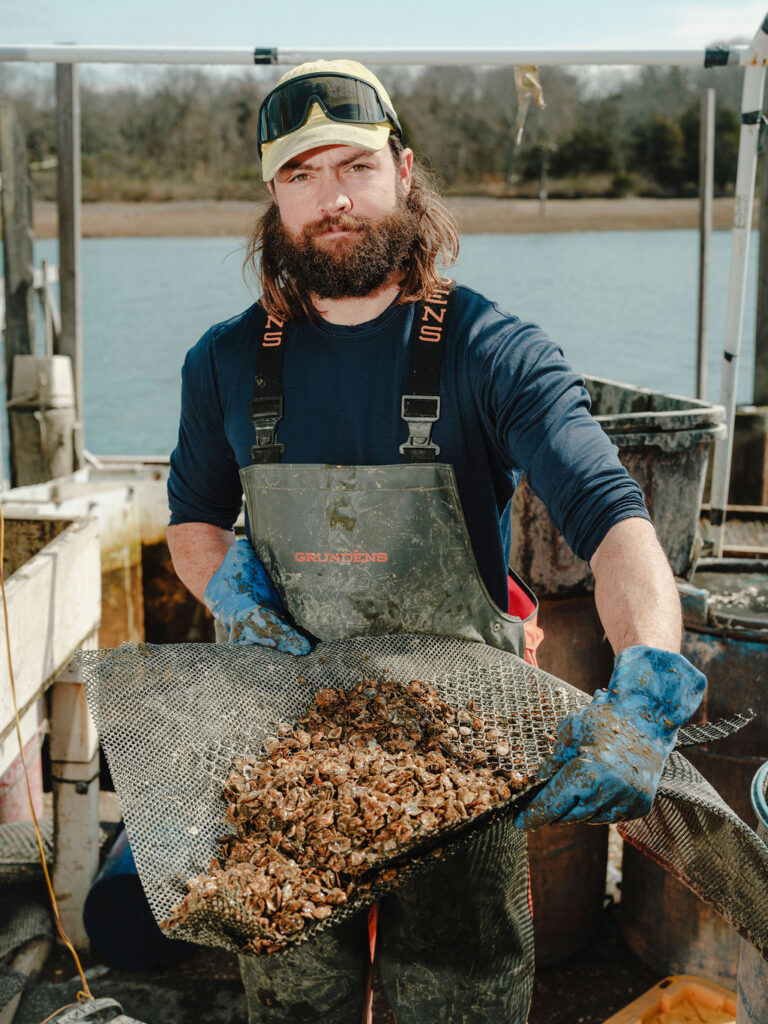
Mike Martinsen, owner of Montauk Oyster Company in Montauk, cites the collaborative aspect of the association and its reach as an unexpected benefit. As a commercial fisherman for decades, he saw firsthand how unpredictable wild harvesting could be. Now, especially with the collective knowledge and reach of the association, there is a great deal of potential in aquaculture.
“What I can do alone or with my company is limited, and I think that what we can do together is much bigger than I ever realized,” says Martinsen. “I think that there’s a great future ahead for Long Island Oyster Growers Association.”
Joe Finora, co-owner of Hampton Oyster Company in Peconic, even hopes the association can create partnerships with other community and industry advocacy groups to improve and strengthen their net of support.
“We’re hopeful that the group can expand into opportunities with community collaborations,” says Finora. “And there’s so many active subgroups within the North Fork, like civic associations and the Farm Bureau. So we hope that this group can help integrate our positions and our needs with those other groups as well; be a voice for us and help also be a tool to educate the community on what we’re doing and how we can work together.”
Indeed, the product local farms are producing is superior to oysters from other sources: DEC reporting shows that Long Island’s oysters are among the safest on the market, with no foodborne illness outbreaks in the last 10 years.


“We’re able to go out and kind of thump our chest a little bit and tell people that we deliver some of, if not the safest, shellfish into the market of any shellfish area in the entire United States,” says Koepele.
In fact, the farms are doing one better: They improve their environment. One oyster can filter around 50 gallons of water a day, removing excess nutrients. The mature oysters are also spawning, repopulating the wild oyster beds in the process.
“You’re not taking anything from the natural environment. Quite the opposite. The oysters themselves, or any shellfish for that matter, don’t require anything from the farmer than what’s already provided for naturally,” says Finora. “They require no feed. They require no water, no fertilizer. They’re taking nutrients that are often in overabundance in the water column. All we really do is keep them alive and give them the space to grow.”
Martinsen sees what his oysters do naturally as a restoration of his legacy on the water.
“As a commercial harvester, I was raised to be competitive, fill my boat, build my house, make money, and take as much as I can from the wild in order to pay the bills and get things done,” he says. “But I would say now, after 15, 16, years farming, I’ve completed the circle of my life on the water, and my farming has actually given back to the bay more than I ever took. And that’s my biggest prize.”