To Carmen Campos, a puppet is never just a puppet. It might become a Peruvian storyteller, a turtle with a message about plastic pollution, a young Jane Goodall or a blue-footed booby from the Galápagos.
A puppet can spark a child’s voice, bridge cultures for students or transform an environmental lesson into something they can see, touch and never forget.
And at 72, Campos is still finding fresh ways to bring her ideas to life.
Where puppetry and education meet
Campos teaches Spanish part-time at Farmingdale State College, leads puppetry workshops for teachers and children and creates puppet-based programs on the North Fork. Her journey with puppetry, though, winds through decades of teaching, leadership and adventure.
“My belief is that whatever works with Sesame Street, which seems to work still —kids learning at home, preschool — it still works now in high school, everywhere,” she says. “Not only can they learn like that, but you can teach them to really embrace the craft of puppetry, and to me this becomes a philosophy of education.”
Campos was born in Bay Shore and grew up in West Islip. Her parents are from Ecuador and, while studying at Dowling College, she spent a year in South America. The experience brought her closer to her family’s culture and strengthened her interest in language and travel.
Her education led to a lifetime of educating. Armed with a bachelor’s degree in elementary education and a master’s in education from Dowling, as well as an advanced administration degree from C.W. Post, Campos hungered to learn more. After earning a doctorate in educational leadership from St. John’s University, teaching seemed a natural path.
Her career began in 1987 at West Islip Junior High, where she taught Spanish. She later taught English as a Second Language in Bay Shore, then Spanish, ESL and Italian at Babylon Junior-Senior High School. Campos later returned to West Islip as an administrator overseeing world languages and ESL, also helping to implement American Sign Language into the classroom. In 2007, she became department chair and a world languages teacher at the Cold Spring Harbor School District.
When Campos joined the prestigious and progressive Dalton School in Manhattan, she expected to eventually move into administration as the logical career path for someone of her experience and brainy talents. Instead, she found herself wanting to stay in the classroom.
That choice became a turning point for her puppetry.
Finding her craft
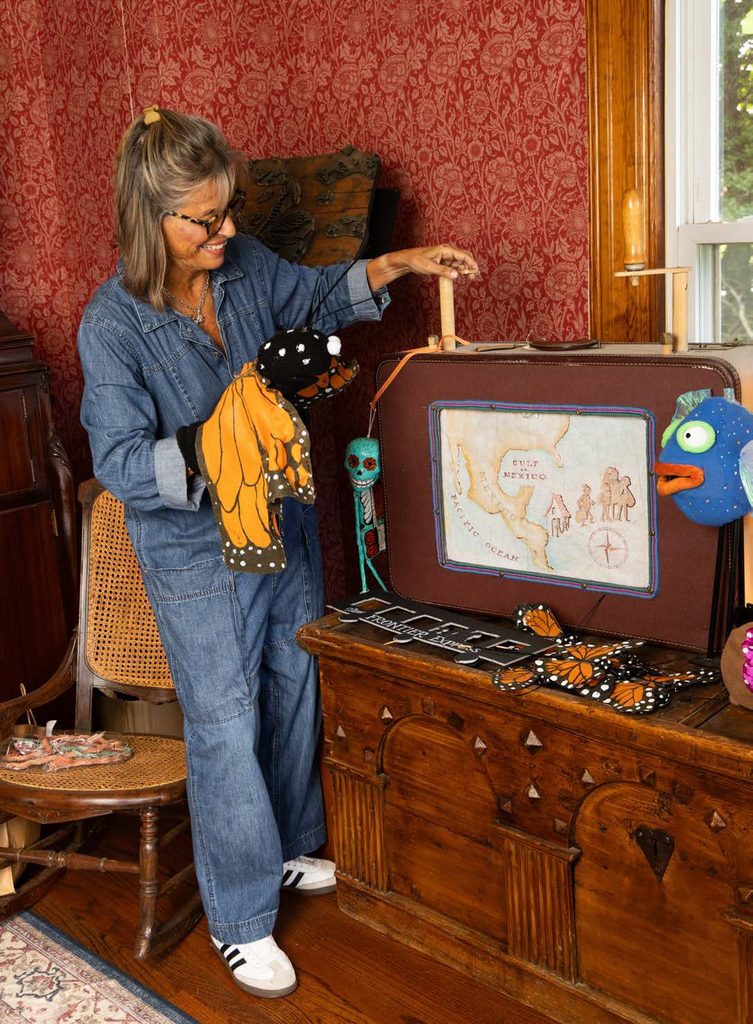
Campos had always woven puppets into her teaching, but Dalton’s professional opportunities opened doors for her to dive deeper into the craft. She journeyed to places like Guatemala and the Czech Republic, learning from master puppeteers and exploring a world of traditions and techniques.
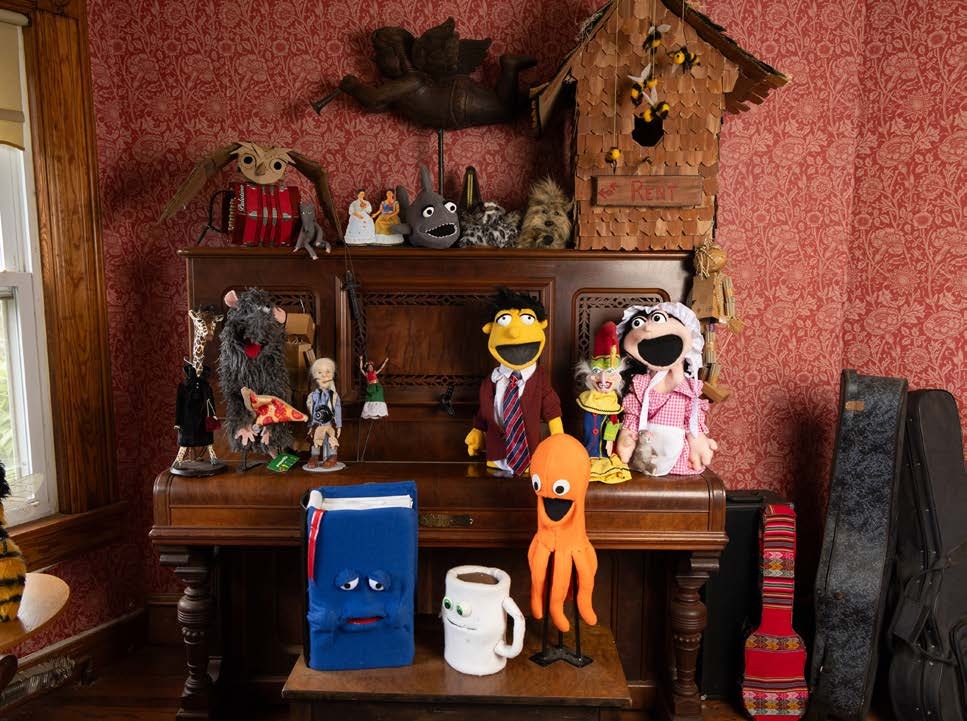
She started crafting her own puppets when she couldn’t find the already fully realized characters she vividly imagined. If a puppet for Indigenous Guatemalan stories didn’t exist, Campos brought it to life herself. When she needed a Frida Kahlo puppet, she made it with her own hands.
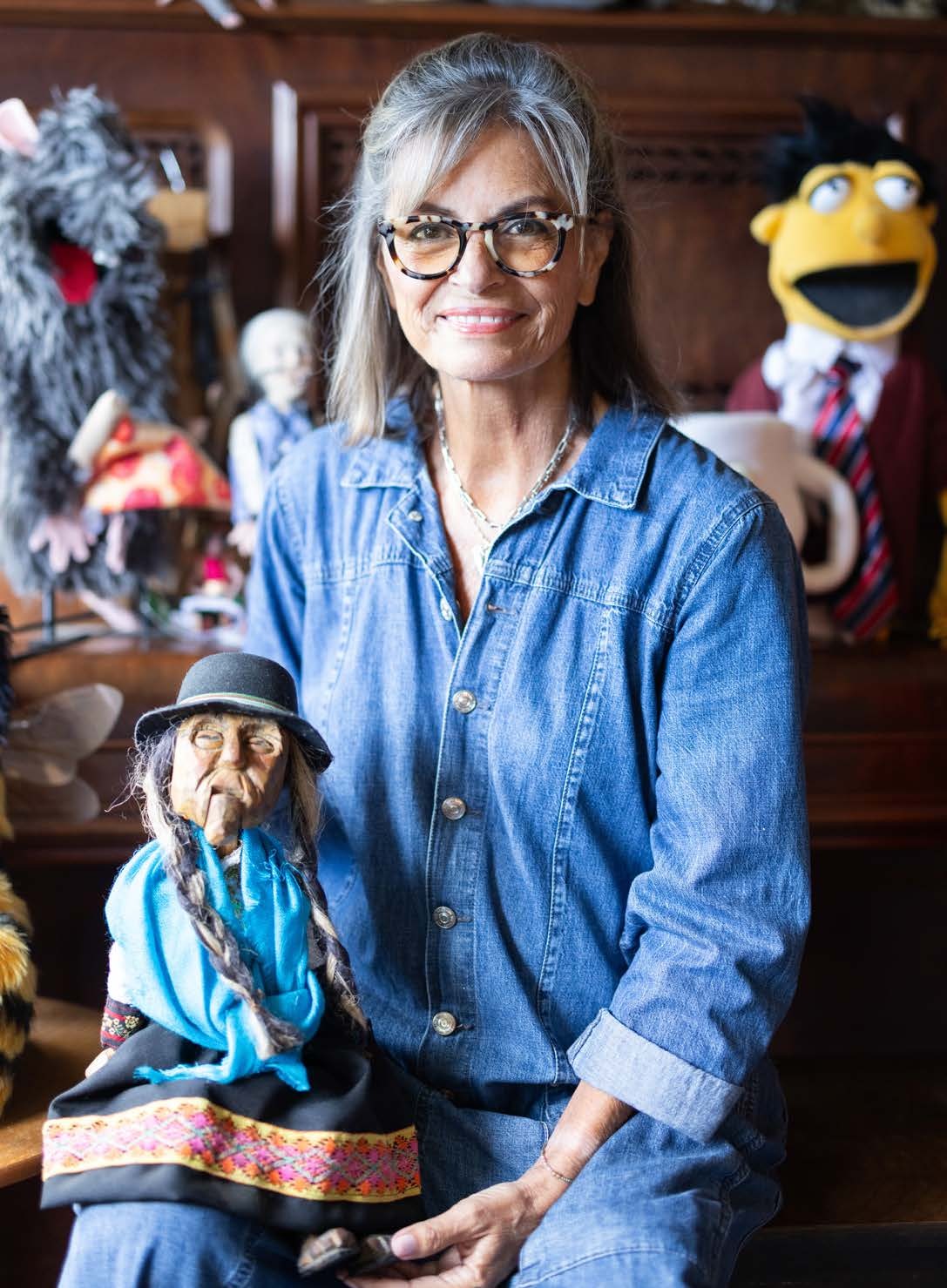
Over the years she mastered materials from sawdust and glue to carving and papier-mâché, creating everything from shadow puppets and glove puppets to marionettes and Muppet-style characters. Among her most beloved creations is Esmeralda, an elderly Peruvian storyteller born of Campos’ marionette-carving studies who has a rich personality and backstory and wears Indigenous clothing.
Before the puppet makes her appearance, Campos warns students that Esmeralda is a little hard of hearing and tends to grow weary during long classroom visits, feeding into the persona of a lady of a certain age.
Meanwhile, the students have work to do. Before Esmeralda enters the room, Campos asks them to prepare questions. When the puppet finally appears, they engage with her as a living character, not just as an audience with a lesson to absorb about Peru.
Campos’ puppets have also led her beyond the classroom walls. During a Fulbright project in Peru where she used 360-degree video to help students explore independently, she brought along two llama puppets for the journey.
“I got what I really want, which is a connection with the puppets,” she says. “People approached me, children approached me, mothers approached me. I got to have real conversations. I became just part of the landscape.”
Bringing puppets to the North Fork
The North Fork soon became another community where Campos could bring her vision to life. She and her husband bought a house in Cutchogue, intending to retire there eventually.
As she began spending more time on the North Fork, Campos followed the local Turtleback Environmental Education Center online. Her Instagram account, PuppetED, caught the attention of board of directors president Jennifer Murray, and she reached out after noticing the puppetry connection.
From there, the collaboration grew.
Turtleback’s environmental programs offer Campos a constant stream of inspiration for new characters and stories. A turtle might spark a conversation about plastic pollution. A bird can guide children into the world of migration. An animal can become a friend children root for, worry about and learn to care for.
Campos now serves as vice president of Turtleback’s board, developing puppetry programs that weave into the organization’s focus on environmental education. She brings her workshops to North Fork schools, libraries and camps, inviting children into puppet-making and bilingual storytelling adventures.
Spanish is another important part of that local work. Campos can conduct workshops in Spanish or move between Spanish and English, something she particularly values because of her experience growing up with immigrant parents.
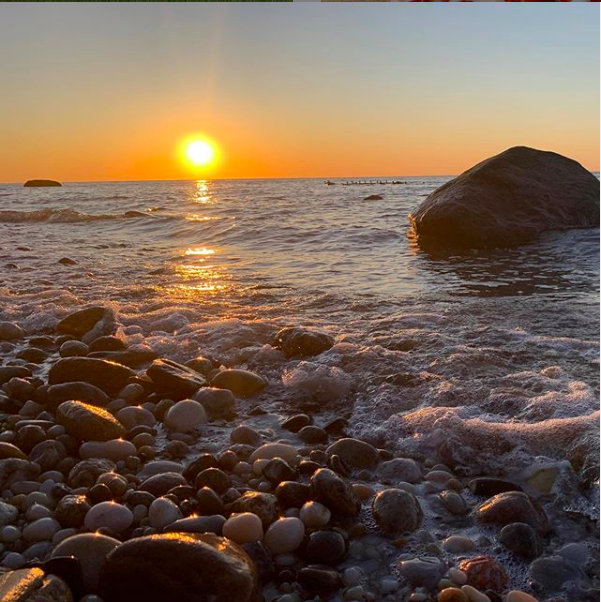
“When I worked in the city, it was the first time I felt like, oh, okay, here are some Latinos, and for me, that was important,” Campos says. “When I went out to the North Fork, I felt that same thing, and as a teacher it’s even better because you feel like you have more purpose. And of course, who doesn’t love the vineyards and the beautiful sights and the sunrises and the sunsets?”
Letting creativity take over
For Campos, making puppetry accessible is just as important as the puppets themselves.
A classroom doesn’t need a big budget. Under her imaginative and talented guidance, a sock can transform into a character, as can cardboard or paper. Campos keeps supplies ready for workshops and lets children choose eyes, hair, colors and materials so that even with the same starting point, every puppet develops a unique personality.
She has also stretched her storytelling beyond traditional puppetry and teaches children to create “crankies,” panoramic scrolls that reveal stories as images glide through a box or frame.
But the core idea stays the same: give children something they can touch, move and interact with.
Campos witnessed that magic most clearly during the COVID-19 pandemic. For one class, she crafted a unique puppet for each student, adding familiar touches like clothing or hairstyles, and mailed them out. When the class met online, the puppets filled the students’ Zoom boxes. Years later, one former student told Campos the puppet remained a treasured keepsake.
Campos officially retired from full-time work around 2022 — but for her, retirement simply meant reshaping her work, not ending it. After nearly a decade at Dalton, she continued to take on leave-replacement teaching roles and now teaches Spanish I and II part-time at Farmingdale State College.
She also continues to make puppets.
Her favorite puppet changes depending on the audience. Esmeralda is one Campos particularly loves, but she has learned that the puppets that generate the biggest reactions from children are often the Muppet-style characters.
That may be fitting because for Campos, the point has never really been the puppet itself. The point is what happens once it comes alive, when a child asks it a question, tells it a story, gives it a personality or sees a turtle struggling with a problem and suddenly wants to help.
The puppet opens the door.
The learning comes through it.