As the weather cools and harvest season arrives, squash takes over farmstands and markets, its girth and curvy mass pushing aside summer corn and tomatoes and showing up on local menus in myriad dishes, from starters, soups and mains to sides and desserts.
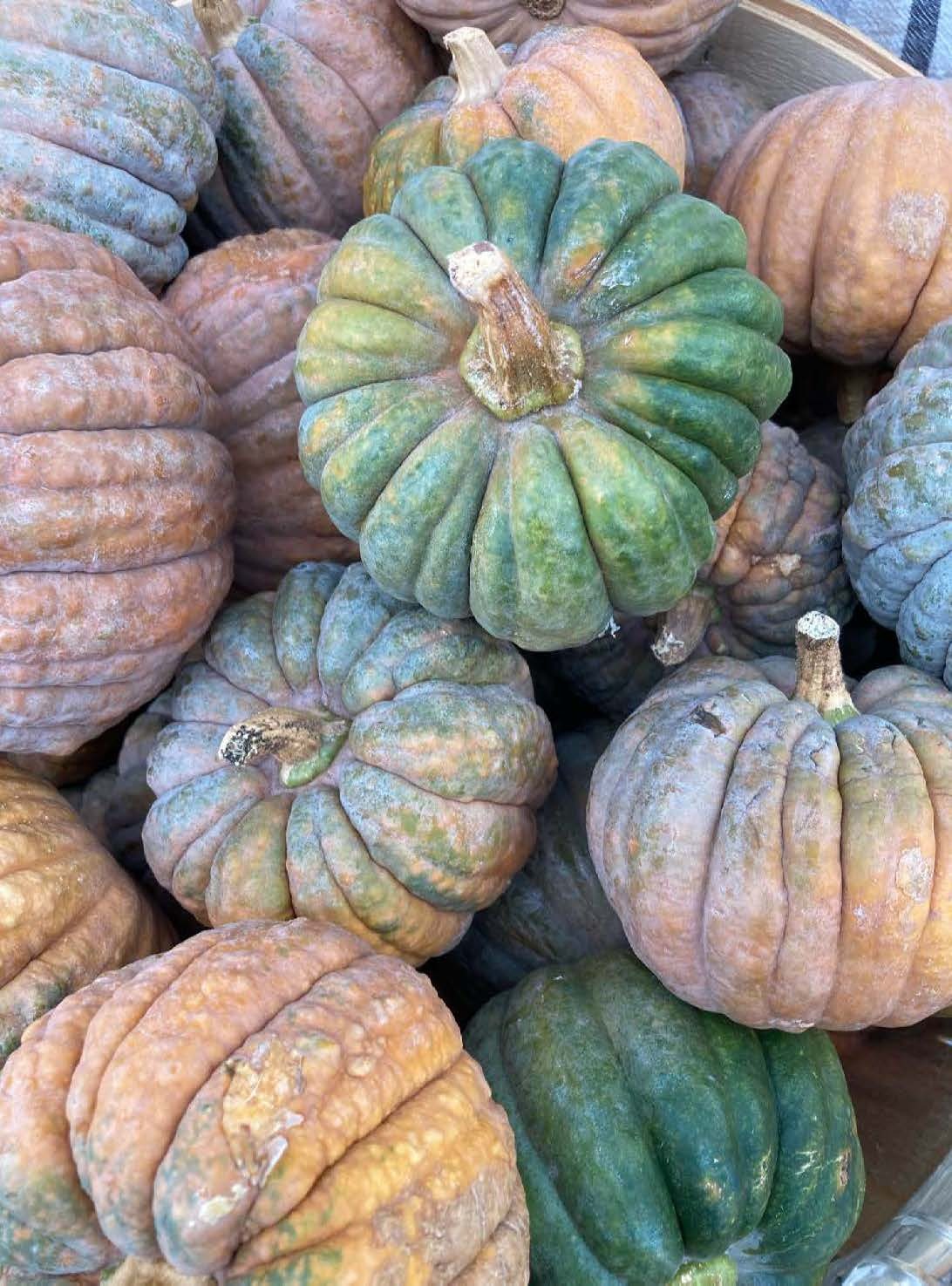
Tender summer squashes such as zucchini, pattypan and yellow crookneck yield the spotlight to butternut, acorn and pumpkin varieties. Squash comes in hundreds of shapes, sizes and colors in autumnal shades of green, gold, orange and even slate blue, and knobby or ridged heirloom varieties like kabocha, black futsu and Hubbard.
On the North Fork, you’ll find them in abundance because they grow well, are a seasonal staple and have a long history here. You may be familiar with some and less so with others, but we’re here to give you a little produce primer right in time for the gourd-forward season.
Technically a fruit because it develops from a flower and has seeds, squash is versatile and nutritious. Historically, it was an important crop for many cultures, especially Indigenous peoples.
A historic staple
According to the American Indian Health and Diet Project, squash is the oldest cultivated food in North America, first planted over 8,000 years ago. It was relied upon by Indigenous peoples of the Western Hemisphere as a staple and was around long before corn and beans, the other “three sister” plants, were cultivated.
Squash was baked whole in the coals of a fire, eaten raw off the vine or dried in the sun and stored for winter. Squash blossoms were eaten or added to soups and stews; the seeds were also dried, roasted, spiced and stored.
Indigenous peoples of the Southwestern United States paid tribute to the fruit with beautiful silver squash blossom necklaces, sometimes inlaid with turquoise and featuring the flowery blossom of the plant.
A squash primer
Generally, summer squashes like zucchini and pattypan are picked when they are immature; they have thin skins and cook relatively quickly. Because of their water content, they do not store well.
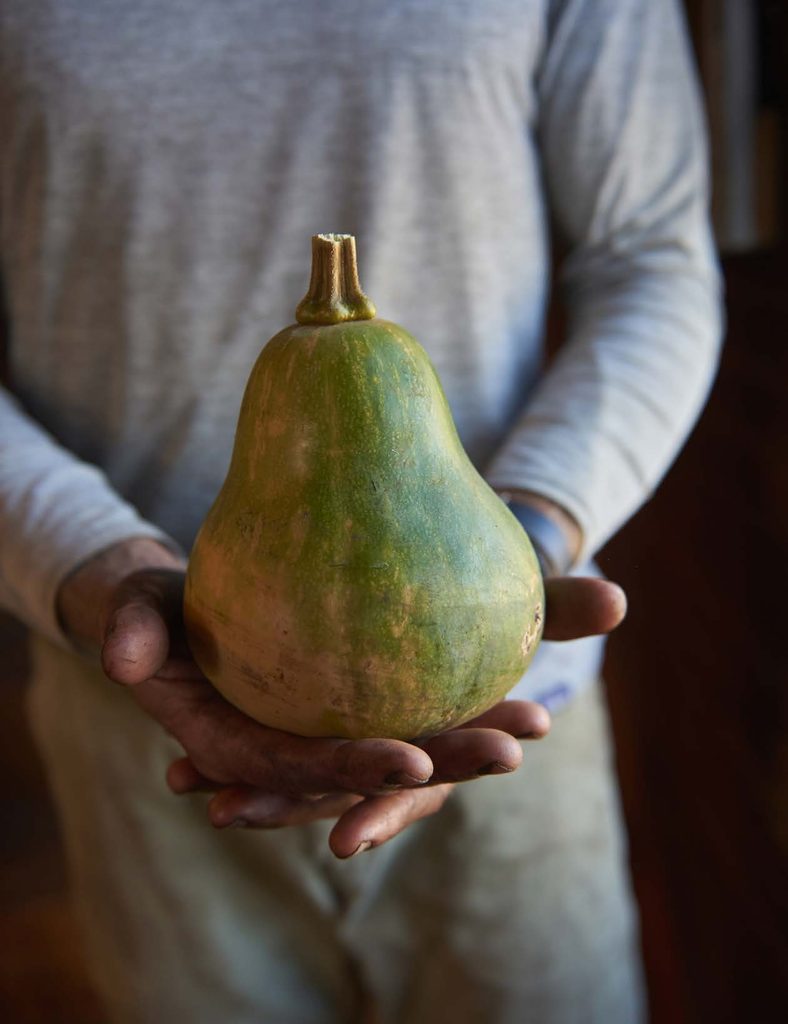
Winter squashes like acorn, butternut and kabocha take longer to cook. They have much harder skins and can be roasted, fried, baked or made into a soup or stuffing (where the outside can be used as a clever vessel). In their natural state, they store well for up to six months, but if you have a bumper crop, they can be peeled, cut into cubes and frozen.
While many North Fork farmstands offer the fruit, Krupski Farms in Peconic, a fifth-generation farm owned by Al and Mary Krupski, is a mecca for squash and pumpkin lovers.
“Al’s been growing pumpkins and squash for 50 years,” says Mary. “He started when he was in high school … he’s grown with the different varieties.”
Back in the 1970s and ‘80s, when the price of potatoes was so low it didn’t make financial sense to continue to grow them, many farmers quit or pivoted to growing other vegetables or sod. Al (whose other job is Southold Town Supervisor) decided to switch to pumpkins.
Today, you can find colorful mounds of pumpkins, squash and gourds at the couple’s farm on Main Road — some familiar and some you’ve likely never seen before.
Butternut and acorn squashes are the most common and are piled on wooden wagons at Krupskis. The small yellow-and-green-striped delicatas are the most popular, says Mary.
“Honey nut is the new kid on the block, and that’s because it’s very sweet,” she says, pointing to what looks like a mini butternut squash with a much thinner skin. There are plenty of unusual looking heirloom varieties as well. “You’ve got the baby Hubbard — the little orange guy — while the big gray ones are the Mother Hubbards.”
“They’re all very versatile,” she continues. “You can make pies, you can make breads, you can make soups.” Cheese pumpkins, tan-colored and shaped like a wheel of cheese, are the best for making pies, but many folks swear by the small sugar pumpkins when it comes time to roll out the dough.
Nutritionally, squash is low in fat and calories. It contains high concentrations of beta-carotene, fiber, vitamin B6, vitamin C, magnesium and potassium, according to The Nutrition Source at Harvard T.H. Chan School of Public Health, which also notes that “winter squash has been used in some cultures as a medicinal plant to treat diabetes, high blood pressure, cancer, high cholesterol and inflammation.”
Squash and pumpkin seeds can be roasted, salted or spiced and provide fiber and healthy fats, as well as iron, calcium and magnesium. When de-hulled, the kernel is known as a pepita.
Ways to cook squash
Summer squash can be eaten raw in salads or thinly sliced and sautéed or steamed for 6-10 minutes. Winter squashes take more cooking time and are best roasted in the oven for 20-40 minutes, blended into a soup, or cut up and added to a stew or even a chili. Both types of squash can be baked in a casserole or microwaved.
Mary Krupski’s favorite method is to cut a winter squash in half (buttercup is her favorite), rub the pieces with olive oil, season with salt and pepper and roast until soft. She sometimes eats the leftovers for breakfast the next day.
Other ways to cook squash:
» peel and cut into slices or 1-inch cubes and spread on a sheet pan to roast
» slice thinly, dip in batter and fry tempura-style
» blend into a soup or stir into a chili
» roast and scoop out the flesh to make a sweet or savory pie
» scoop out the flesh, stuff and roast
» stuff squash blossoms with mozzarella, then batter and fry
» cut into chunks, sauté and add to a salad with greens, grains, cheese and dried fruits
» slice, brush with your favorite glaze and grill
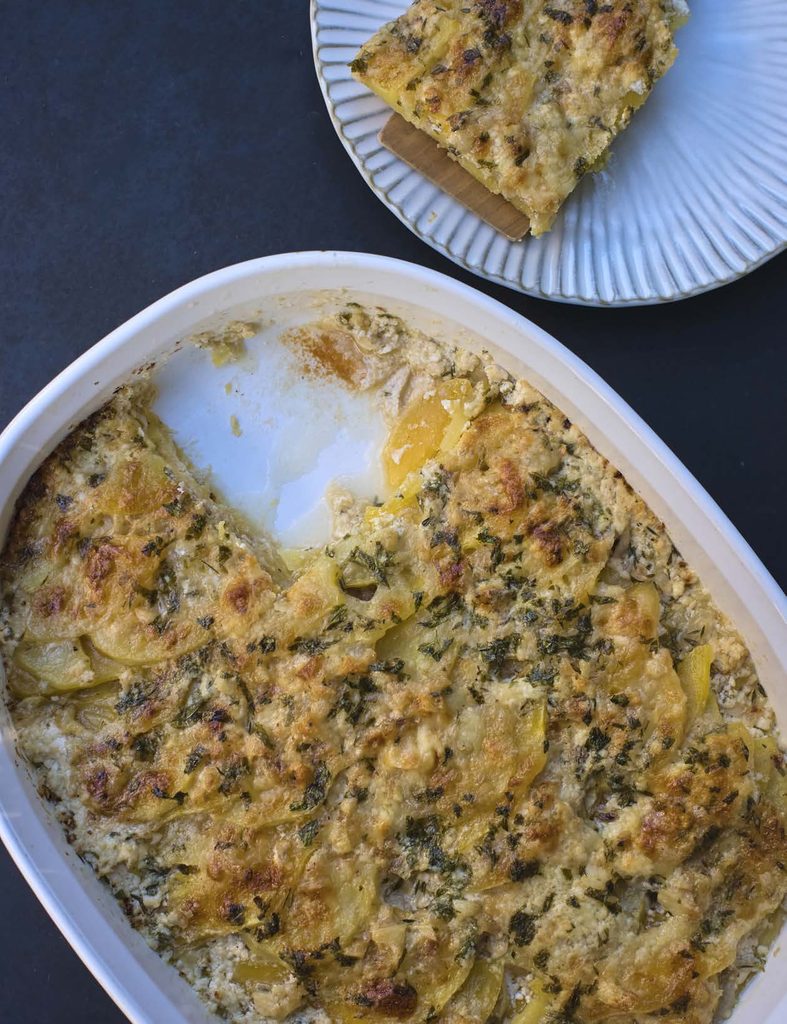
Squash and potato gratin
PREP TIME: 30 minutes
COOK TIME: 55 minutes
SERVES 6
Try this seasonal recipe for a squash and potato gratin with red onion, thyme and Gruyère, suitable as a side dish or for dinner with a salad and a glass of Long Island wine.
1 acorn squash, peeled, de-seeded and sliced into 1/8-inch pieces (about 1¼ lb)
3 gold potatoes, peeled and sliced into 1/8-inch pieces (about 1¼ lb)
3 tsp olive oil
2 tbsp butter
½ cup diced red onion
6 cloves garlic, smashed and roughly chopped
2 tsp fresh thyme, minced
1 ¼ cup light cream
Salt and pepper to taste
1 ¼ cup grated Gruyère
1 cup grated Parmesan
2-3 tbsp chopped parsley
1. Preheat oven to 400 degrees F and butter a 2-quart casserole dish.
2. Peel and de-seed the squash and peel the potatoes.
3. Using a sharp knife or a mandoline, slice the squash and potatoes into 1/8-inch-thick half-moons and place in a large bowl. Toss with the olive oil.
4. Heat a saucepan over medium-low and melt the butter. Cook the onion and the garlic with a pinch of salt until tender, about 5-6 minutes. Turn off the heat and add the thyme and the cream and stir. Set aside.
5. Layer the squash and potato slices into the dish, alternating colors. Top each layer with salt, pepper, Gruyère and Parmesan. Repeat with another layer of squash and potatoes and salt, pepper and cheeses until the dish is full.
6. Pour the onion, garlic and cream mixture over the vegetables. Sprinkle the top with the remaining cheeses.
7. Cover with foil and bake for 25 minutes. Remove the foil and bake uncovered an additional 30 minutes until golden brown on top. Let set for 10 minutes before serving.