Halloween costumes do not have to come from a store to make a statement.
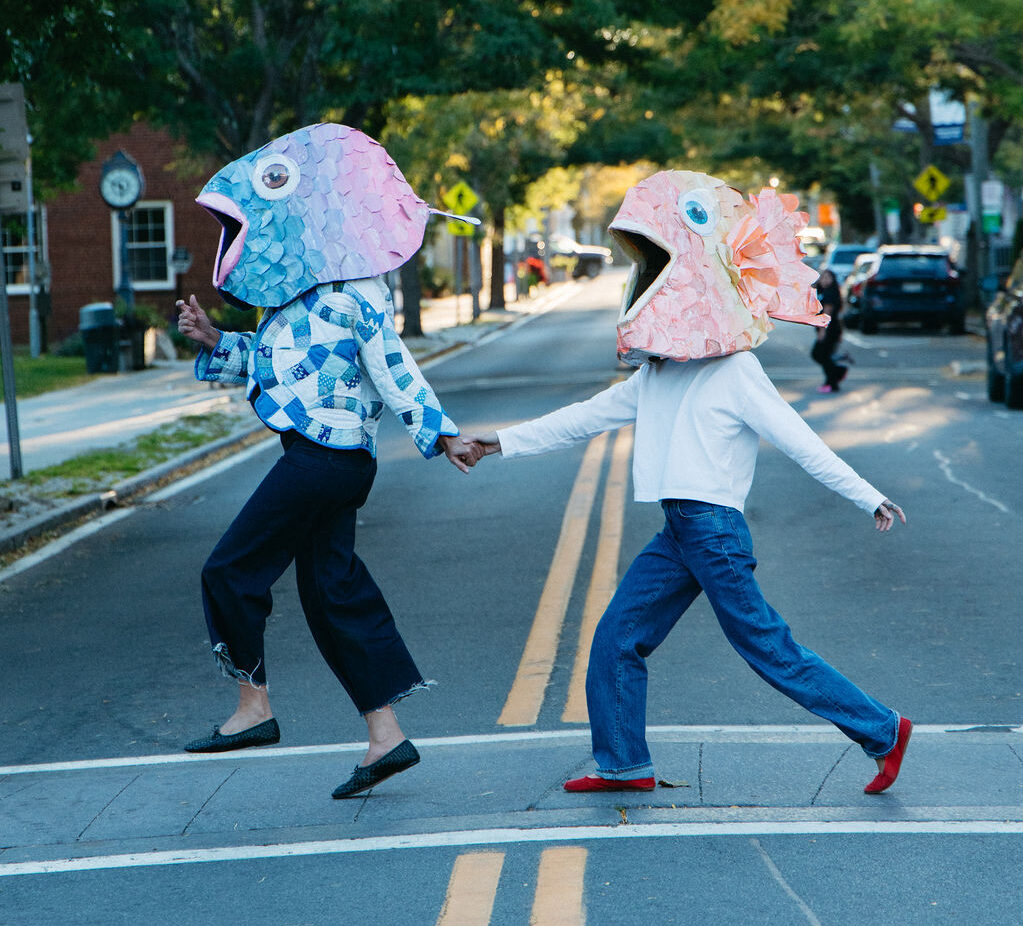
At VEME Studios (37 Front St., Greenport), partners Verona Peñalba and Melissa Flotteron approach creativity with an emphasis on imagination, repurposed materials and the freedom to make something entirely your own. Their oversized fish heads, created for the Maritime Festival, offered a playful example of how cardboard, paper and paint can become wearable art and how a homemade costume can invite people to embrace a different side of themselves.
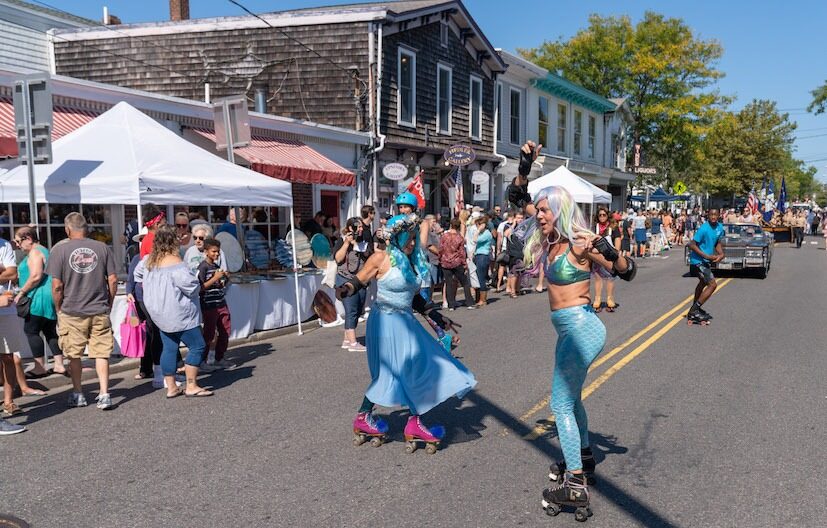
The pair developed five fish heads and two shrimp heads for the festival, building them from cardboard and paper and adding painted details. The idea grew out of their desire to represent the studio at the maritime-themed celebration. Fish offered an opportunity to experiment with different shapes, sizes, and colors, while a disco theme encouraged people to wear the creations and dance. VEME also organized community workshops ahead of the parade, resulting in 69 wearable creations by children and adults.
The fish heads became more than eye-catching accessories. At the pre-festival Land & Sea Gala, people put them on and took to the dance floor, an experience that reinforced for the studio partners how a costume can help people loosen up, play and feel more confident.
That same spirit can guide anyone making a Halloween costume at home.
1. Turn cardboard into a wearable creation.
Start with cardboard and recycled paper already on hand. For a simple approach, cut a flat piece into a shape, make an opening for your face and paint it with details. For a more ambitious project, build a three-dimensional head by breaking down the object you want to represent into its basic shapes, then reconstructing it with cardboard. Thinking about how something is made in real life can help you work out how to build a simplified version.
2. Give an old outfit a new personality.
Instead of buying a new costume, use a sweater, jacket, pair of pants or old hat as a starting point. Add pom-poms, eyeballs, fabric or other decorative elements to transform what you already own. The result does not have to depict a recognizable character or follow a logical theme. Combining colorful, unexpected elements can be part of the fun.
3. Make a character with a few key accessories.
Think of a character or person who inspires you, then look around your home for pieces that suggest their look. Focus on one to three defining accessories rather than trying to recreate an exact outfit. Peñalba recalled dressing as Frida Kahlo with a skirt, flowers in her hair and a plush monkey around her neck. The combination conveyed the character without requiring an identical costume.
For the Peñalba and Flotteron, the point isn’t perfection — it’s participation. A paper bag can become a mask with a painted face and cutout eyeholes, just as cardboard can become a fish head. The best place to start is with what you have, what interests you and a willingness to experiment. They suggest Halloween is an opportunity to play, and sometimes the simplest idea becomes the most memorable.