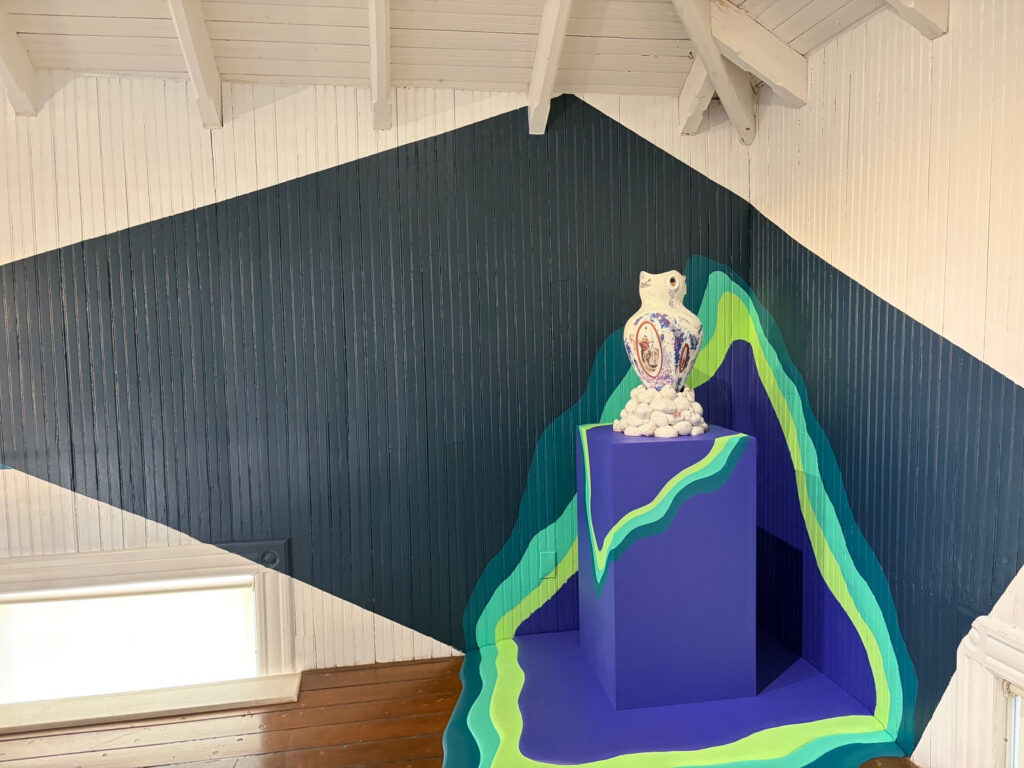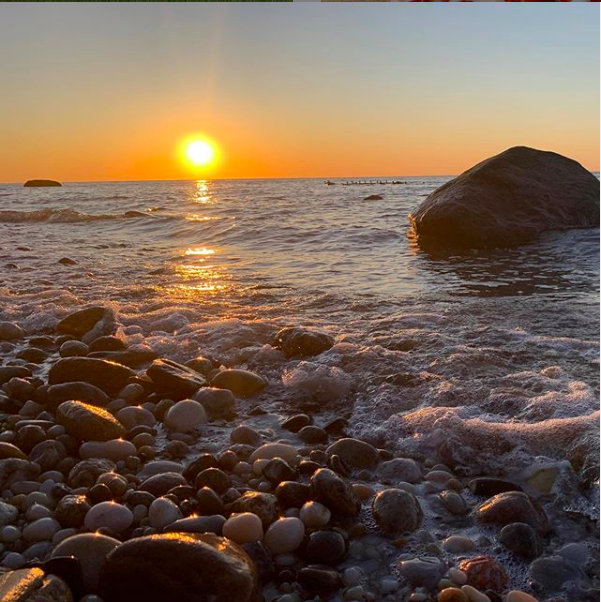
“Green Hill” is an earlier name for what is now Greenport, and this fall the North Fork Art Collective (207 Main St., Greenport), in partnership with Ma’s House & BIPOC Art Studio (159 Old Point Road, Southampton, 631-566-0486) brings ASKASQÁYUW WACUW (Green Hill) to Greenport, an exhibition exploring the land, memory, and Indigenous presence on Long Island. The show opened on Oct. 9 and is on view until November 30 at the NFAC’s Main St. exhibition space.
Guest curated by Shinnecock artist Jeremy Dennis, the show brings together over 25 Shinnecock and other Indigenous artists connected to Ma’s House. Through photography, painting, jewelry, leatherwork, and more, they consider “green” as landscape, medicine, growth, and renewal, and reflect on land loss and what survives in memory.
“The hill that gave the village its name was eventually reduced and leveled, with its earth used to expand the waterfront,” says Dennis. “I wanted the exhibition to bring attention to a landscape that has largely disappeared from view but remains part of the history of this place.”
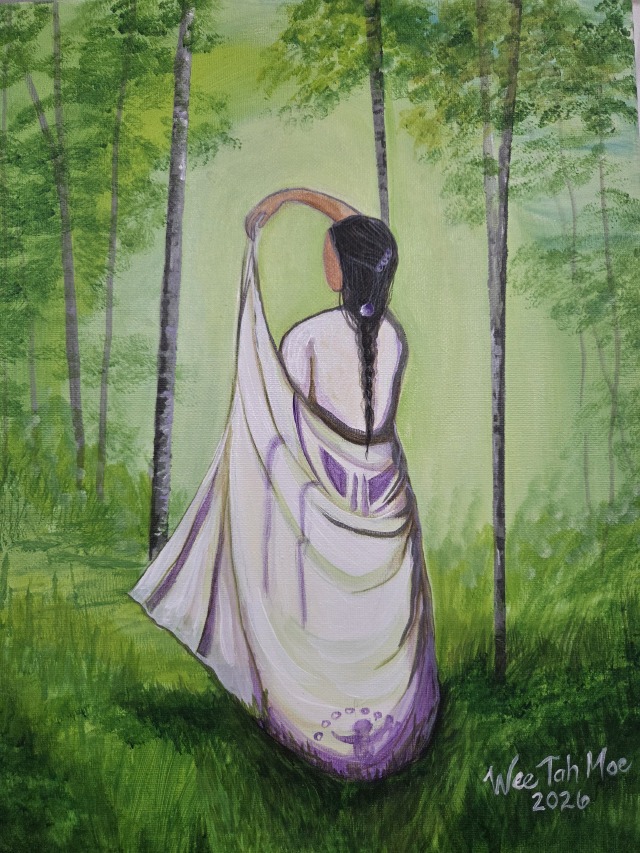
Denise Silva-Dennis, Blanket Dance at Askasqayuw Wacuw, 2026, acrylic, 11 x 14 inches. (Photo courtesy of Ma’s House)
A varied group of artists contributed work to the exhibition. Denise Silva-Dennis, a multi-disciplinary artist and educator based in the Shinnecock Nation and a retired art teacher at Southampton Elementary School, contributed her painting Blanket Dance at Askasqáyuw Wacuw, which depicts a solitary dancer, her purple and white blanket a nod to the wampum shells that she wears in her hair.
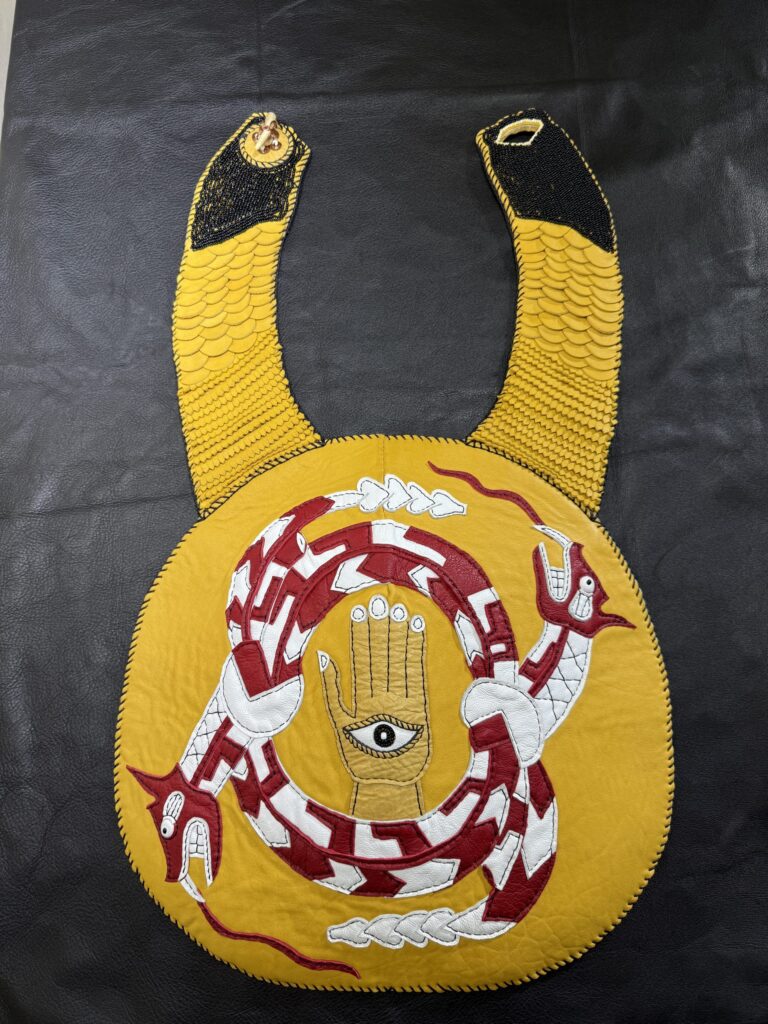
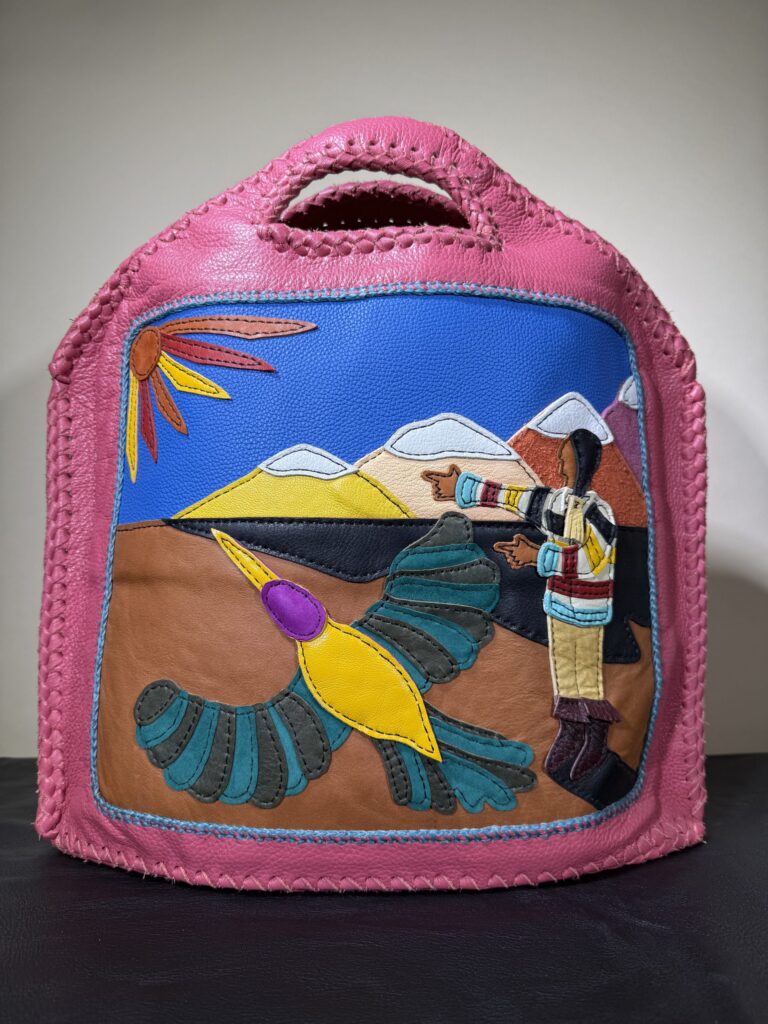
Left, Johnny Hendry, The Milky Way, 2026, deerskin, American bison leather, glass beads, copper, deer antler, 13 x 22 inches; right, Johnny Hendry, Hatak Owa Hvshi Osh, 2025, cow leather, deerskin, American bison leather, 15 x 16 inches. (Photos courtesy of Ma’s House)
Johnny Hendry shows a handmade deerskin gorget (an ornamental collar covering the throat) with a depiction of the Milky Way/Rattlesnake Portal. “Our religion was based upon ascending to the Milky Way in the afterlife, which is represented by the cream-colored bead in the center of the hand. The rattlesnakes guard the entrance into the next Realm,” he says in an artist’s statement.
Another of Hendry’s pieces, Hatak Owa Hvshi Osh, is a brightly colored bag made from cow, deer and American bison leather, which tells a story of the Chata tribe about a man who wanted to see where the Sun slept. The man walked from modern-day Mississippi to California, creating what would become trade routes that his people used for centuries.
All of Hendry’s work is made without machines or electricity. “I start with a pencil and paper and end up 10,000 stitches later all by hand a completed piece,” he notes.
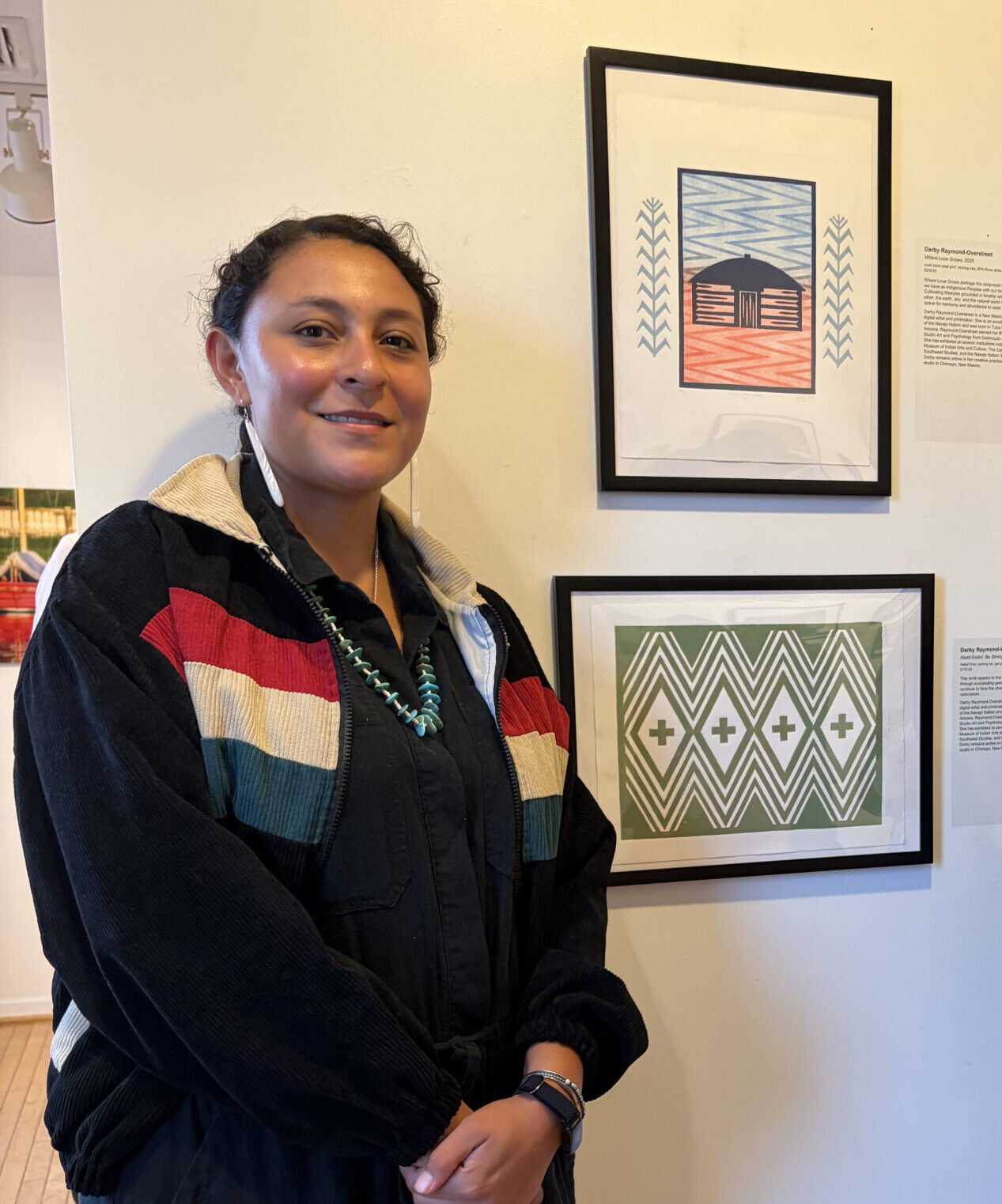
Navajo artist Darby Raymond-Overstreet contributed two prints to the exhibition that reference traditional motifs: Where Love Grows and Hada’íínólní: Be Strong. “I’m really inspired by Navajo weavings — I have weaving in my lineage,” she says. “I am not a weaver, but I draw inspiration from those geometric and pictorial styles.”
Raymond-Overstreet, who lives in New Mexico, is in the area doing a residency at Ma’s House in Southampton. The residencies support U.S.-based BIPOC artists working in different mediums with stays of one to four weeks, stipends and access to shared studio, library, gathering and program spaces.
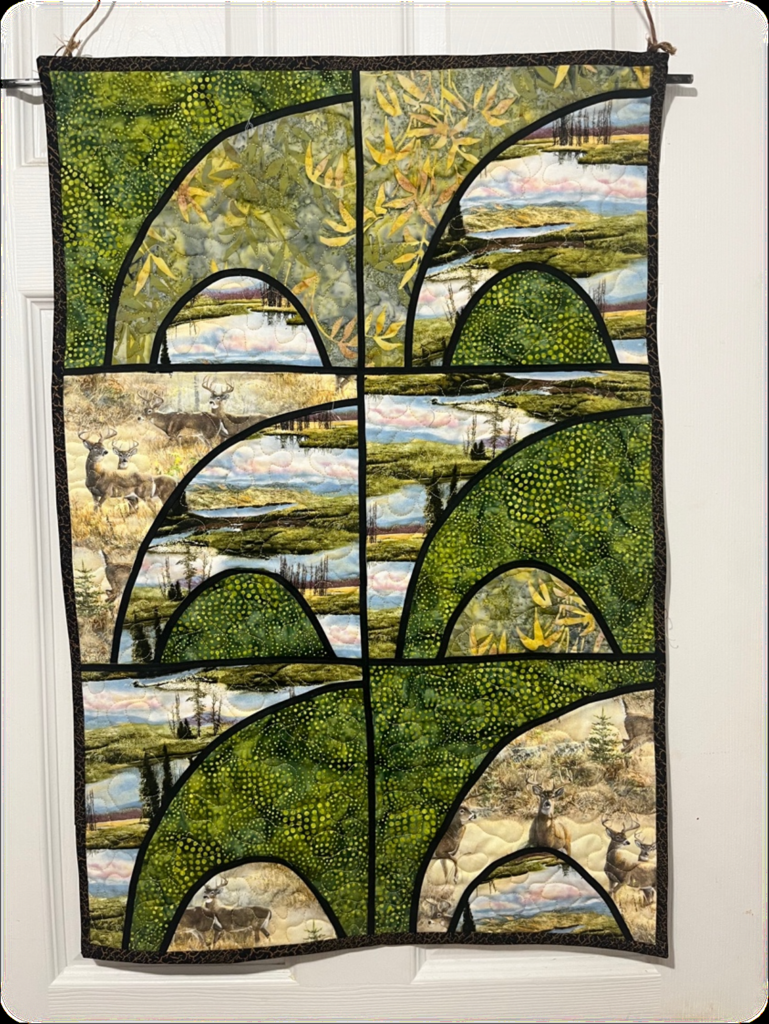
Rebekah Arch, Sacred Ground, Changing Views, nd, fabric/art quilt, 20 x 30 inches. (Photo courtesy of Ma’s House)
Rebekah Arch, an artist born and raised on Shinnecock Territory, created a quilt called Sacred Ground, Changing Views as “a reflection on the enduring presence of the land we share,” noting that the constantly changing views of the Long Island landscape continue to sustain life.
Dennis emphasizes that “this exhibition is about recognizing that the landscape we see today is not the landscape that has always existed. Long Island has been reshaped through centuries of development, but the Indigenous histories and relationships connected to these places have not disappeared.”
Raymond-Overstreet will be presenting a free collagraph printmaking workshop at Ma’s House on Sunday, October 25 from 1-3 p.m.; to sign up, click here or email [email protected] or call 631-566-0486.
The North Fork Art Collective is open Saturdays from noon to 5 p.m. and by appointment via email at [email protected].