The further we have traveled from growing, hunting and generally foraging for our own food sources with the seasons as our guide, the pickier we’ve become as a nation in what we deem edible. From neatly trimmed meats wrapped in plastic (its source animal barely identifiable, if at all), to perfectly sized strawberries not remotely in season, our demands for what we want when we want it — and how we want it to look — dictate much of what we see in markets and on restaurant menus. It’s a funny kind of sanitizing we’re all guilty of engaging in, especially when the creature, vegetable or fruit in question isn’t so picture-perfect.
Food from the sea isn’t immune to this plague of prettification. And even more so, perhaps, diners cling to the familiar. The ubiquitous branzino (European sea bass) on our plate is likely farmed in Greece or Turkey, then frozen and sent to you here. Lobster served in myriad methods? Some local fishermen grab a few when they can, but in all likelihood yours is hauled down from Maine or Canada. And salmon? Oh dear, let’s please not get started on that.
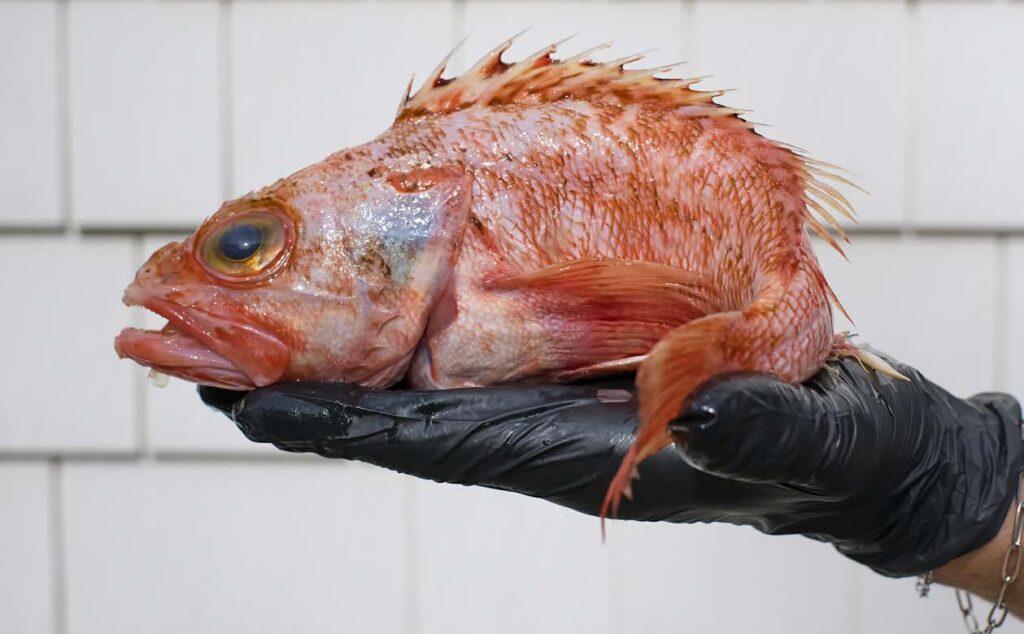
But a growing number of chefs and fishmongers on Long Island are reeling in something different yet wholly local. Often considered bycatch or bait or just too plain ugly to eat, fish and mollusks native to our waters are surfacing on menus here — and if we can all get on the boat, it will be an important key to securing a future for our maritime community in both food sourcing and who brings it to us.
CUT LINES
“Many of the restaurants around here on Long Island, even though we’re on an island surrounded by water, do not have the fish that’s harvested just off our coast. People think, ‘It’s Long Island, I’m going to eat seafood, and this must be from here.’ But it’s the furthest thing from the truth,” says Kristin Gerbino, a fisheries specialist for Cornell Cooperative Extension for the last 22 years. “The majority of seafood that people consume is imported from overseas, and so much of the fish that’s harvested off Long Island is exported. So why are we not using what we have readily available to us, and why are we not connected to our food in that way? We’re seeing all this fish on board the boat that’s being harvested, and then you go to a restaurant and you realize none of it is on the menu. The majority of what you’re seeing is shrimp, salmon and branzino.”
To fight the tide, Gerbino and her team at CCE, which is funded solely by federal and state grants, have come up with a few excellent projects that are moving the needle, albeit slowly, in the right direction. Examples are their work with fishermen in conservation gear technology, creating and testing fishing gear that reduces bycatch — that is, the creatures caught when fishing for something else entirely and which often go to waste — and other industry challenges.
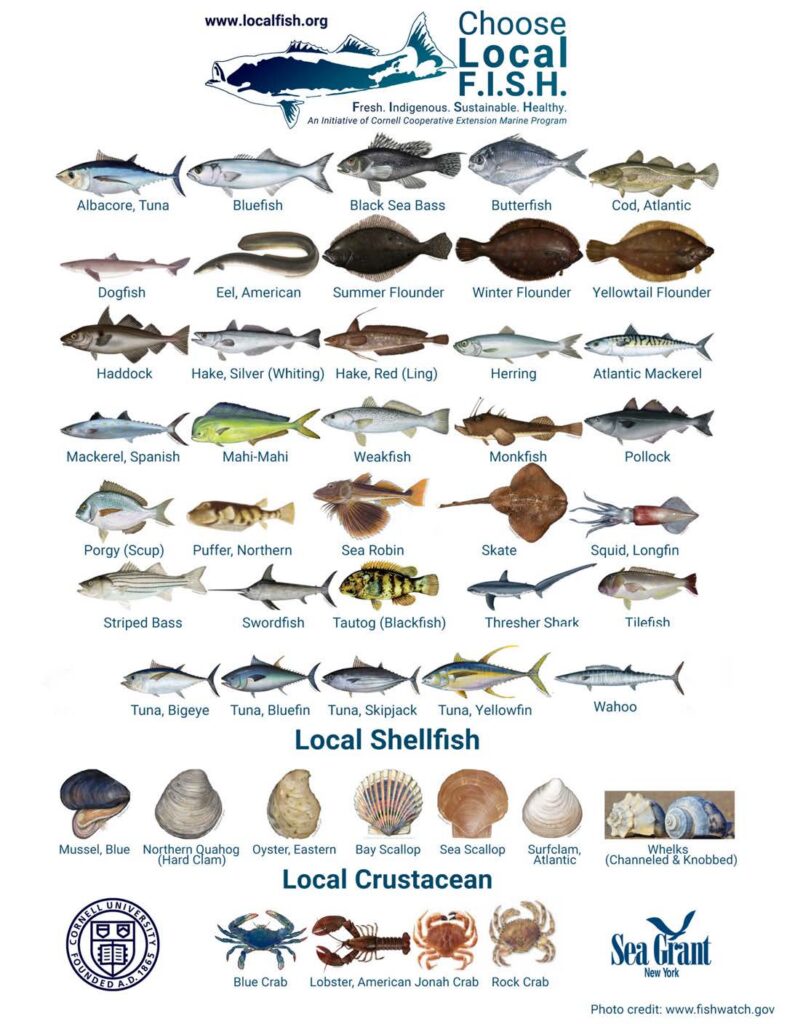
In more of a “teach a person to fish” stance, CCE has taken aim at perhaps the most pivotal problem: consumers. Through their Choose Local F.I.S.H. (fresh, indigenous, sustainable, healthy) initiative, they’ve created an educational poster of sorts, featuring graphics of a multitude of hyperlocal fish, shellfish and crustaceans with their names and nicknames, which was made in conjunction with the National Oceanic and Atmospheric Administration.
And then there’s the Long Island Seafood Cuisine Trail, as featured on localfish.org, showing consumers a digital map of where they can find these fish in both restaurants and fish markets up and down the North and South shores. The U.S.D.A. and New York Sea Grant-funded effort lists close to 50 spots serving fish from local waters, as well as fishmongers selling them and recipes to guide you through serving up a delicious dish yourself, plus a multitude of other fun, interesting, informative fish tales.
“I really am a scientist first, and we have a lot of research projects with the commercial fishing industry,” says Gerbino. “What we realized in working with them is that one of their big needs is for people to be eating the locally harvested fish that they’re out there bravely fishing for and catching.”
In addition to the names of local fish with which diners are well-familiar — flounder, swordfish, striped bass, tuna, bluefish, cod — there’s quite a cache of other under-appreciated fish, shellfish and crustaceans that fall into this purview: dogfish, butterfish, sea robin, wahoo, eel, weakfish, monkfish, scup, surf clam, whelk.
But while a big part of the issue is familiarity and the subsequent education needed to tackle that, for fishermen, it’s also one of economics. If demand exists for a popular fish that restaurants know their customers want, that’s what’s going to put food on the table for the fishermen and the restaurant. Engaging in a mission to make people eat differently, even if it’s all-around better for everyone? That’s a harder sell.
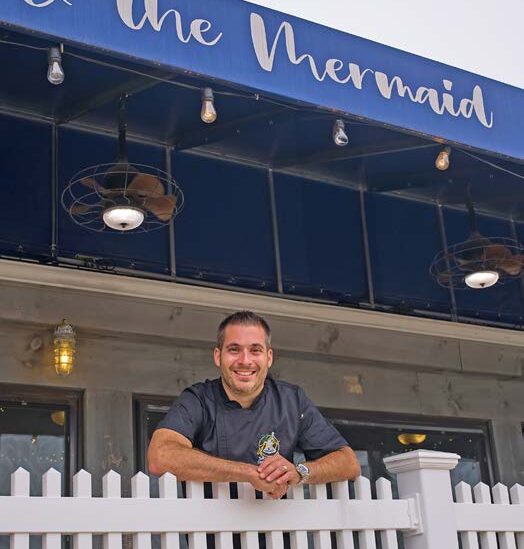
“There’s stuff that, for the fishermen, aren’t worth it. Like, are they going to clean skate and bring these big skates on their boat and have to deal with all of that, and sell it for $4 a pound, where they’re selling bass or something else for double the price,” says Jerry Dicecco, chef and owner of Jerry and the Mermaid in Riverhead. “That, you know, a lot of times it just doesn’t financially make sense for them.”
RED SKY AT MORN, SAILOR BE WARNED
“It’s very easy to see that the future of our fishery is in jeopardy. We need to support our fishermen through sensible policies and in every way we possibly can to make sure that the vitality of the fishery is there,” says K.C. Boyle of Dock to Dish, the fish purveying company initially founded as a way to connect local fishermen and their catches to East End restaurants. “It’s vibrant, one of the longest standing traditions of Long Island, really. It’s like the bedrock of our identity.”
Dock to Dish, which was founded as a direct-to-consumer and chef community supported fishery in 2012, has shifted as a company as of last year into wholesale, now partnering with Down East Seafood, the sustainably sourced seafood purveyor division of Chefs’ Warehouse. Their mission is still East Coast-driven in what they source and sell, with bycatch or underutilized fish not uncommon as a catch of the day.
For Boyle, it’s a topic about which he is deeply passionate.
“So, look, the first, second and third priority of sustainability, in my mind, is to support our fishermen and to support them by buying local fish,” he says. “They sacrifice everything to put food on our plate, right? They miss birthdays, they miss weddings, they miss funerals, they miss the most important milestones of life in order to put food on our plate. They’re sacrificing their body, and they’re going out in extremely dangerous conditions.”
Meanwhile, the median age of commercial fishermen, a career choice seemingly for the young, is inching up year after year. In a 2017 study funded by the U.S. Department of Commerce and NOAA, the average age of a commercial fisherman was already at 52. According to the New England Young Fishermen’s Alliance, which formed to address the “graying of the fleet,” that age has risen to between 58 and 60, on average. And while it is often an apprenticed, generational occupation, the issue of all-around regional affordability is taking a bite out of younger anglers. Climate change, regulations, overfishing and all-around ecosystem collapse have made the abundance of “popular” fish not so abundant. And if the money’s not there to bring home, there’s no future in the industry.
Part of that thinking on fisherman can, also, extend to what they’re catching. While tuna isn’t the first fish that comes to mind when sustainability is on the table, its importance wraps back to this other aspect of the issue: fisherman’s livelihoods.
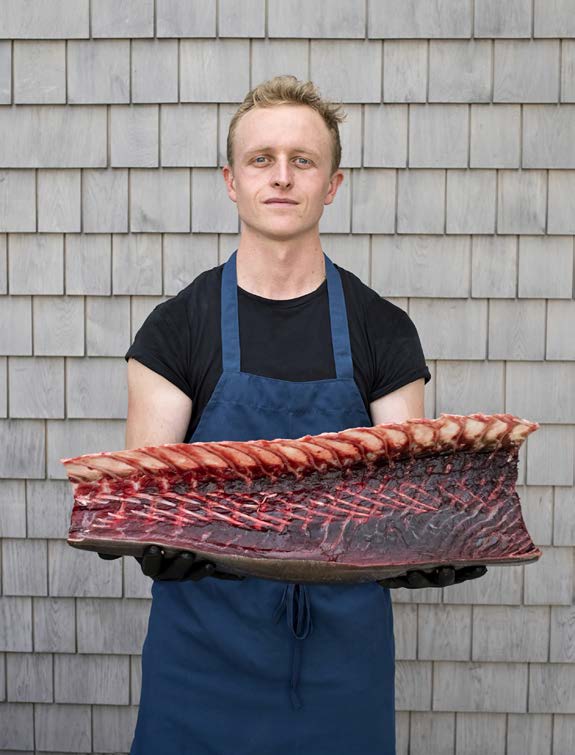
“We have tuna on the menu this year in a pretty big way. I was initially like, well, you know, tuna is a heavily used product and it’s an apex predator, and I think of those things as a no-no when it comes to my sustainable food message,” says chef Finn O’Hara of Silver Sands Motel in Greenport. “[But] there’s a generation of tuna fishermen on the East Coast and they are 60-year-old men looking to retire soon. If we don’t continue to support that industry our shorelines will go barren because the younger folks won’t pick it up if there’s not enough money there, and then when those fisheries go away…”
Strict fishing regulations and requirements from National Oceanic and Atmospheric Administration, O’Hara says, have improved stocks for local commercial fisherman lately so tuna is added to the sustainable menu of options.
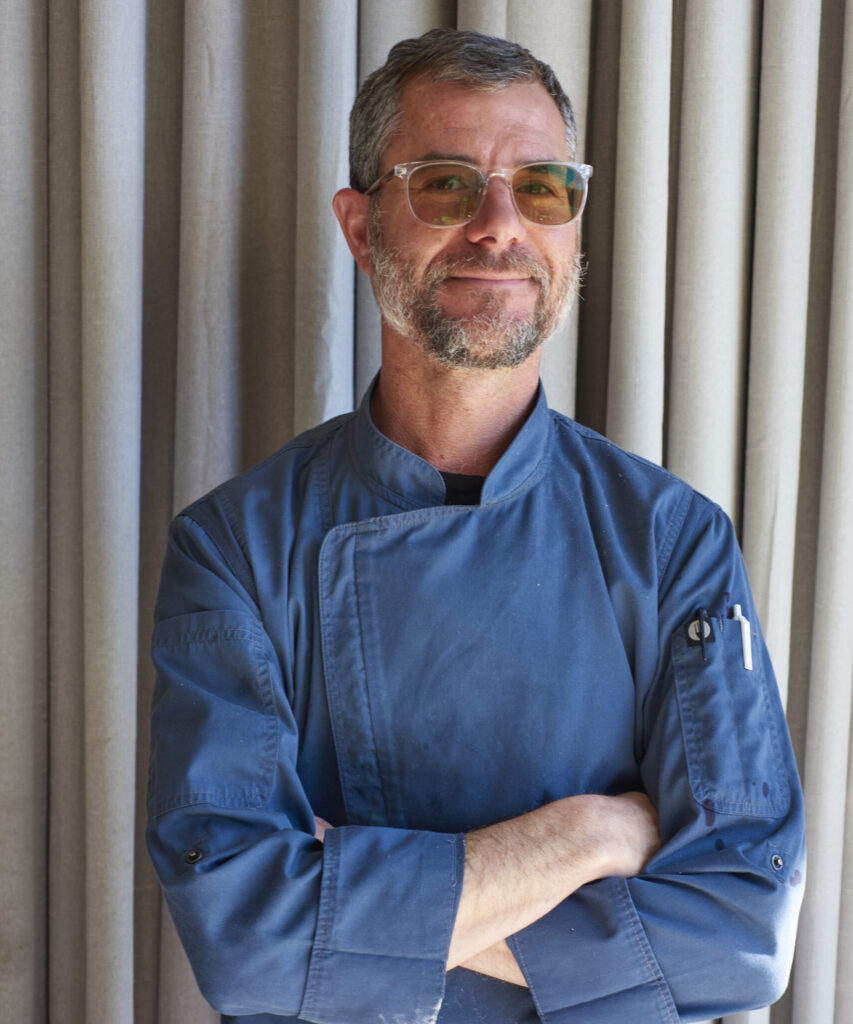
Chef Armond Joseph of Shelter Island’s Leon 1909 has become a passionate promoter of local, less-loved fish, from surf clams to predator shellfish like green crab.
“If we stop using those fisheries that are regulated and sustainable, then the sourcing moves to Southeast Asia or [other] places,” he says. “Then we’re shipping in commodity seafood from far, far away to our shorelines.”
HOOKING A LIVE ONE
Local fish stocks, though, may well hold hope for a better future, and many East End chefs are answering the call.
“It’s important to profile our hallmark species — fluke, black sea bass, tile fish and squid are really the four species that keep Montauk in business,” says Boyle. “It’s important to keep those mainstays on menus present, but the more that fishermen can diversify their catch and monetize their catch, whether it’s butterfish, whether it’s porgy, whether it’s sea robin, whether it’s dogfish… I mean, there’s limitless opportunity.”
As for chefs like O’Hara, Dicecco, who often brings less-familiar finned creatures to his menu, Armond Joseph of Léon 1909 on Shelter Island, Joe Realmuto of the Honest Man Group in East Hampton, Jason Weiner of Almond in Bridgehampton and restaurant owners like Minnow at the Galley Ho’s Andrea Tese, being an eager partner in sustainable seafood sourcing means introducing diners to what’s right under their noses.
For O’Hara, the topic is at the forefront of his menu and his mind. A bit of a naturalist, the chef, who cut his teeth at New York’s Michelin-starred Four Horsemen, grew up on Long Island and has spent a lifetime fishing with his family. As his career began to expand, he found his thoughts homing in on things closer to, well, home.
“I just started asking myself, how can we make a little bit of a difference in our restaurant? And so, we started really attempting to utilize not only just kind of bycatch product, but heavily underutilized products,” says O’Hara. For him, presentation has been a big part of the fun, not just creating dishes so irresistible diners can’t possibly resist them but making a real connection between the item and its origins, like his surfclam ceviche, served in that bivalve’s giant shell. It’s become one of the most popular items on the menu at Eddie’s, Silver Sands’s seasonal beachside eatery. Normally, surfclams are sold far and wide to be made into frozen clam strips, never showing up on a local menu, at least not by name (you can find them in clam chowder). It’s just one of many recurring local yet barely known fish and shellfish that have found a home on O’Hara’s purposeful menus.
Joseph, too, is a surfclam fan, among other local-water dwellers, frequently featuring them on his menu at Léon. This past July, he helped take aim at an adjacent issue — the devastating effects of green crabs on local crustaceans and eelgrass — during the Green Crab Week initiative.
“The European green crab is an invasive species. One green crab can eat up to 40 soft shell clams a day. They also eat baby lobsters, baby shrimp. They mess around with the eelgrass, which is already problematic,” says Joseph. “You don’t really use them for meat. The reason is they’re so small. You can have them as soft shell and have them whole. There’s a roe season where you can have the crab roe, which is quite delicious! And then you can use them for a lot of broths and fermented sauces. They have beautiful crab flavor but at a really good price, if we create a market for them and, you know, restaurants are kind of the first place.”
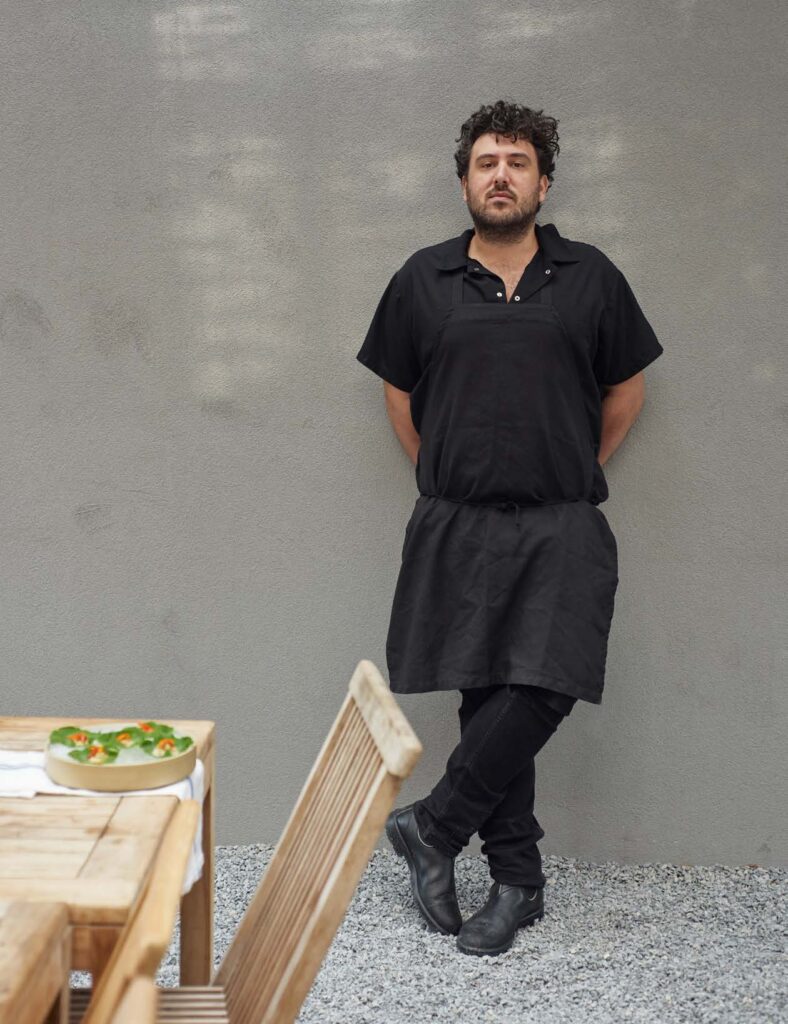
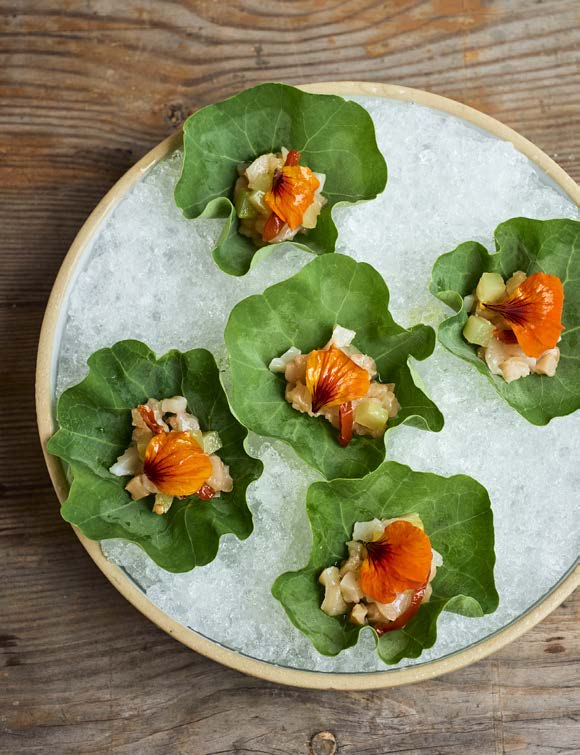
Chef Armond Joseph of Shelter Island’s Leon 1909 has become a passionate promoter of local, less-loved fish, from surf clams to predator shellfish like green crab.
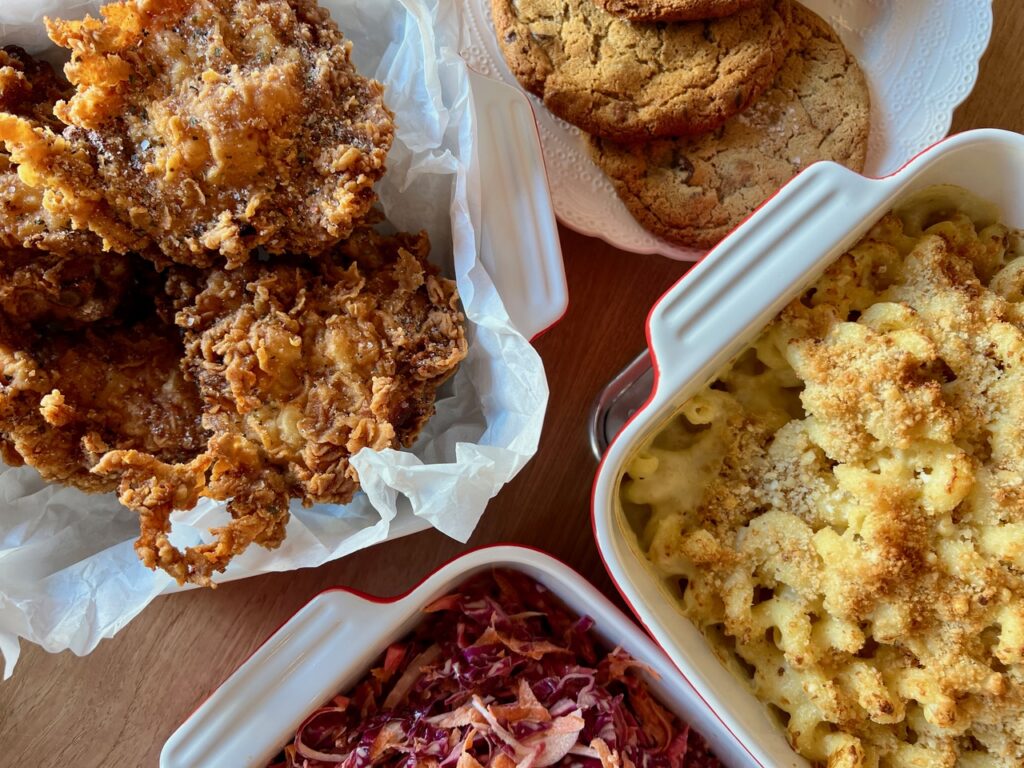
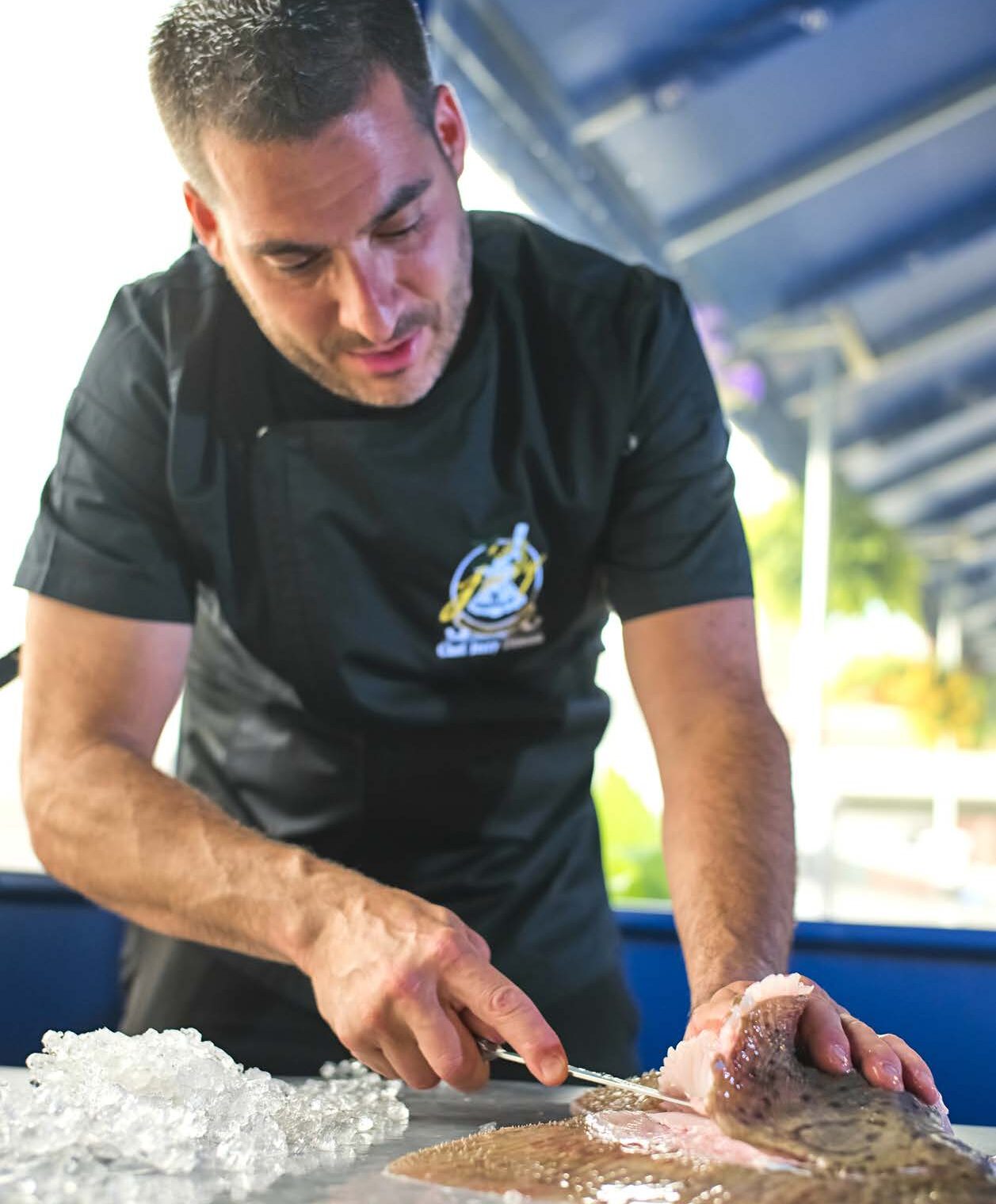
The key with this and other lesser-used fish is in the creativity. Dicecco has spun new interest in skate, using it as a protein source for banh mi. O’Hara has dogfish ever-present on his menu, tender chunks soaked in buttermilk, fried to a just-golden crisp and dipped in a coriander-chili aioli, as well as the extremely underused whelk.
“It’s really important because us as a society, as a country, and definitely us on the North Fork really have an obligation toward education, especially in the food industry. You know, it’s not all salmon,” says O’Hara. “The reality is that seafood’s going to go away, and it’s going to make us all sad at the end of the day. We use something like 3% of the actual edible seafood that’s out there. There is so much more out there that people are uncomfortable with for some reason, and I attempt to make it so delicious that they are not uncomfortable any longer.”