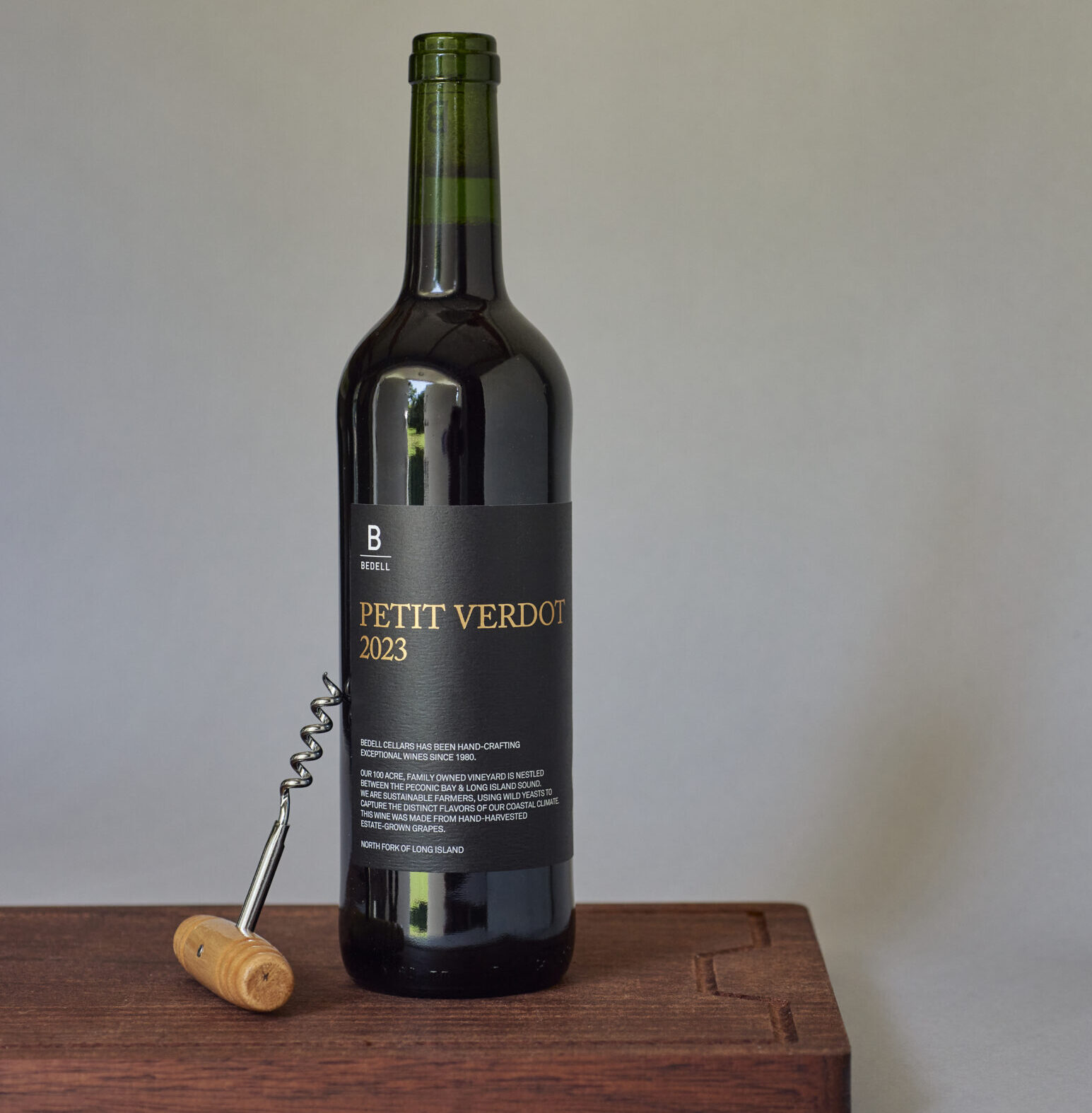
WINERY Bedell Cellars
WINEMAKER Marin Brennan
WINE 2023 Petit Verdot, 12.5% abv, 300 cases made
GRAPES 100% petit verdot
PRICE $50
FAVE FOOD PAIRING Roasted local squash or braised short ribs
In a way, there’s nothing petite about petit verdot — except, maybe, how much of it is grown on the East End. Traditionally, this tiny-berried red grape is used for blending, adding color, acidity and sturdy but not overwhelming tannin. But all those things on their own? They’re actually … kind of amazing.
That’s what Marin Brennan believes, and so do the good folks at Cutchogue’s Bedell Cellars, who started out in 1999 with only a half-acre planted but have increased that to 2 ½ acres of the late-ripening red.
“There’s a lot to like about petit verdot on Long Island. It’s one of our most consistent varieties, both in the vineyard and in the cellar. Year after year, it ripens reliably in our maritime climate and produces wines with excellent color, structure and depth,” says Brennan. “What I enjoy most is that it reflects our terroir so well. While petit verdot is naturally powerful and structured, on the North Fork it also retains bright acidity, [and a] fresh dark berry [fruit].”
And 2023? It’s a standout. The slightly cooler year, which saw a little extra rain during the growing season, didn’t prove to be a conundrum in the vineyard; the opposite, in fact. The temps provided the right circumstances for excellent acidity, but the grape’s typical bitter-end hang time (it’s the last to come in) allowed for slow, steady ripening. It’s powerful and saturated, with beautiful deep, dark cherry and blackberry notes, just a little hint of dark chocolate, structural elegance that makes you sit up a little straighter and a bright gemstone ruby hue that nearly glows from within.
It’s not a grape that many producers use as 100% varietal wine, in part because of the amount available and the notion that not all wine drinkers are familiar with it. Add to that the conundrum that its viability in slightly off years means it’s needed as a blending grape to bolster other reds with its excellent qualities. And, well, petit verdot has a little road ahead in fighting for its place in the spotlight. But that may well be changing.
“Consumers are also becoming more adventurous and are looking for varieties beyond the familiar,” Brennan says. “Petit verdot is no longer viewed as just a blending grape. While it still plays an important role in Bordeaux-style blends, it’s increasingly earning recognition as a standalone varietal. It’s a small grape with a big personality, producing deeply colored wines with rich tannin, dark fruit character and enough freshness to make it both approachable when young and age-worthy.”