Six years ago, the landscape in front of Minnow at the Galley Ho in New Suffolk looked very different.
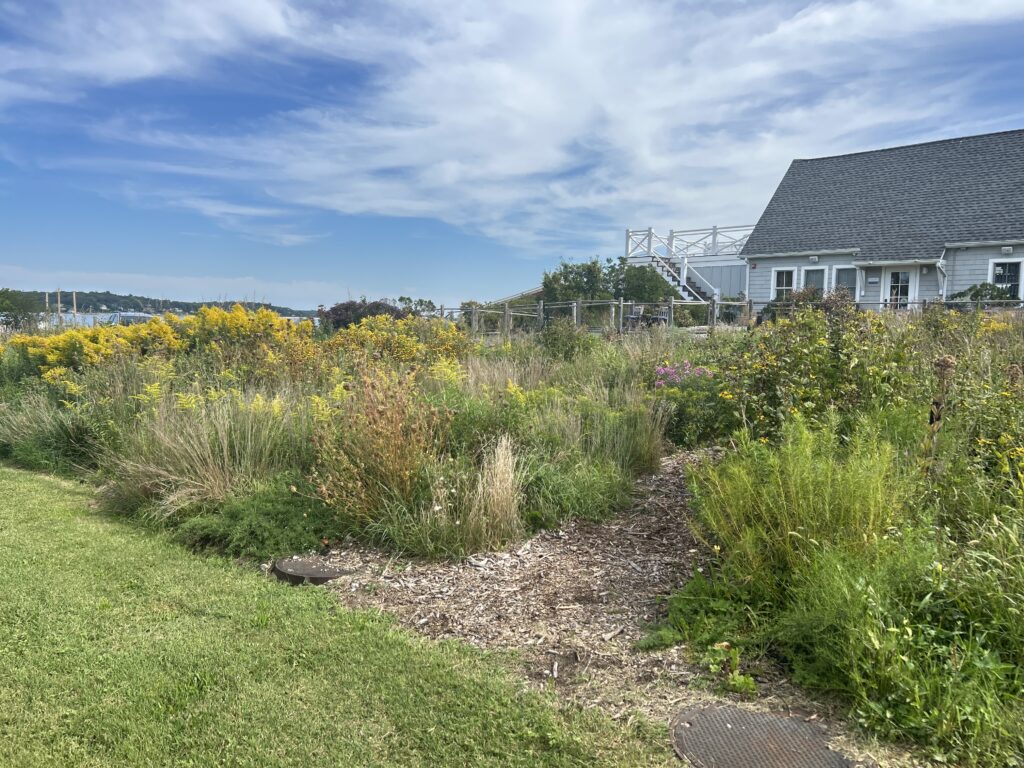
What is now a flourishing native plant meadow was once largely overtaken by mugwort, an invasive plant whose persistent roots made reclaiming the site a hands-on effort.
The garden’s story began in 2016, when the New Suffolk Waterfront Fund developed the property and installed a septic system for the restaurant. With dozens of manhole covers across the septic field, the organization brought in topsoil and embraced native plants to make the area both attractive and environmentally appropriate.
The first planting included species such as echinacea, bee balm, amsonia, partridge pea, rudbeckia, mountain mint and native grasses. But a garden, as the volunteers learned, is never truly finished. By 2020, mugwort had overwhelmed the plantings.
That year, volunteers began reclaiming the meadow by hand. They pulled, dug and hauled away load after load of mugwort, taking care to remove as much of its extensive root system as possible. The work continued into the following year as they prepared and replanted newly cleared sections.
Gardener Lucy Maitland and master gardener Barbara Butterworth are among those who have watched that transformation firsthand. Today, the meadow is filled with native plants that provide habitat and food for pollinators, with goldenrod and asters creating a particularly vibrant display in late summer and fall.
“This is the payoff time when it all looks fabulous and everyone’s wowed,” Maitland says.
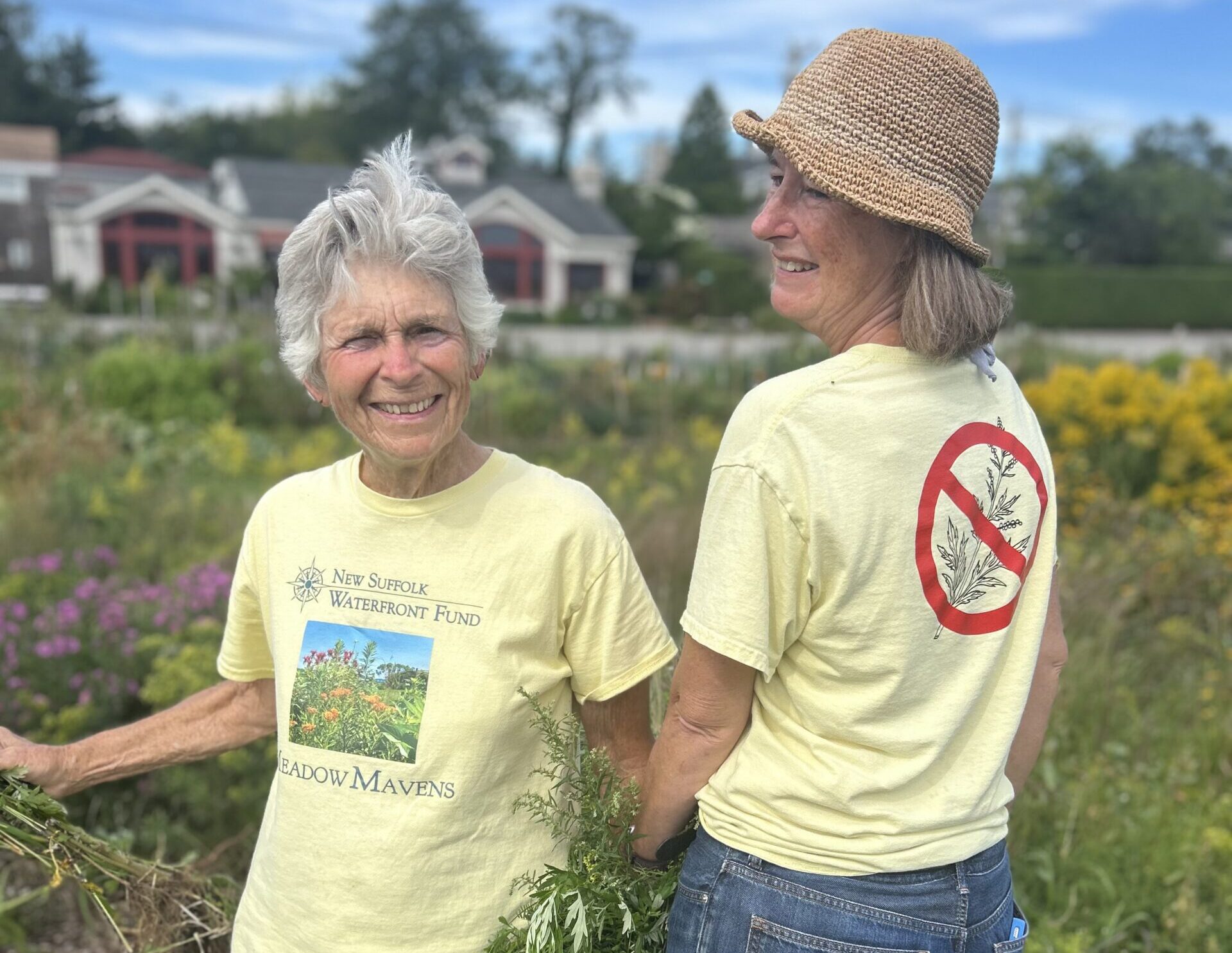
The Meadow Mavens, a core group of about 10 local volunteers, do the work on Sunday mornings during the growing season. Their work is primarily weeding, along with planting, maintaining paths and keeping aggressive plants from overwhelming the meadow.
“I think part of it is the social gathering,” Butterworth says. “Afterward, Lucy brings iced tea, I bring cookies, and we sit and chat.”
Mugwort still appears, and even some native species, including big bluestem, have proved overly vigorous for the confined space.
The garden’s evolution has also extended beyond planting. In 2025, Butterworth and fellow Meadow Maven Gloria Baume enrolled in Cornell Cooperative Extension’s Master Gardener Program. As part of their work, the meadow became a Master Gardener-approved site, allowing participants to earn volunteer hours there. Butterworth and Baume also developed an educational plant plaque with QR codes offering additional information.
North Fork Side by Side supported the project by funding the signage. The display incorporates historic mulberry wood connected to New Suffolk’s 19th-century silk-farming history.
Next comes another chapter in the meadow’s cycle: a community seed-collecting workshop planned for Oct. 17 at 10 a.m., with participants collecting and preparing seeds from plants growing in the meadow. Registration is limited to 20 people.
For the Meadow Mavens, the garden’s greatest lesson may be its ongoing nature. Replacing mugwort with native plants was only the beginning. Keeping the meadow thriving requires returning, season after season, to pull, plant, clear and make room for what belongs.