There are those kinds of people who don’t like to stay anywhere too long. The ones who live out of a suitcase, hopping from one place to the next, always traveling light and eschewing too many earthly belongings. The ones to whom you send a holiday card and it inevitably gets returned.
But there’s another parallel category of wanderluster — the ones who live to travel, to bear witness to the world around them and all its treasure, both tangible and experiential, but who also have a deep desire to bring it all back home and share it.
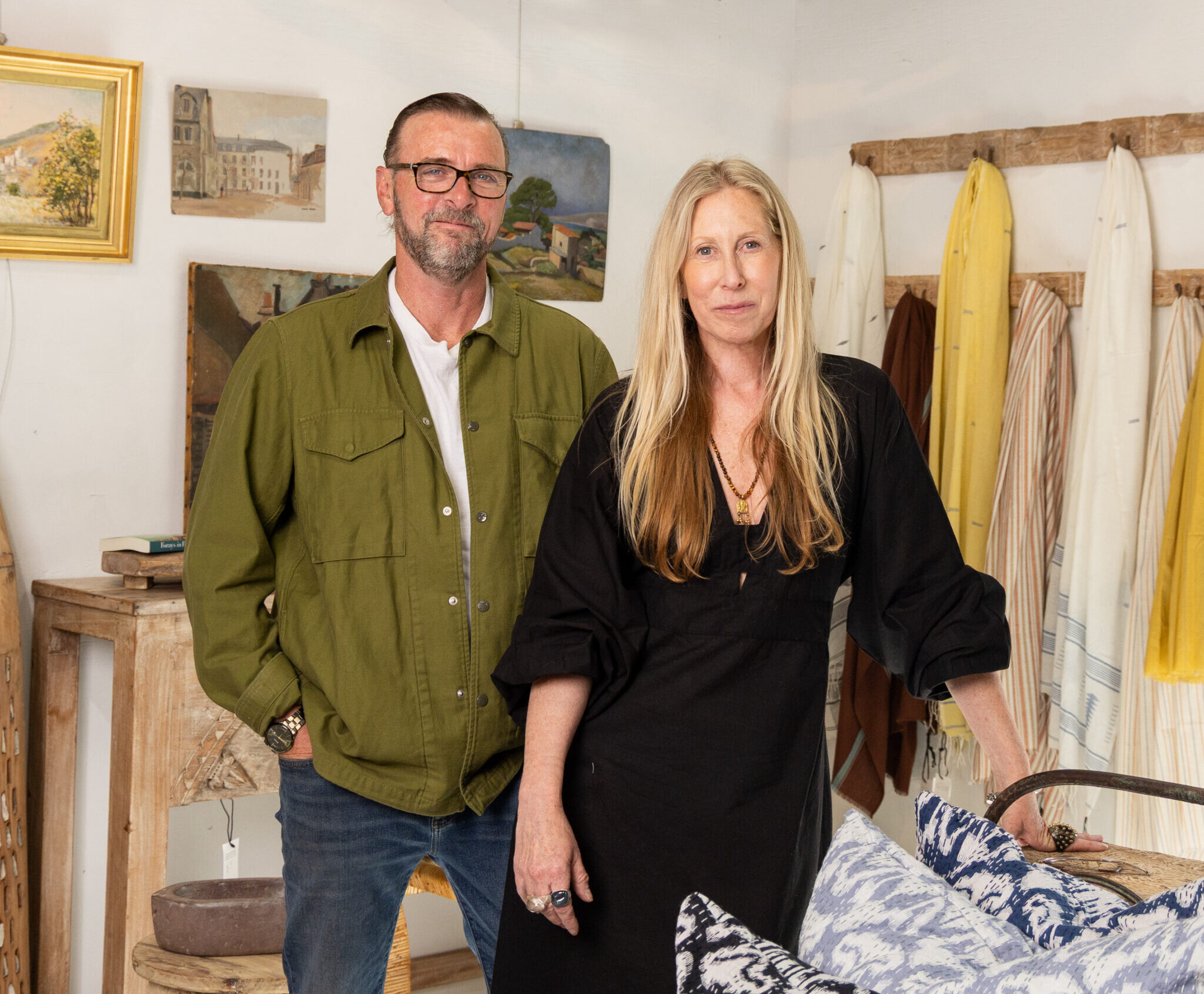
Heidi Kelso and Grant Cowell are the latter, and for those of us homebodies who are happy to live vicariously through them and their 14-year-old Greenport shop, Lido, transport to other worlds is ready for the taking, right on Main Street.
The Pop-Up That Put Down Roots
Located in a long, stately, Federalist-style red brick building with white dentil molding running its length and within view of Greenport Harbor, Lido is nestled between Greenport Creamery and Goldsmith’s Toys & Electronics. Its curve-topped picture window stands out for the very un-Federalist items displayed within it: woven throws from Salento, Italy; one-of-a-kind, hand-blocked beachy caftans with a Mediterranean vibe; pit-baked terra cotta pots from India; hand-woven Beni Ouarain rugs from Morocco.
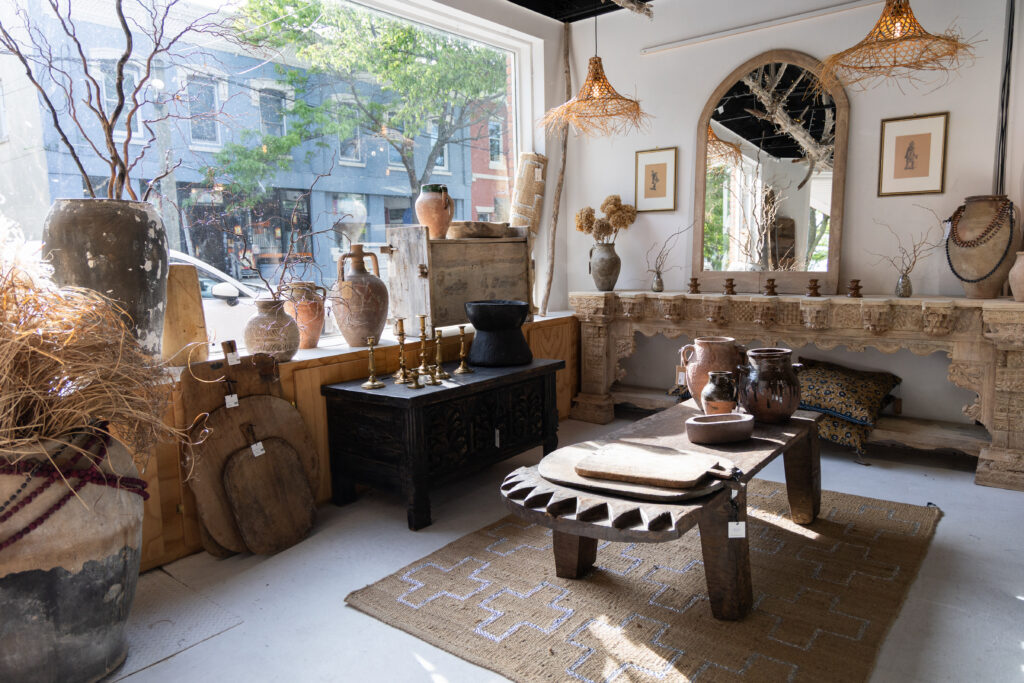
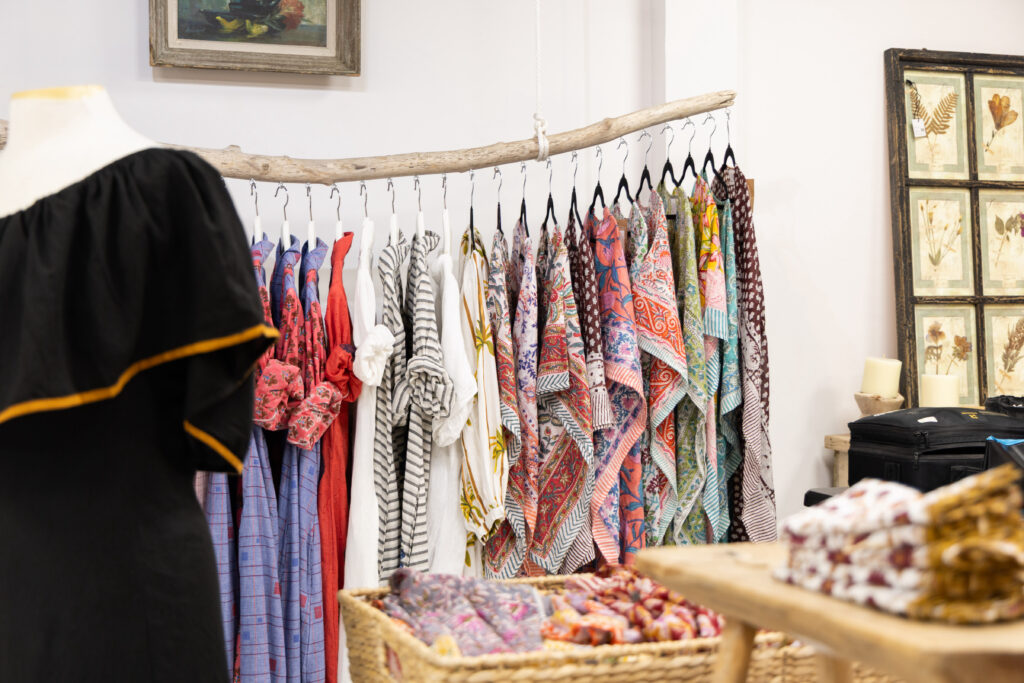
Photo Credit: Madison Fender
Open year-round, Lido was never meant to be more than a summer romance, a three-month fling in Greenport dreamt up by Kelso and an old college friend and presented to summer strollers as the source of wearable, stylish souvenirs from points further afield.
“I had this idea that I wanted to do a pop-up because I would travel all over the world, bring things back, and people would say, ‘Where’d you get that?’” Kelso says. “And I said, you know, wouldn’t it be fun to do a pop-up and just curate my favorite things…”
Initially dubbed Eureka Beach, Kelso took up residence next to the former cupcake den Butta’ Cakes, now Lucharitos (both owned by local dining trendspotter Mark LaMaina), and that three-month stint turned into four months; four months turned into six.
Charmed by Greenport, Kelso kept finding reasons to stay. Eureka Beach got a coveted write-up in T magazine, the New York Times weekend supplement, and suddenly her little experiment became a must-visit. When her business partner needed to step back for family reasons, she changed the name to Lido and Cowell stepped in.
“I have never met anybody like Grant, who is a true Renaissance guy. He can literally build it, make it, fix it. It’s utterly unbelievable,” says Kelso. “If there’s a challenge, whether it’s logistics or fixing something or making something better, he’s the guy.”
Their skill sets complemented each other’s immediately: Kelso, a creative with a keen, uncanny eye for everything from unique clothing and textiles and their makers to one-of-a-kind antique furniture destined to become a home’s showstopper piece. Cowell, also a creative, is the one with a logistical brain and the ability to fix and tinker and find solutions.
“I like a good puzzle and projects,” says Cowell. “And obviously, I want to make sure that my wife succeeds in whatever she does. You know, it’s a lot of give and take.”
The two met and became friends a few decades ago through the music business. Kelso, who still runs a company that produces award shows and concert specials, used to run the H.O.R.D.E. Festival, which was founded in 1992 by the band Blues Traveler, with whom Cowell worked for many years. Cowell got married and had two children; Kelso was dating H.O.R.D.E.’s lighting designer, with whom she actually attended Cowell’s wedding. Years and years passed and they lost track of each other. The lighting designer relationship petered out (although they’re still friends); Cowell got divorced. A chance connection on Facebook brought them back together around 2011 — and together they’ve been ever since.
After a few years in the pop-up spot, LaMaina had turned Butta’ Cakes into Lucharitos and wanted to expand, which meant Kelso and Cowell needed to find a new home for the little flirtation of a shop that had settled down. Across the street, Arlene Marvin was gearing up to close her beloved local store, the Cookery Dock, after a good 43-year run. She owned the building and was looking for a tenant. Kelso’s friend, local boat captain and musician Dave Berson, suggested she talk to Marvin. The two women bonded over their mutual love of Bali, and Marvin liked Kelso and Cowell’s spirit. They struck a deal, and it’s where Lido’s taken up residence for over a decade.
On the Road
The store has slowly evolved over time, moving from beachy-vibe clothing to a destination with often one-of-a-kind pieces with provenance, such as clothes or furniture or home décor. Kelso and Cowell travel all over the world, traversing myriad countries side by side — Turkey, India, Morocco, Bali, France, Belgium, Italy — seeking out master craftspeople, be they furniture makers, block printers, color masters, weavers, seamstresses and the like.
Many of the items they sell carry the Lido brand tag, as they are made for them and them only, and in limited quantities. You might, say, find a similar popular style of caftan from one year to the next, but the fabric, the dye, the embroidered accents, or a slight change in the swing of the hem will make it something that’s only in your closet.
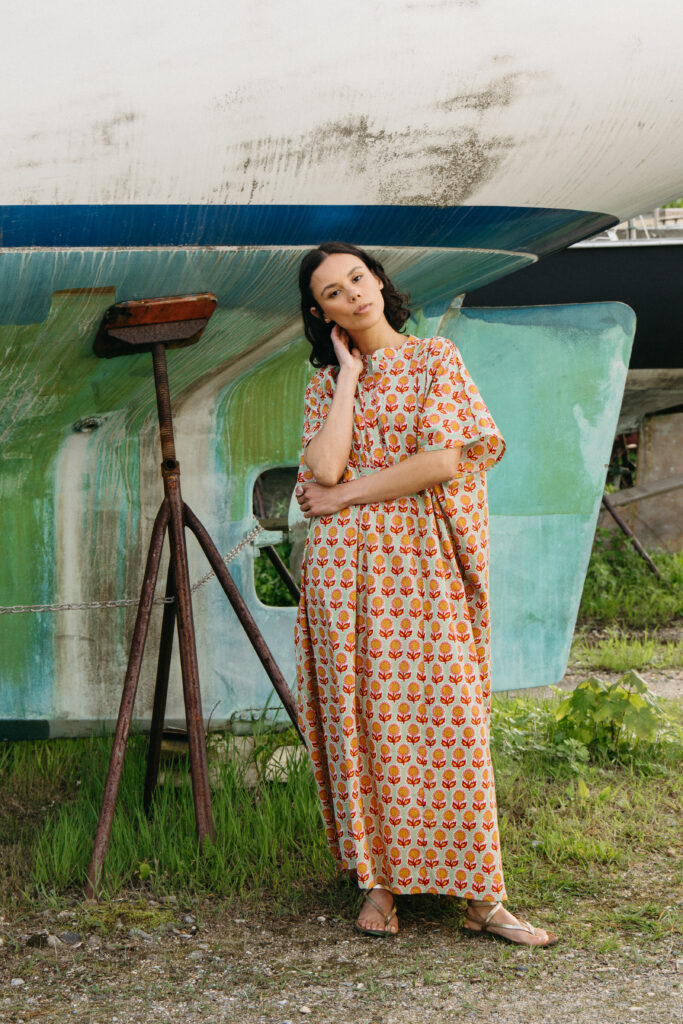
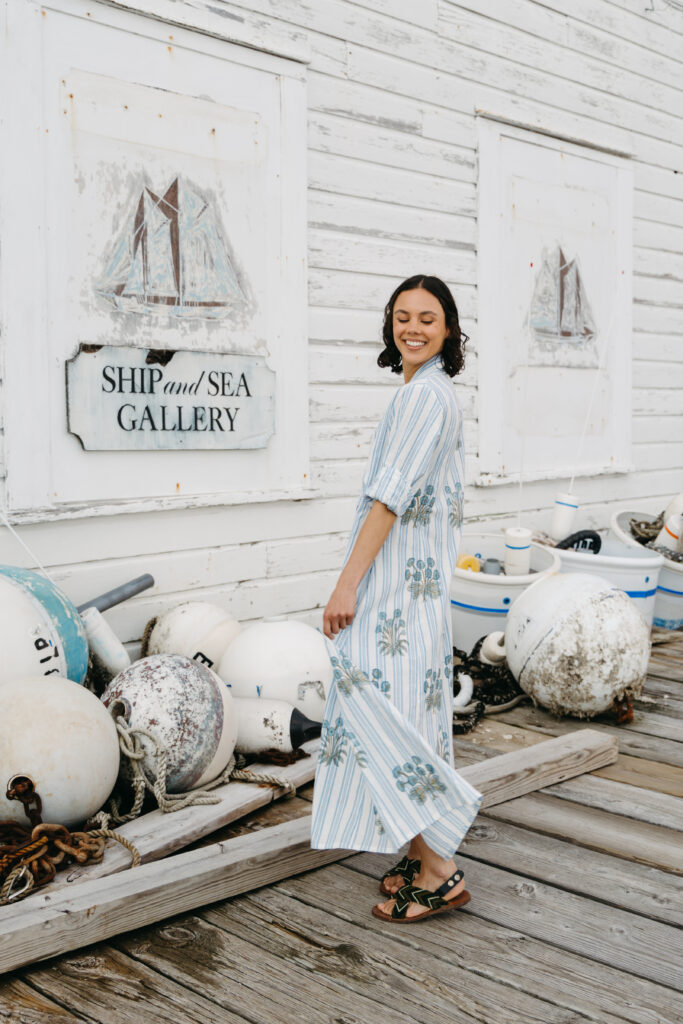
Model Daina Reynolds donned some of Lido’s swingy summer dresses available at the store this season. (Photo Credit: Madison Fender)
Some of the items are antiques of a particular stand-alone ilk, the kind of thing that most of us would pass by if we saw it out in the wilds of the world but that catches the eye of Kelso and Cowell on their treks to far-flung places, like the grain threshers they found in Anatolia in southern Turkey, a place rife with the ruins of empires past.
“I think they’re super cool. I like all these weird kind of things. They’re like sleds and they have quartz and flint rock buried in them, and they were used to drag through the barley and wheat fields to catch all the grain,” says Cowell. “Heidi was looking at them and was like, ‘I don’t know…’ and I’m like, ‘I’m telling you! They’re really cool!’”
Back on the North Fork, with its farming history, Kelso could see that Cowell was right, at once an art piece and a reminder of the region’s roots.
“They’re visually aesthetic,” Cowell says, “but they’ve got a whole story behind them.”
Which you can pretty much say about everything inside Lido.
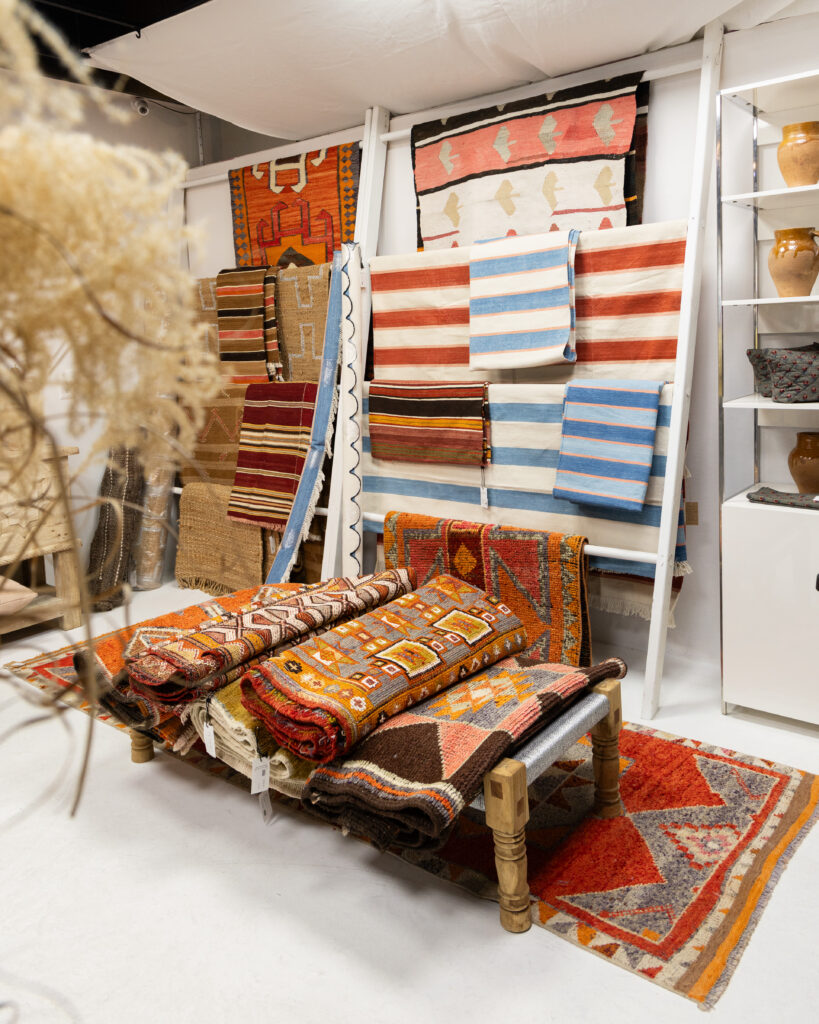
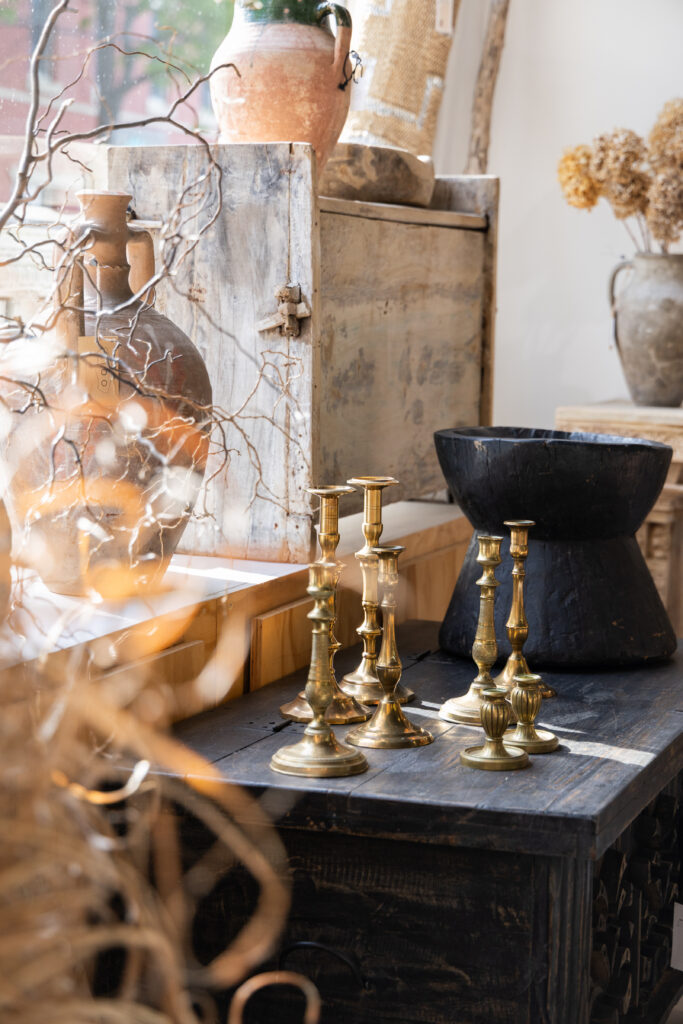
Constant treks for sourcing and a love of unique objects, textiles and clothing design has been the lasting power of lovely Lido. (Photo Credit: Madison Fender)
“It’s really the practice of what [these artisans] do, and some of these practices have been the same for hundreds of thousands of years, passed down generation to generation,” says Kelso. “Whatever country we go to and whatever we find, whether it’s vintage rugs in Morocco and Turkey or weavers in Bali and India, that’s really the aspect of what we love.”