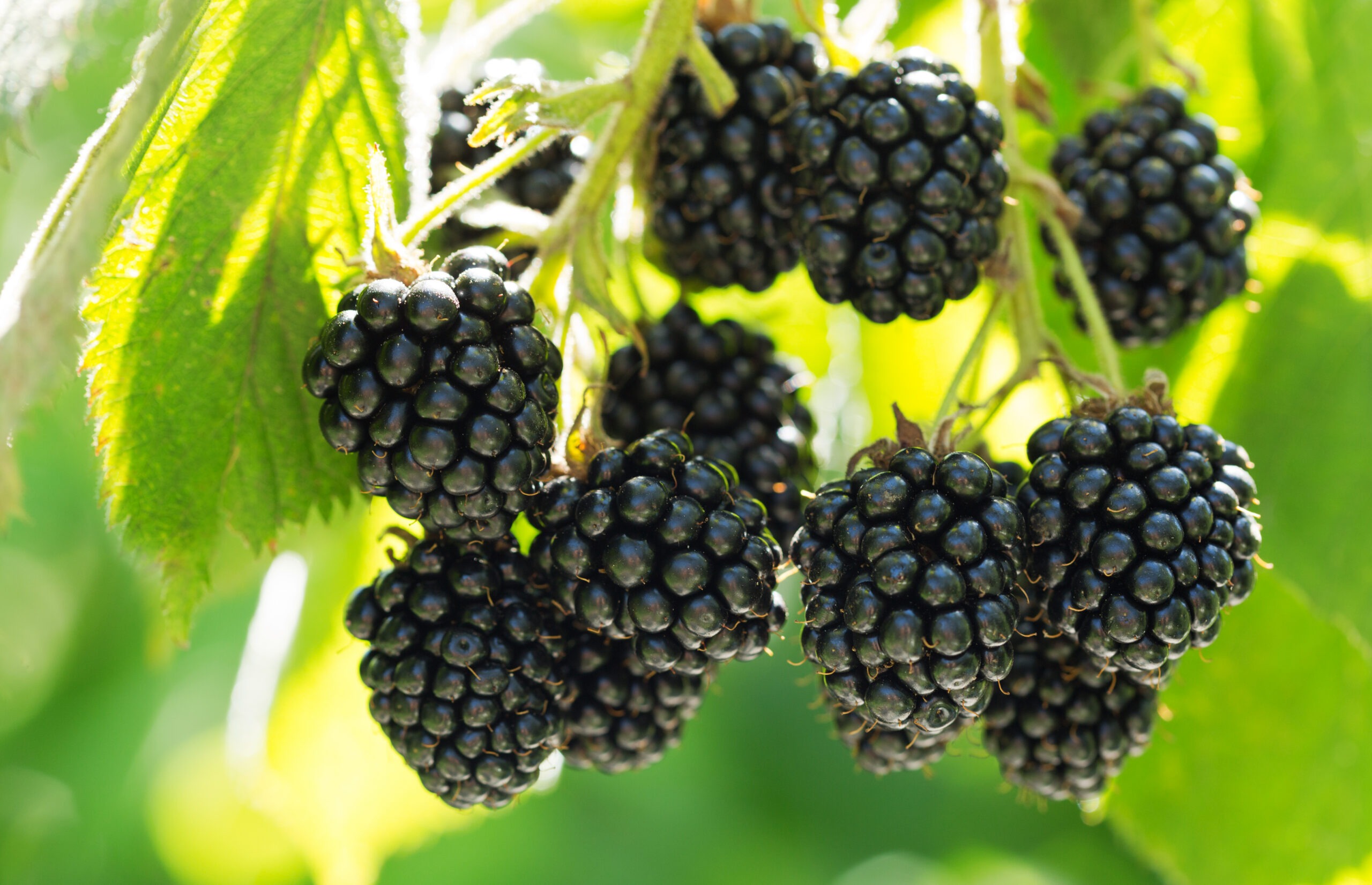
Whether you live on or visit the East End, summer berries are a seasonal given, be they cultivated blackberries, strawberries, blueberries and raspberries from local farms or roadside tangles of wine berries ready to stain your fingers and fill Dixie cups with wild treasure.
The area is chock-full of farm stands with berry bounty, from Garden of Eve in Riverhead, Golden Acres in Jamesport and Wickham’s in Cutchogue to Deep Roots in Southold and Latham in Orient, not to mention all order of smaller roadside stands up and down the North Fork. But even though farm life is alive and well here, enterprising gardeners may ask: Why not grow your own?
A backyard berry garden allows you to create your own day of picking (and eating — like us, farmers and gardeners often can’t wait to enjoy their berries). Try your thumb at a blackberry, strawberry, blueberry or raspberry garden this year with these tips from local pros.
Let’s get dirty
Don’t leave your garden center without some hefty bags of dirt. Soil is so essential, in fact, it deserves its own section so that we can dig into all the details.
Soil isn’t one size fits all — or, rather, one pH level fits all. Patty Divello of Patty’s Berries and Bunches (410 Sound Ave., Mattituck, 631-655-7996) suggests growing strawberries, blackberries and raspberries in soil with a pH of 4 to 6. “Right in the middle,” she says. Blueberries, on the other hand, thrive in soil with a pH of around 4 to 5.
If blueberries sound like the outlier, it’s because they are.
“Blueberries are different because they’re not a bramble,” says Eve Kaplan-Walbrecht of Garden of Eve Organic Farm (4558 Sound Ave., Riverhead, 631-722-8777). “The other berries are related, but blueberries are completely different and need acidic soil.”
You can make soil more acidic by mixing it with sulfur and taking advantage of our coastal surroundings.
“Sand is excellent,” Kaplan-Walbrecht says. “Sometimes on Long Island, you can just dig up your own sand and put some in the hole with the blueberry [plant].”
The best time to work on this process is actually during the fall because it takes time for sulfur to break down. “But… most people are probably making a last-minute decision at a garden center when they see a bush with blueberries on it,” Kaplan-Walbrecht says.
Guilty?
“That’s okay, too,” she assures. “You can add sulfur after you plant it. Mulch and woodchips will also usually make the soil a little bit acidic.”
If you just got the green-thumb urge to make your berry dreams come true, don’t panic about timing.
“Ideally, you plant them in early spring,” Kaplan-Walbrecht says. “By the time you see it in the garden center and it has berries and flowers on it, it’s technically much later than you would want to be planting it.”
That doesn’t mean you can’t, but for next year, it’s good to know that the best time to plant them is when they’re still little sticks. Divello reports that April, before more intense heat comes, is usually a good month.
“Because in that wicked heat, no roots can get going,” she explains.
Yes, climate can vary from year to year, and some Aprils are cooler than others, but Divello says berry bushes are fairly hardy.
Where to plant
One of the biggest mistakes Divello sees home gardeners make with berries is planting them in a shady spot; she says they actually thrive with six to eight hours of direct sunlight.
Divello also suggests avoiding locations where they’ll compete with other plants, such as trees or shrubs, for root space.
“Nothing likes to be starved,” she says. ”They need enough room to get their nutrients in water.”
You want to give them a place to grow with correct spacing.
The distance between plants depends on what you’re planting (and who you talk to).


(Photo credit: iStock)
“We always obsess about [spacing] and everyone tells you something different,” Kaplan-Walbrecht says. “Sometimes, you just have to decide what works for you.”
Kaplan-Walbrecht notes that people who garden organically or with minimal herbicides (aka, not suppressing weed growth) will also want to consider their mower when spacing.
“You want to know how wide it is and make sure it has enough room to get between plants without mowing down your bushes,” she says. “But I’ve also found that, particularly with brambles that fill in nice, it can help to do them a bit closer. Then you get fewer weeds because they can crowd everything out.”
And so, we circle back to the “do what works for you” advice.
Regardless, make sure to mulch your plants as you plant them (which you may already know to do if you bought blueberry plants late in the game and need to acidify the soil). You’ll proactively reduce weeds, especially the mugwort that’s ubiquitous out East. Kaplan-Walbrecht recommends topping newspaper and cardboard with mulch, but hay and straw also work.
Water ASAP
These plants aren’t succulents. They’re thirsty! “You always have to water your plants [right after planting them] and to get rid of the air pockets so the dirt settles around the roots,” Divello says. “After that, water them at least once a week with an inch of water. Give them a nice, saturated watering and hope it rains.”
Think: saturated enough to water the roots and the soil. But if it doesn’t rain, go check.


For those who like specifics Divello recommends the following [guidelines for between the plants]: Raspberries 2 feet apart, Blackberries At least 2 feet apart, Blueberries 4 feet apart, Strawberries 18 inches to 2 feet apart. (Photo credit: iStock)
“If the soil is dry, that’s a sign to water,” Divello says. “You have to step it up a little bit. The plants won’t be as perky. They’ll be crying for a drink.”
After that, Kaplan-Walbrecht recommends an inch of water per week.
Enjoy it
Heading out to pick and enjoy the literal fruits of your labor is arguably dreamier than the dream day of planting the garden itself.
“As soon as you notice they’re starting to get ripe you should pick them because they’ll either rot or insects will get in them,” Kaplan-Walbrecht says. “I have two raspberry bushes in my garden. [At first], I would see them and they wouldn’t be ripe. Three days later, they would all be overripe.”
Kaplan-Walbrecht sometimes makes ice creams with her berries. Last year, a blackberry-flavored novelty took a quart of blackberries and some serious willpower.
“I eat a lot of my berries when I pick them,” she admits. “It’s fun.”