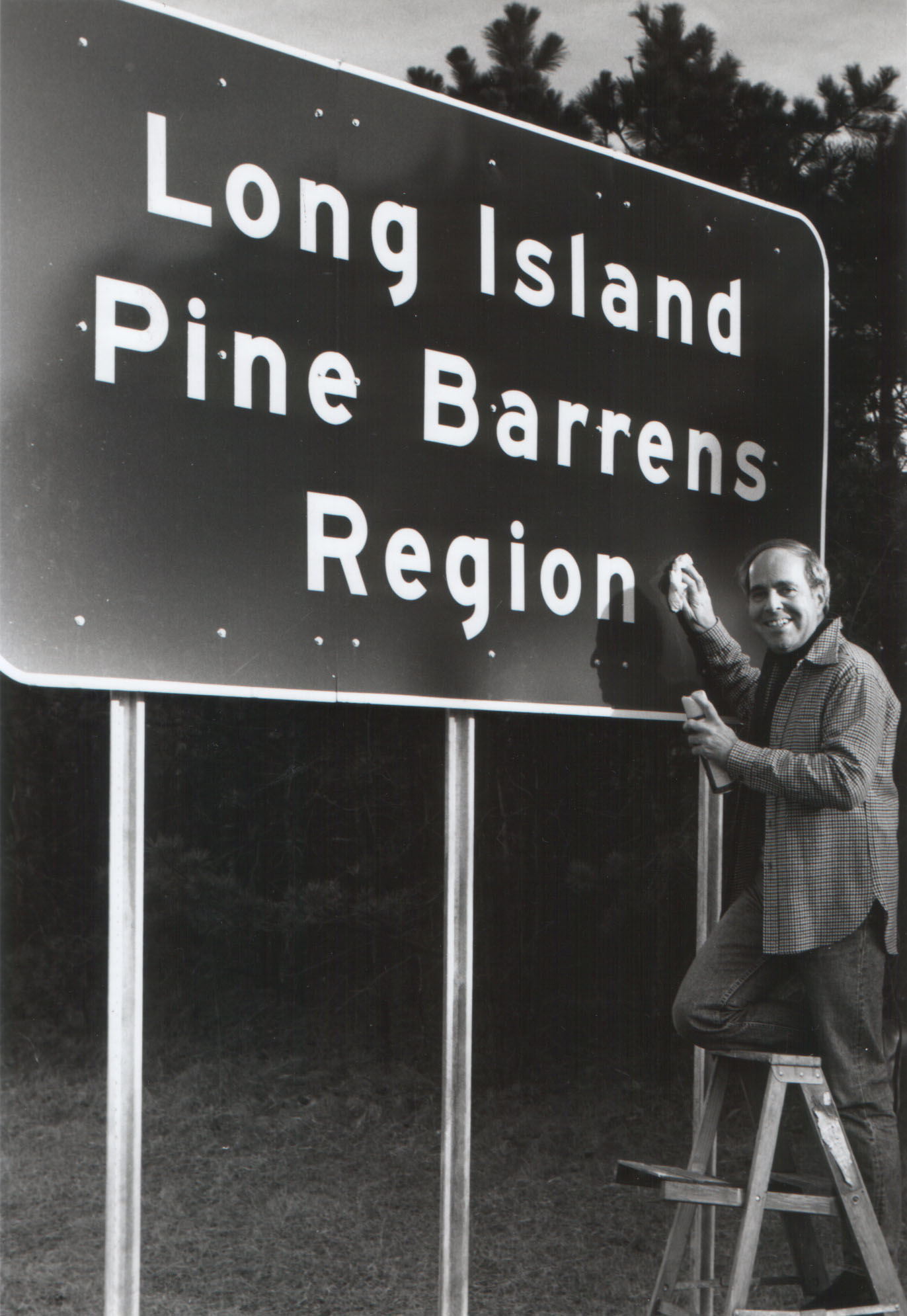
During what environmental advocates deemed the “War of the Woods” in the 1980s, when encroaching development threatened Long Island’s Pine Barrens, Richard Amper stood firmly on the frontlines to defend the ecological treasure.
Affectionately known as “Dick,” the executive director of the Long Island Pine Barrens Society for more than 30 years and driving force behind the preservation of over 100,000 acres of land died of a heart condition while in hospice on March 23 at 81.
A funeral mass was held Wednesday, April 1 at St. John the Baptist Church in Wading River.
Mr. Amper shepherded a landmark 1989 lawsuit that halted planned development in the Pine Barrens and ultimately led to the Long Island Pine Barrens Protection Act of 1993.
“Dick was a force of nature, fighting as a force for nature,” said John Turner, co-founder of the Long Island Pine Barrens Society and current board member.
Founded in 1997 by three college kids and local naturalists — Turner, John Cryan and the late Robert McGrath — the Long Island Pine Barrens Society initially focused on raising awareness about its ecosystem, home to the largest collection of rare and endangered native species in New York State.
As development pressure intensified, the group shifted toward direct advocacy, and needed a public-facing leader. Amper stepped into that role.
Amper had worked in media, including at PBS Radio, producing Jerry Lewis MDA telethons and running a public relations firm before entering environmental advocacy.
Turner remembered when Amper called him at 9 p.m. on a Sunday night to pitch himself for the executive director role. Around this same time, he and his late wife, Robin Hopkins Amper, alongside members of the Lake Panamoka Civic Association, successfully thwarted a proposed housing development just two days before its construction on the pristine Ridge lake’s shores.
“At that time, as a society, [we] had a lot of really knowledgeable, highly motivated, well-meaning board members who are naturalists and environmentalists and things, but we didn’t have anyone with the expertise that Dick brought to the issue,” Turner said. “Dick said, ‘Look, if you hire me, I will fundraise for my own salary,’ and they say the rest is history.”
Under his leadership, the society filed what was then the largest environmental lawsuit in state history in November 1989, targeting Suffolk County and the towns of Brookhaven, Riverhead and Southampton, along with their planning and zoning boards.
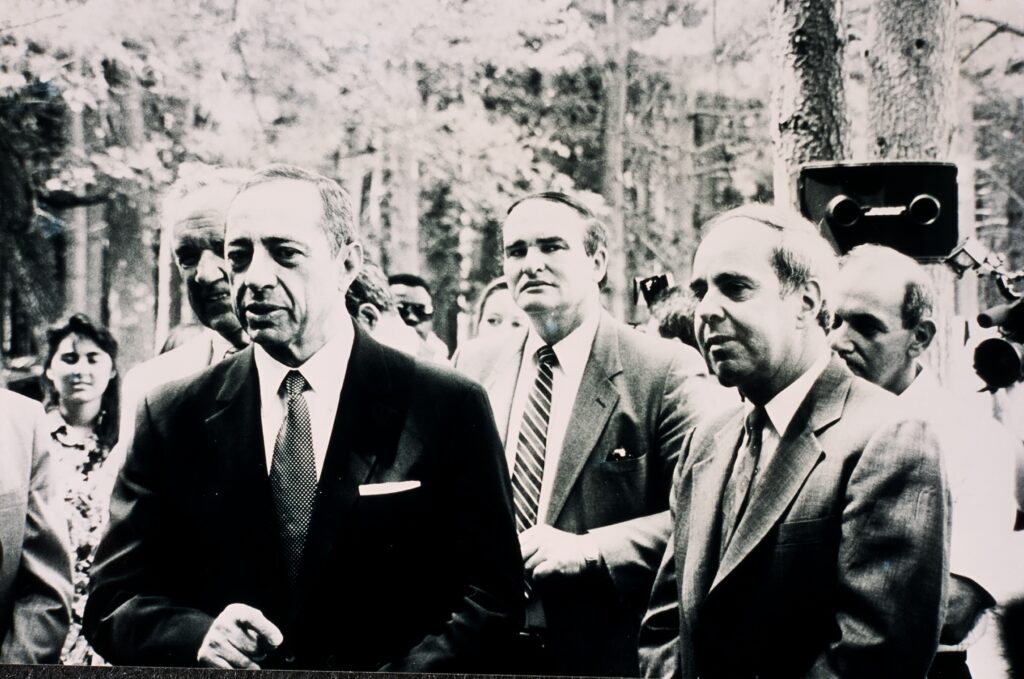
At the time, Turner said there were about 232 development proposals within the Pine Barrens, ranging from industrial sites to residential subdivisions, threatening to turn the region into “Swiss cheese.”
Bob DeLuca, president of the Group for the East End, said Amper understood that “you’ve got to bang a drum to get people’s attention.”
After filing the lawsuit, the society launched a public education campaign emphasizing the Pine Barrens not only as a natural habitat but as a critical source of drinking water.
“Dick was a prodigious fund-raiser and a tireless campaigner,” Cryan said in an email. “He built the society up into the most powerful environmental group on the Island.”
Colleagues said Amper used the media as a megaphone, with a talent for translating complex environmental science into language the public could understand. Even after the 1993 law passed, he remained a watchdog, monitoring its enforcement for years.
He also understood public life as “theater,” DeLuca said, and while his style could be confrontational, he was widely respected as a “titan” of Long Island’s environmental movement.
“We used to say it was good cop, bad cop, and then Dick,” DeLuca joked. “He pressed hard, he was sort of unforgiving and relentless.”
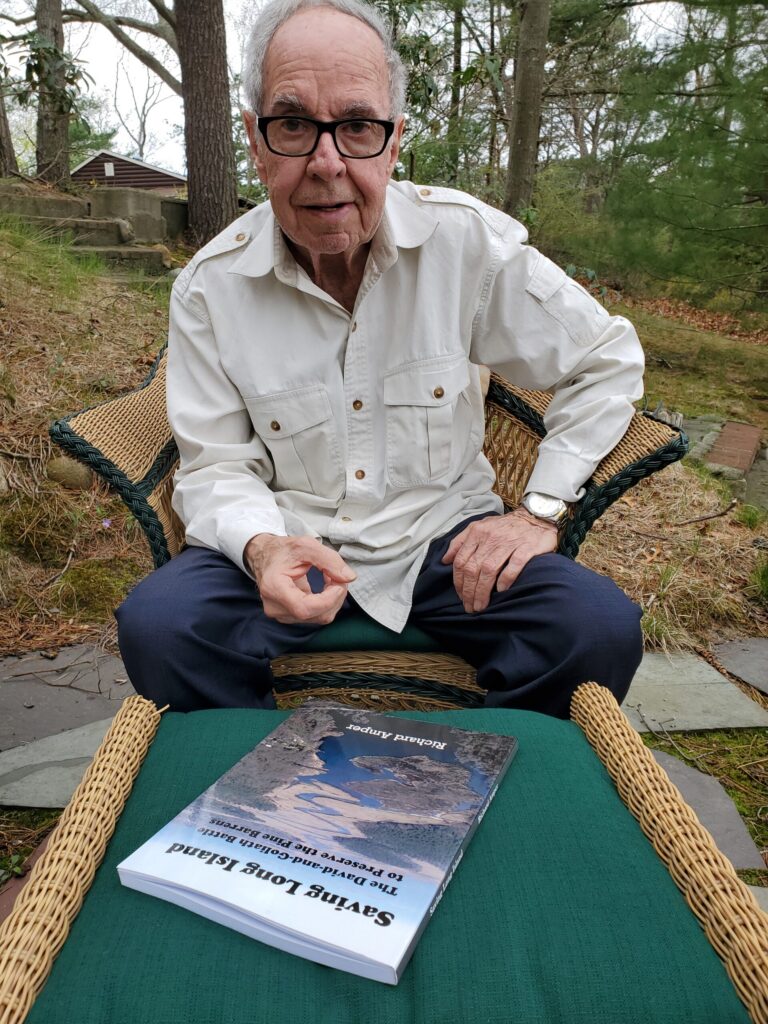
Though known for a tough exterior — a “pitbull with two legs,” Turner said — colleagues said he was also deeply generous. He and his wife frequently hosted board meetings at their Lake Panamoka home, cooking breakfast for attendees.
Elina Alayeva, the society’s current president, recalled being hired by Amper straight out of college.
When she said she didn’t have a car and would commute from New York City, he told her: “You’ll figure it out. We’ll see you on Monday.”
“He relished the opportunity to work with young people and treat them like they knew what they were doing,” said Alayeva, who later had Amper officiate her wedding. “He lived on Pepsi … His door was always open, so we would hear him yelling at whoever he was yelling at that day, and loudly with two fingers typing on his keyboard, banging out a press release, then coming out and just cracking jokes — it was unlike anything I imagined a boss would be.”
She added that his wife, Robin, played a critical behind-the-scenes role.
“She was as much of a strategist as he was,” Alayeva said. “The two of them built this organization as well as this community of people that they both mentored and took care of.”
Looking ahead, the society is continuing its “Best of the Rest” campaign, aimed at preserving up to 3,800 remaining parcels in the Pine Barrens.
Colleagues said Amper’s legacy is not just the land he helped protect, but the example he set.
“He had the chutzpah to take on this work and preserve all this land that was going to impact generations, and he had no doubt that he could do it,” Alayeva said. “He would talk to anyone, there was no one he wouldn’t talk to, and as I think about my own advocacy work, those are the lessons that I’m taking away.”
Amper is survived by his brother, Tom Amper of Bellerose, and his two sisters, Julie Amper of Mattituck and Emily Amper Murphy of Texas.