Preserving foods through fermentation has been practiced for thousands of years and can be found in every culture (yup, pun intended): kefir, a fermented milk drink from Russia, Europe and the Middle East; sauerkraut, from Germany; sake, from Japan; kimchi, from Korea; pulque, a fermented alcoholic drink made from agave, from Mexico; gari, which is fermented cassava, from West Africa; and kombucha, a fermented tea drink from China that has become the darling of every grocery and deli cold case, among many others.
Through the process of fermentation, food is transformed, enhancing flavors and textures, allowing it to stay fresh longer and providing numerous health benefits. It’s also darned delicious — and, for many chefs, offers a fun world of endless culinary exploration. You might even find yourself experimenting with your own solid and liquid versions.
What is fermentation?
The dictionary’s definition of fermentation is “the chemical breakdown of a substance by bacteria, yeasts, or other microorganisms, typically involving effervescence and the giving off of heat.” Sugars are consumed by yeast and converted into ethanol, producing alcoholic drinks (wine, beer, cider); bread is leavened as yeast produces carbon dioxide and makes it soft and airy; and lactic acids preserve food and make it more digestible and/or more delicious (yogurt, sauerkraut, kimchi, vegetables).
“The fact that these foods are produced by these invisible life forces, these microorganisms, just adds this mysticism and alchemy to the whole thing,” says Sandor Katz in the documentary Sandorkraut: A Pickle Maker. The New York Times calls Katz “the man at the forefront of reviving the art of fermentation.”
Katz teaches fermentation workshops around the world and notes that “right now we are in a moment when people are earnestly seeking to become more connected to their food and where it comes from and reclaim some of the processes that their grandparents were doing that they never learned how to do. There’s just a growing interest in fermentation because of that, and I love to share it with people.”
Fermented foods continue to trend not only for health reasons but because of a demand for less processed foods, interest in complex flavors and curious culinary exploration. Add to that the growing popularity of plant-based diets and a desire to promote sustainability and reduce waste and you have a movement bubbling from myriad angles.

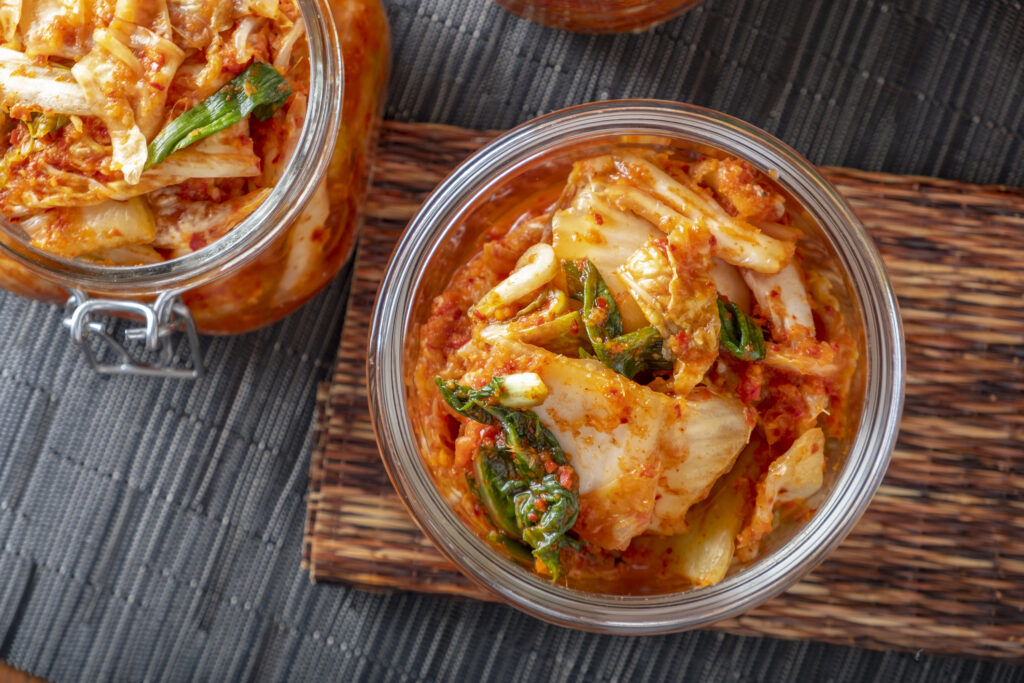
Kefir, a fermented milk drink from Russia, and kimchi, a Korean staple made of seasoned, fermented vegetables, are two examples of nutritious, gut-friendly foods. (Photo Credit: Dejankolar for iStock, left; 4kodiak for iStock, right)
Good gurgling
According to the Stanford Medicine Nutrition Studies Research Group, “Studies suggest fermented food consumption may increase gut microbiome diversity and reduce inflammation. Research also suggests they may improve digestive health and lower the risk of conditions like Type 2 diabetes.”
Probiotics — aka “good” or “friendly” bacteria — are live microorganisms that provide health benefits when consumed in adequate amounts. Many (but not all) fermented foods contain probiotics with health benefits.
Unlike ultra-processed drinks, fermented beverages such as kombucha and kefir provide a healthier alternative. But beware of marketing terms, as not all products labeled as “gut friendly” contain probiotics or are truly fermented. The recent arrival of prebiotic and postbiotic sodas — brands like Poppi and Olipop sell them — claim a host of benefits, such as improved complexion and lowered cholesterol, but studies backing up those claims are largely lacking.
A Local Food Scene Ferments
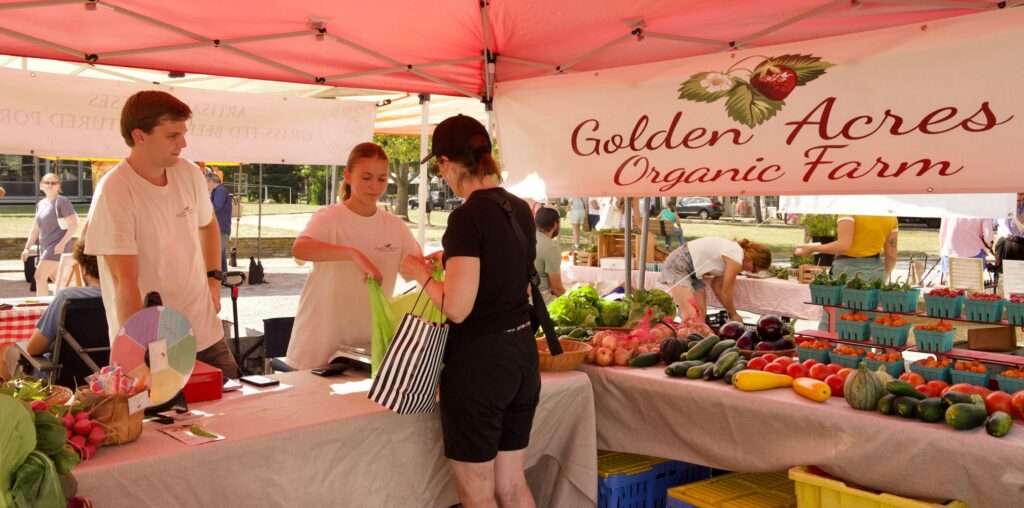
Julia Schimpf, who owns the Jamesport-based Fields of Dough and has been selling her breads at local farmer’s markets since 2024, believes her sourdough products have discernable health benefits.
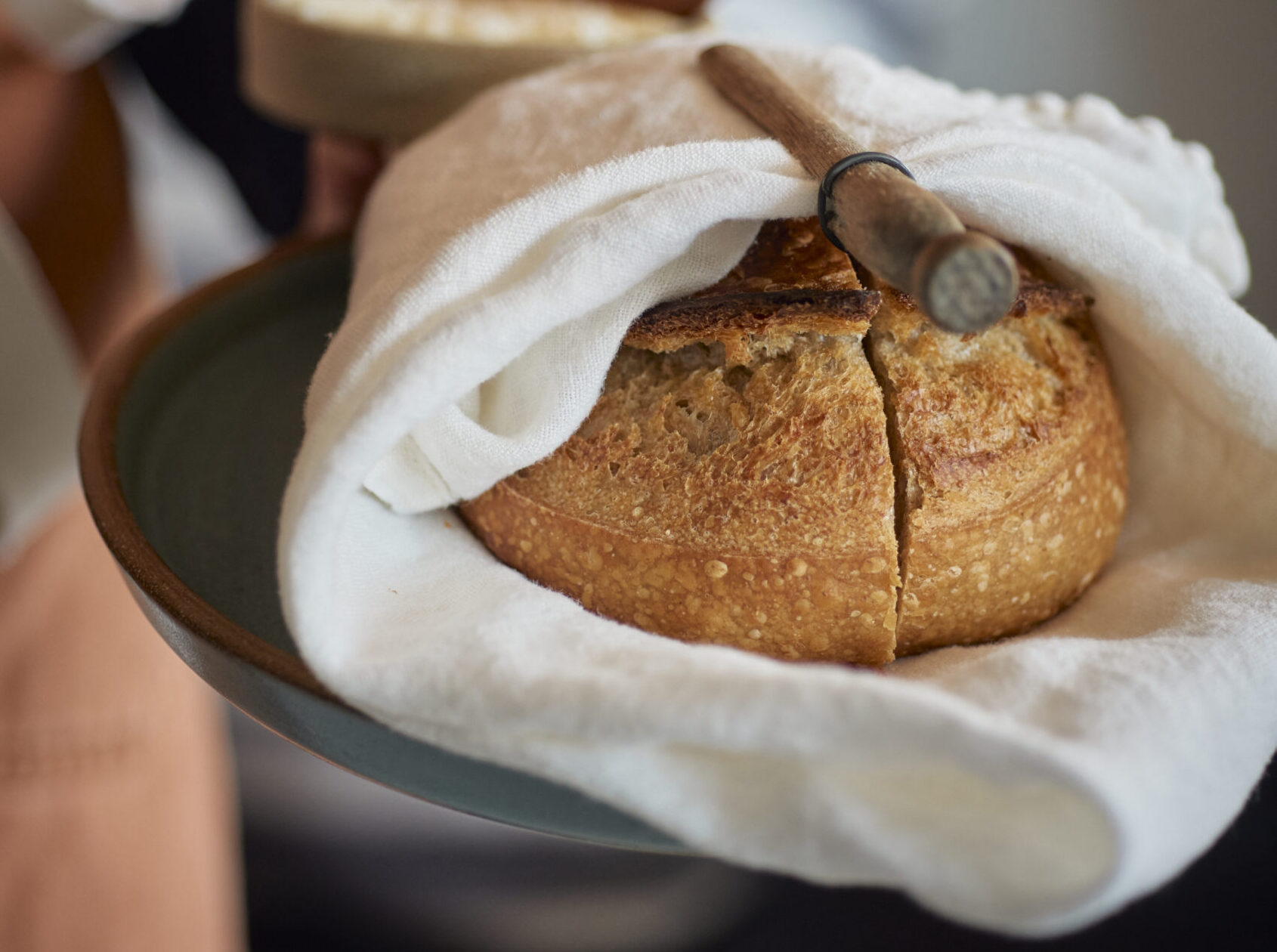
“All of Fields of Dough’s breads and baked goods are intentionally made with our house-made sourdough starter, created from just organic flour and water,” she says. “With time and regular feedings, it grows into a natural wild yeast and healthy bacteria culture.”
Schimpf’s slightly sour-tasting loaves contain good bacteria, she says. “The healthy bacteria — lactic acid bacteria— supports your gut and helps break down gluten and starches, making sourdough easier for most people to digest. This natural fermentation also gives the bread deeper flavor, better texture, a longer shelf life, lower blood sugar spikes and helps your body better absorb nutrients.”
Nick Horman is a third-generation pickle maker at Horman’s Best Pickles; he sells at the Riverhead and Westhampton Beach Farmer’s Markets and other markets across Long Island and New York City. He refers to fermentation as “controlled rotting” and produces his small-batch pickles in barrels of salt brine, which create lactic acid and “good” bacteria. At home, he makes sauerkraut and ferments vegetables using garlic, jalapeño peppers and various spices.
“It’s a raw product … the food is much more nutritious. It’s so easy to get a two-gallon crock and fill it with chopped cabbage and two tablespoons of salt. I leave it on the counter,” Horman says. He adds to the crock’s contents as it ferments and uses sea salt or kosher salt — whatever’s on hand. “It’s a superfood for pennies on the dollar,” he says.
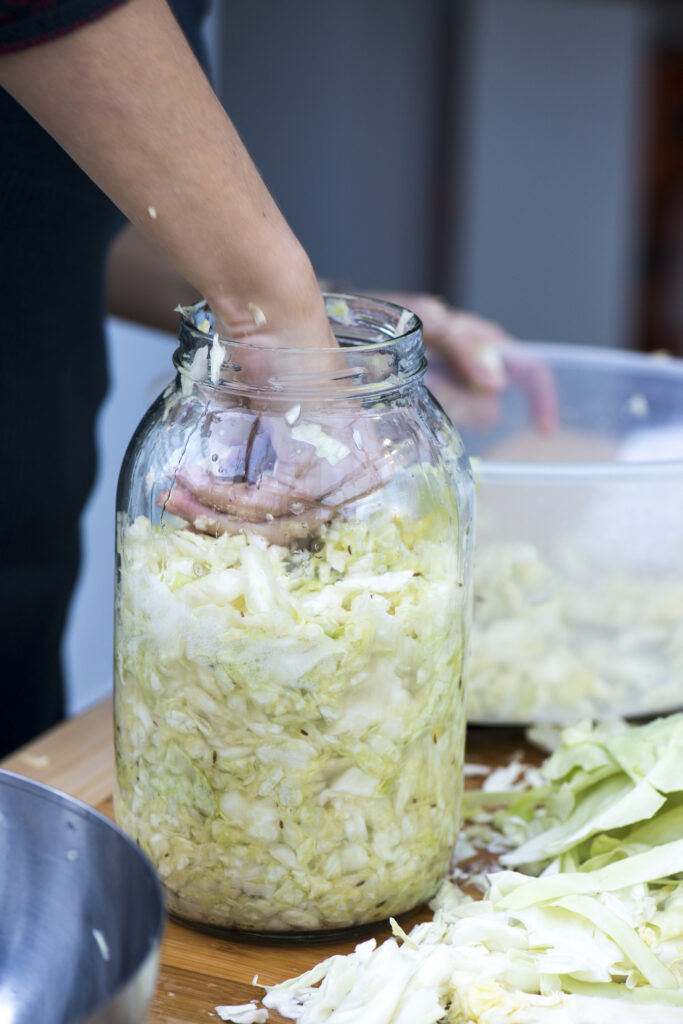
While the cabbage tastes great after only a few hours, Horman says it takes 27 days for the sugar to be eaten and for the sauerkraut to fully ferment. Since the sauerkraut has to breathe, the container cannot be sealed, and Horman checks on it daily.
Aiyana Edmund of 1610 Sourdough, a baker whose loaves can be found at shops and farmers markets across the North Fork, is serious about the grains she sources for her sourdough bread. “Considering it’s the most important part of bread — quite literally the foundation — this is where the magic and health benefits lie,” she says.
“Stone-milled grains mixed with water and salt and then cold-slow fermented for an extended period of time yields a loaf of bread that is a powerhouse of nutritional value and gentle on the gut’s microbiome and your digestion system … this is why the flour matters.”
How to Get More Fermented Foods in Your Life
While it’s easy to find familiar ferments like yogurt and sauerkraut on store shelves, lesser-known items like kefir and kimchi can be found in health food and specialty stores and farmers markets.
The Stanford Medicine NSRG advises shoppers to consider these tips when searching for truly fermented foods:
›› Look for terms like “cultured,” “fermented” or “live active cultures.”
›› Choose refrigerated foods, as most authentic fermented foods are refrigerated to preserve live microbes.
›› Large-scale commercial fermented products are often pasteurized for stability, with added microbes that may not ferment the product. Seek out smaller-batch artisan producers, found at farmer’s markets and specialty stores, who likely follow traditional production methods depending on local regulations.
For nearby artisanal options, you’re in luck. Local chefs have done some experimenting with various fermented dishes, and the delicious results can be found on North Fork farm stands and menus.
Over in Aquebogue, Barrow Food House’s carrot kimchi ($8) has been “on the menu since we opened and it is there to stay,” says co-owner Amanda Falcone. She describes the dish as a mixture of mostly shredded carrot, napa cabbage, daikon radish, gochugaru chili flakes, ginger and garlic.
“We make and ferment it in-house and it’s pretty popular. It’s full of probiotics and extra immunity support,” she says.
Although Scott Bollman removed it from the menu at the end of 2025, Bruce & Son in Greenport had a “kimcheese” sandwich on the menu for a spell, and it’s likely he’ll be adding some fermented gem back in the mix this year (if he hasn’t already). Made with toasted sourdough, Brussels sprouts kimchi, New York cheddar and furikake mayo, it was piquant and gooey, richly satisfying and hit so many tastebuds that it made one rethink kimchi’s side-dish status and consider the way it can add flavor to the most American of lunch dishes.
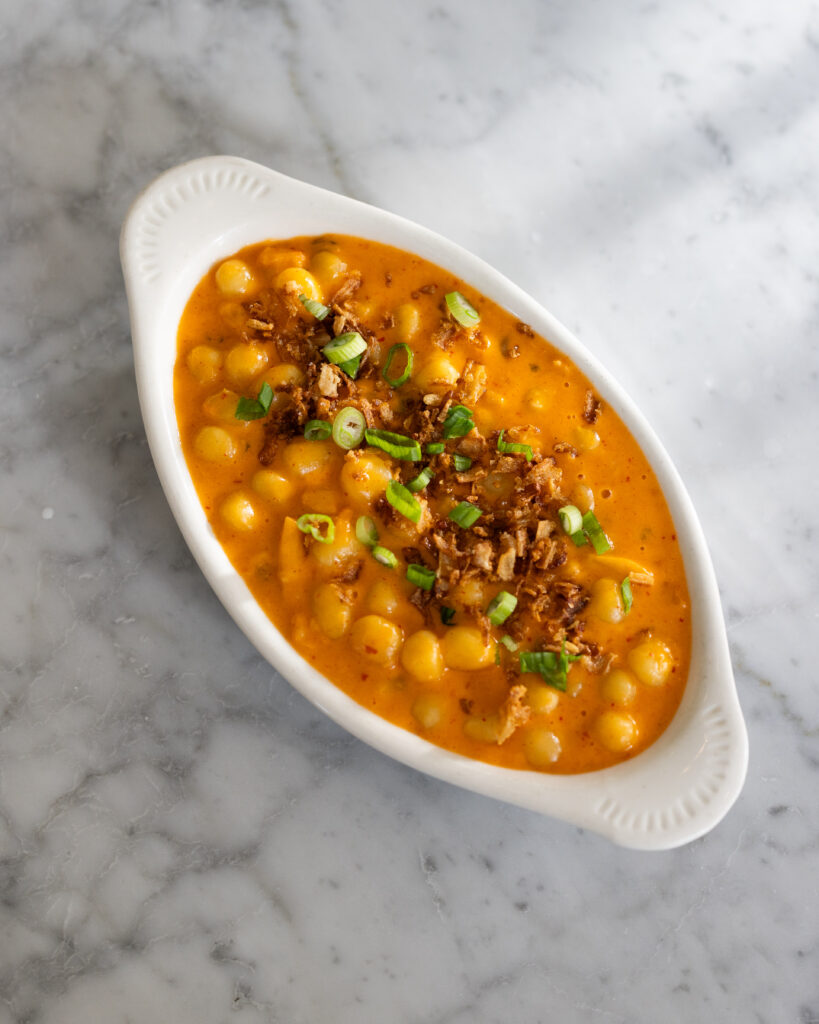
A new dish on Ellen’s on Front’s menu is kimcheese mini gnocchi ($17), made with kimchi-gochujang mornay and topped with crispy shallots.
“[The dish] has proved quite popular in its limited time on the menu,” says Andrew Wertz, co-owner of the Greenport restaurant. “The genesis of this item comes from Ellen’s on Front’s passion for combining different foods and cultures … [chef] Jennie felt that gnocchi reminded her a lot of tteok, a Korean rice cake. From there, she considered how to combine the traditional Italian dish with other Korean elements to create a unique take on mac ‘n cheese.”
The kimchi is house-made and contains napa cabbage, garlic, ginger, rice vinegar, fish sauce, sugar, salt, gochujang and gochujaru.
If you’re more hands-on and want to explore how to ferment the spoils of your garden, there are plenty of websites and in-person classes to guide you (the local Cooperative Extension is a good place to start). And don’t miss Katz’s book The Art of Fermentation, widely considered the most comprehensive guide to home fermentation.