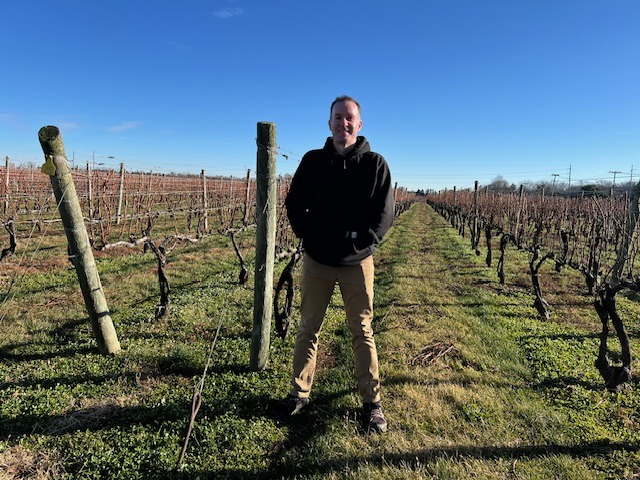
Journalist Chris Ariens spent the brunt of his career diving into the stories of others. But with the purchase of a gorgeous, well-tended vineyard in Jamesport exactly one year ago, he’s re-writing his own tale.
Ariens’ Theo Vineyard at 480 Tuthills Lane is the latest entry into the decades-long story of Long Island wine country. And while he’s not the first journalist to get into the wine business (right here on the North Fork, we have Ev & Em Vineyards’ Dan Abrams in Laurel) — but his story is one with some pretty interesting provenance and history of its own.
The 20-acre parcel was owned and tended to by renowned Lenz Winery vineyard manager and all-around grape whisperer Sam McCullough since 1991 — and, post-sale, he’s sticking around to offer guidance to Ariens, with a little help from some friends, too: Lenz’s new vineyard manager Ken Deegan (McCullough is gently stepping into well-deserved retirement after 37 years at Lenz) and award-winning winemaker Tom Spotteck.
But for this crew to believe that Ariens’ has got the stuff to bring the Tuthills Lane spot into the future, lending their knowledge and talents to the cause, is no small vote of confidence. He may have spent his life at the keyboard, but don’t for a second think he’s not getting his hands dirty.
“I was a journalist — local TV news, then cable news, then digital, then magazines. It was something I always wanted to do,” he says of his years covering current events. After doing the local news circuit in Florida, he took a job with MSNBC for seven years in New York City, then moved over to the industry website Mediabistro covering media news for then-owner and founder (and Shelter Island resident) Laurel Touby.
He started spending time on the East End and bought a house in Laurel in 2015 with his partner, Israel Duran. The more time he spent here, the more he became fascinated with the wine industry.
Meanwhile, he moved from digital to print journalism, leaving Mediabistro for a job with AdWeek magazine — until a 2023 mass layoff had him contemplating the open road of his future.
His stock-and-trade as a researcher and writer kicked in.
“The greatest thing about the New York Department of Labor is they give you all these courses and classes through a subscription to Coursera,” he says. He grabbed the opportunity to take a wine class online via University of California, Davis, the gold standard in wine education, and he was hooked. After that, he opted for a webinar on entrepreneurship.
“I saw this listing for the vineyard. It wasn’t a lifelong dream of owning a winery. I had very little background in farming,” says the Wisconsin native. He did grow up among dairy farms, but his immediate family were not farmers by trade, at least not in the contemporary.
“It was something I just gravitated toward. It was a gamble! But I said, I could do this if Sam sticks around… and he agreed to be an advisor, with Ken as our vineyard manager. It all worked out really well. We share the crew with Lenz, we share equipment, and that’s how Sam had done it.”
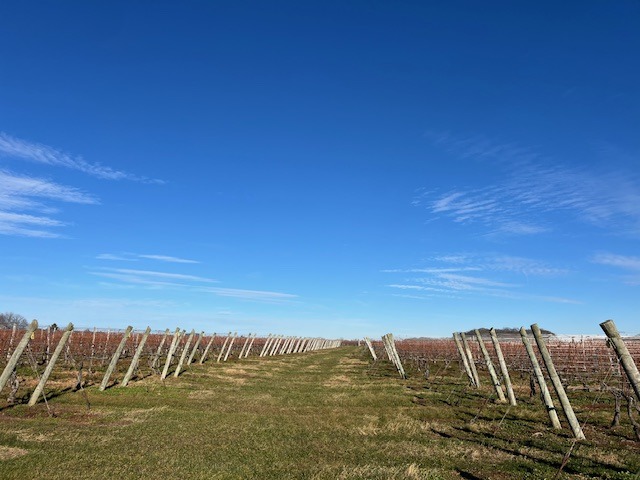
But a couple of classes were, of course, just the teaser. Now, he’s full-on. In season, he’s hopping on a John Deere to mow the weeds up and down the 200 rows or so of the 16 planted acres; in the quiet months, he’s meeting with Deegan and McCullough to talk about things like spray programs and other plans for the coming year.
Beyond the star crew, Theo Vineyard has some pretty exciting raw material to work with. Vines here were planted by McCullough in 1993, with the youngest, most recent plantings already a decade and change in the ground. This past year, Ariens had his first harvest. “Knock on wood, it all worked out better than I could have conceived,” he says, despite the October nor’easter.
With Spotteck’s keen talents, Ariens will release a merlot rosé, made from one of the three clones grown here, and a steel-fermented chardonnay in 2026. In the future, he’ll use the estate-grown fruit that he doesn’t sell to other wineries (a common business model for most vineyard-owning producers) to make a blanc de blancs sparkling, a malbec, a merlot-heavy red likely with some petit verdot in the blend and an oak-aged chardonnay, with initial plans to sell them direct to consumer from the tasting room he will build once all the paperwork is in order.
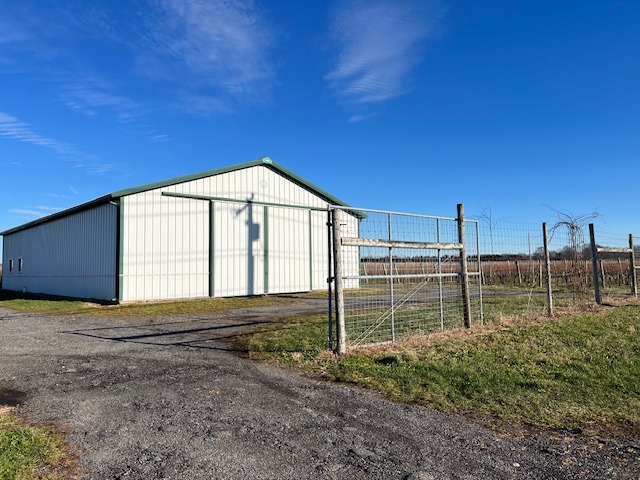
“What we’re allowed to do is a 1,000 square foot farm stand. We can do 1,500 square foot outdoor space. The products we make here, we have to sell here and nothing can be sold here that’s not produced on Long Island,” Ariens says.
The land upon which Theo Vineyard sits is preserved by the county, which meant he had to go in front of the local Farmland Preservation Committee in July for approvals. The winery is also part of Long Island Sustainable Winegrowing, and will have an on-site pollinator garden as part of that not-for-profit’s dictate.
And the name? Well, that’s the surprise coda to this story of journalist-turned-farmer. As it turns out, farming is in Ariens’ blood after all.
“Theo is my great-great grandfather, Theodore Ariens, who’s the first of the Ariens from Holland, and who immigrated to Wisconsin. He was a farmer. So it’s kind of an homage to him,” he says.
But as much as the farming history, there’s a little more in the bloodline that bodes well for Ariens’ future here. “I read his obituary recently and it read, ‘He was a good neighbor to all.'”