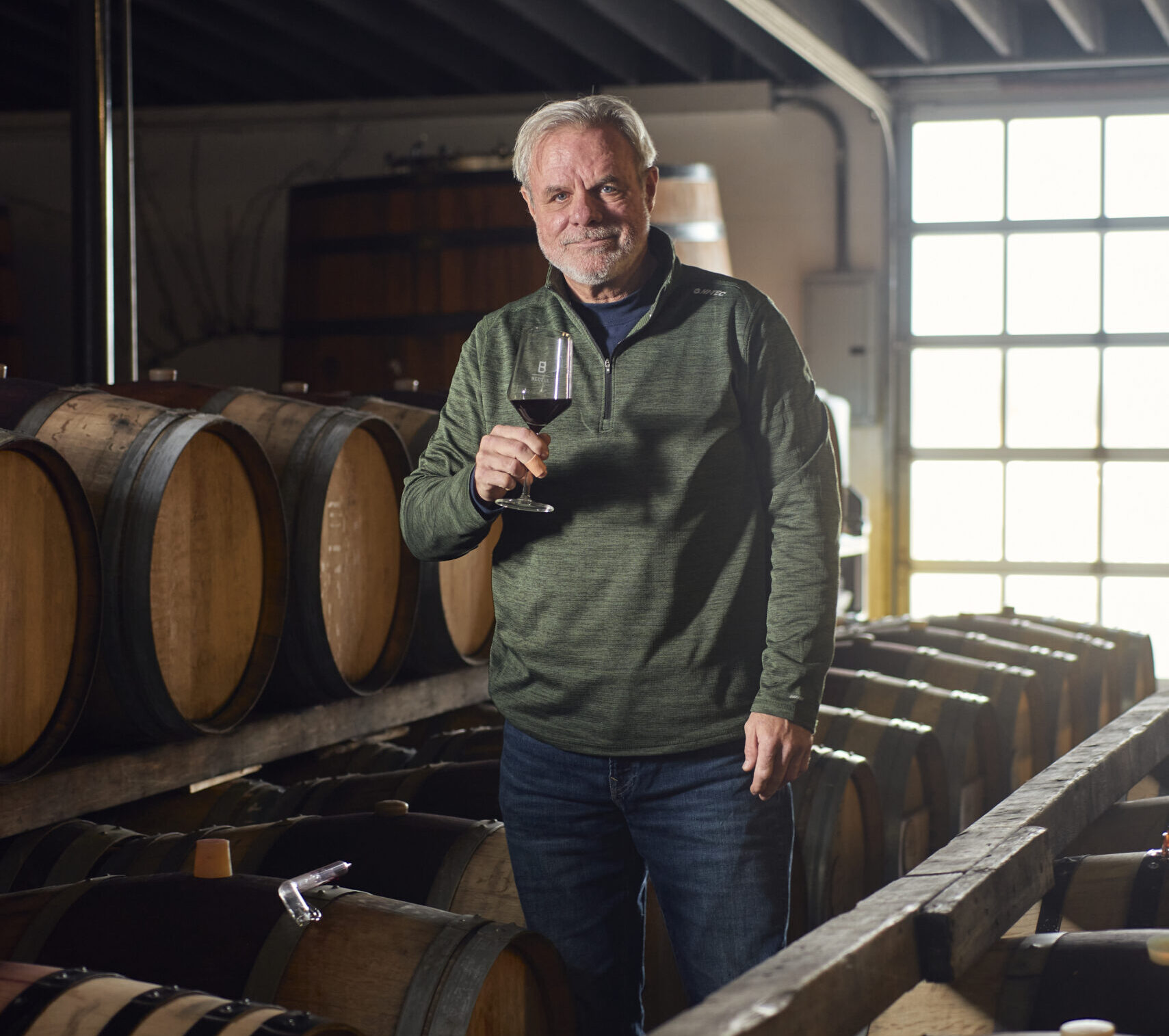
Director of winemaking and forward-thinking sustainability advocate and pioneer Rich Olsen-Harbich will retire from Bedell Cellars, making 2025 his farewell vintage on Long Island.
Olsen-Harbich’s deep passion for Long Island’s terroir has made him something of a soil whisperer, digging deeply into the historical glacial study of the region’s land formation and using it to both educate and push regional bounds. Instrumental among his many contributions and accolades was using his knowledge and gaze to the future, helping to create the Sustainable Wine Growing program here, which has proven influential across the entire state of New York.
Olsen-Harbich’s forward-thinking ethos went beyond what was in the bottle, however, and also spread to people behind the winemaking. In an industry that for many decades (and, at times, still) traditionally held the decision-making position of winemaker for men, Olsen-Harbich has been an important advocate for women. Case in point: His named replacement and protegé, winemaker Marin Brennan.
‘For 16 years, I had the privilege of working with Rich, a winemaker whose influence helped define Long Island wine. A fixture of the region for over 40 vintages, his leadership in establishing all three of our American Viticultural Areas (AVAs) and crafting more than 50 nationally acclaimed, 90+ point wines set a standard of excellence that will endure,” says Brennan. “He taught me the true essence of terroir winemaking, a lesson I’ll carry throughout my career.”
Olsen-Harbich grew up in New Hyde Park on Long Island, and began his journey to the wine world in the late 1970s studying plant science at Cornell University, which didn’t have a viticulture program at the time. Still, the vineyards around him in the Finger Lakes proved inspiring, especially those of renowned producer Hermann Weimer. In the book Behind the Bottle: The Rise of Wine on Long Island by author and wine expert Eileen Duffy, Olsen-Harbich says, “No other agriculture sector has so much history and is really looked at as intellectually as wine is. That’s why I’m still doing it.”
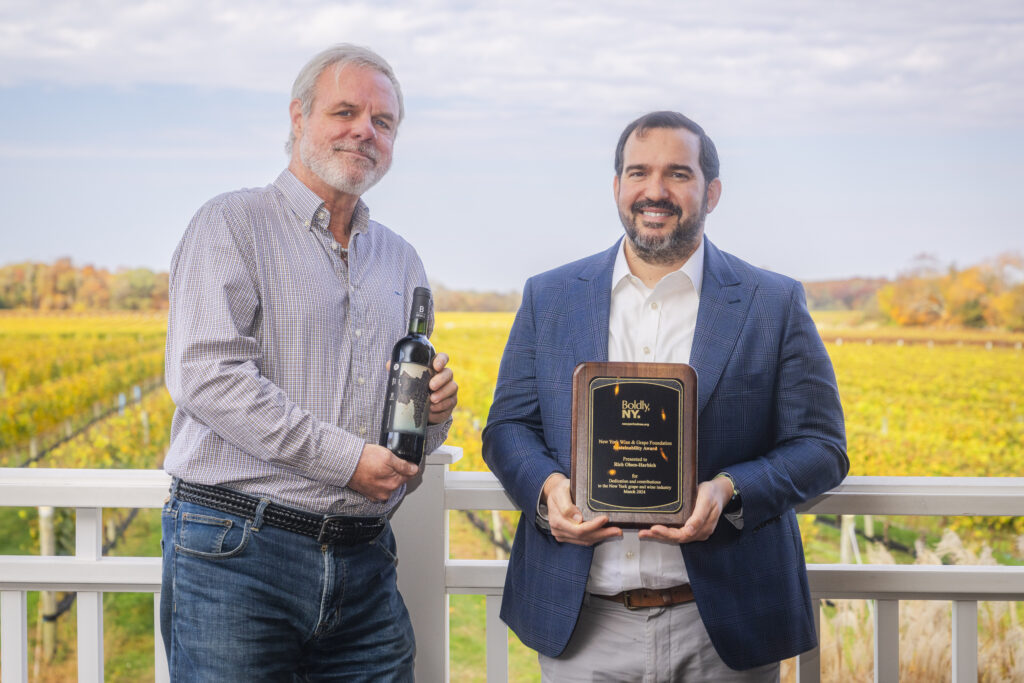
Indeed, his curiosity and studied yet creative approach to winemaking has been the driving force behind his success. In his earliest days in the burgeoning Long Island wine region, he worked planting some of the first vines for father-son vineyard impresarios, Dave and Steve Mudd. In the early ’80s, he was hired as the vineyard manager and sometime salesman for the now-defunct Bridgehampton Winery. After a decade there, and a few other consulting jobs in the industry helping other wineries get off the ground, he took the role in 1996 of head winemaker for Raphael Vineyards.
A visit to Olsen-Harbich in the barrel cellar there was an exploration in learning about our soil science and maritime climate, with terrarium-like instructional dioramas hung on the walls showing our local layers of glacial till, gravel, clay, silt and sand, and spirited discussion on how our local grapes expressed themselves in it. For instance, he was an early believer in bringing grapes like petit verdot and syrah into the fore instead of relegating them as a blending elements only.
In 2010, he moved to Bedell Cellars, the winery founded by namesake Kip Bedell in 1980, where Olsen-Harbich has spent the final flourish of his 44-year-long career. Not content to rest on his many accomplishments, in 2023 Olsen-Harbich released the book Sun, Sea, Soil, Wine, a learned testimony as to why Long Island wine country is far from a fluke, but instead an excellent region for high-quality grape growing and winemaking. The year after, he received the Sustainability Award from the New York Wine and Grape Foundation.
“It has been one of the great privileges of my life to make wine on the North Fork and to share it with people who truly care about this place,” Olsen-Harbich said in a statement to the press. “I’m extremely proud of the wines I’ve made here and honored to have been part of the Bedell story.”
And, undoubtedly, Long Island’s wine story, too.