Live
Dream Boat: How Kiki Boucher turned a ’60s-era ranch into a yacht with a yard
by Amy Zavatto
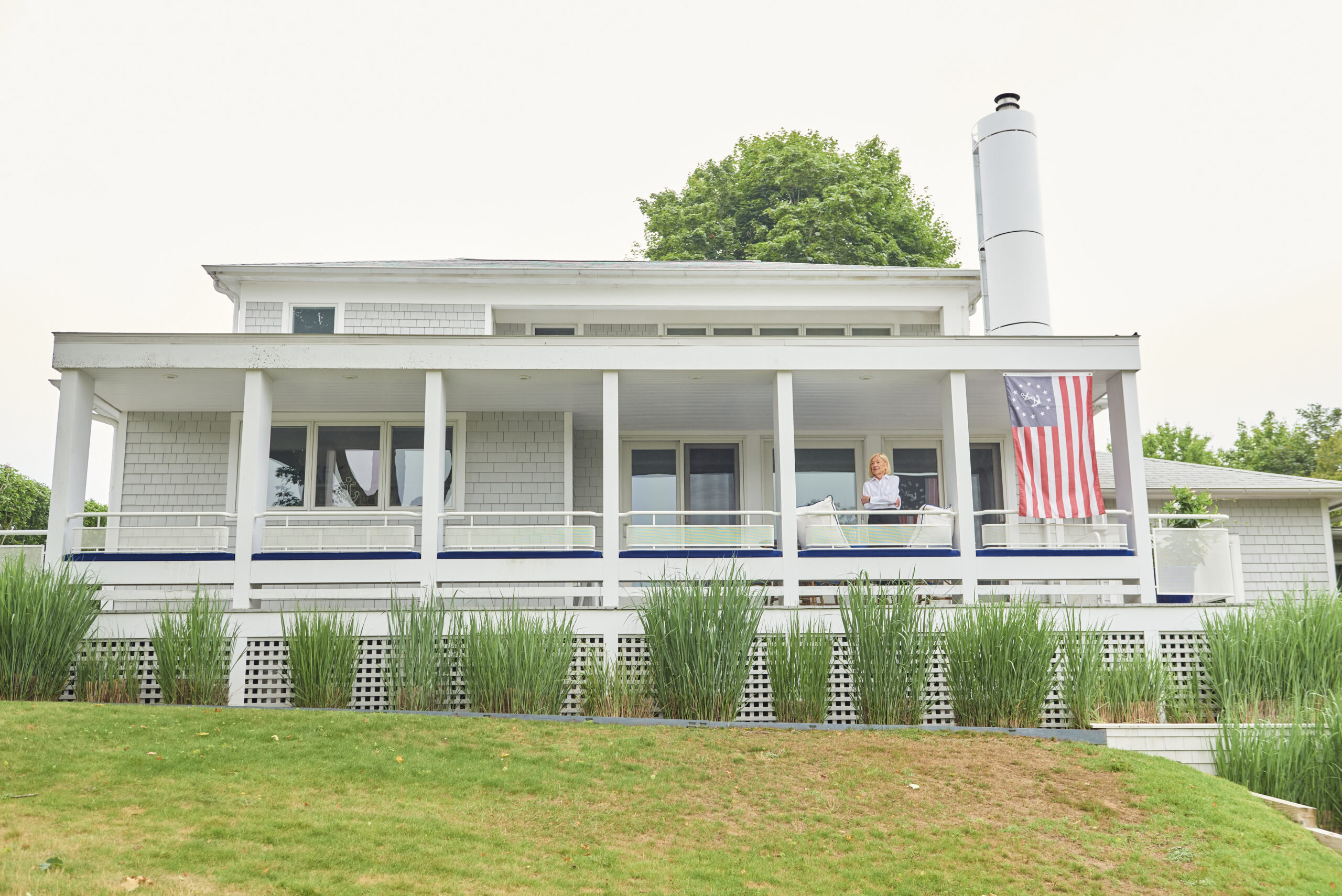
There’s a house in the Heights area of Shelter Island that is like no other. Not one of the storybook-like, turret-topped Victorians accessorized with fanciful wood cutouts and gabled roofs. Not the cute little dormered Cape Cod cottages with stained glass windows. Not even the newer, modern builds on the fringes — the architectural interlopers clashing with the 19th century neighborhood’s charm-laden vibe.
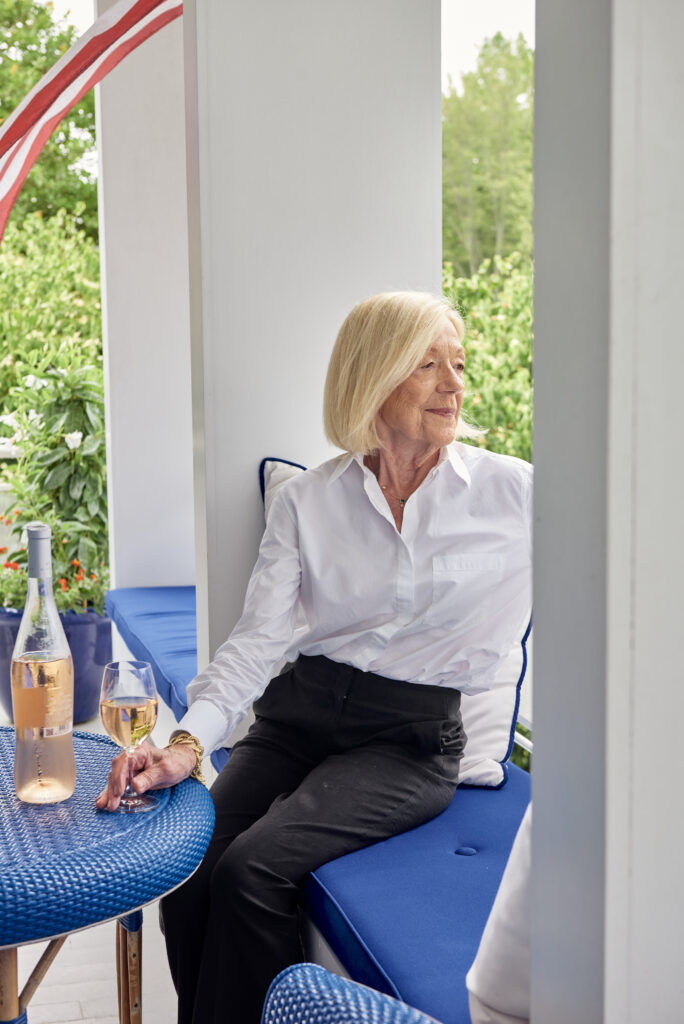
Tucked away on a little side street just behind the Heights post office on a petite lot, befitting of its petite, blonde-bobbed owner, sits Kiki Boucher’s ship house. It is, indeed, technically a house — a 1960s-era ranch, actually — but with Boucher’s imagination and clear-eyed captain-of-her-ship direction, it has instead become her very own delightfully dry-docked vessel, a place she’s chosen to anchor the voyage of her days.
From Across the Ocean
Boucher is a woman who knows exactly what she likes. She likes shades of bright French and nautical navy blue. She likes sweet little Scottish terriers. She’s drawn to the eras that bore Futurist art and Art Deco style. She likes order and purpose, but when you’re a passenger on her little ranch-turned-ship you feel comfortable, welcome and as breezy as a billowy bow flag blowing in the wind.
Perched atop what was once known as Divinity Hill, so named for the Union Chapel in the Grove on Wesley Avenue founded and built by Methodists in 1872, the Heights neighborhood on Shelter Island feels like a blast from the 19th century past. Boucher’s home, though, is a bit of an outlier. When the Heights post office moved to its current spot on Grand Avenue, the land purchased for its use was a full acre parcel. It wasn’t all needed for the building and parking areas, however, and one sliver of a quarter of that acre was sold as a residential plot. Here, a compact ranch house was built in 1962.
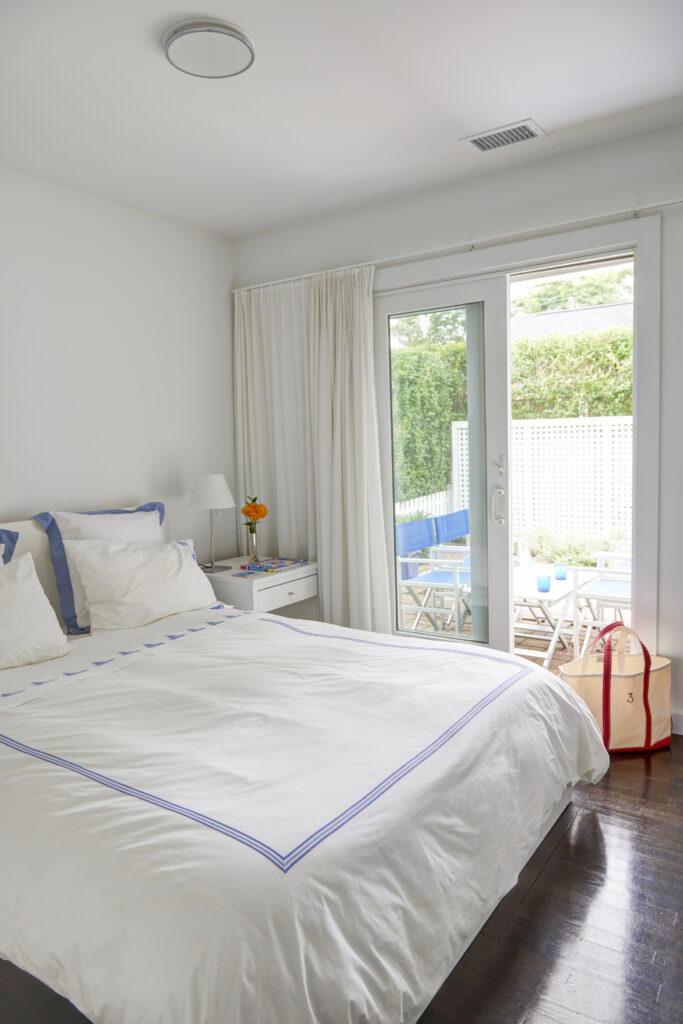

“It was yellow. Everything was yellow!” laughs Boucher. “Inside and out, every shade of yellow, from mustard to butter. The bathroom fixtures were yellow. And really, I hate yellow.”
But she saw the possibilities. Newly single at the time, the small footprint of the property seemed just right for her needs — room enough for her and her pup, and for her two sons to visit — and a little yard that wouldn’t threaten to overwhelm her with the unruly demands of nature.
With its flood-averse position on a hill and sloping view of Chase Creek, Boucher could see in her mind’s eye the boat from which she’d never have to disembark, the ship that would shelter her from any storm and, despite the daunting notion of completely making it over, a source of smooth sailing.
Ship to Shore
Design has been Boucher’s mooring line from the get-go. She and her family moved to the United States from Paris when she was just 10, her father courted by the U.S. government to work on the burgeoning space program. They came by steamship and that experience — and returning the same way for visits with family in France — piqued her passion for the strong color and wood delights of the Art Deco aesthetics she saw on board, igniting her imagination and an early eye for design.

The move from Paris to Metuchen, N.J., was a culture shock but Boucher adapted quickly. She and her sister easily mastered their new home country’s language (“We were fluent in English within about three months,” she recalls), although they only spoke French at home; Boucher currently teaches the language to advanced learners at the Shelter Island Library. She forged an early and lifelong companionship at her New Jersey school with a kind student who remains Boucher’s bestie to this day. It was also this friend who would, as young adults years later, help her to land her first job at an advertising agency as an account executive. It would change both the trajectory of Boucher’s career and the place she’d eventually call home.
In that first year at the advertising firm, Boucher befriended a coworker, Robin Drake, whose partner, Tim Purtell, had a home on Shelter Island. It was Memorial Day weekend, 1978. Drake invited her and a small group of friendly colleagues for a weekend of beach and barbecuing. Boucher brought along her boyfriend to hang out with the rest of the crew, venturing to this funny little island she’d never heard of.
“We stayed at the Peconic Lodge,” she recalls. “We arrived on the last ferry, late on a Friday, and had no idea where we were going.”
When they got to the Lodge, the patriarch of then-owners the Koszalka family showed her and her boyfriend to their cabin — only he brought them to the wrong one and it was already occupied.
“He had a flashlight and opened the door and all we heard was screaming,” Boucher laughs. “That was my introduction to Shelter Island.”
Despite that jarring welcome, Boucher found herself drawn back year after year.
“We started coming every Memorial Day weekend, and our group got bigger and bigger because we’d invite friends,” she says. “The last time, the year before [the Peconic] sold, I think we must have been, like, 25.”
She married the boyfriend, had two sons, and all the while returned to the Peconic Lodge each Memorial Day weekend. The marriage didn’t last, but her love of Shelter Island did.
In 1994, the Peconic Lodge was sold to Itzhak and Toby Perlman, who turned it into the renowned Perlman Music Program for classically trained, highly talented students of string instruments. For the next decade, Boucher was adrift, staying with her friends on the island when she could. It was her friend Drake who would again provide the compass in her life.
“He said, ‘Kiki, Tim and I have the perfect house for you. But it’s not a Victorian. It’s not a cottage. It’s a really ugly ‘60s ranch, but it’s perfect!’”
It was 2004. She came to see it that very weekend and made an offer.
Poster Child
Meanwhile, Boucher’s career began to take an interesting turn from advertising account executive to graphic art. She and Drake struck out and started their own advertising firm. Boucher’s ability to envision the art and graphic design side of things started to lead her down a different path.
“I had to hire art directors to do the ads and the design. And what happened is a lot of the art directors didn’t like me telling them what to do,” she says. “I would say to them, ‘Look, I’m the creative director. That’s why I’m giving you direction on what to do.’ So, I decided to teach myself how to do [graphic design] so I could do a mockup to show them what I wanted. I taught myself [Adobe] Illustrator and started drawing on the computer.” And she got very good at it.
The year after she bought the house, Boucher decided to make a symbolic Shelter Island-centric poster to thank Drake and his partner for finding her dream home. One day, while shopping at a local store in the Heights, she got to talking with the owner and showed him the piece of art that she’d made for her friends. He insisted on selling them.
Since then, there have only been three of the last 20 years when Boucher didn’t make a new iconic poster, now an in-demand annual tradition on the island that graces the walls of many a home and shop. They hang on the walls of Isola restaurant and are sold at Ram Design Home on Bridge Street, as well as other local spots. They’ve become a symbol of summer on the island, inspired by Boucher’s love of Futurist poster art and her island home.


“My inspiration is really French advertising posters from the ‘20s and ‘30s, and also Italian posters,” she says. “That’s really my influence.”
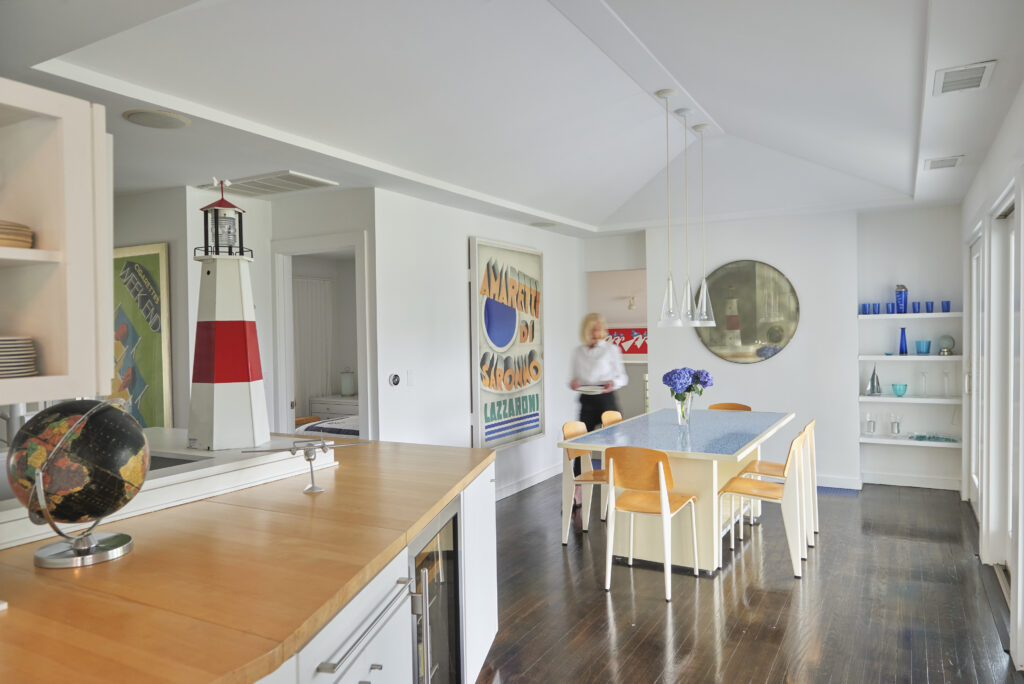
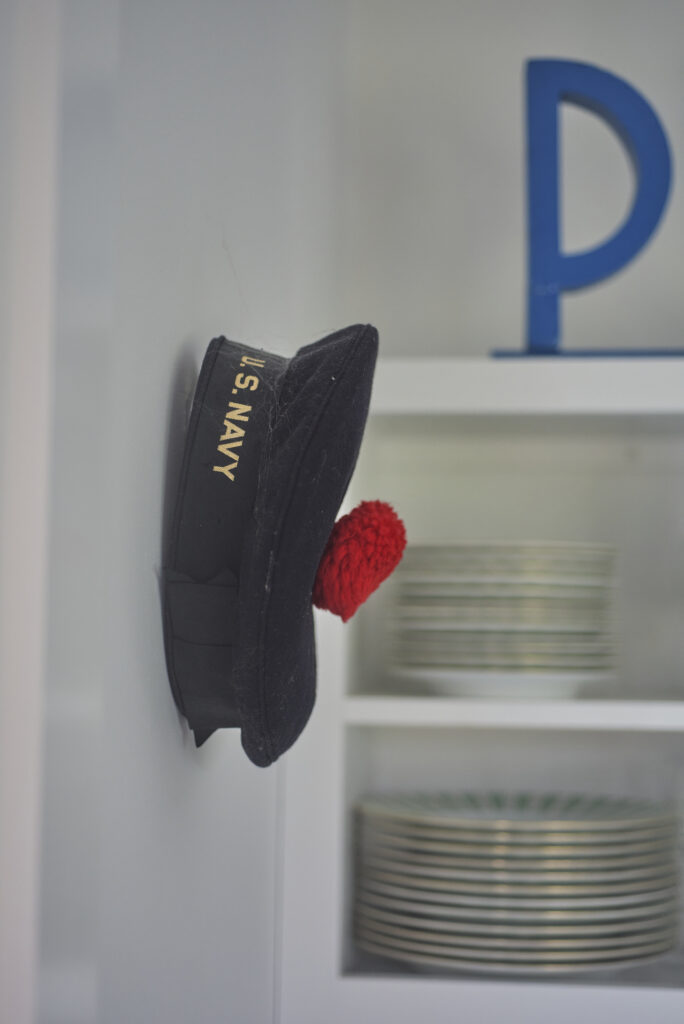
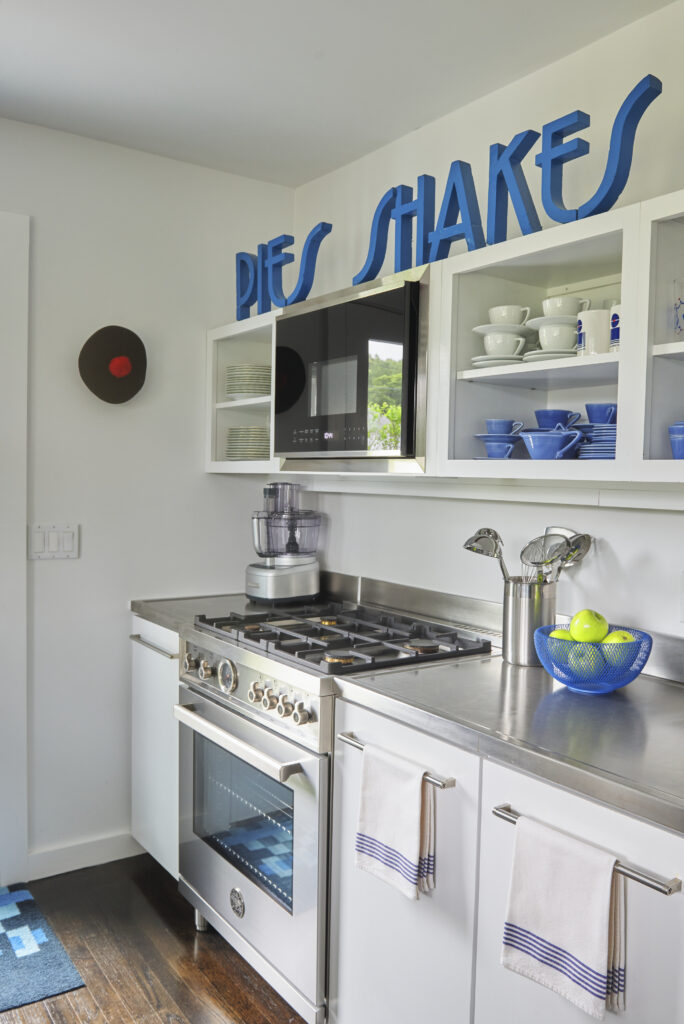
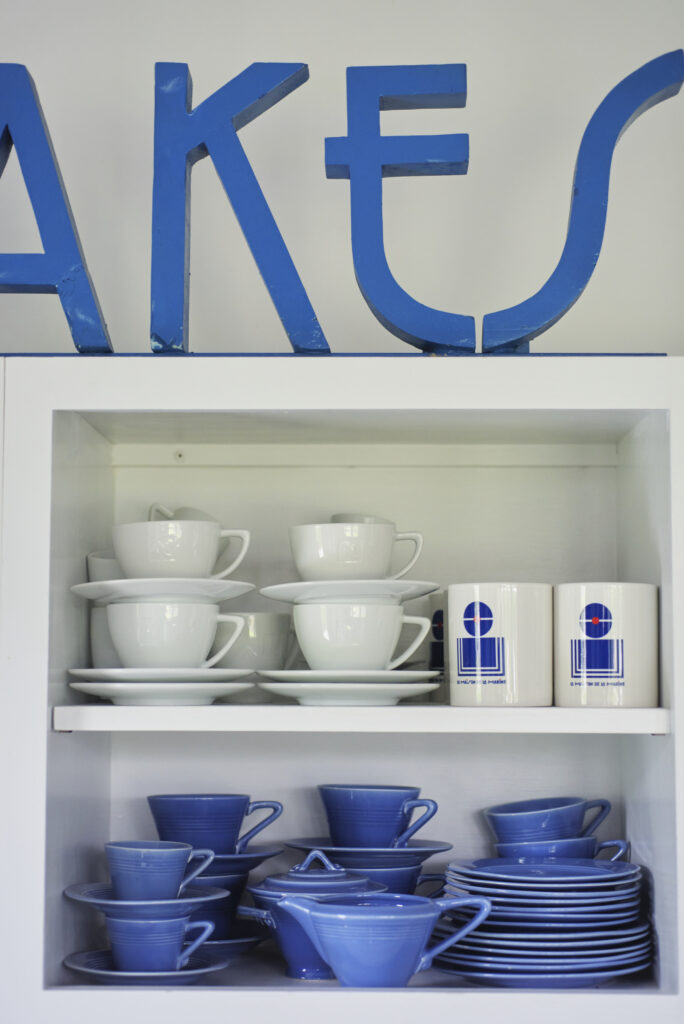
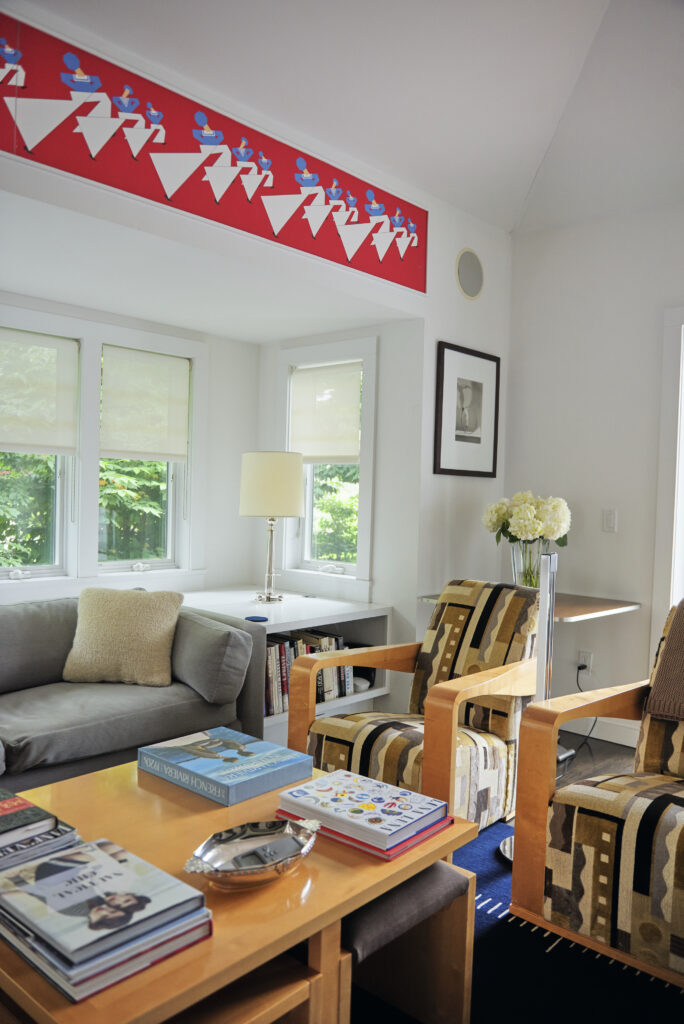
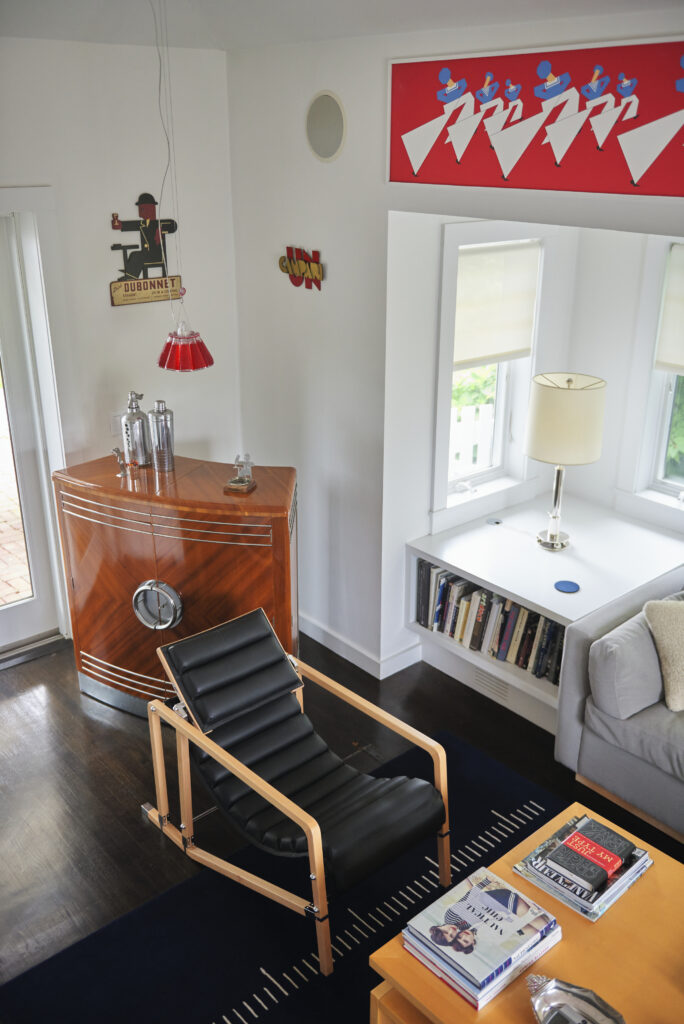
When you look around Boucher’s home, you see that influence in the large-scale, dramatic Italian and French poster art from the early 20th century by iconic illustrators like Paul Colin and Marcello Marchesi. Books on the shelves about the Art Deco period in France, Italy and America. Books and even art depicting the history of graphic design and lettering. Above the line of cabinets that hold a full set of blue Harlequin dishes, made by the Homer Laughlin Company for Woolworths, as well as glasses and mugs designed with her house logo — a French sailor’s retro bib and hat, inspired by the one her dad wore in the French Navy and which hangs by the door in the kitchen. There’s even stand-up ‘20s-era letters spelling out “Pies Shakes Burgers Sodas” to punctuate the point. A friend found them for Boucher at a luncheonette in Manhattan that was going out of business and knew they’d fit in perfectly, bien sur.
Land Ho!
For most people, it wouldn’t look like much to work with, but Boucher could see the destination on the horizon.
“I described it to my architect as a wash-and-wear house, so that it’s easy to maintain,” she says.
Not only was the little-ranch-that-could yellow, it was also only 800 square feet. The ceilings were dropped and low. The kitchen was small with a cute but out-of-place Dutch door, a dining table squished into the small footprint and a choppy hallway situation that made the house feel even smaller than it was.
The footprint of the kitchen has remained basically intact, but the hallway walls came down and the ceilings were opened up, with sleek, tucked-away shelves and cubbies for storage added, as well as a long counter with a wine ‘fridge and tons of drawers — topped by a lighthouse that actually lights — providing a guidepost entryway to the basement staircase. The adjacent former tiny living room was transformed into the dining area, with a wall of windowed sliders letting in tons of natural night and anchored by a custom blue and white travertine-topped table made by Boucher’s architect, Michael Rubin, both sea-scape lovely and spray-and-wipe easy to clean.
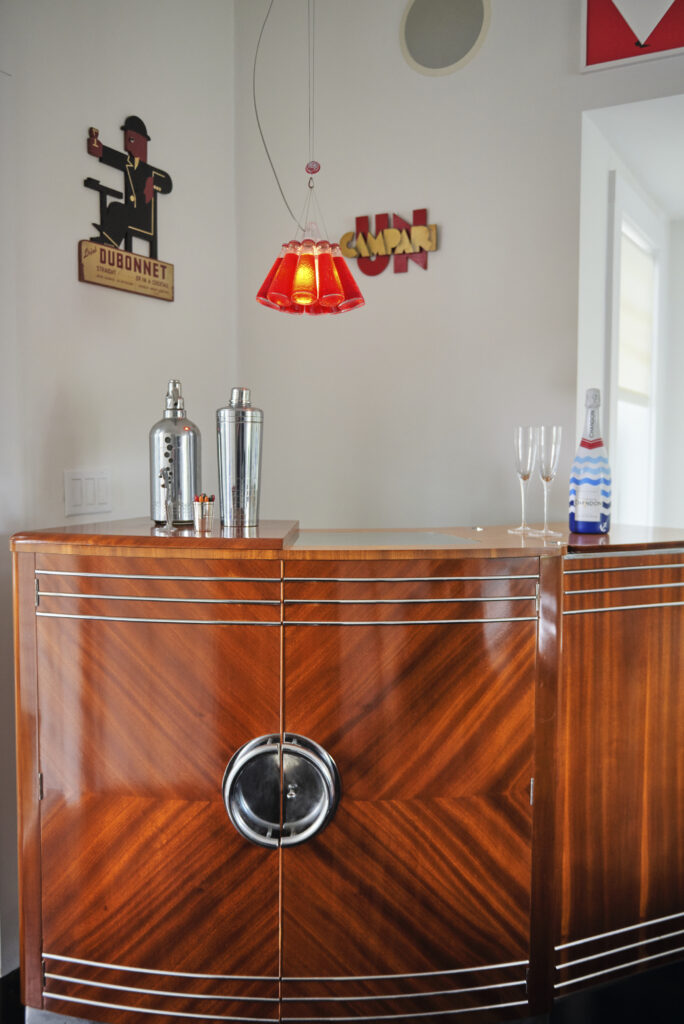
There were three small bedrooms, a bathroom and an attached garage, but the latter wasn’t connected by a door. Rubin added a door and staircase on the back wall of the new dining area, leading to a new vaulted-ceiling living room in the former garage. He added a sleek gas fireplace that created a natural lounge/conversation area as well as space at the other end of the room for Boucher’s beloved little 1920s bar that was made for a yacht, complete with antique barware and a Campari light fixture.
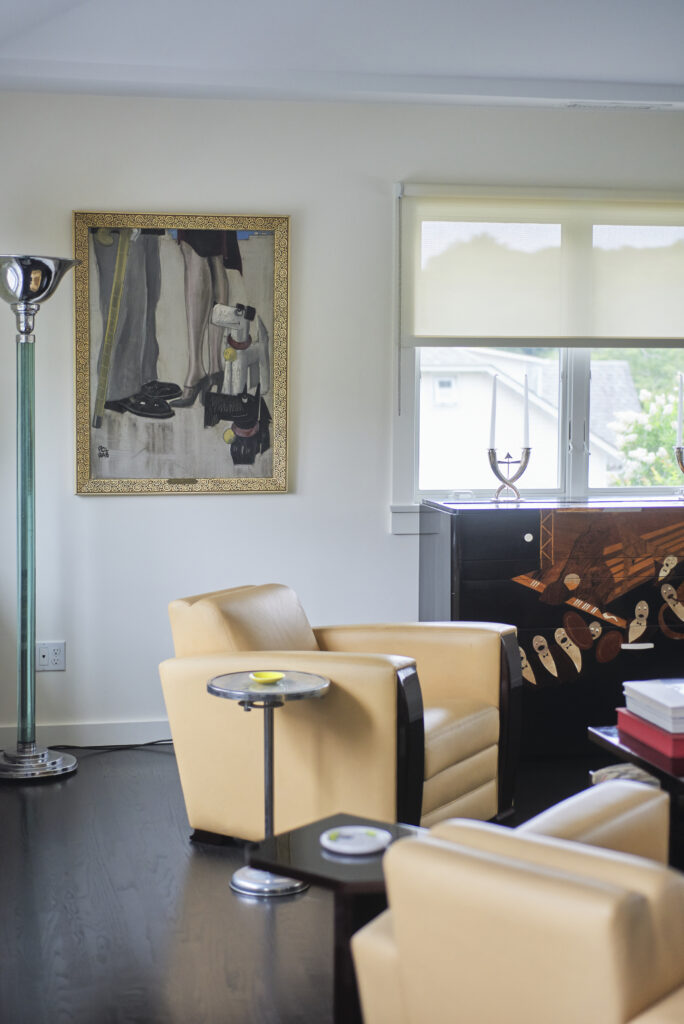
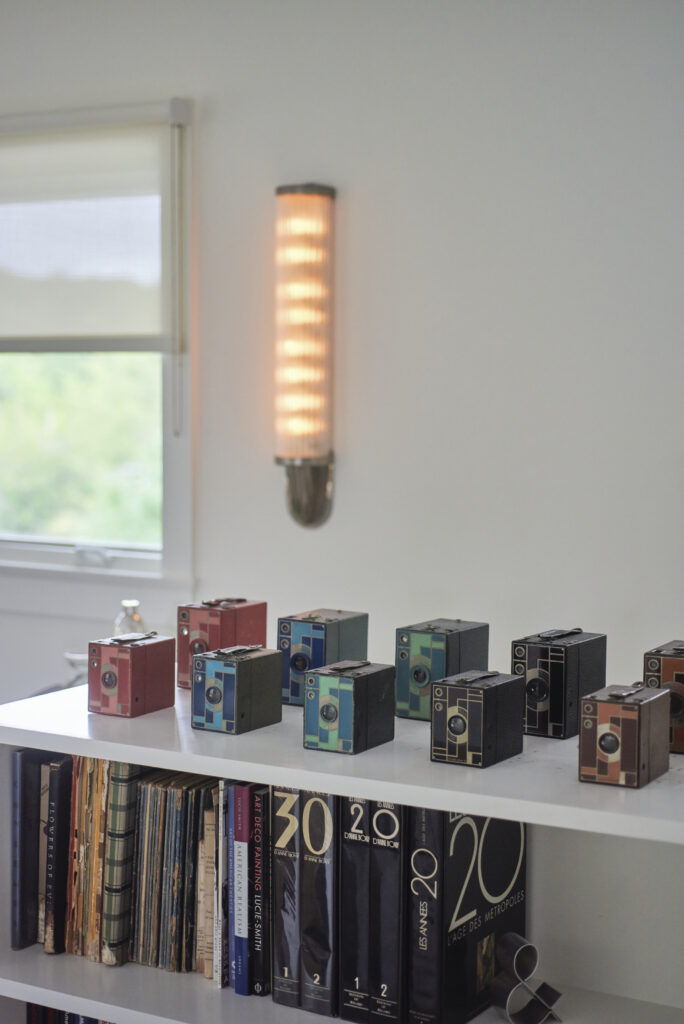
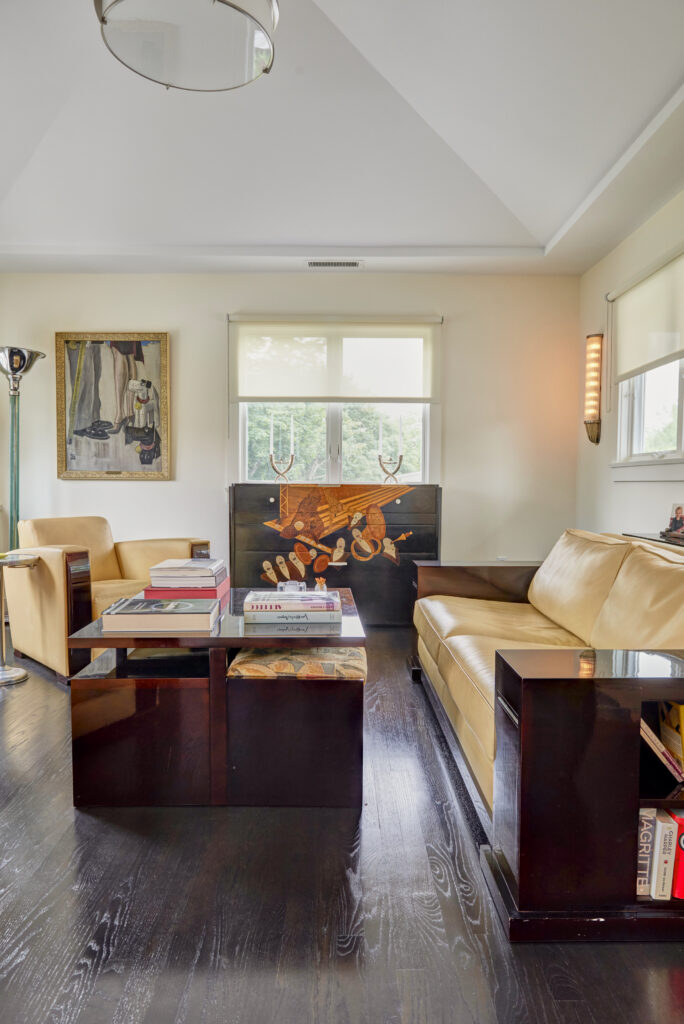
Boucher had an apartment on the Upper East Side in an Art Deco building that she loved and decorated in that style (“My apartment was 2,500 square feet, so it was bigger than this house,” she quips). When she gave it up in 2017, moving to the island full-time, she brought her most treasured pieces — stylish ‘30s and ‘40s-style furniture made from sycamore wood and crafted by the French company Hughes Chevalier, a collection of his and hers antique “Beau Brownie” cameras designed by Walter Dorwin Teague for Kodak, a stunning piano with a wood-inlay recreation of a Josephine Baker jazz performance by Paul Colin, a painting by the cheeky French artist and cartoonist Pol Rab, who not only created the mischievous cartoon terriers Ric and Rac, but also the French poster art that has long fascinated Boucher.
About eight years ago, she added a second floor — a private living space all her own that not only features tucked-away bookshelves built into the walls that lead to the new space, but a separate Deco-decked out living area and little spot for her sleek Hugh Chevalier desk with leather accents. A pocket door reveals an ensuite bedroom lined floor to ceiling in mahogany, with stainless steel accents running through it that make it look nothing short of a perfectly preserved state room on an elegant, antique ocean liner — one with the kind of practical and compact yet well-appointed details (built-in nightstands, a slender but just-right vanity) that store necessities in style.
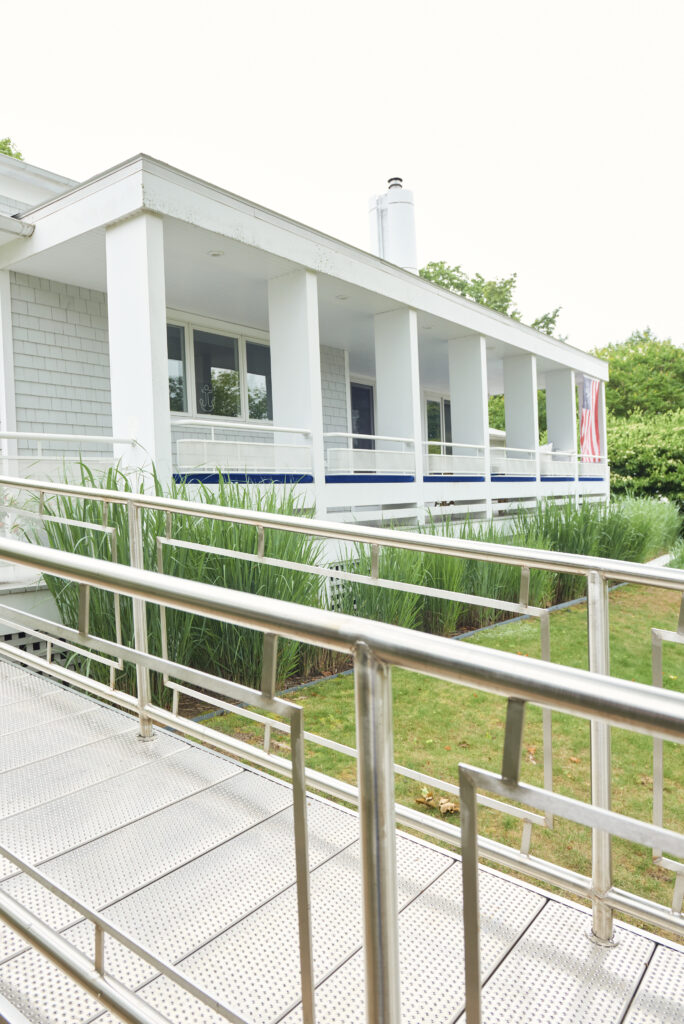
The sea-centric touches extend to the house’s exterior, too, with a wide front porch adorned with bright-blue ship canvas on the railings as well as on the sides of the custom steel gangway Boucher had made so that it truly feels like you’re stepping onto a boat.
“I’ve had so many people who have come here and they said, ‘You know, I can’t believe what you did with this house. You knew you could do something,’” says Boucher, a woman who certainly has her sea legs for whatever comes her way. “It didn’t faze me.”