When we think of Sagaponack—a consistent top contender among the wealthiest neighborhoods in the nation—we think of massive, swanky beachfront homes and the swanky people who dwell in them.
But when the late impressionist painter Robert Dash purchased the roughly two-acre property his eventual Madoo (Scottish for “my dove”) Conservancy would sit upon back in 1967, Sagaponack wasn’t swanky at all. In fact, like many other pockets of earth scattered among the South Fork’s hamlets, it was an artists’ retreat, beloved for its simple, immersive and near-palpable connectedness to the natural world. And it still is today.
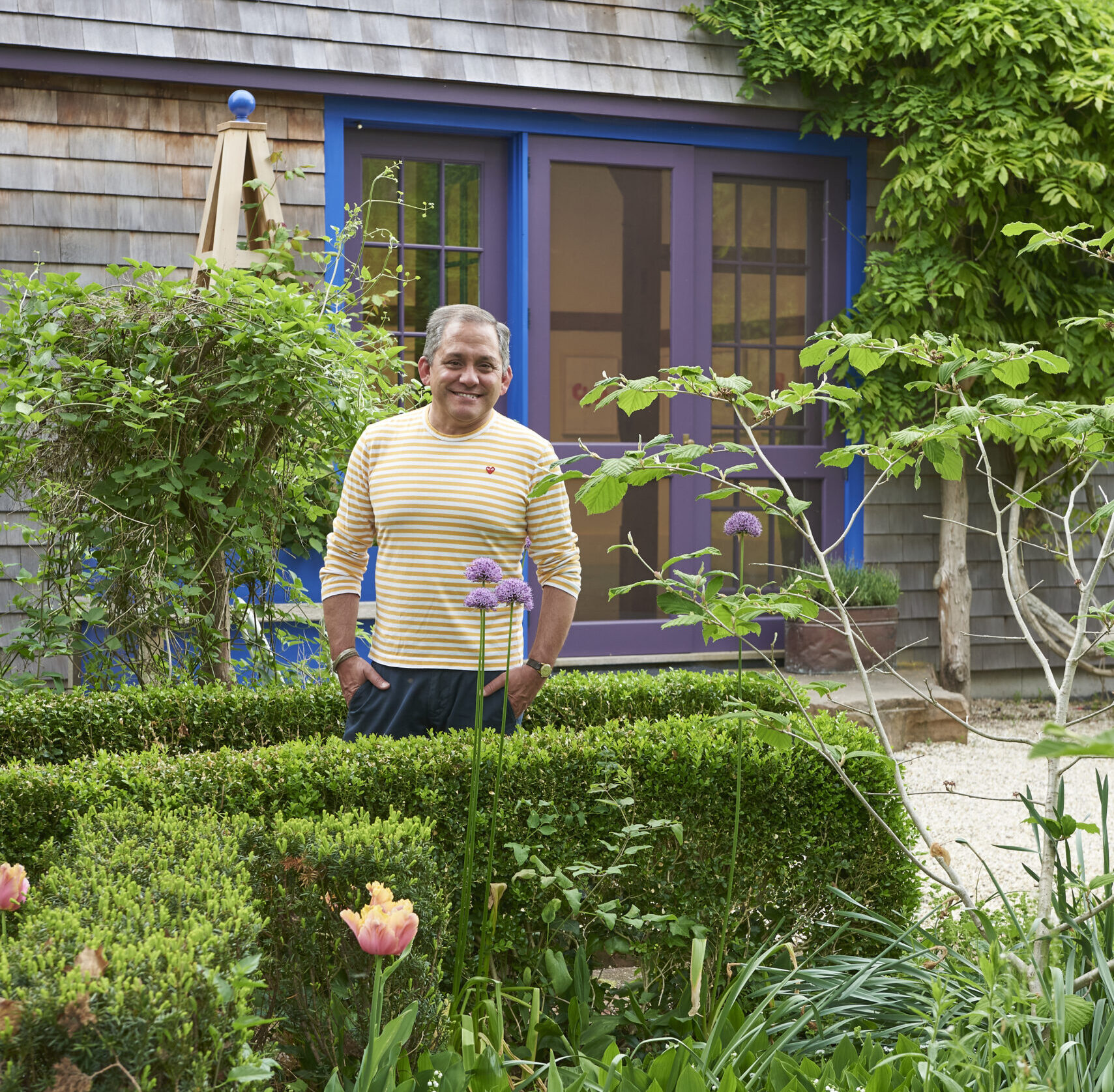
A nonprofit since 1993, Madoo Conservancy (618 Sagg Main St., Sagaponack, 631-537-8200) has evolved from a bucolic private residence for Dash to its present-day role as an open-to-the-public garden. Tucked away on a cul-de-sac off Sagg Road, its 1.9 acres hold carefully curated and innately intimate outdoor spaces connected by small, meandering footpaths, dotted with myriad flora comprising both lush vegetation and native pollinators, and tiny areas carved out for stopping, seeing and sitting.
“It’s a super place to spend some time to mellow out,” says Alejandro Saralegui, director at the Conservancy. “I like to think that your blood pressure drops about 10 points just from walking in.”


(Photos by Doug Young)
Madoo’s mashup of horticulture and expressionist landscapes, peppered with almost modern-day Monet vibes, leads visitors to observe that the plots of land draw design inspiration from numerous influences, from historical Indo-Persian to beach-filled Greek islands to gardens found in the south of Spain—or France, or England, for that matter.
“We keep it very loose in terms of genres found within the gardening world,” says Saralegui. “As I like to say, Robert didn’t want the garden to be preserved in amber. We have to maintain that freedom to be able to change it up when we feel we need to.”
While the actual flora may change intermittently, there are some not-to-be missed permanent fixtures at Madoo that speak to Dash’s structure, style and original vision. “We’re known for our bold use of color while remaining incredibly elegant,” Saralegui says.
This past spring saw the completion of a newly constructed welcome center situated on the footprint of two worker sheds Dash connected in the 1970s. According to Saralegui, the biggest, most noticeable improvement at the welcome center is increased accessibility, with the gardens’ new entry now flush to the ground. The space also now includes a gift shop and a horticultural/reference library to help people interested in identifying and researching the many plants found throughout the grounds.
Two new bathrooms, one of which is compliant with the Americans with Disabilities Act, are also part of the revitalization, as well as a green roof and gutters that empty into rain barrels for hand watering.


(Photos by Doug Young)
Open Fridays and Saturdays, summer hours take effect June 18 (Wednesday through Saturday from noon to 4 p.m.). Madoo’s season runs from around mid-April to mid-October, and there is free entry to the gardens and indoor exhibition spaces.
“Our mission here is about preserving and enhancing this garden space,” Saralegui says, “and ultimately aiming toward the preservation of a simpler life.”