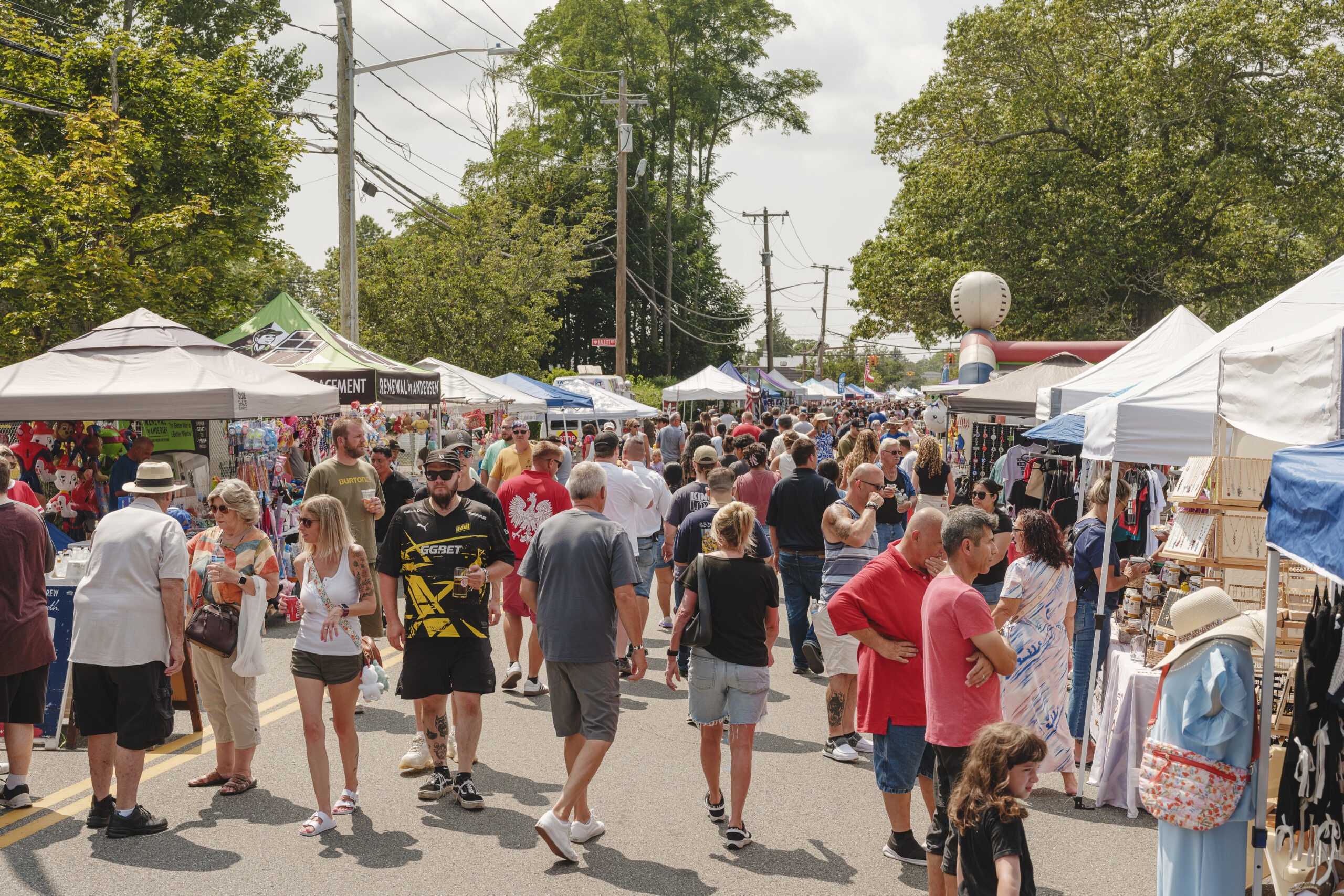
Pierogi-loving East Enders are counting the days. For the past five decades Riverhead has welcomed the Polish Town Fair, a two-day event in mid-August that stretches across the Polish Town grid and fills the streets with vendors, tents, people and, of course, pierogi.
What started as a single-day event in 1975 has evolved into a full weekend of festivities on Pulaski Street and within the surrounding arteries that make up Polish Town. The area is bordered to the east by Osborn Avenue and Marcy Avenue to the west, with East Main Street creating the southerly border and Horton Avenue, just over the railroad tracks to the north. Each year, it attracts a whopping 50,000 visitors (the population of Riverhead is just shy of 36,000) looking to sample Polish cuisine and immerse themselves in Polish folk traditions.
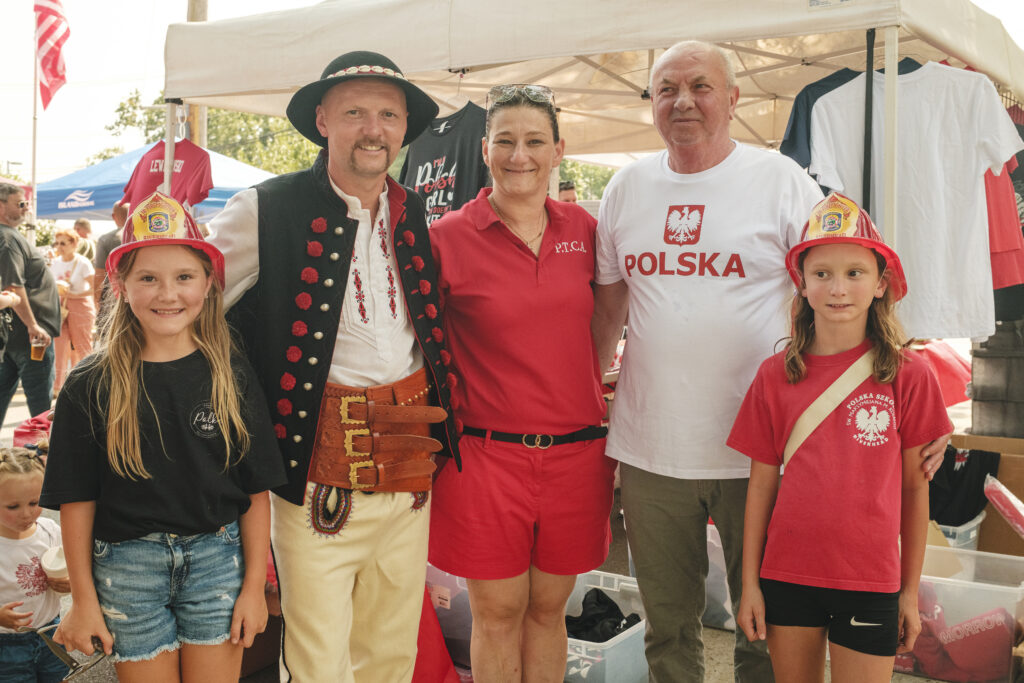
Photo Credit: Jeremy Garretson
The original Polish Town Fair began as a joint effort between the Polish Civic Association and Polish Town Hall just over 50 years ago and continued until the pandemic halted the event for a short time. The hiatus ultimately resulted in a restructuring of the fair, with the two organizations parting ways and producing their own versions. In a complicated turn of circumstances, they now host the annual fair separately but in tandem, which sounds like nothing short of a paradox.
“It’s a joint venture that we kind of plan independently,” says Thomas Najdzion, president of Riverhead Polish Hall. “We do a couple of things together, and others on our own.”
Fair revelers hardly notice a divide given the blurred lines of the festive roadmap and the deep community spirit that lives in the dozen or so blocks that make up the area.
PRESERVATION OF POLISH TOWN
So, how did Riverhead become a haven for Polish immigrants? Polish families began emigrating to the U.S. in the 1880s and 1890s when times were tough in Poland, according to local author and historian Richard Wines. Predominantly agricultural laborers, they left hardship behind to settle on Long Island’s expansive East End, where they could sink their shovels into fertile soil and start a new chapter. They eventually purchased their own farms here, built homes, created their own church and persuaded other Polish merchants and professionals to move to the area.
Riverhead Polish Hall was initially created in 1903 as a place for the Polish immigrants who lived in the community to meet, a hub where they could speak their native language and feel a sense of belonging. The first Polish Hall burned down in the 1920s and was rebuilt soon after, existing as the structure that stands on Marcy Avenue in Riverhead today.
“They were and are very hard-working people,” says Wines. “I asked a woman recently why they were such good farmers. Her response was, ‘Why, they grew potatoes in Poland, of course!’” Hence, the birth of the Long Island potato farmer.
Once here, the Poles became patriotic Americans but never forgot where they came from. Many of their descendants remain in Riverhead and the surrounding areas, with generations staying put and maintaining a foothold in the region.
In fact, Wines is elbow-deep in an initiative that is seeking National Register recognition for Riverhead’s Polish Town. As the Landmarks Preservation Committee chair, he has been diligently researching Polish history, which includes tedious survey work to document the neighborhood’s buildings and locale. Wines is hoping to engage a team of volunteers to help with data compilation, as well as connect with Polish farmers and residents in the area who can share stories of times past.
HERITAGE AND HIGHLIGHTS
The Polish Town Fair gives the East End’s tightly knit Polish population the chance to honor their heritage and share their spirited customs with a wider circle. The mission of the Polish Town Civic Association, established in 1975, is to maintain and enhance the area’s Polish presence — and the fair bolsters these efforts tremendously.
Tom Andrzejewski, PTCA president, and Rich Miller, a PTCA member and committee chairman of the Polish Town Fair, spent months coordinating the event, sifting through vendor applications, booking entertainment and securing volunteers.
“The fair helps us raise funds for many projects and causes,” says Miller. “We’ve added flags to the light poles in Polish Town, had the street signs changed to red and we want to make the Civic building more of a cultural center. We’re here to preserve and beautify Polish Town, as well as support the Polish community.”


Photo Credit: Jeremy Garretson
Just looking through the crowd is a treat for the eyes, with visitors and participants decked out in vivid reds and crisp whites — the colors of the Polish national flag. This year, as always, guests can expect a trove of Polish celebrations and happenings throughout the buzzy fair weekend. An opening ceremony takes place at 10 a.m. Saturday, Aug. 15, followed by mass at St. Isidore R.C. Church on Pulaski Street. Afterward, the day will be filled with folk dancing, accordion players, a parade, a reenacted traditional Polish wedding, polkas and more.
Many festivalgoers are there on a foodie quest. With the scent of sizzling onions filling the steamy summer air, you won’t make it far without a paper bowl of pan-fried pierogi in your hands. Next up will be a seared kielbasa sandwich embellished with pungent sauerkraut and mustard. Before you instinctively migrate to the kielbasa grill, however, you may want to give bigos a try. Bigos, which translates as “big mess” in Polish, is also called “hunter’s stew” — a yummy jumble of meat and cabbage that ranks as the national dish of Poland. If your comrades are kind enough to share, you can wisely sample both.
For those prudent palates craving foods they can spell without phoning a friend, there will be plenty of other options, all evidence of the community melting pot, with Caribbean fare, Maine lobster, ice cream, and pickles among the gamut of summer treats.
And if you want to take a break from the heat and give your tired toes a rest, Polish Hall (214 Marcy Ave.) is offering a ticketed sit-down feast, indoors or outside under a shady tent. For $40 you can dig into a conventional Polish spread complete with kielbasa, pierogi and golumpki (traditional rolls of stuffed cabbage).
Although avid fair fans embrace the traditional fare and format each year, the Civic Association is shaking things up a bit for 2026, with the band Blue Sky making their Polish Fair debut, some re-jiggering of the beer garden, which will feature sturdy Polish brews and zippy polka music, and the staging of a food truck court they’re dubbing “Roadeo.”
Aside from the indulgent extravaganza the fest promises, there are other leisurely pursuits for both young and young at heart. Kids can play in a designated “fun” area with games and animals from Rocking Horse Farms, while treasure-seeking adults can wade through tables of handmade crafts and wares.
Maya Talik, a 17-year-old from Hampton Bays, was crowned the Polish Town Queen this past May and will make her debut in the festival’s parade. Talik is 100% Polish and will attend several community events during the year in keeping with her royal duties — part of her solemn oath to keep this half-century community tradition polkaing into the future.
The Polish Town Fair took place Aug. 15 and 16. For more information, visit polishtownfair.com.
Maria Pietromonaco has been a journalist, author, storyteller and editor for over 35 years. Her books include Images of America: Long Island’s North Fork, as well as a young adult novel. Her more recent passion is to share her love of writing with others to learn the craft and inspire them to tell their own stories. Maria lives full-time on the magical North Fork, where her family set their roots back in 1960.