Breathe
Native Network: Where birds, bugs & native plants meet
by Parker Schug
When you meet a North Fork transplant, many mention their love of the landscape as a top reason for moving here. And for families who have been here for generations, the ecosystems that exist in our eastern Long Island enclaves are often a prime reason to remain — or, at the very least, an obvious perk.
Beautiful sunsets and stunning vistas aside, at the heart of the natural North Fork are three things that aren’t always as showy in their consistent, daily presence: insects, birds and native plants. Yet despite their tenacious existence, there’s so much we can learn about them and why they’re deeply important to the health of our local lands.
The three buzzy, feathered and leafy locals here came about millions of years ago and have co-evolved ever since. One cannot exist without the other but, due to the modern normalization of straying from what the environment needs to thrive, the North Fork’s natural world has felt the impacts.
“They work together, and if you don’t have native plants then the insects can’t eat them, and if you don’t have insects, then the birds aren’t fed,” says Ellen Birenbaum, member of North Fork Audubon Society’s board of directors.
And protecting them? Well, that’s a mission several North Forkers take very, very seriously.
Bye Bye Buggy
According to Dan Gilrein, an entomologist at Cornell Cooperative Extension of Suffolk County, Long Island has an interesting mix of insects flittering, crawling and floating around.
“It varies so much based on the time of year and the plants you have,” Gilrein explains.
In 2025, the county got a glimpse of native cicadas, which only emerge every 17 years. We also share the island with spicebush swallowtail and red-banded hairstreak butterfly, dogbane beetle and cecropia moth, among many other indigenous insects.
Due to a host of factors, insect numbers on the North Fork are declining, warn Gilrein and Jared Dyer, an entomology educator at the Extension. Land-use patterns like human development, habitat fragmentation and broad-spectrum pesticide use are driving the problem.
Birenbaum adds that seasonal raking and bagging up your lawn’s leaf litter each fall wipes away insects’ habitat. Before the leaves even hit the ground, however, comes the fact that there is a lack of plants, including non-native ones, taking up residence on individuals’ properties.


The North Fork Audubon Society’s rain garden full of native plants (above), not only supports sustainability but provides necessary resources to species that call the North Fork home. (Photos courtesy of north fork audubon society)
The Trouble with Turf
Doug Tallamy, an entomologist and conservationist, regularly delivers presentations for North Fork Audubon Society members. “There’s really nothing different about the North Fork from most of the rest of the country,” he says. “We have 44 million acres of lawn. Lawn does not support birds, lawn does not support the watershed, lawn does not support the food web [or] pollinators and it doesn’t sequester carbon. It doesn’t do anything good ecologically and of course Long Islanders are just as guilty as anyone else as far as having the big lawns.”
The large portion of privately owned land that’s covered in non-native grass disrupts the energy transfer insects so valuably provide when supplied with the native plants they evolved to rely on.
“Some [insects] do feed on plants and consequently a lot of birds and small mammals feed on those insects,” says Dyer. “They’re very important for moving a lot of that energy from the plant base up to other organisms. If you want to have birds in your environment, you do need those insects and you need the plants they feed on there too.”
Taralynn Reynolds, outreach director at Group for the East End, takes the cause for native plants a step further.
“They provide either a nectar source, a place where [insects] lay their eggs, something for a larval form to eat or all three,” she says.
This can be observed on the North Fork’s native milkweed that the familiar Eastern Monarch relies on.
“It supports the entire life cycle,” Reynolds says. “The females and males connect; the females lay their eggs on the underside of native milkweeds; the young hatch and eat the leaves. The cycle continues.”
If the importance of native plants still isn’t clear, consider Long Island’s on migratory birds’ Atlantic Flyway, the migratory route for North American birds that reaches from South America and the Caribbean all the way to the Canadian Arctic. That welcome springtime chirp of Baltimore orioles, purple martins and ospreys is supported by a landscape of local flora found here.
Many migrating and resident birds depend on the berries from our native plants and, according to Tallamy’s research, 96% of North American terrestrial birds rear their young on the insects that also depend on the hearty nutrients provided to them by native species.
The Native Advantage
While changing up your shrubbery may feel intimidating, there are benefits to taking on the challenge that go beyond supporting the beaks and the bugs.
“Native plants are pretty low maintenance,” says North Fork Audubon Society president Peggy Lauber.
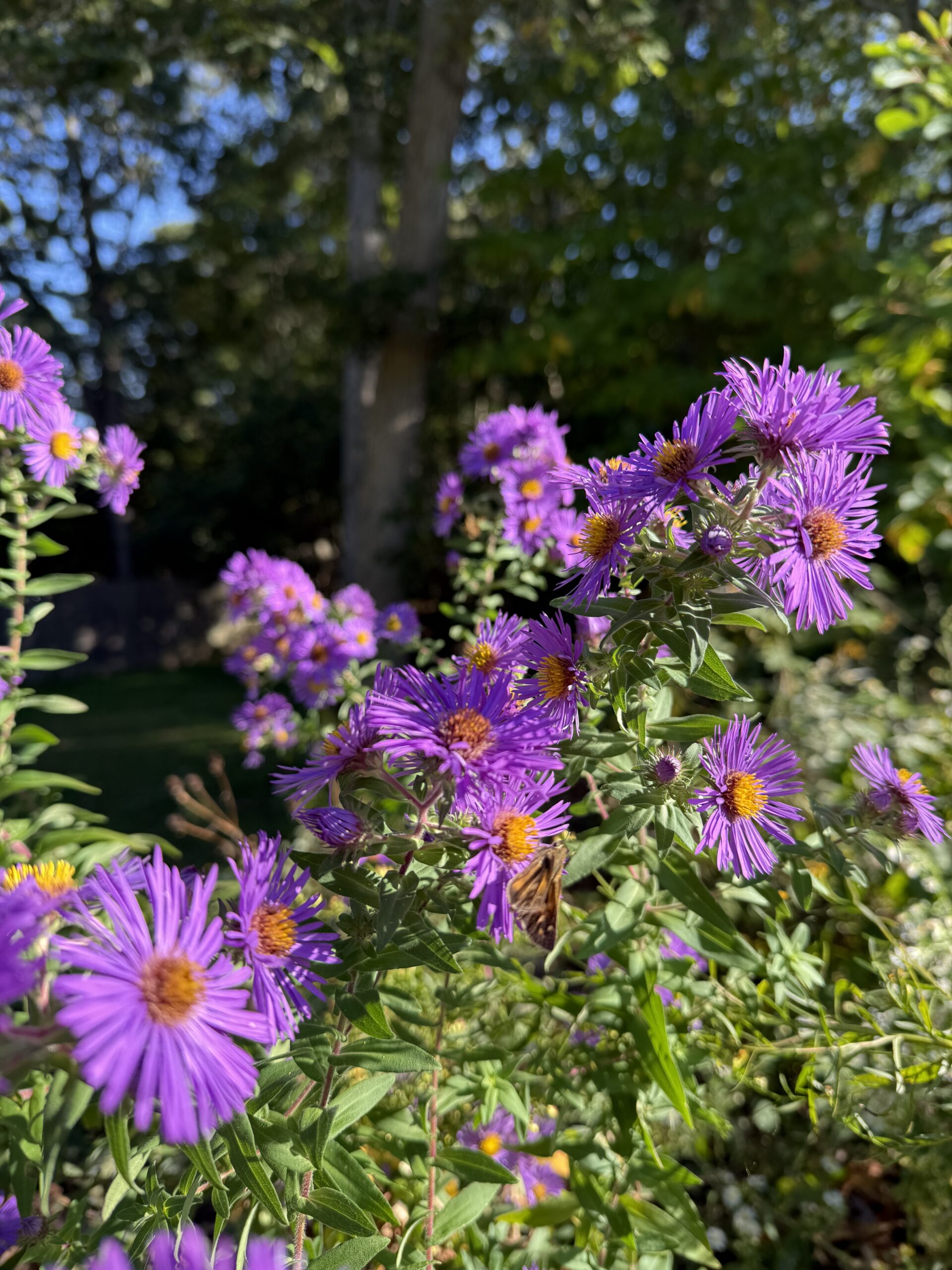
Filling some lawn space with native grasses, asters, ferns, milkweed, viburnums and other species leads to much better natural irrigation compared to rainfall runoff from a large patch of non-native grass, says Lauber.


(Photos courtesy of North Fork Audubon Society, Dan Gilren and Taralynn Reynolds)
“There’s a health aspect to it,” ReWild Long Island North Fork chapter co-chair Mary Morgan says. “We need to support our native health and that’s not only our natural species but our own species. We’re part of it. We’re not separate from nature, we are part of nature and I think people have lost sight of that.”
Alongside her co-chairs Nancy DePas Reinertsen and Ralph Reinertsen, Morgan and the organization host the event Sustainable Garden Tours. They have also installed a couple dozen native plant gardens on local organizations’ properties.
“The garden tours are a wonderful way for people to come and experience what others have done and then also replicate it in their gardens,” says DePas Reinertsen.
At North Fork Audubon Society’s Roy Latham Nature Center (65275 County Route 48, Greenport), the Society maintains native plant gardens with the same mission, including a rain garden with self-sufficient irrigation.
“I wanted to showcase what our native plant palette looked like,” says Robin Simmen, member of North Fork Audubon Society’s board and the rain garden’s curator. “And these plants are all labeled, so if people go to nurseries they can say, ‘I want that Maryland Aster.’”
Rooted in Knowledge
If native gardening is now on your to-do list, you’re in luck.
ReWild Long Island North Fork Chapter and North Fork Audubon Society both host native plant sales in the spring and fall with enough plants to either dip your toe in the native-plant flower box or fully landscape your property.
While getting your hands covered in soil is important, the biggest way to support the ecosystems around you is to know before you grow — or chop.
“We need homeowners to stop cutting down their trees,” Reynolds says. “Oaks are so important to everything, supporting over 400 species of wildlife. They’re vitally, vitally important.”
As an ecotypic species, or a sub-group of native species genetically adapted to their local habitat, Long Island’s native oaks host hundreds of species of caterpillars — perfect for hungry birds. According to Tallamy, they also produce the acorns that feed many mammals, sequester carbon and manage the watershed.


Appreciating nature isn’t lost on North Forkers, in fact many organizations have opportunities to get involed with restoring, revitalizing and viewing nature like bird walks, trail clean-ups and native plant sales. (Photos courtesy of North Fork Audubon Society, Dan Gilren and Taralynn Reynolds)
Tallamy teaches about environmental elements like these through his organization Homegrown National Park. Reynolds does the same through Group for the East End’s educational programs.
North Fork Audubon Society and ReWild Long Island North Fork chapter leaders were inspired to learn more about native gardening through Cornell Cooperative Extension’s Master Gardener program. As a bonus, the respective organizations offer additional experiences, furthering people’s environmental awareness.
“That idea of ecological service is not a popular one in the United States. It’s almost a suspect one. It’s a very complicated one because we have so many cultural attachments to the idea,” Simmen says. “To start to have more information available on a regular basis — certainly in schools but also in nurseries where we buy plants — that starts to connect the dots between the plants that you’re purchasing and growing and the ecologic service that those plants provide.”