With the world increasingly dialing up anxiety and despair, it’s more important than ever to be able to identify — and appreciate — the joys of life. Be it a multi-hued sunrise, a chance encounter with a friend, a day without aches and pains or the perfect cup of coffee, logging both large and small moments of gratitude can have a powerful physiological effect.
“There’s something special about gratitude that fosters and cultivates a sense of peace and wellness,” says Dr. Emily Anne McDonald, M.D., a Mattituck-based board-certified lifestyle medicine physician who encourages patients to use gratitude to heal.
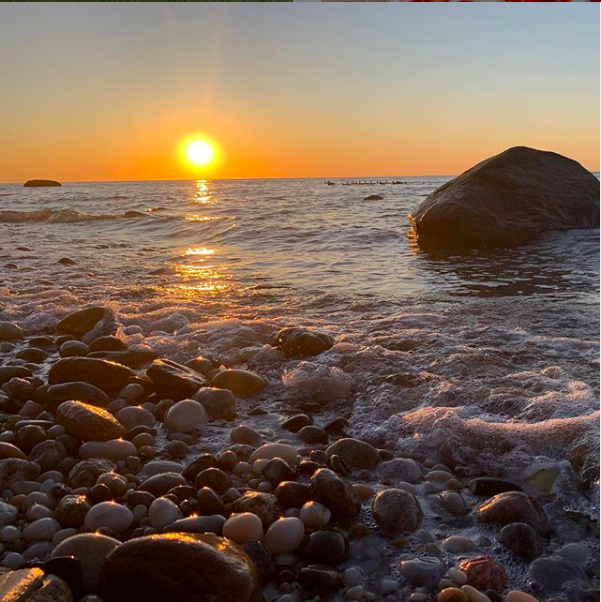
“Gratitude is an essential tool for me in terms of reassuring people and creating therapeutic conversations and encounters,” Dr. McDonald says, noting that the North Fork’s inherent beauty offers many opportunities to feel thankful. “I’m often recommending people look to the natural world for moments and spaces to cultivate gratitude.”
There’s no one-size-fits-all approach, either. Whether you’re drawing daily self-portraits in a sketchbook, journaling longform prose or sharing digital collages with an online chat group after a “gratitude prompt,” it’s all about constructing your own attitude of gratitude.
Here, four prominent North Forkers explain how they do it.
Portraits of Positivity
Artist Verona Peñalba thinks in images. The painter and co-owner of VEME Studios in Greenport started keeping a daily self-portrait sketch journal this year, continuing a legacy she discovered from other local artists.
She was inspired by artist Alexandra Blazer’s self-portrait/journal project, which in turn was inspired by another local artist’s sketch diary that wound up at an estate sale after he passed away. “It’s a passed-on practice from artists in the area,” Peñalba says. “And it shows that when you share your work, you can inspire others.”
She uses a psychotherapy modality called Internal Family Systems, which states that the core self is comprised of different subpersonalities with their own characteristics.
“When I’m journaling, I’m trying to feel what they are, connect with these parts and just give them space,” she says. Peñalba accents her portraits with adjectives and phrases, sometimes in her native Spanish. One portrait shows the words “Wit. Sun. Wise. Energy. Connected” literally radiating from her head, while another describes her strength as a manager with: “Creative. Genius. Confident. Inspired. Manager is the brain body … so if one needs attention, they speak up.” A portrait of herself hugging and kissing her 9-year-old daughter is doodled with hearts.
Peñalba keeps colored pencils and markers by her nightstand and sketches in bed at the end of the day as a self-reflection. “Sometimes I’m tired and [the drawings] are very bad,” she laughs. “Sometimes it’s dark and I have no photo reference, so I just make them more whimsical.”
Regardless of the recording method, everyone who keeps a gratitude journal agrees the practice itself makes you more open to noticing and receiving.
“If you train your mind and spirit to be aware of the things you’re grateful for, they are going to keep coming,” Peñalba says. “It’s an exercise for life.”
Sharing is Caring
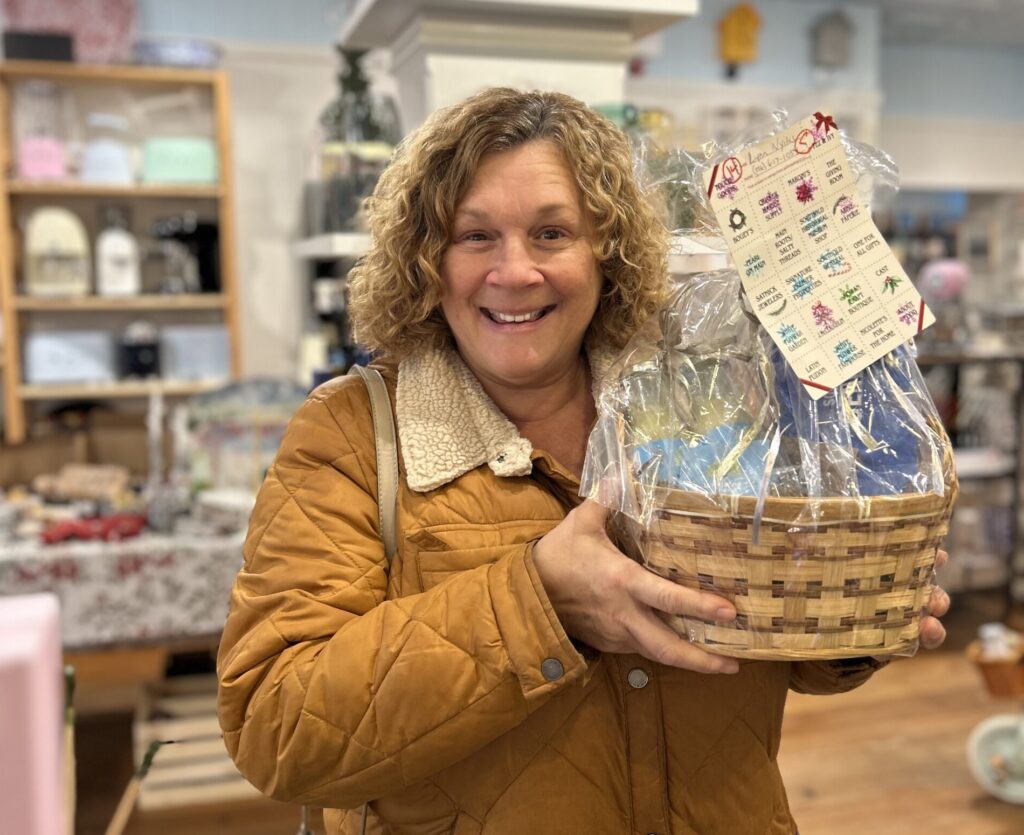
Paula DiDonato, owner of The Giving Room, has always been enthusiastic about community. Her Southold studio is known for its group yoga classes, juice bar, art exhibits and spirituality-driven gift shop, but during the COVID-19 pandemic, things had to go virtual.
To preserve a feeling of community and raise spirits, DiDonato created a Giving Room email chain in which participants digitally shared three things they were grateful for. “I’ve kept up that practice of sharing my gratitude with a small group of family and friends, and now it’s also part of my regular yoga practice teaching,” she says, noting that when people express gratitude, the brain releases the “feel-good” chemicals dopamine and serotonin.


DiDonato believes that sharing amplifies positive energy and reinforces the experience. “Research shows that people who share three things they are grateful for, for at least 30 days, have a significant improvement in mood and mental state,” she says. “The practice reduces depression and anxiety. It’s amazing.”
Proving that writing needn’t be cumbersome to be effective, DiDonato keeps her three-point gratitude reflections short and sweet. “Friends. Sunrise. Juice” reads one entry, while another says, “Forgiveness. Path to Peace. Belief in Angels.”
The Giving Room also sells gratitude journals with various prompts: three things you are grateful for today; three things that made the day great; and three affirmations. “Everyone has those blank books all over the house that we can write in and walk away from, but having a specific book with daily prompts holds you accountable,” DiDonato said, noting that writing down the date and where you are is more likely to keep you compliant.
Daily Ritual
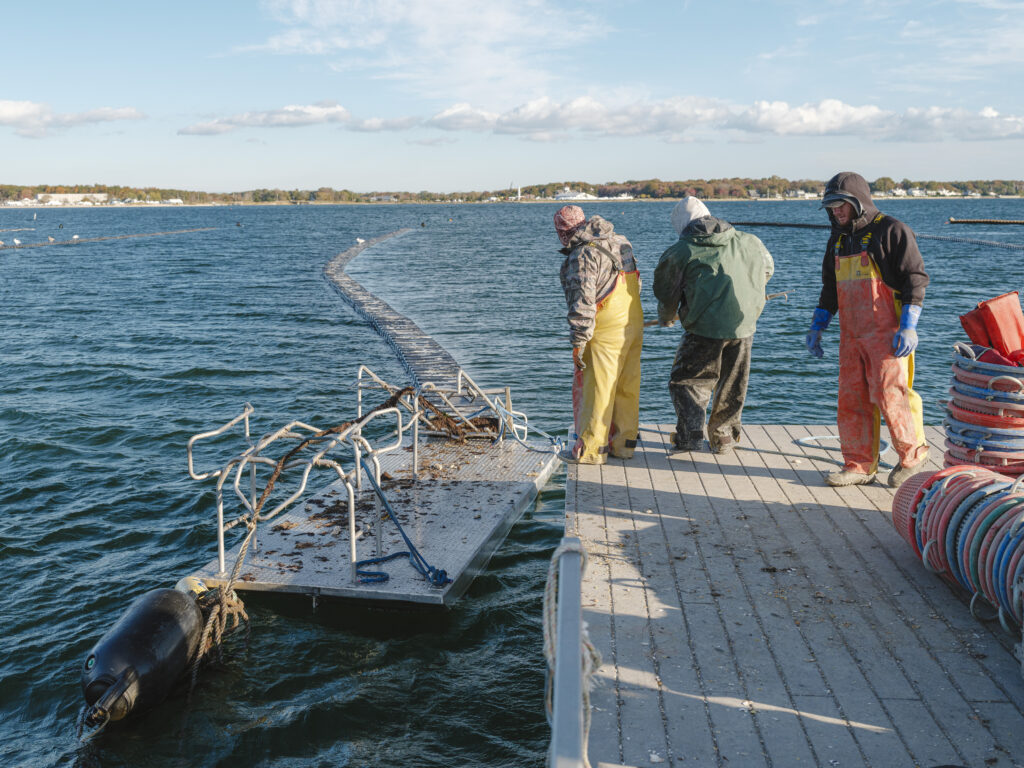
Every morning when Yvonne Lieblein, general manager of Port of Egypt Marine, gets out of bed, she says “thank” when her left foot touches the floor followed by “you” when the right does. When she later leaves the house, she sets a gratitude intention for the day once her hand meets the doorknob.
She’s been recording gratitude for more than 20 years, keeping a scrapbook-like journal that mixes observations with images and keepsakes, and mentions a renowned quote that resonates deeply with her: “A grateful heart is a magnet for miracles.”
Gratitude can include photos or keepsakes, like a weathered snapshot of herself as a child she found that day, or handwritten musings (“Walking through the Village before it wakes up.” “Night Swimming.”), and she finds taking pen to paper helps cement the moment.


“There are studies on how the tactical act of handwriting really increases the connectivity between all of your brain regions and your memory and retention,” Lieblein says.
She also finds her gratitude journal a way to metaphorically slow time. “It’s a biological fact that as you get older, your perception of time appears to be moving faster,” she says. “Gratitude is one of the things that helps slow it down because when you’re practicing and thinking about gratitude, you are in the present moment.”
One with Nature
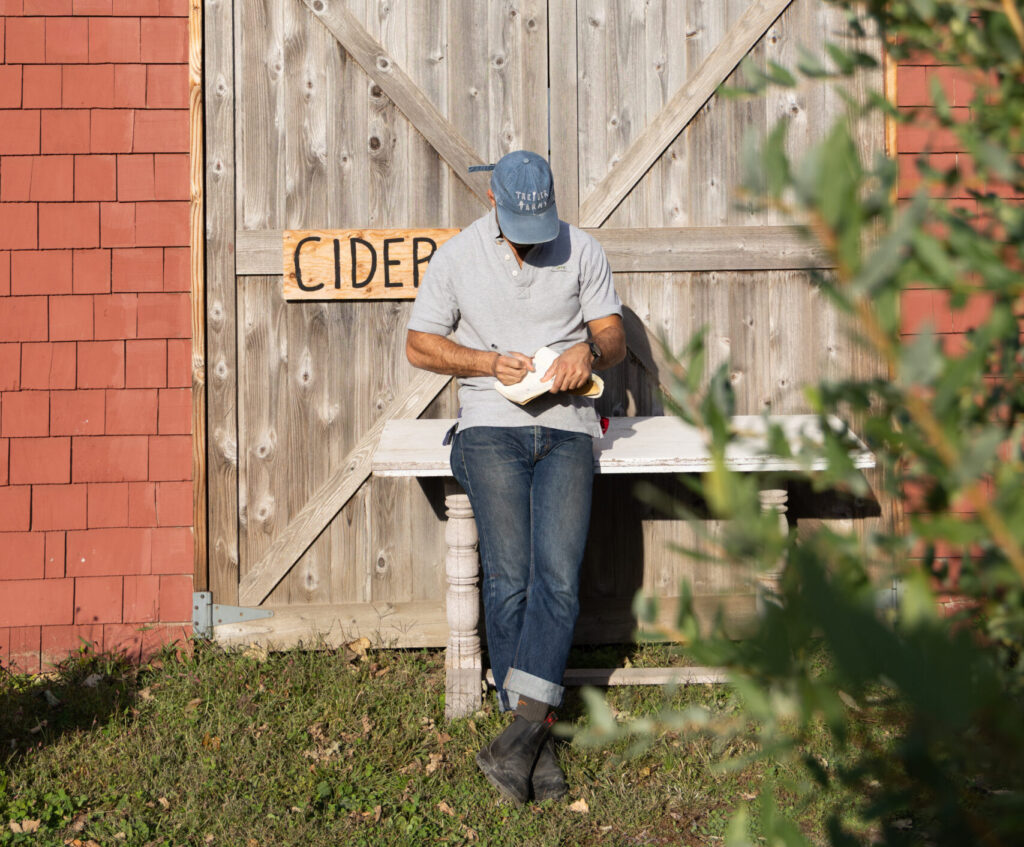
Farmers, whose livelihoods depend so much on nature’s bounty, are already highly attuned to their environment. So it’s not surprising that Peter Treiber, who runs the decade-old, 60-acre Treiber Farms in Peconic with his father, Peter Sr., has been writing down thoughts as a way to stay present, positive and appreciative.
It’s a bit of an extension of his spoken gratitude practice, during which he meets on Zoom every Monday with a group of guys to discuss what’s going on in their lives. (Treiber credits his therapist cousin who runs Dude, Breathe Counseling with the motto “You gotta check on your bros.”)
Treiber’s notebooks, however, are a way to check in on himself, whether it’s recording things seen on the farm that day (“a one-eared rabbit”), a list of items to buy for the farm, a chance encounter with a friend, or a poetic state of mind (“It’s gray and my toes are cold. I hope life never gets old.”).
Treiber’s observations, from a post-rainshower’s patchwork sky to a new door at the farm, underscore that the little things are often the big things.
“I’m grateful for my Dutch door. Who knew a door could bring such consistent delight? I swing the latch open, a joy in itself, and voila! The outside is now inside and all is okay.”