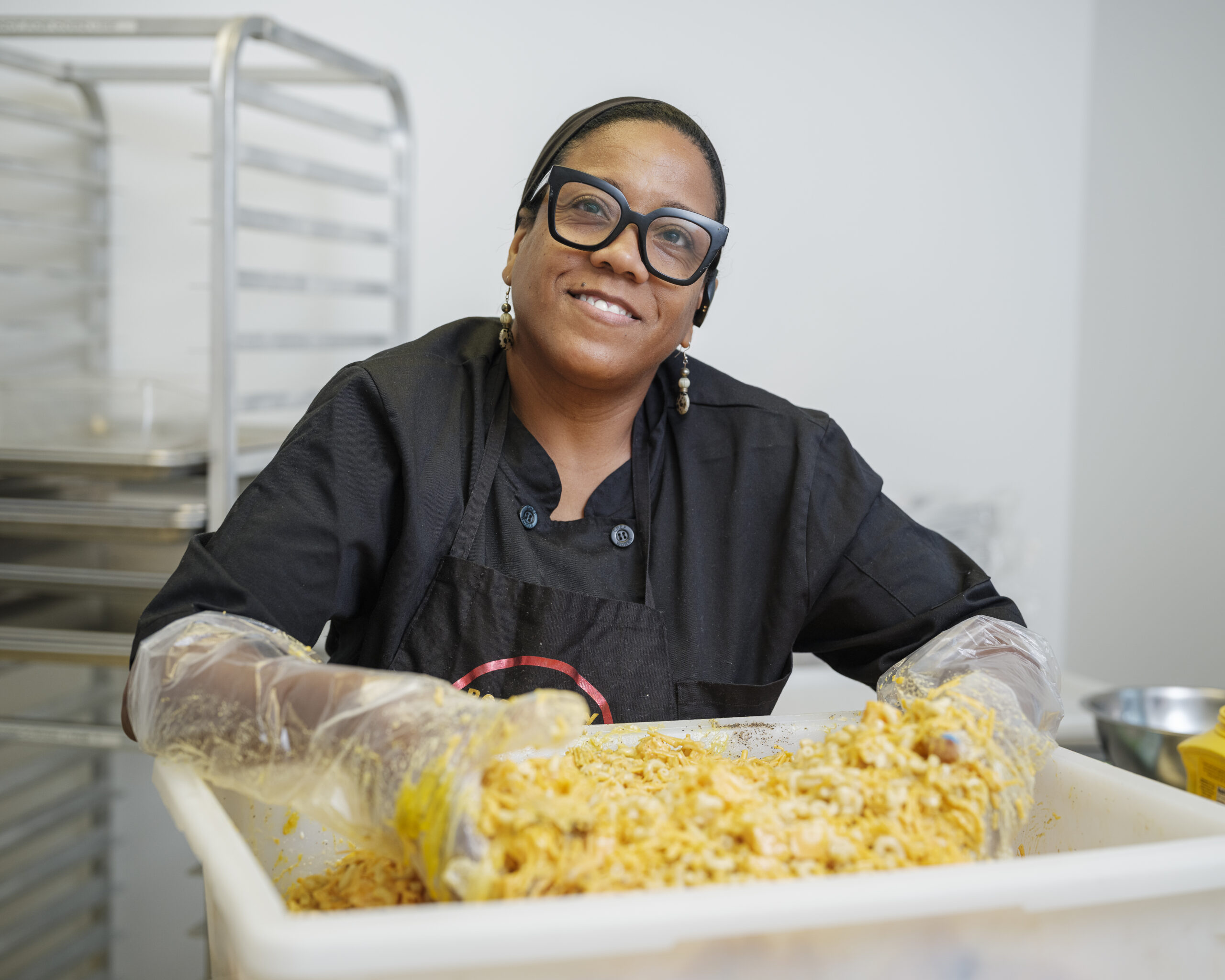
Everyone knows the East End’s fields and waters yield incredible, impeccable ingredients — asparagus, strawberries, sweet corn, clams, tilefish. The region also counts an impressive roster of food makers, from bakers to chefs, from vegetable fermenters to coffee roasters — artisans inspired partly by the indigenous ingredients and partly by what they crave themselves and feel is lacking in the local pantry. Precise origin stories vary. An act of passion spurs a second career. A post-pandemic desire grows to reinvent and adapt. Or maybe a keen observer of local life has the vision to fill a gap in the market.
The burgeoning small-business mindset born of our food ways has caught the appreciative and industrious eye of supporting actors and local government, like the Stony Brook Food Incubator in Calverton and East End Food in Riverhead, and grants from New York Ag and Markets, the state agency to support farmers and food entrepreneurs.
Here are four such North Fork food makers to know and try to support.
Disset Chocolate
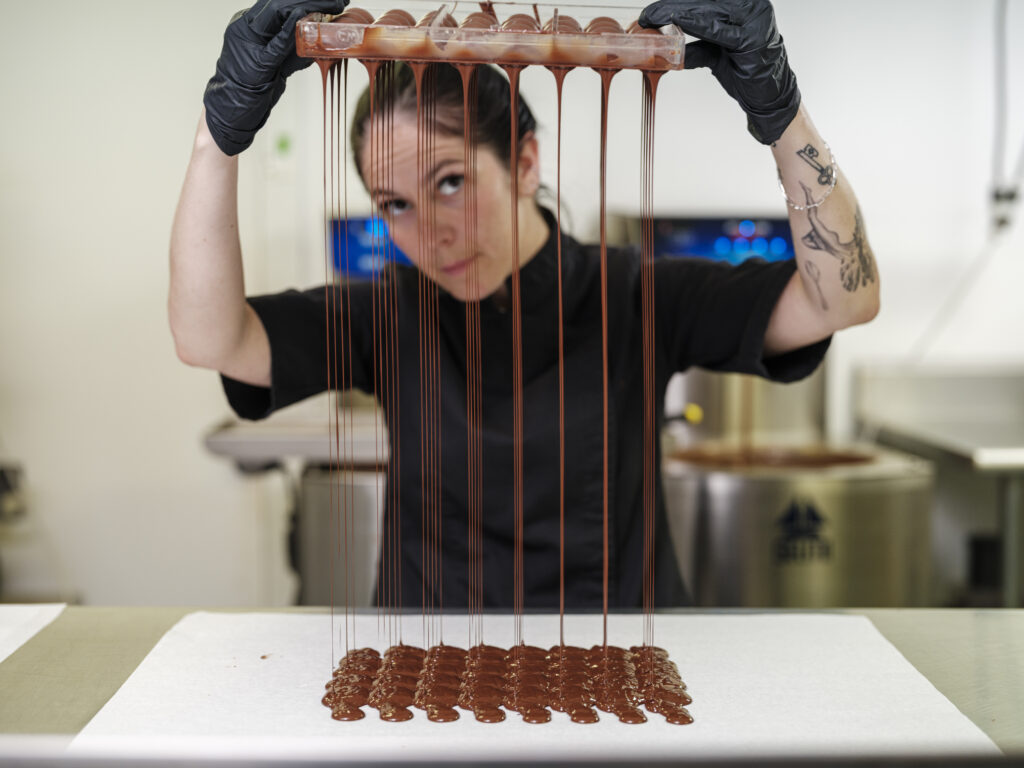
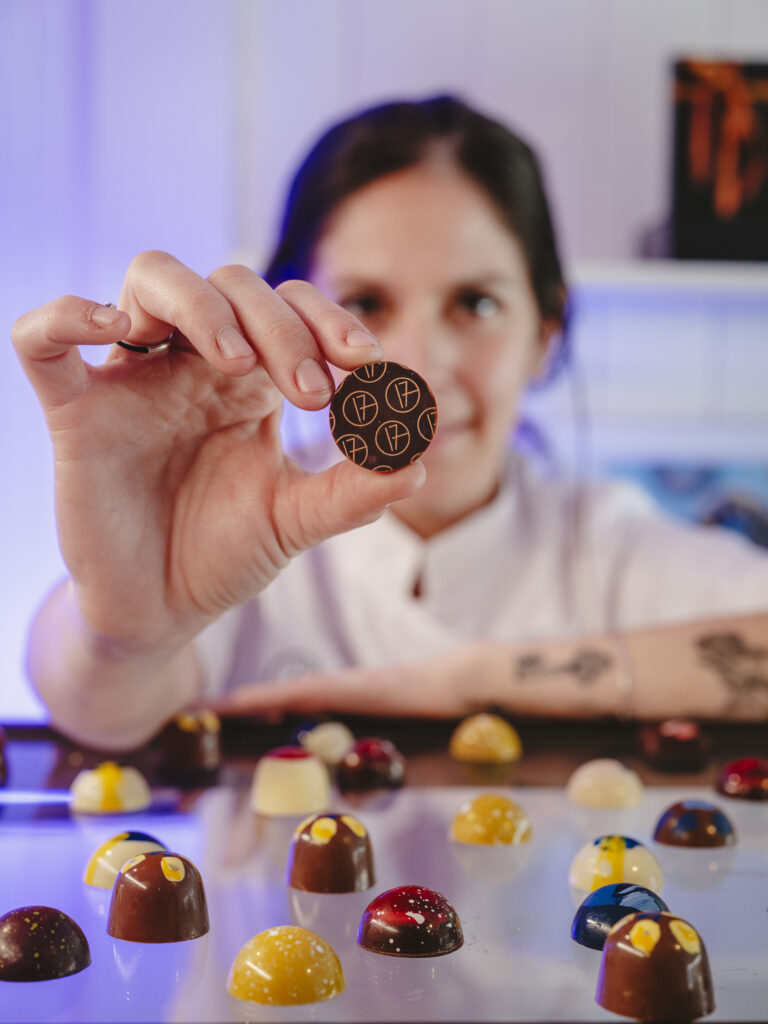
On Main Road in Cutchogue, just past the Cutchogue Diner and before Wickham’s Fruit Farm, sits the cacao atelier Disset Chocolate, a store that is at once an irresistible chocolate boutique and workshop space for classes in the art of tasting and decorating chocolate (think birthday parties, corporate team building, bridal showers and other such group-gathering occasions).
Ursula XVII’s movement into the world of chocolate was not a straight path, although she was always drawn to the art and science of baking. “I just loved how, like, five ingredients could make a cake, a soufflé, ice cream, a custard, all based on the ratios,” she says.
She went to the French Pastry School in Chicago and staged at fine-dining restaurants from New York City to Barcelona, along with a stint at the Mohonk Mountain House in the Hudson Valley, before settling on the North Fork, where she purchased the Harvest Inn bed and breakfast in Peconic.
XVII eventually connected with chef Claudia Fleming, co-founder of North Fork Table & Inn, and was hired to staff their food truck. She had started making chocolate for friends and family and would share it with Fleming and her team. When Fleming sold the restaurant, she pushed XVII to go all the way. “She was like, ‘That chocolate thing that you do? That’s what you need to do.’”
From there, the business grew rapidly, using commercial kitchen space on Oregon Road in Cutchogue, next to where North Fork Potato Chips, another local food-centric success story, are made. Orders came in via e-commerce and then grew with pillow service at hotels and custom projects for restaurants and specialty food shops.
When the pandemic started, the hotel and restaurant business went away overnight. Disset was buoyed by support from nearby businesses. There were pop-ups at Greenport Brewing Company, wineries, farmers markets and other local spots. “The saving grace was online and the North Fork as a community,” XVII says.
At the same time, XVII’s mother had retired and stepped up to spearhead the storefront. And eventually the weddings, hotels and restaurant demand came back.
Get XVII talking about chocolate and she eventually nerds out about the global chocolate crisis. Like coffee, chocolate is only grown in the small band of our planet between the Tropics of Cancer and Capricorn. Climate change, rainforest destruction and other factors have been hard on this unique global ingredient. During the 2023 El Niño year, the erratic weather in the global chocolate zone ended up driving up the price of cacao, the raw ingredient in chocolate, to the highest levels ever seen — per pound, cocoa went higher than copper.
“It was like telling a graffiti artist that aerosol cans were becoming extinct,” XVII quips.
XVII gets her chocolate from the French firm Valrhona Chocolate, where she is an ambassador chocolatier. She chose them because of their B Corp status and adherence to other social, labor and ecological sourcing criteria.
This interest in traceability — knowing your supply chain — extends beyond the cocoa to the fruit and vegetables and salt that she uses for Disset. “I have a guy that makes me sea salt from Orient waters. There is a local and global responsibility that we have as food producers,” she says. “There are no strawberries in our pastries unless it’s strawberry season.”
Disset does to-die-for baked goods that you’ll see at the Greenport Farmers Market on Fridays, including cookies filled with custard that were inspired by eggs from 8 Hands Farm in Cutchogue; a popular vegan carrot cake with Sang Lee Farms carrots, and an Oyster mignonette bonbon flavored with Little Ram Oyster’s oyster liquor, the liquid that surrounds an oyster and is sometimes discarded while shucking. It’s combined with Disset’s “bang bang” mignonette sauce, which is a little spicy and herbal.
XVII’s desire to constantly innovate means she encourages her team to think outside the box and dream up new flavors and creations in beginning-of-the-year brainstorming sessions.
The North Fork also has more name recognition than it used to, which makes it easier to unlock business with, say, a new hotel on the Lower East Side or in Long Island City.
This past winter, XVII did the Columbus Circle Holiday Market for the first time — a thrill for a girl who grew up in the city.
“People came up to me and said, ‘What do you mean there are beets in this chocolate?’ And I said, well, we live on the North Fork, we have farmers and when their food is about to go bad we freeze-dry them and we make all these crazy flavors. We highlight no waste.”

The Biscotti Company
Even though Bruno LoGreco of The Biscotti Company had a thriving practice as a life coach in New York City, baking the perfect biscotti may have been his true calling. “I used to teach people to reinvent themselves,” says LoGreco. “Because I wrote the book on how to reinvent myself, I thought I could use the tools on myself.”
This was in 2018, when he went to a startup food biz boot camp in New Jersey. He had long felt the American biscotti market was missing something, having grown up on his family’s 200-year-old biscotti recipe—passed down from his grandmother’s grandmother. “Gotta be crispy, crunchy, delicate to the tooth,” he says. “Won’t snap a tooth but can still hold for a dunk.”
In March 2020, LoGreco set up at the Stony Brook Food Incubator in Calverton, which launched in 2012 to provide shared kitchens, storage and separate rooms to support food startups on Long Island. In the name of research and perfection, LoGreco tried any biscotti he could get his hands on, from Milano on the Upper East Side to Eataly in the Flatiron District and everywhere in between, including single-serve brands at the grocery checkout. “I cursed each and every time I bought them,” he says.
Because they were bad and he knew he could do better.
How does he get the biscotti to be crispy and crunchy throughout? It’s not a simple answer. LoGreco talks about a proprietary formula — developed over approximately three months — that includes the flour blend, how much air is whipped into the eggs, when the ingredients are combined and a range of other decisions that affect the texture and mouthfeel.
Beyond nailing the elusive crispy-crunchy texture, The Biscotti Company has an impressive range of flavors. “Our flavor profile is unmatched,” says LoGreco of a category that is often stale — literally and figuratively. “We work with perfumists and essential-oil folks. Our almond extract has tones of apricot and that is proprietary to use. Our chocolate tastes like a fudge brownie.” The range includes blueberry, cranberry-pistachio and a rainbow of other flavors.
In five years, business has boomed. LoGreco, who lives in Southampton, sells 60% of his product through QVC, where his story and charismatic salesmanship get the phones ringing. The rest is sold to wholesale clients throughout the region, like King Kullen, Iavarone Bros and IGA.
LoGreco’s dream is to have a flagship store somewhere on the South Fork (think the Tate’s Bake Shop Southampton location) where customers can buy their favorite flavor of biscotti and have their cup of coffee — for dunking, of course.
Peconic Escargot
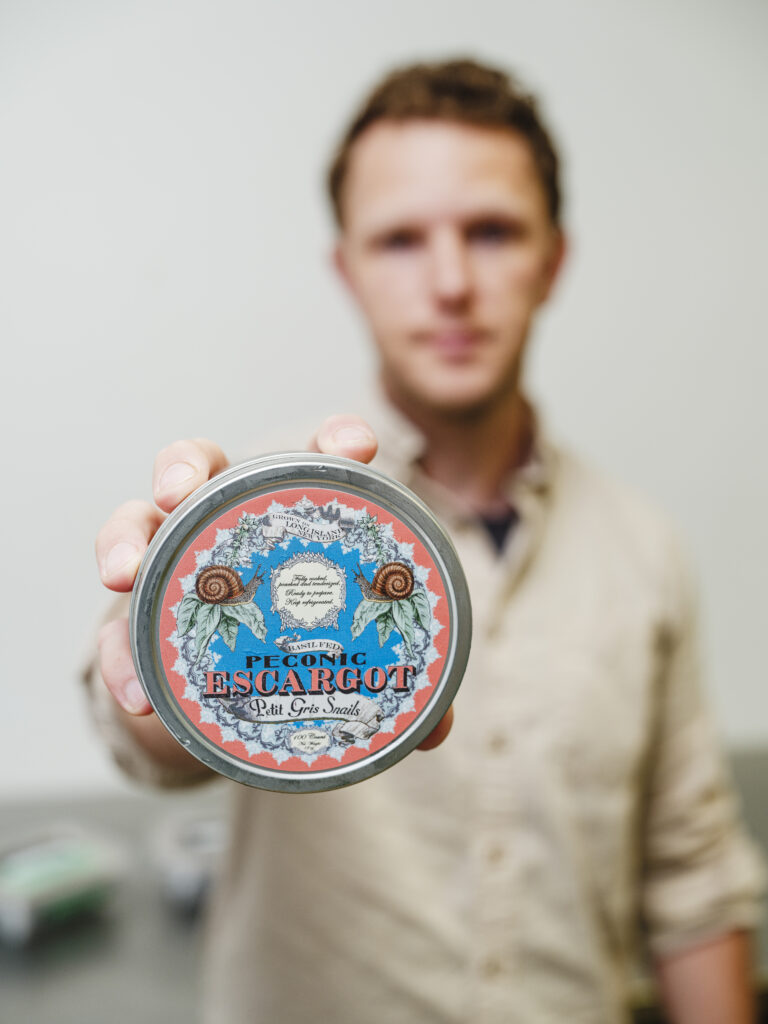
It’s a little-known fact that the North Fork is home to the nation’s only snail farm. It was 10 years ago that chef Taylor Knapp, who blew away eaters helming the kitchen at First and South in Greenport, and still does at his frequent PawPaw dinner popups at the Lin Beach House, rented a small plot of land from the Peconic Land Trust and installed a greenhouse where he began to raise snails through his company, Peconic Escargot.
“It’s a lot like a mushroom farm,” Knapp says. “The snails really take care of themselves. As long as the temperature and humidity is right.”
Today, the farm raises a quarter-million snails a year. “We are a tiny farm, but big as far as snail farms go,” he says. Most of these snails go to restaurants around the country, in places like California, Chicago, Florida, Texas and Puerto Rico, as well as Canada and Mexico. Early adopters included Little Creek Oysters in Greenport and Léon on Shelter Island. The snails show up weekly at the PawPaw pop-ups. Eastport General Store in Eastport, L&W Market in Bridgehampton and Farm & Forage in East Hampton and Southampton are among the local locations that sell the snails retail.
Peconic Escargot grew out of Knapp’s own love of escargot and the dearth of alternatives to imported canned snail product. He found interested investors and built the farm. Eventually, he made the move to use the Stony Brook Food Incubator in Calverton for processing.
In addition to whole snails, Peconic Escargot produces an even more unique product: snail caviar. More common in Europe, this is another first in the U.S. Peconic Escargot’s snails lay eggs twice a year in small holes they dig in the soil, where they deposit a clutch of 50-100 eggs. Peconic Escargot leaves some eggs to hatch and harvests the rest. Knapp cures them with salt and jars them.
“Larger than sturgeon roe, but smaller than trout and salmon roe, they have a thick membrane,” he says. “You can roll [them] around in your mouth, and when they finally pop you get this salty burst with notes of mushrooms and earthiness.”
Knapp is happy with the company’s growth, in particular its recovery after the pandemic. He can foresee additional expansion but is in no rush. “Like any business, if you start getting ahead before you got the sales, you are in a lot of hot water,” he says.
Tashana’s Kitchen
Tashana Small turned deep cooking roots and a lifelong love of feeding others into her eponymous business, Tashana’s Kitchen just a few years ago. In the midst of the pandemic the Brooklyn native, who makes her home in Patchogue, launched a catering and events business celebrating what she calls “gourmet soul food.”
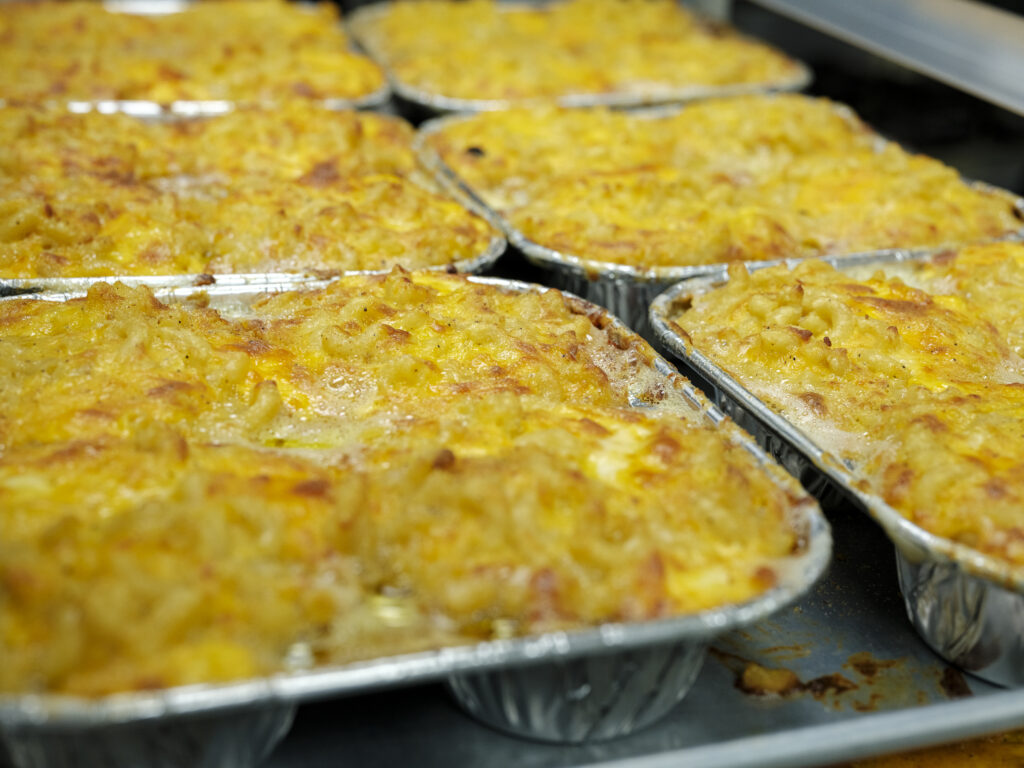
While she makes a range of Southern American or soul food dishes, Small is most famous for her mac and cheese cupcakes, which she first created while cooking a holiday dinner and wanting to make use of a spare muffin pan on the counter. “It’s all about the concept,” she says. “Because everything else has become so commercialized. This is an intriguing take on mac and cheese. And it’s grab and go.”
To dress up the mac and cheese cupcakes there are toppings ranging from oxtail and gravy, to chicken and yam, to pulled pork. Compared to New York City or Nassau County, the East End isn’t known for its diverse or ethnic food options. Small learned to cook at her grandmother’s side, preparing Southern Sunday dinners and extravagant holiday meals, setting tables, cutting and washing fresh vegetables and cleaning and trimming meat.
Small launched her business out of a kitchen in Amityville before moving to the Calverton incubator. “There are other kitchens and there is Calverton,” she says. “It’s a professional, great facility, great location, lots of other businesses and colleagues to interact with and learn from and bond with. You learn so much.” Through the incubator, Small has become close friends and colleagues with The Pudding Lady of New York, Stacy Aluc; the two support each other, and Aluc’s banana pudding and Small’s mac and cheese is a divine combo.
Small raised two children on her own, including a medically fragile daughter. When her son turned 18 and she turned 50, Small decided to put her business and herself first. “My ultimate goal is to get a food truck. If I was blessed with a food truck or food trailer it would take my business to the next level,” she says. “I’m not where I want to be. But I’m thriving and growing.”
Today she plies her wares at Sweet 16s, street festivals, farmers markets, summer parties, fundraisers at the Sag Harbor Yacht Club, the Foodie Fest at Tanger Outlets in Riverhead and Deer Park and, at the latter location, the Famous Food Festival, a perennial favorite for her. And the feedback has been spurring her on, like with one customer, a transplant from Kansas City, who told her: “This is as close as I’m going to get to home.”
Says Small: “I’ve been blessed to have those kinds of experiences.”