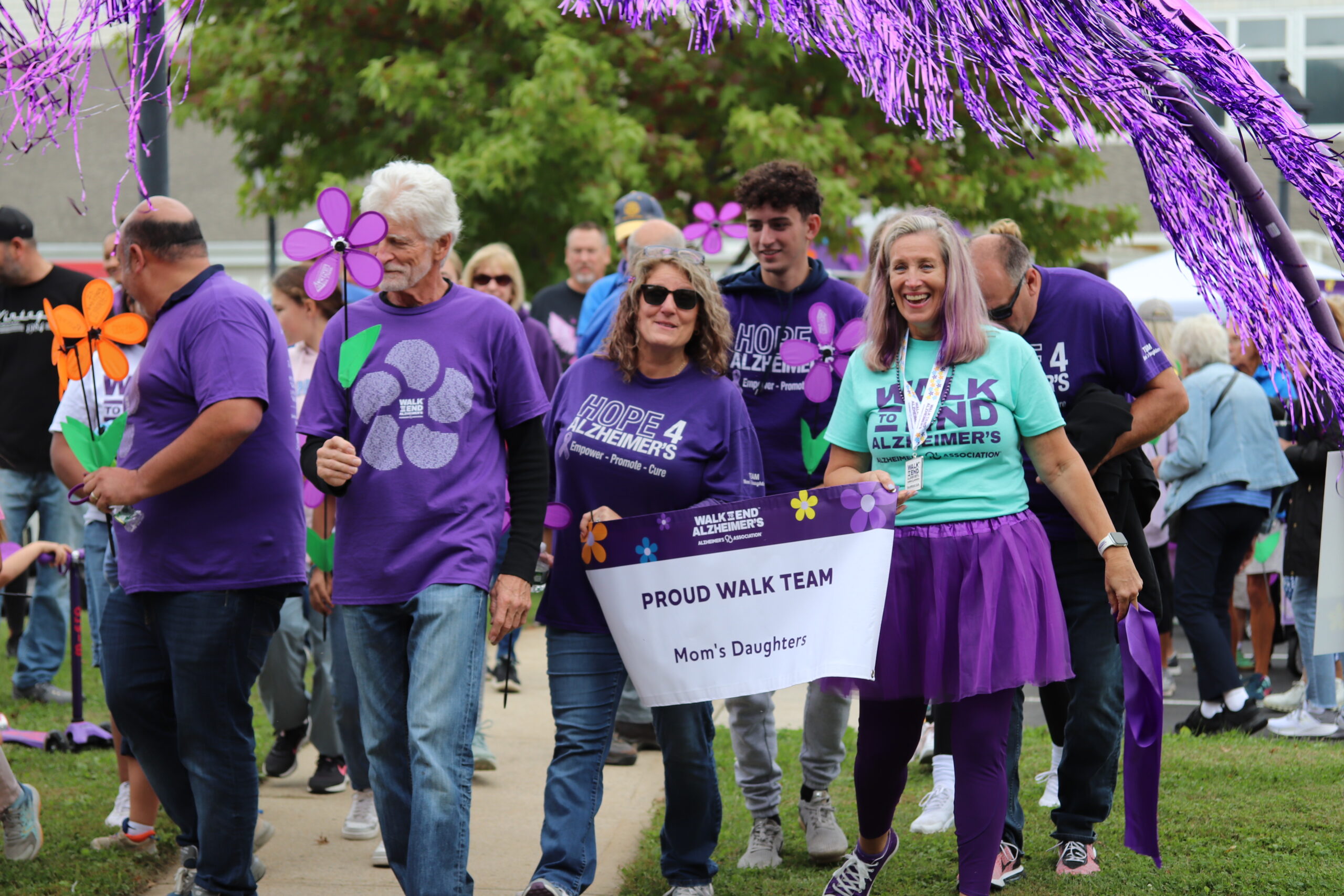
North Forkers can help raise funds for a condition impacting over seven million Americans and nearly 12 million caretakers in the country this weekend. If that doesn’t hit close enough to home, in New York State alone, more than 426,500 people are living with this disease.
The third annual North Fork Walk to End Alzheimer’s is set for Sept. 27 at Peconic Landing, led by the Long Island chapter of the national Alzheimer’s Association.
The event is one of five Walks held around the Island to support global research, increased risk reduction and early detection around Alzheimer’s and other dementias.
In its first year on the North Fork the event raised $27,000; last year the total rose to $78,000, and this year the event has already surpassed its $100,000 goal, thanks to the donations of individual and team Walk registrants.
The event kicks off at 9 a.m.; participants can register in advance or they can sign up the day of the race. Each walker receives a “promise garden flower.” Yellow flowers indicate that you are caring for someone with Alzheimer’s or dementia, purple flowers mean you have lost a loved one to the disease, blue flowers are a sign that you have been diagnosed and orange flowers mean you do not have a direct connection but strive to help.
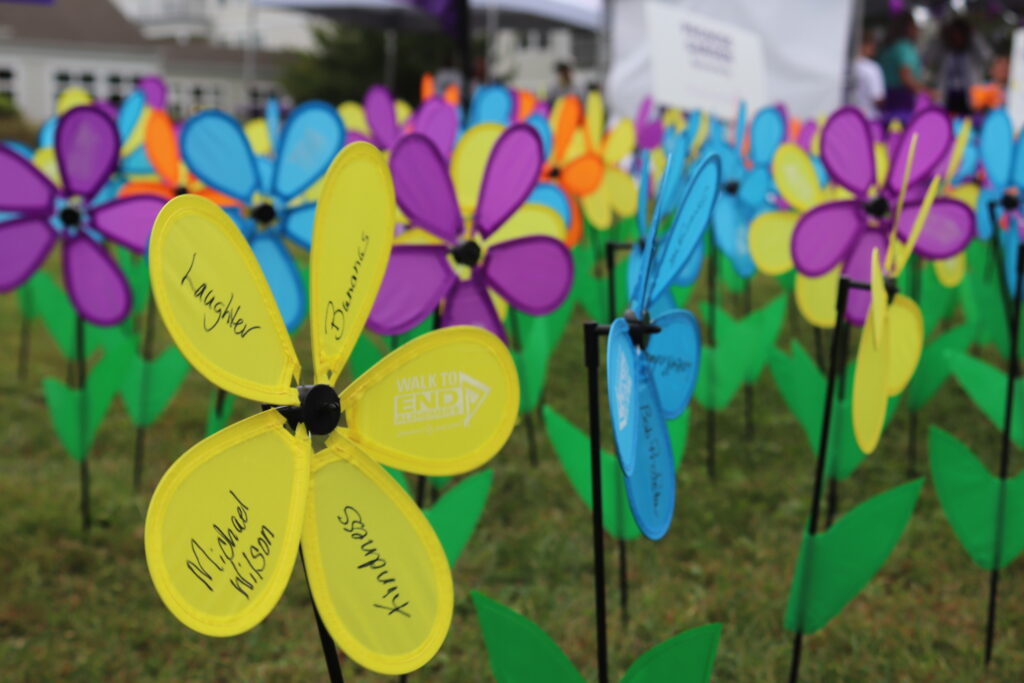
“We like to say that the Walk is really like one big giant support group,” says Judy Wichter, associate director of development for the Long Island Alzheimer’s Association. “Without even having a conversation with the person next to you, just based off the color flower they hold, you know exactly what their connection to the cause is.”
At 9:30 a.m., an opening ceremony features a representative for each flower on stage and a speaker. This year, Long Island Alzheimer’s Association board member Nancy Chandler’s husband John Chandler will share some words as he was recently diagnosed with the disease. At 10 a.m., community members will walk the campus of Peconic Landing as a physical show of solidarity.
Nancy joined the organization after losing her mother to Lewy body dementia in 2017. “I just wanted to help other families go through this journey,” says Nancy. “I wasn’t aware of the services.”
The association offers a 24/7 helpline in 200 different languages for caretakers and those impacted by the disease to call in crisis moments or to ask questions that come up. There are educational programs, first responder trainings and support groups as well, plus resources for those diagnosed and many other opportunities for support — all of which are free, thanks to fundraising through Walk events.
To Nancy, this event is about providing a light for those impacted, a sentiment many leaders and volunteers in the organization share.
“For me, it means hope,” says Nancy.
To become a part of the movement or to learn more about the event, the organization and the resources, click here.