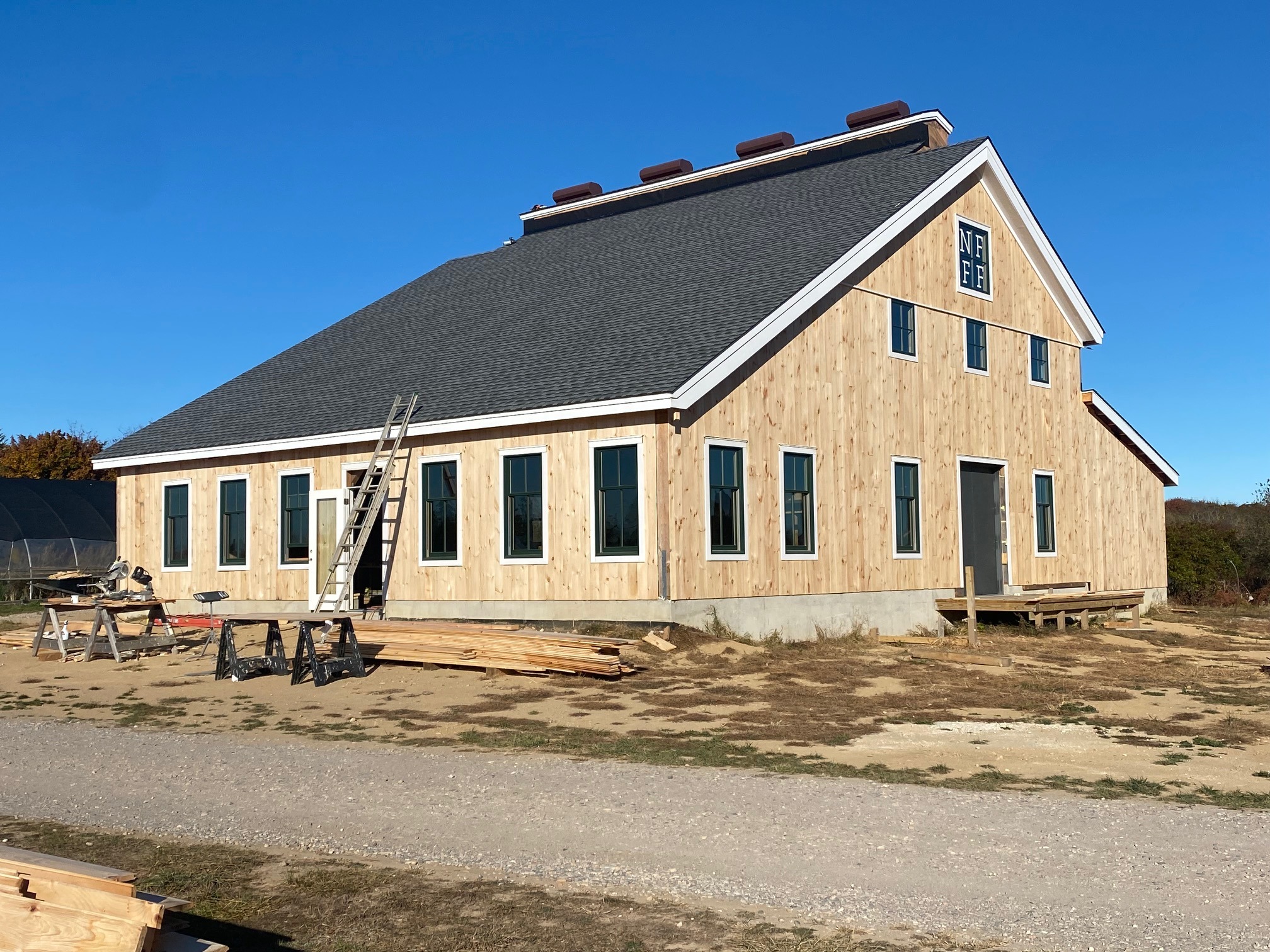
On the North Road in Southold, you may have caught a glimpse of a big new barn through a thick wall of old pine trees. Those giant pines are grown-up Christmas trees left over from the land’s former incarnation as Moffat Farm — and that big new barn belongs to the current owner, North Fork Flower Farm.
Set on 24 acres, the farm is run by three couples: Karen Braziller and Charles Sherman, Kevin Perry and Drianne Benner, and Al and Raquel Martinez-Fonts, all Orient and Cutchogue residents who started NFFF in 2016. The business quickly outgrew its initial rented space in Orient and moved to their current location in 2022.
In late July of 2024, NFFF broke ground on their new barn, a boon to the blossoming of this North Fork business. The farm grows over 300 varieties of flowers, foliage, herbs and grasses planted on six acres (the development rights are sold on 20 acres of the property).
“We thought we were going to be gardeners, and all of a sudden we’re farmers,” says Al Martinez-Font, a master gardener. “The volume and scale of things is just tremendous.”
With no buildings on the property save a couple of hoop houses, all of their operations were run from one of those existing structures. “We worked in that hoop house for two years,” says Benner. “We did all of our flower arranging, we did all the harvesting, cutting and cleaning and workshops. We had people crammed between a sink and the vases and wedding flowers; we had the workshop in the middle and people just loved it. But we really needed more room.”
Perry, an architect, took on its design and the partners acted as general contractor for the project. The group hired a team to put up the frame. “What is referred to as the “heavy timbers” — all the big wood, was cut by a company out of Connecticut called Harvest Moon, and they delivered it with two 53-foot trailer trucks,” says Martinez-Font. “Every single piece had a number on it — post 1 and beam 1 and beam 2 — these guys out of Ohio came out [to put up the frame].”
“We rented a huge telelifter,” says Perry. “It’s basically an oversized forklift that can lift 30,000 pounds; they set the roof rafters with it. They were here for ten days to put the frame up.”
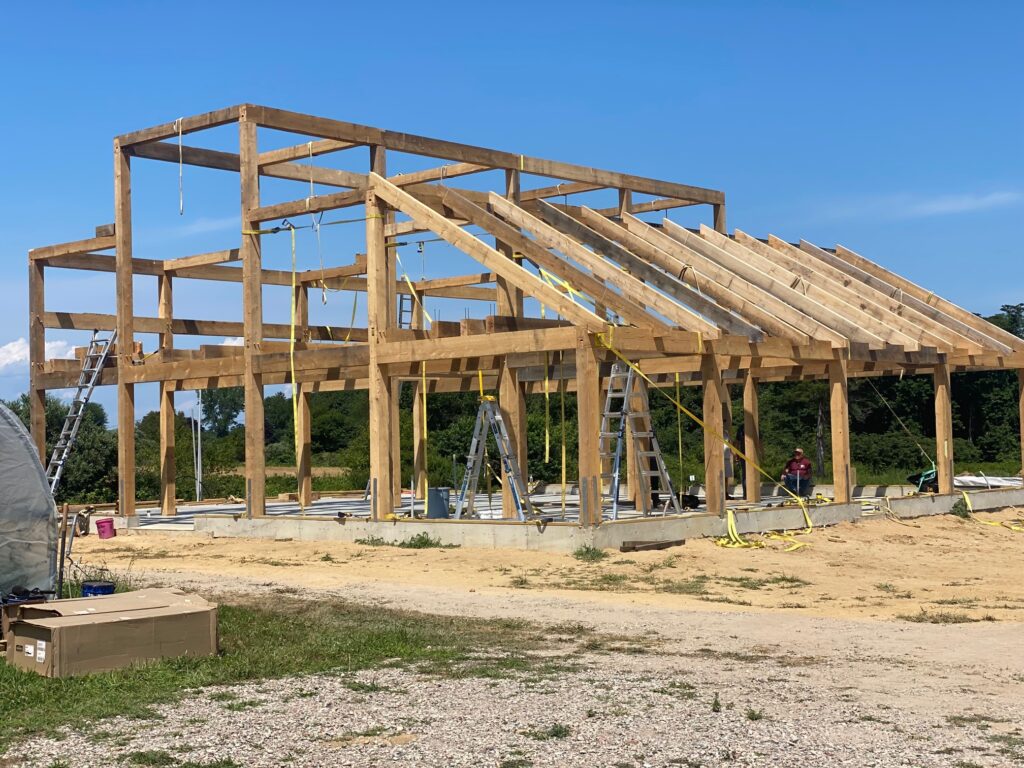
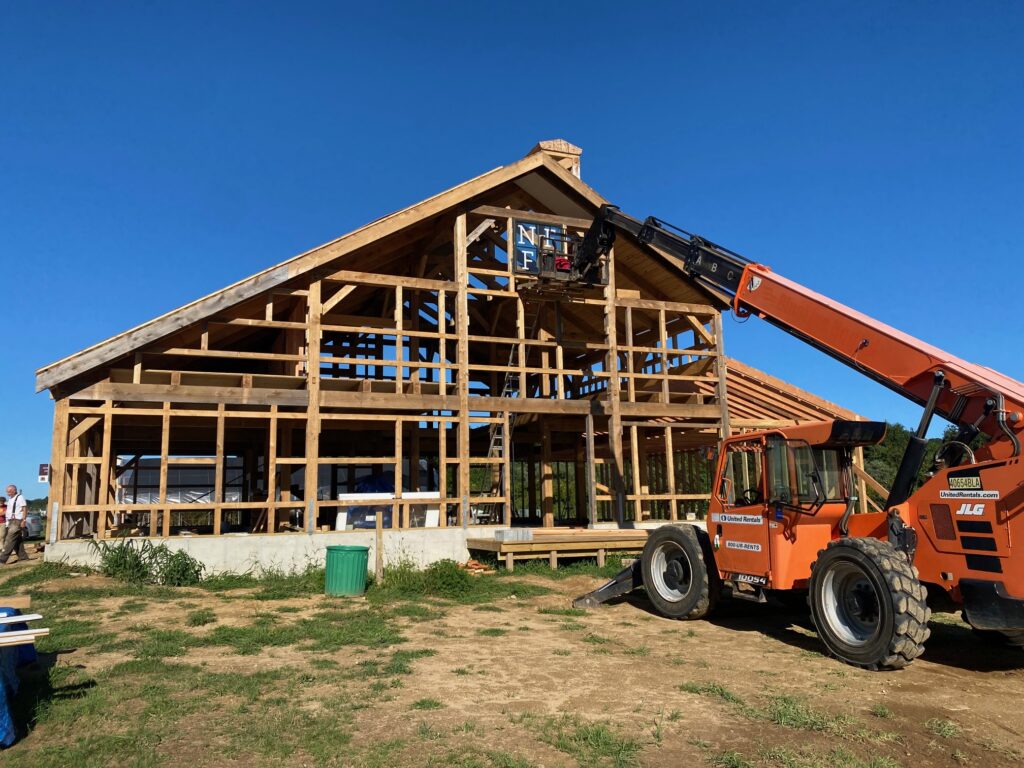
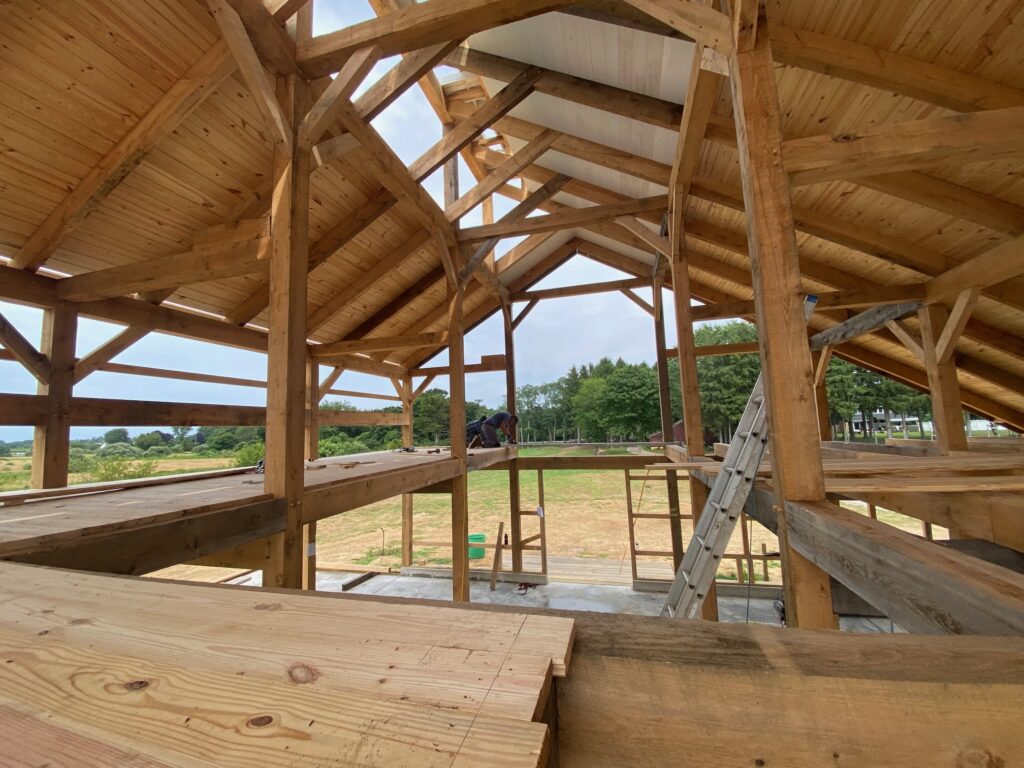
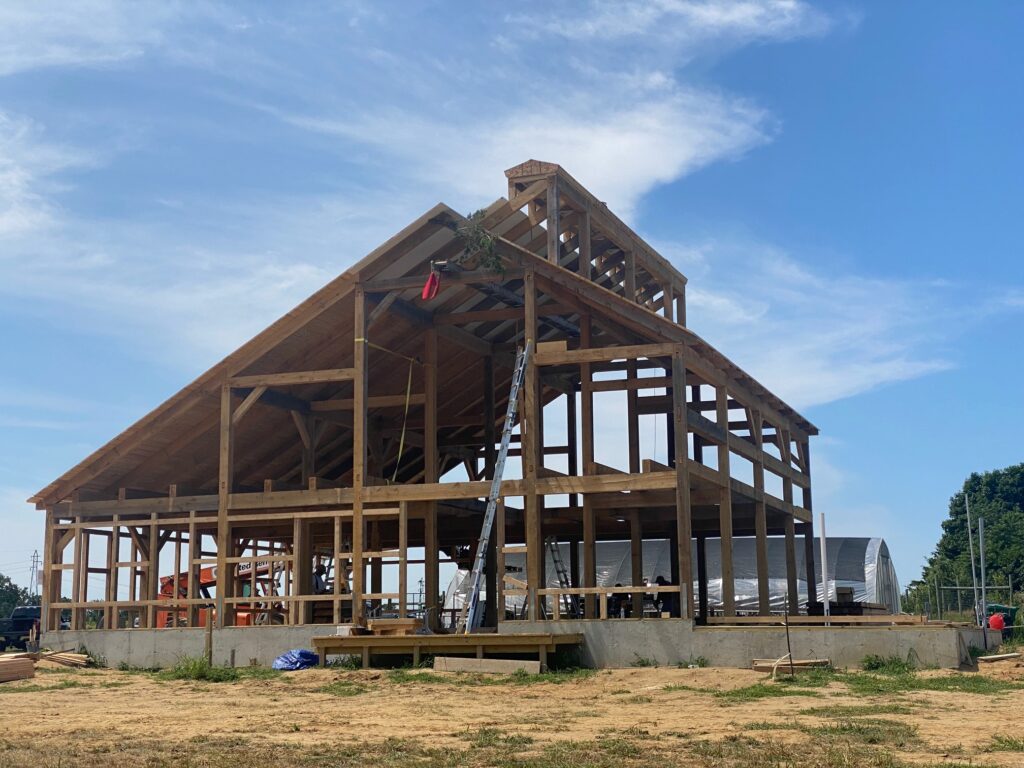
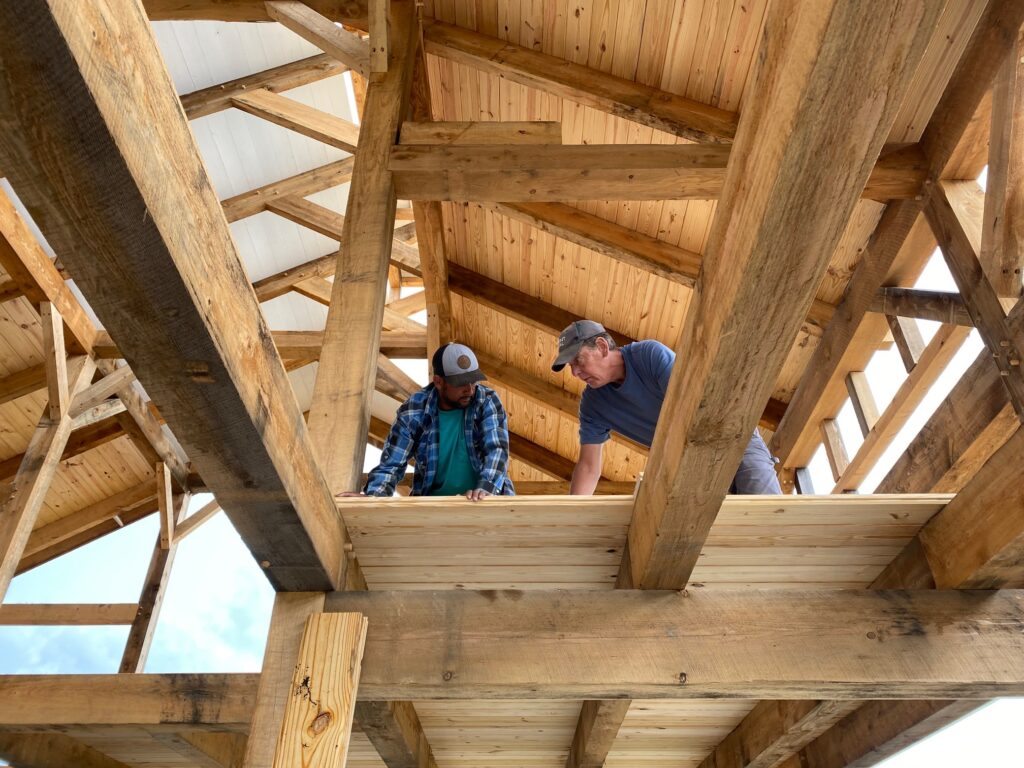
Construction of North Fork Flower Farm’s new barn started in July of 2025. (Photo Credit: Al Martinez-Fonts)
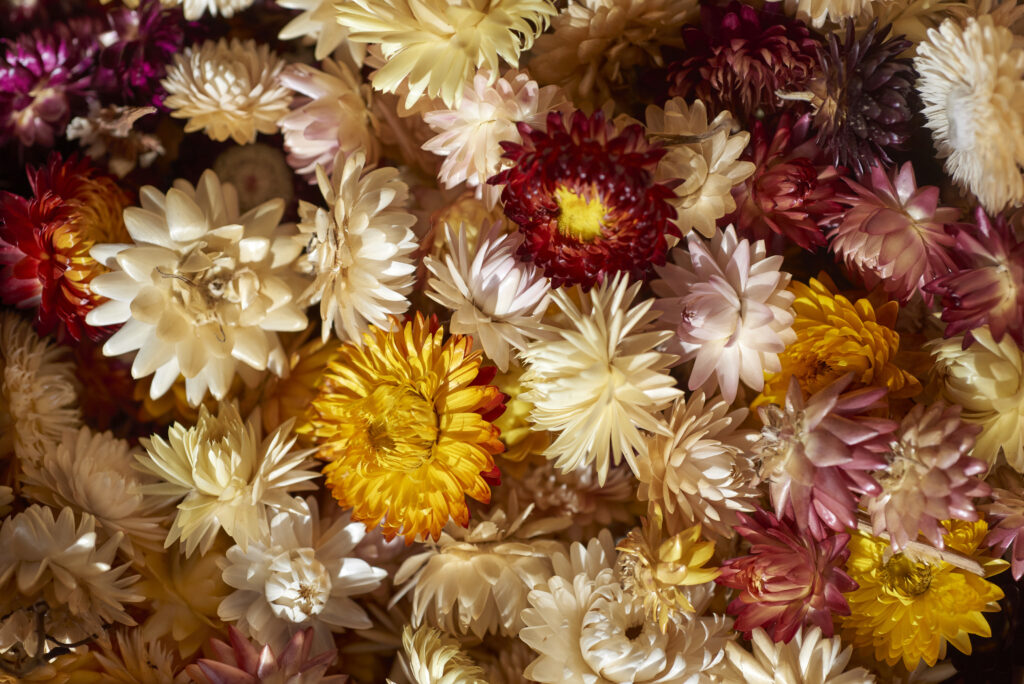
The roof was expressly designed with the knowledge that NFFF’s flower-drying operation would be set up on the second floor of the barn. When drying flowers, colors can sometimes fade or darken; white flowers can appear yellowish or brownish when the petals oxidize. Sunlight, or even indoor light, can fade flower colors, and humidity can encourage mold.
“The building is designed to move air,” says Perry. “We have four ventilators [on the roof] which we control by rope … we can open and close them. It’s got a cap so the rain doesn’t come in; the idea is that the air goes up and through.”
“We struggled with that in the past,” Perry continues. “[Flowers] need a dry environment with low light. We have slots running around the length of the building, so the air comes up and goes into that assembly up there and vents out.”
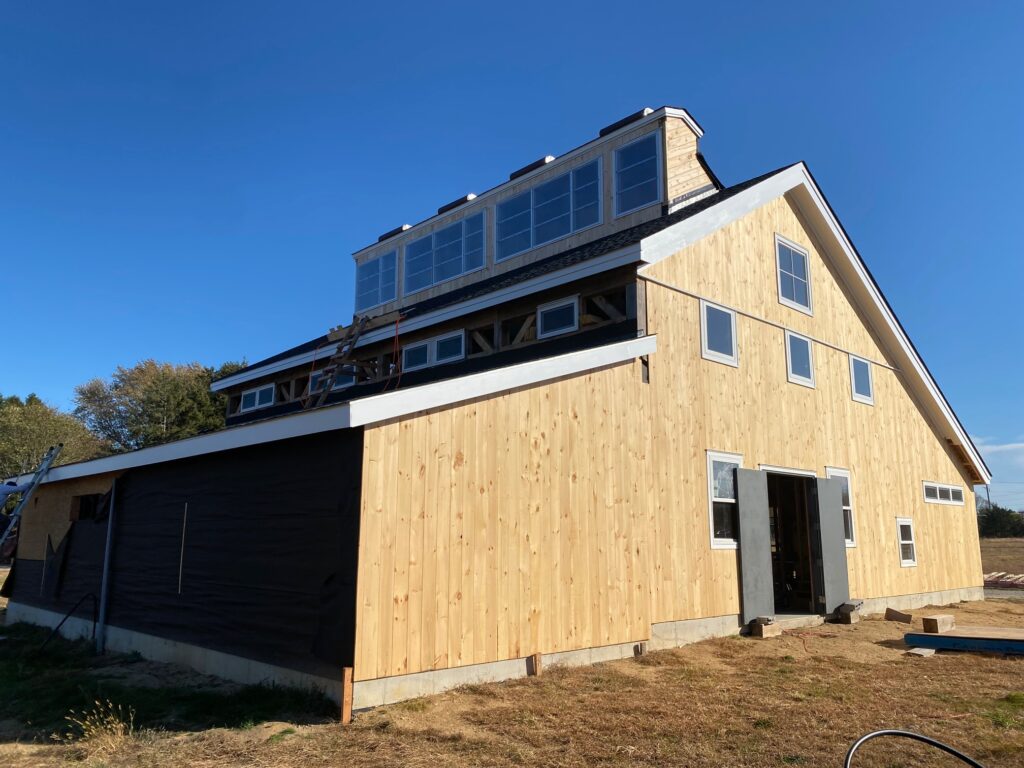
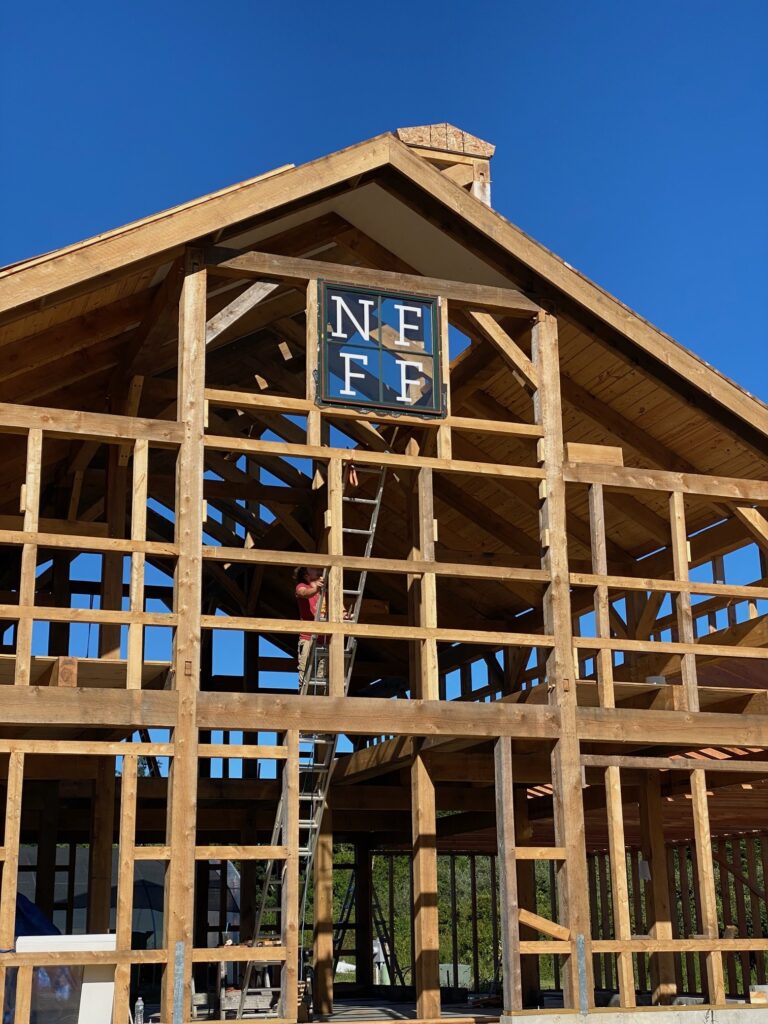
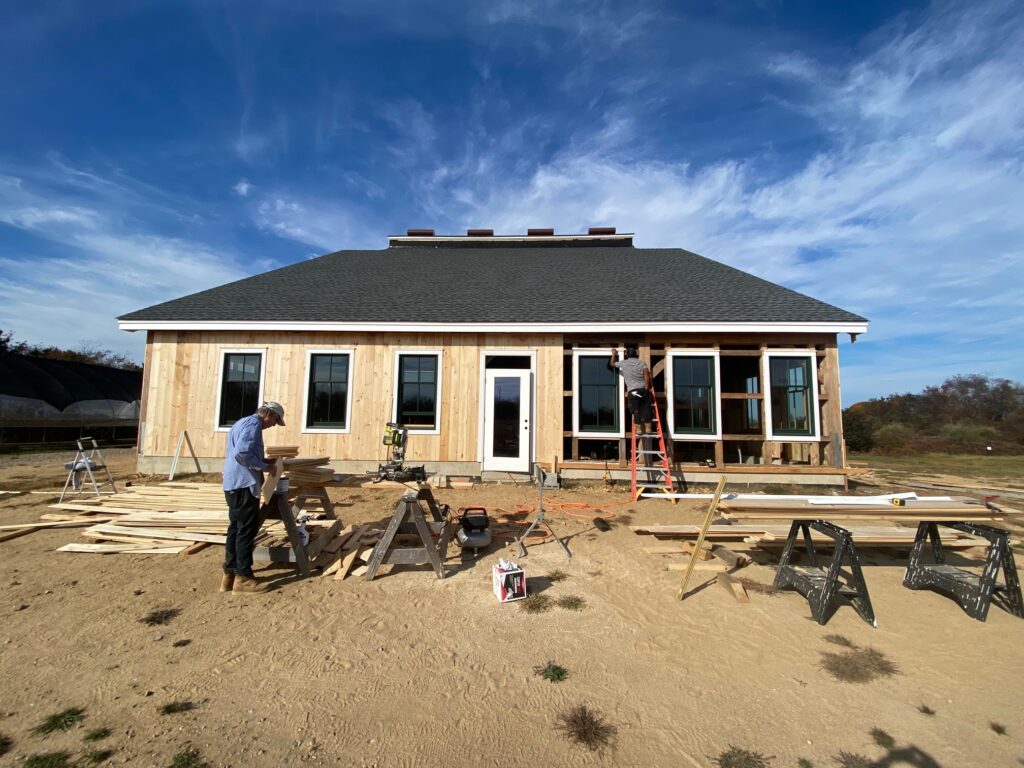
(Photo Credit: Al Martinez-Fonts)
The railing that runs around the second-floor interior is made of rebar, giving a very open feeling to the space. “The question was how to make a very light-looking but strong enough railing system,” says Perry. “The green rebar is used nowadays in roadway work. We got some epoxy rebar and we cut it and installed it.”
While the group has contracted with local electricians, roofers, and a plumber, they have done a good share of the work themselves. “We put the siding on the building, and we are still in the process of [building] the interior partitions,” says Perry.
Outside adjacent to the barn is a cooler set at 38 degrees and crammed with flowers. The group is in the process of installing a new, larger cooler inside the barn, which is crucial to keeping flowers fresh; it will just about triple their refrigerated space.
“The building, by the way, is uninsulated,” says Perry. One interior room is insulated but not heated and is used in the winter months to start seeds. “We work in here starting in January; we have eight to 12 racks where we do seed trays under grow [lights]. Each seed tray is 170 plants, and when we fire up this room, we have to open the window and put fans in because it gets so warm,” Perry notes. After four weeks, the plants are moved into a heated hoop house, and the process starts again.
The front area of the barn will be used as a farm stand, and the center area is used as production space and event space for various workshops.
“We’re trying to organize a little bit more of a retail work area where people can make their own bouquets and get assistance from us,” says Benner.
A local woodworker made the cabinets and shelves, where flower containers and pressed flowers are displayed for sale. “We are going to be making farm tables that are in sync with the aesthetic of the barn,” says Benner. “This barn has changed so much about our business; we do call it a game-changer.”
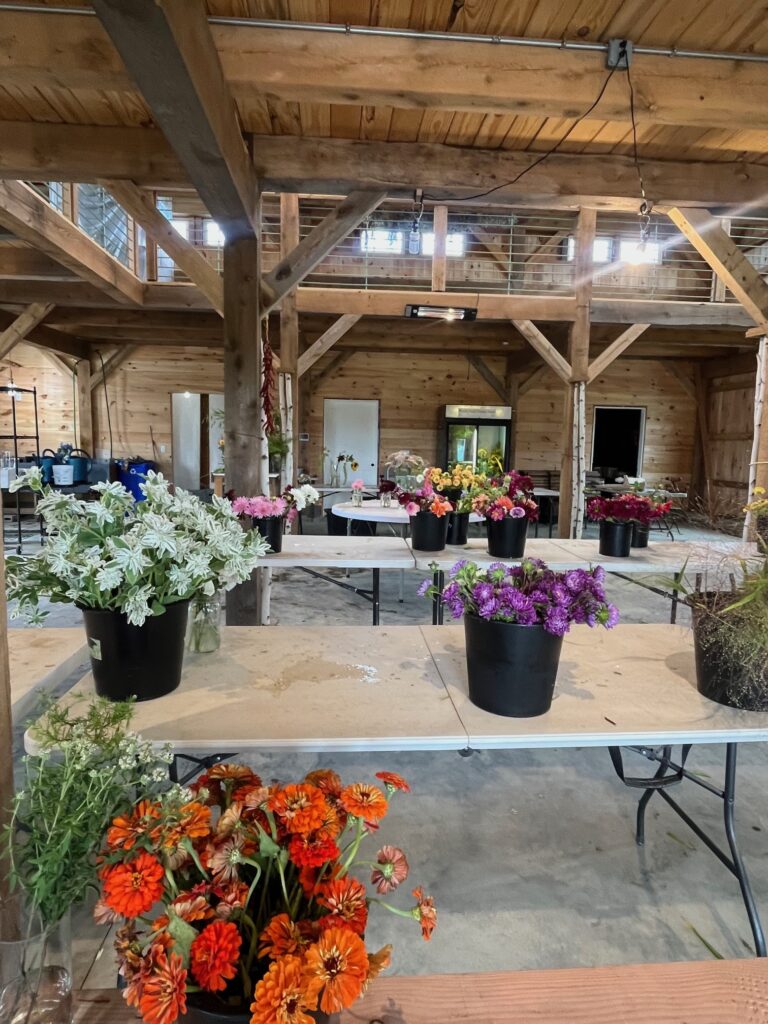
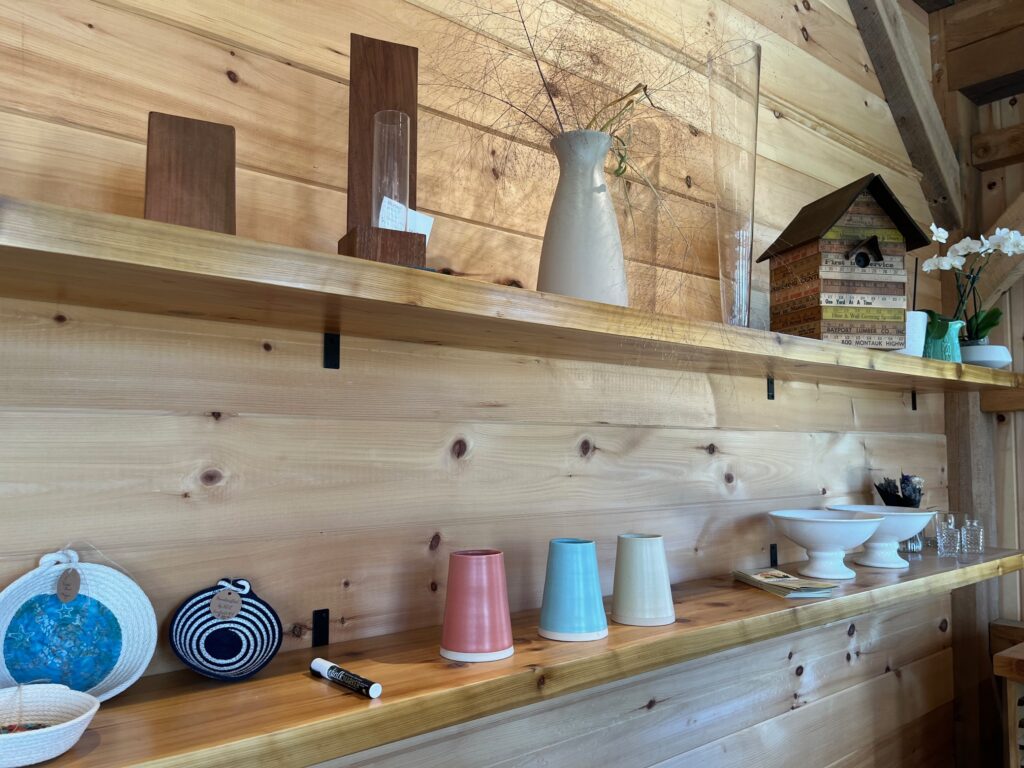
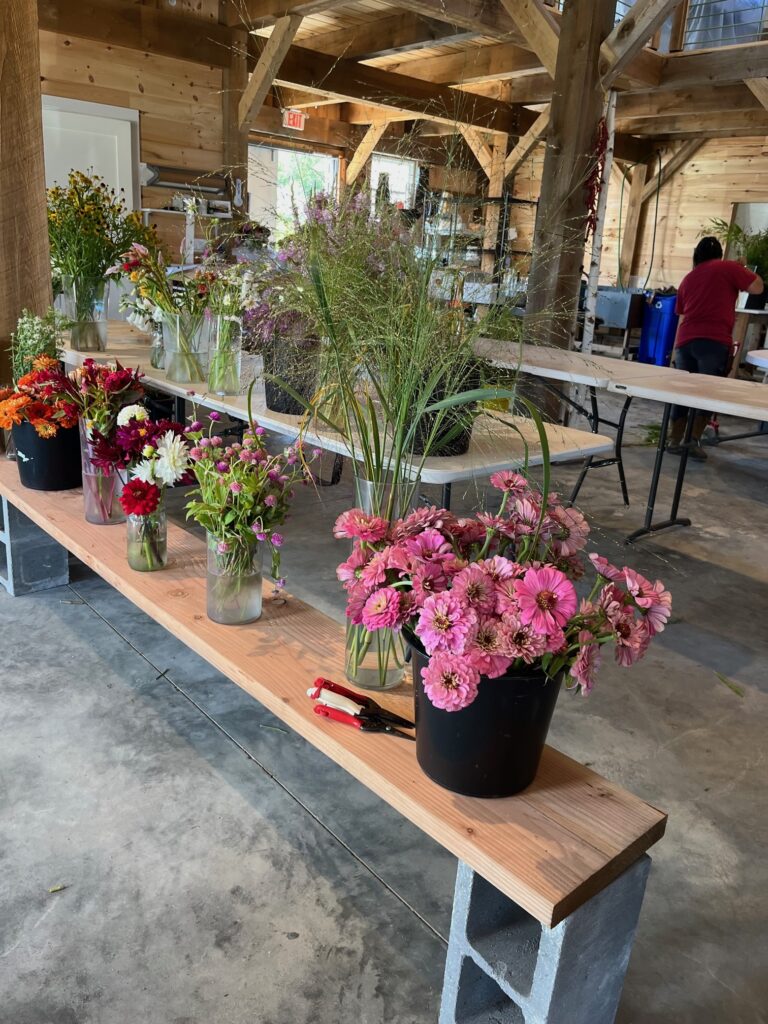
The interior of the new barn. (Photo credit: Stephanie Villani)
NFFF sells flowers and greenery wholesale and retail, and they work with floral designers for weddings and events. Besides walk-in sales, they offer seasonal subscriptions for weekly flower bouquets that can be picked up or delivered.
The reception has been overwhelmingly positive from clients. One woman, the recipient of a weekly flower delivery, called up to ask “why are you delivering new flowers when the old ones are still in perfectly good shape? Can we change delivery to every two weeks?”
Martinez-Fonts says “to me, that’s been just a great compliment and a great story of people really liking what they get. It couldn’t have been any more fresh.”
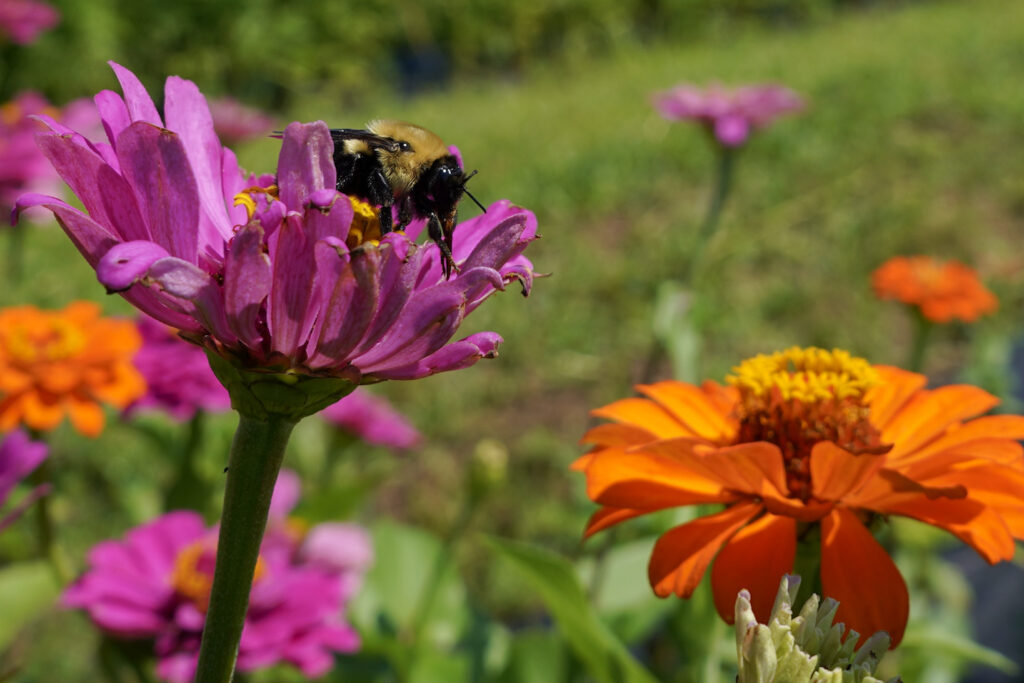
Not only that, but the fragrant smell of wood and flowers — and the flutter of butterflies and bees in the field — make the farm a very pleasant place to visit. Benner says that the next focus of the group will be landscaping, which may mean a new garden or flowering trees planted near the farm’s entrance.
“We have a family of deer that love to be in the front at four o’clock in the afternoon,” she remarks. “We want it to be a magical place.”
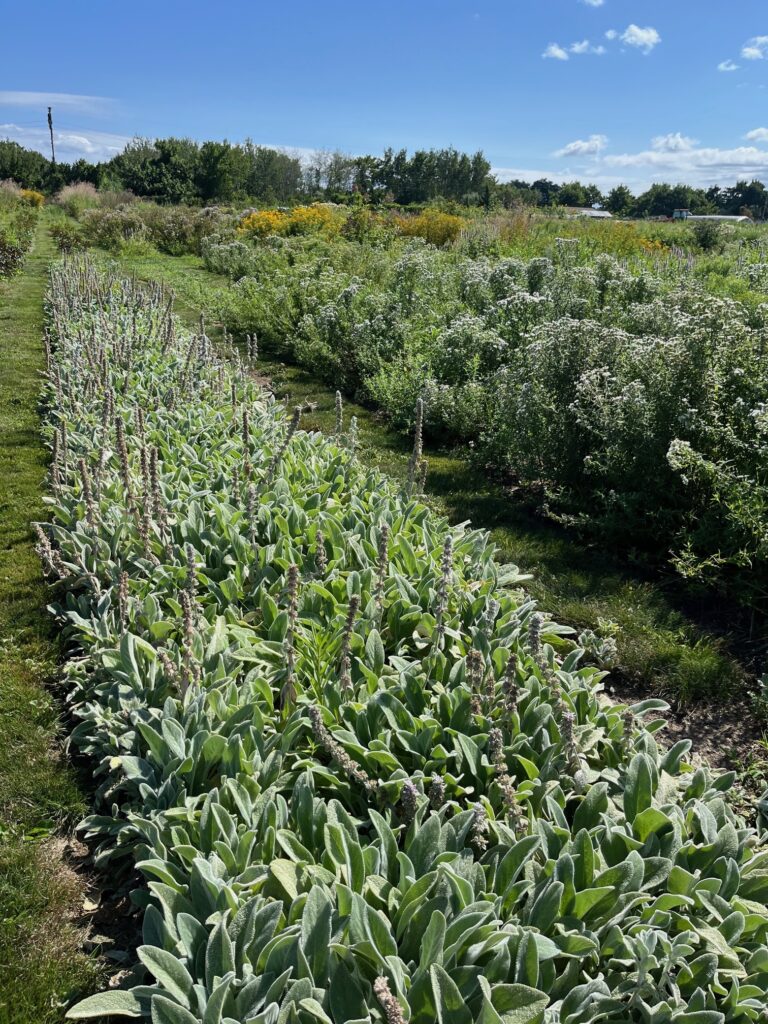
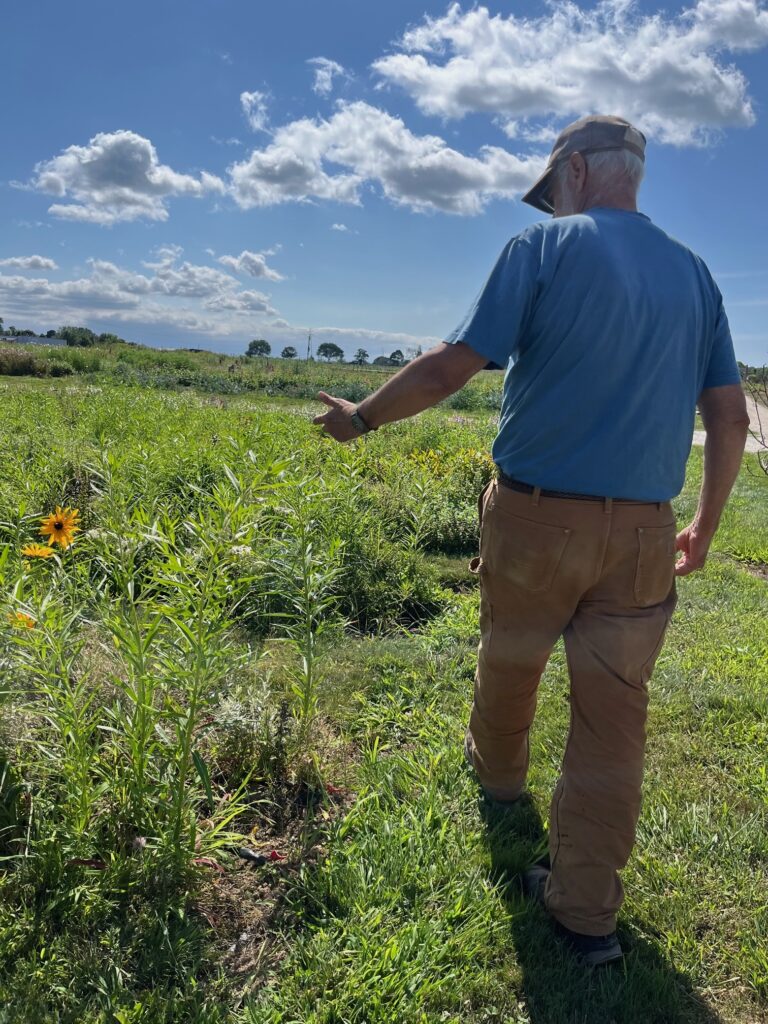
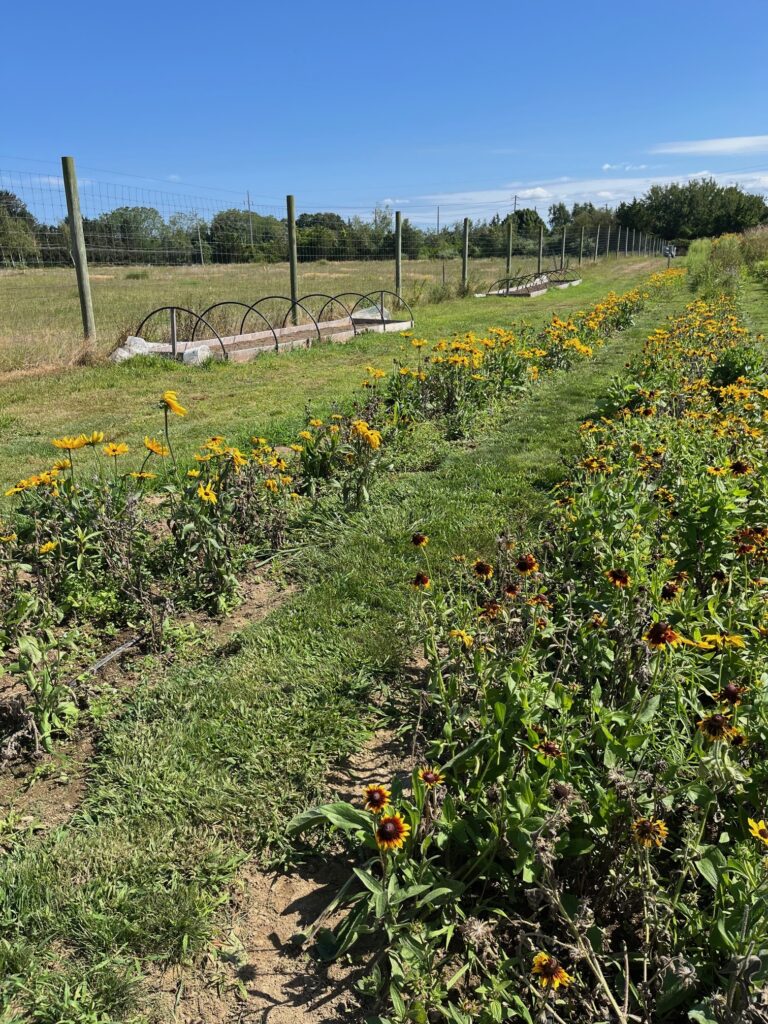
Owner Al Martinez-Fonts at the NFFF’s fields. (Photo Credit: Stephanie Villani)
For now, patrons are invited to sit outside the barn and enjoy the flowery fields for a while before they leave with their bouquets.
The farm expects to offer fresh flowers until Thanksgiving and will have a selection of dried arrangements and holiday ornaments as well. For details on workshops, subscriptions and more, check the farm’s website.