This year is the 50th anniversary of Steven Spielberg’s film Jaws, which came out in 1975 and became a pop culture phenomenon, scaring a generation of beachgoers.
On Saturday, August 30 at 7 p.m. you can catch the film on the big screen at the North Fork Arts Center in Greenport. In conjunction with the East End Seaport Museum & Marine Foundation, Pat Mundus, daughter of shark hunter Frank Mundus (the inspiration for the movie’s crusty character Quint), will join the audience for a Q & A about her father and his exploits on the water.
Mundus, a Greenport resident, graduated from SUNY Maritime College in 1974 as one of the first female cadets. She traveled the world working as a ship’s deck officer for 17 years on Exxon oil tankers, ran East End Charters out of Greenport, and is now retired.
“Local history is kind of like a treasure hunt,” she says. “If I can contribute some way to some sort of humanistic truth about my father, I’m happy to tell that story.”
Northforker: How accurate was the portrayal of your father as Quint in the movie?
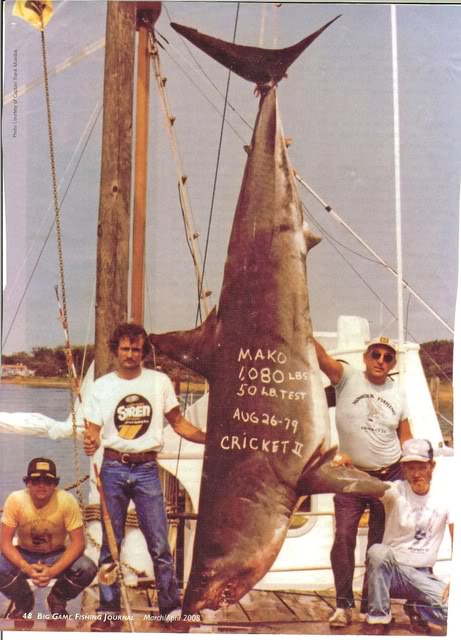
PM: Well, the fishing techniques [were accurate], he really did catch that fish, a 4,500-pound great white … it had a 17-foot waistline. That was in 1964, a decade before Peter Benchley showed up on the scene.
He used multiple harpoons and multiple barrels, and the boat broke down — exactly the drama and the suspense-building technique they used in Jaws. But my father never used a harpoon gun; he thought they were inferior and inaccurate.
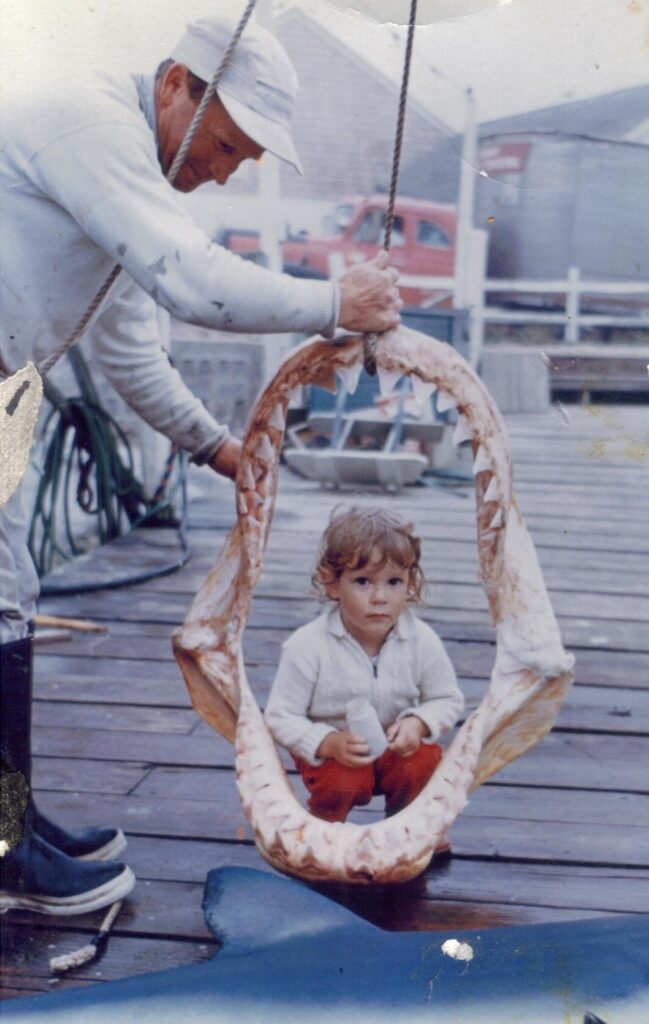
Our garage looked like Quint’s garage, because one of his (Mundus’) side hustles was to cut out the jaws and make trophies out of them.
NF: What was your father’s reaction to the movie?
PM: He stood up in the back of the East Hampton movie theater; he kept scoffing and saying, “you can’t do that!” Really, what they should have done is hired my father as a technical consultant. Anybody who knows anything about fishing Montauk or white sharks knows that it was [based on] him.
NF: Did your family know Peter Benchley, the author of the book?
PM: Benchley did fish with my father. I’m not exactly sure of the dates because I left the country that year, 1974. That was the year that Benchley wrote Jaws. I have photographs of my father and Benchley together, so I know they met.
NF: What did your father do with all the sharks he caught?
PM: There was no market for blue sharks. What he was doing is he was making a spectacle of himself to promote charters; he was just trying to support his family.
The really big ones he donated to a fisheries group, except for the 4,500-pound shark which he kept, because those jaws are extremely valuable. They are still hanging in Salivar’s (in Montauk), as far as I know.
NF: Growing up in Montauk, you lived with your father, mother Janet and your two sisters, Barbara and Tammy. Did you really eat fish five days a week?
PM: We did eat fish five days a week. We ate everything.
When I was growing up, every fisherman’s wife worked at Gosman’s. My father would go to Florida for charters, or he would work on tugboats in New York harbor [in the off season]. My mother worked at Gosman’s as a waitress.
My father also began to believe his own hyperbole. He thought the success of his business and his whole image was all his doing, when in fact, the kids ground chum, my sister went to the boat show, my mother booked charters and did the bookkeeping. She worked hard and was very knowledgeable and helpful while raising the family … it was a family business.
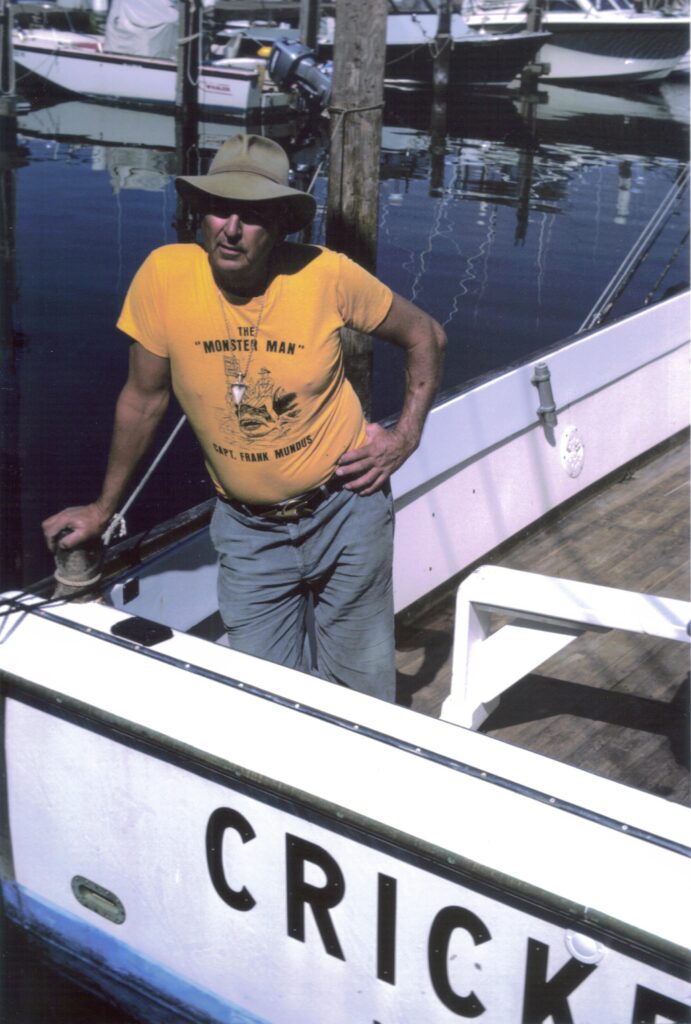
NF: Later in life, Peter Benchley regretted writing Jaws because it led to a surge of people killing sharks. How did your father feel about that? Did he feel the same?
PM: My father probably felt that way instantly after Jaws. He called [the shark fishermen] idiots — everyone and his brother was out there trying to catch them.
He appealed to the alpha male, and it went too well. My father would say “a charter business is 90 percent show and 10 percent go,” and he was absolutely right about that.
He was against shark tournaments. He would go to a shark tournament in his older years and sit at a table and tell people they shouldn’t participate, and he tried to pass out circle hooks (circle hooks cause less damage to a released fish than the usual J-hook).
After Jaws he did, just like Benchley, feel responsible for popularizing this hobby and he did eventually swing to conservation. Really his heart was with light tackle fishing.
Scientists and documentarians hired him also, because he had such an astute understanding of shark behavior. He was like a goldmine. Peter Gimbel, who made the documentary Blue Water White Death about giant white sharks — that was filmed on the Cricket II. I think Jacques Cousteau was the one who invented the shark cage, but my father and Peter Gimbel really perfected it.
For more shark-hunting stories and a chance to see Jaws on the silver screen, reserve your tickets now. Tickets are $25 and may be obtained here.
North Fork Arts Center, 211 Front Street, Greenport, 631-477-8600.