A real-life miracle occurred just before Christmas last year—a tiny, emaciated white puppy had been spotted running loose in Riverhead. When he was finally found hiding underneath someone’s deck in the cold, rescuers from the North Fork Animal Welfare League rushed him to East End Veterinary Center in Riverhead for emergency surgery. Suffering from fractures to his hip and leg, the non-profit rescue group put out the word that help was needed, and an impromptu fundraising campaign began to help the newly named Saint Nick get the treatment he needed.
This wasn’t just a once-a-year, holiday-fueled good deed. It’s what the good folks at the NFAWL do on a daily basis. The group can be relied upon to do the often-difficult work taking care of the lost and abandoned animals in Southold Town, a service they have been providing since the nonprofit was founded in 1963, and one they plan to keep on doing as long as there are creatures in need of comfort on the East End.


A Will to the Way
NFAWL holds contracts with Southold and Riverhead Towns to run their respective no-kill animal shelters—each staffed 24 hours a day—with locations on Peconic Lane in Peconic and on Church Lane in Aquebogue. When an animal needs their help, they go the extra mile, and then some.
In the case of little Saint Nick, the pup had several pins and plates placed in his leg and was brought to the Southold Animal Shelter, whose compassionate crew tended to him. His medical fees, which included diagnosis, surgery and post-surgery care, were in the five figures.
The League documented the puppy’s saga on social media as he slowly regained his strength, quickly attracting a large number of followers hoping for his recovery and eventual adoption. Saint Nick’s virtual friends watched as his belly filled out and he began physical therapy. He was fostered by a NFAWL employee and eventually adopted by an adoring local couple and now lives in a happy home.
The remainder of the money raised for Saint Nick went to the League’s Guardian Angel Fund, earmarked for animals with extensive (and expensive) medical needs like his. While this it-takes-a-village support earned by NAWFL speaks volumes to their stance in the local communities, it all began on a far smaller, and more humble, scale.
Back in the early 1960s, The Southold Dog Pound was located at the Town Dump—a small, sad cinderblock building with no amenities. The shelter was then moved to Town property in Peconic, with a six-run dog kennel and a trailer for an office. By 1980, the league became the first humane organization on Long Island to contract with a town. The Peconic shelter has since upgraded to a larger building and is helmed by director of operations Gabby Glantzman, a 24-year employee of the League.
The Riverhead shelter has a similar history, moving from the Youngs Avenue Waste Disposal Facility to a 6-acre Church Lane property, formerly a kennel, that was bought by the League in 2018 and renovated to the tune of $2.8 million.
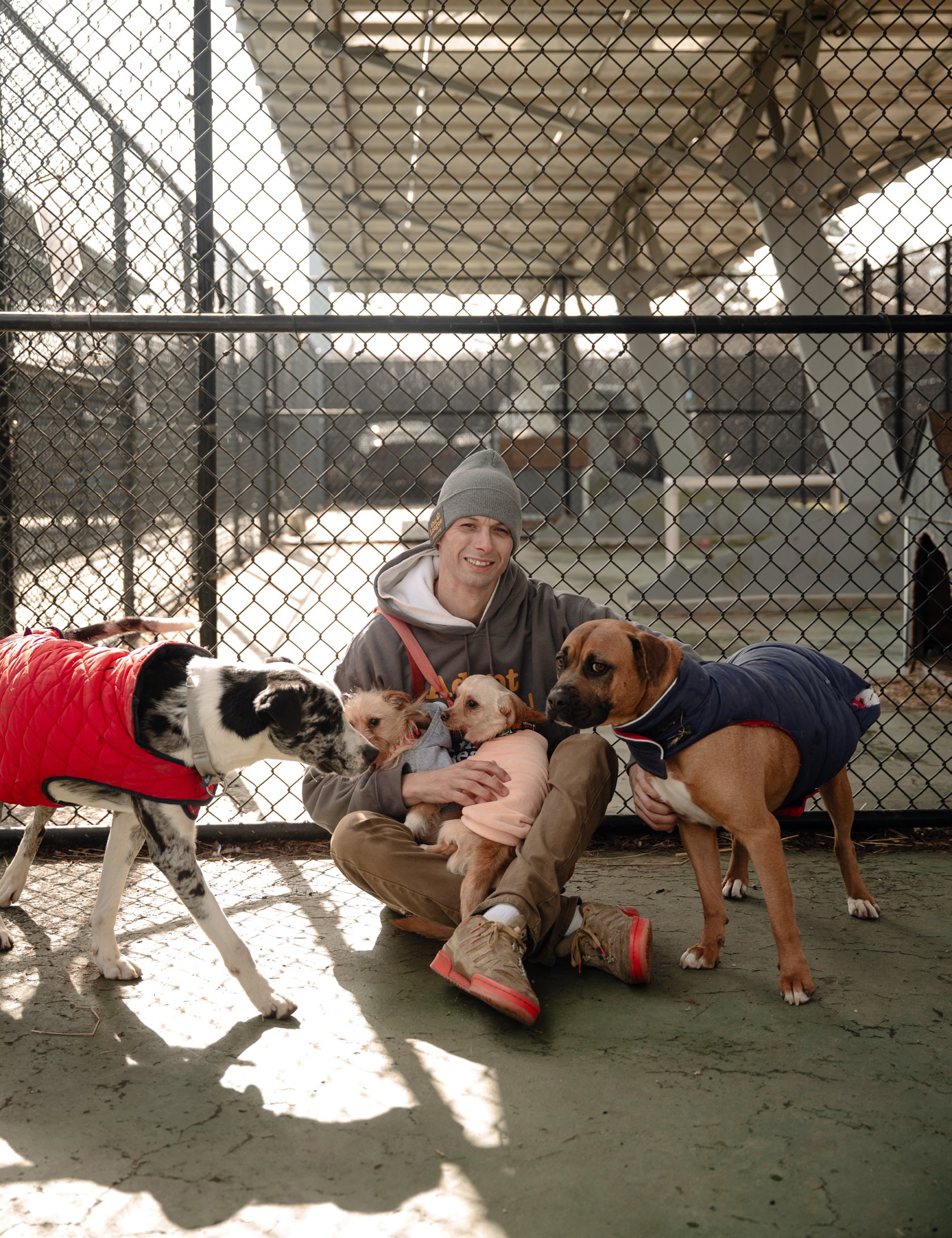
Thanks to the staff and volunteers, both shelters are far more cheerful these days, with dedicated spaces for dog and cat adoptions, areas where both cats and dogs can walk outside, a grooming room and an enrichment room with a large white board that tracks the mental stimulation of the dogs, who are treated to toys and frequent walks. Fearful or anxious animals are placed in quiet areas, and there are spaces for the staff to do laundry, prepare the animals’ food and store supplies.
Glantzman and Taylor Dixon, a certified dog behavior consultant and manager of the Aquebogue shelter, both work closely with Matthew Valentino, a dog trainer who floats between both locations—NFAWL’s secret weapon and a luxury that most shelters don’t have. The League staff, board members and volunteers’ dedication has resulted in a myriad of initiatives to help animals from Riverhead to Orient and beyond.
“We are not just a shelter,” says Glantzman, “we are engaged with the community.”


Programs in Motion
Leslie Benway, president of the NFAWL’s Board of Directors (and the owner of four border collies), has been involved with the group for almost nine years. “I’ve always been an animal person and an advocate against cruelty to animals…. I’m passionate about it,” she says. “We are very involved with the community at a grassroots level.”
Indeed, you may be surprised at the extent of programs and services that NFAWL offers. Besides the Guardian Angel Fund, these include an animal control program, where strays or abandoned animals are trapped to protect people, domestic animals and livestock. The League licenses animals, runs spay and neuter and microchip clinics, including programs for feral cats, and will help connect a pet owner with a trainer if necessary. They are part of the national nonprofit Pets for Vets program—“a fabulous program,” says Benway—which matches American veterans with shelter dogs, waiving adoption fees and assisting with training and care.
The League will help if community members have hardships, providing pet food and assistance with medical care. Glantzman describes the League’s Safekeep Program as “performing a community service when people can’t take care of their animals, whether people have to go to the hospital or if someone loses their home, we will take care of their animals for 30 days. We do this on a case-by-case basis.”
Sometimes adopted animals “are not a right fit for people,” says Benway, and they are returned to the shelter to, hopefully, be re-homed. When it comes to animals other than dogs and cats, “we have the resources to connect people if they find an animal in distress—there is a turtle rescue, a rabbit rescue,” Benway points out. “We’re not equipped [to take wild animals] but we can help the situation…the outreach we do far exceeds other shelter operations.”
Raining Cats and Dogs
According to Glantzman, the Peconic shelter currently has about 22 dogs and 50, with Dixon tallying around 32 dogs and 60 cats at the Aquebogue shelter.
“[Spring is] kitten season,” says Glantzman, “so we will need kitten fosterers and adopters.”
While the priority is on the local animal population, NFAWL regularly receives animals from other locations, like Texas, Georgia and even Puerto Rico. “When we have room, we save animals; we will bring them in from Brookhaven or New York City. Our community wants these dogs,” says Benway. “It helps that people are coming to shelters more and more to adopt animals rather than going to a breeder.”
As a nonprofit, no-kill shelter, NFAWL is always in need of items for their animals and hosts many fundraising events throughout the year. Local businesses, schools and groups regularly make donations to the League and bring in food and toys for the dogs. Last year, Mattituck Girl Scout Callie McLean, a shelter volunteer, spent about 100 hours building five dog houses for the shelter with the help of members of the community. Meanwhile, Glantzman maintains an Amazon Wish List, linked to from NFAWL’s website (northforkanimalwelfareleague.org) so well-meaning community members can donate items if they can’t lend personal time at the shelters.
“Whatever we ask for—food, blankets, or money—we always get a huge response from the community,” says Glantzman. “It’s wonderful.”
With the addition of a part-time volunteer coordinator, the League now has the largest group of regular helpers in recent memory. Volunteers are trained via a 30-minute course and help with adoption events, fundraising, bringing animals to Peconic Landing for visits and giving tours of the shelters.
“We are a shelter constantly in need,” says Dixon. “We could use bottle feeders for kittens and kitten cuddlers. We can always use fosters for dogs and cats—about 50 percent of those that foster animals end up permanently adopting them.”
The kind of help needed varies and opportunities abound. Animal lovers can do anything from reading to dogs or cats to soothe them, to walking dogs and helping socialize cats, to assisting the dog trainer with playgroups. Kids are invited to help out as well, as long as they are accompanied by a parent or guardian if the child is under age 16.
Finding a Fur-Ever Home
A big part of NFAWL’s success within the communities stems from their unflagging devotion to creatures they care for. Glantzman recalls the heart-rending story of Violet, a cattle dog mix who spent 397 days in the Brookhaven Shelter. It was thought that she did not get along with other dogs, cats or kids, so day after day she failed to get adopted.
“She was mislabeled—she actually loved other dogs and cats,” Glantzman says. “We have a full-time dog trainer on staff who worked with her. She was adopted and now her best friend is a cat.” Larger shelters often have no capability to work one-on-one with animals this way, but the shelter’s smaller size and in-house professional pup trainer Matthew Valentino gives the League and the animals it cares for a big leg up.
“I have worked for quite a few animal rescues, and the League has one of the best reputations around,” says Valentino. “I like how this group helps people in the community, and they really trust my abilities. If I need help, I talk with Taylor [Dixon] …we can figure out any animal’s issue that comes through the door. There is no dog that we don’t work with.”
Both the Southold and the Riverhead shelters are open seven days a week from 10 a.m. to 3 p.m. for walk-in adoptions, no appointment necessary. The public is invited to stop in and visit.
“I love the way the staff responds…they care deeply. I love the passion of this team,” says Benway. “It creates a great atmosphere for volunteers and staff.”
And for animals and adopters, too.